Oven Functions Explained: Every Setting, Symbol and When to Use It
Modern ovens come with a wide range of functions, each activating a different combination of heating elements, fans, and cleaning systems. This guide covers the most common settings and explains what each one does, which you will use most, and which function to choose for specific dishes. The two most important settings on any electric oven are conventional (top and bottom heat, no fan) and true fan (rear element with circulating fan). Everything else is a variation of those two principles.
Most oven searches start with a dish, not a function. The table below gives a direct answer for the most common cooking tasks, along with the best fallback setting if your oven doesn’t have the ideal one.
What you’re cooking
Best function
Good fallback
Notes
Roast chicken or joint
Fan assisted 180°C fan / 200°C conventional
True fan
Fan circulates heat evenly; crisp skin without drying out
Sponge cake or Victoria sandwich
Conventional 180°C
Fan assisted at 160°C
Still air is gentler on delicate batters; less risk of a crust forming before rise is complete
Bread (single loaf)
Conventional 220–240°C, reducing after 15 min
Fan assisted at 200–220°C
Conventional retains steam for better oven spring; fan works well for batch loaves
Biscuits or cookies (multiple trays)
True fan 160–170°C
Fan assisted
Multi-shelf baking without repositioning trays mid-cook
Pizza (fresh or frozen)
Pizza function 220–240°C
True fan + base heat
Intense base heat is the key to a crisp crust; preheat fully before use
Quiche or tart (pastry base)
Base heat 180–200°C
Base heat + fan
Direct bottom heat prevents soggy pastry; top stays gentler
Roast vegetables
Fan assisted 200–220°C
True fan
High circulating heat caramelises evenly; avoid overcrowding the tray
Gratin or pasta bake (finishing)
Top heat with fan 200–220°C
Full grill (briefly)
Bubbles and browns the top while keeping interior warm
Sausages, chops, or fish under grill
Full grill Max/230°C
Grill + fan
Keep oven door ajar if manual advises it; watch closely to avoid burning
Toast or browning top of a dish
Top heat 200–220°C
Half grill
Use at end of cooking only; moves fast under direct heat
Slow-cooked casserole or stew
Conventional 140–160°C
Eco true fan
Low, steady heat; no need for fan circulation on long slow cooks
Meringues or delicate pastry
Conventional 100–120°C
Base heat only
Fan can cause meringues to crack and move; still air is essential
Batch baking (2–3 trays at once)
True fan Reduce by 20°C vs recipe
Fan assisted
Rear element heats all shelves equally; no need to rotate trays
Defrosting frozen food
Defrost function No heat / fan only
Room temperature
Fan circulates cool air to speed thawing without starting to cook
Reheating leftovers
Fan assisted 150–170°C
Conventional
Even heat prevents hot spots; cover with foil to retain moisture
Fan vs conventional: the most important difference
If you only understand one distinction about your oven settings, make it this one. The difference between fan modes and conventional heat underpins almost every other cooking decision.
A conventional oven uses top and bottom heating elements with no fan. Heat rises naturally from the base and falls from the top, creating gentle temperature gradients: slightly cooler near the floor, slightly hotter near the top. Food cooks from the outside in, and the still air retains any moisture that evaporates from the food, which is why conventional heat is better for things like bread and cakes where steam matters.
Fan modes use a fan to force hot air around the cavity. This eliminates temperature differences between shelves, speeds up cooking by 10–20%, and promotes better browning. The trade-off is that moving air removes moisture from the food surface more aggressively, which can dry out delicate batters or bread before the interior has set.
Use conventional (no fan) for
Sponge cakes and Victoria sandwiches
Soufflés and delicate egg-based bakes
Single artisan loaves of bread
Meringues and pavlova
Slow-cooked casseroles and stews
Custards and crème brûlée
Anything where the recipe says “conventional”
Use fan modes for
Roasting meat, poultry, and vegetables
Batch baking across multiple shelves
Biscuits, cookies, and shortbread
Reheating food evenly
Frozen oven food (chips, pizza, nuggets)
Pies, tarts, and pastry cases
Anything where speed and even browning matter
True fan vs fan assisted: these are often confused. Fan assisted uses existing top and bottom elements with a fan added. True fan (also called fan oven or 3D hot air) has its own dedicated circular element around the rear fan, with no top or bottom elements active. True fan gives the most even multi-shelf results. Fan assisted is more powerful but can have slight top-to-bottom variation.
Temperature conversion: fan to conventional
When a recipe gives one temperature, it is usually written for a conventional oven. If you are using any fan mode, reduce the temperature by 20°C. The fan circulates heat more efficiently, so the same result is achieved at a lower setting. Overcooking is the most common fan-oven mistake.
Quick conversion: conventional → fan oven (subtract 20°C)
140°C conv.
120°C fan
Gas ½
150°C conv.
130°C fan
Gas 2
160°C conv.
140°C fan
Gas 3
170°C conv.
150°C fan
Gas 3
180°C conv.
160°C fan
Gas 4
190°C conv.
170°C fan
Gas 5
200°C conv.
180°C fan
Gas 6
210°C conv.
190°C fan
Gas 7
220°C conv.
200°C fan
Gas 7
230°C conv.
210°C fan
Gas 8
240°C conv.
220°C fan
Gas 9
All heating functions explained
Core heating modes
Conventional
Conventional (Static / Traditional)
Top and bottom heating elements active, no fan. Heat rises naturally from the base, creating gentle temperature zones: slightly cooler at the bottom, slightly hotter at the top. The most stable, still-air environment your oven can create.
Best for: cakes, soufflés, bread, slow roasts, casserolesTip: use the middle shelf for the most even result; rotate dishes if you notice uneven browning
Base heat
Base Heat (Bottom Element Only)
Only the lower heating element is active. Heat rises gently from the floor of the oven without any top browning. Useful at the end of cooking to crisp up an undercooked base without touching the top of the dish.
Best for: quiches, tart cases, pizza bases, blind baking pastry, finishing undercooked basesTip: place the dish on the lowest shelf to maximise contact with the rising base heat
Top heat
Top Heat (Upper Element Only)
Only the upper heating element is active, radiating heat downwards. This is a finishing function, not suitable for cooking food through from raw, but excellent for adding colour or crisping the surface of a nearly cooked dish.
Best for: browning meringues, finishing gratins, toasting breadcrumbs, adding colour to piesTip: watch closely, as top heat browns quickly and unevenly if food is not positioned centrally
Fan assisted
Fan Assisted (Conventional + Fan)
Top and bottom elements heat the oven while a fan circulates that hot air around the cavity. This gives more even temperatures than conventional heat and reduces cooking time by 10 to 20 per cent. Versatile enough for most everyday cooking tasks.
Best for: roasting, everyday baking, reheating, frozen foodReduce recipe temp by 20°C vs conventionalTip: can cook on multiple shelves, but true fan gives more even results across shelves than fan assisted
True fan
True Fan (Fan Oven / 3D Hot Air)
A dedicated circular element sits around the rear fan. Only this element heats the air; no top or bottom elements are active. The fan distributes heat with exceptional consistency across every shelf, making this the best mode for multi-shelf cooking without repositioning dishes.
Best for: batch baking, multi-shelf cooking, biscuits, roasting, frozen foodReduce recipe temp by 20°C vs conventionalTip: the lower power compared to fan assisted means food cooks more gently, which is ideal when you want even colour across multiple trays
Base + fan
Base Heat with Fan
The lower element provides direct bottom heat while the fan distributes warm air throughout the cavity. Combines the crisp-base benefit of bottom-only heat with the even airflow of a fan mode.
Best for: pizza, pies, pastry dishes, anything prone to a soggy bottomTip: preheat fully before use; the base element needs time to reach temperature before the fan benefits kick in
Top + fan
Top Heat with Fan
The upper element generates radiant heat from above while the fan circulates it through the oven. More gentle than a direct grill but with better coverage than top heat alone.
Best for: finishing pasta bakes, gratins, pies; giving a golden top while keeping the interior warmTip: use a higher shelf position and keep a close eye on colour development, as it progresses faster than it looks
True fan + base
True Fan + Base Heat
The rear circular element and fan provide even all-round heat, while the base element adds extra intensity to the floor of the oven. The most effective setting for a crisp base with an evenly cooked top.
Best for: pizza, pies, pastry, savoury tarts, reheating crispy foodTip: place food on a lower shelf and use a dark baking tray or pizza stone to further enhance the base heat
True fan + top
True Fan + Top Heat
Even all-over heat from the true fan system combined with extra radiant heat from the top element. Gives a golden top surface without sacrificing the even cooking that true fan provides.
Best for: pasta bakes, gratins, pies needing a browned lid, stuffed vegetablesTip: use a middle-to-upper shelf position. Switch to this from true fan alone for the final 10–15 minutes of cooking
Eco fan
Eco True Fan
The energy-efficient version of true fan mode. Operates at reduced power and heats up more slowly, using less electricity overall. Best used for single-shelf cooking where time is not a constraint.
Best for: casseroles, traybakes, single-dish roasts when you have time to spareTip: avoid preheating in eco mode if the recipe allows; keep the oven door closed throughout to retain accumulated heat
Pizza
Pizza Function
Combines strong base heat with fan circulation, and sometimes an active top element, to replicate the floor-heat environment of a pizza oven. The high base temperature is the key to a properly crisp crust.
Best for: pizza, flatbreads, focaccia, dough-based bakes requiring a crisp base220–240°C; preheat fully before useTip: cook directly on a preheated stone or metal tray placed on a low shelf for the crispiest base
Grill functions explained
Grill modes
Full grill
Full Grill
The entire upper grill element radiates intense heat downwards across the full width of the oven. Heat does not circulate; it works directionally from above only, making it the fastest browning function on the oven.
Best for: sausages, chops, fish fillets, toast, browning the top of dishesTip: leave the oven door slightly ajar if your manual recommends it; never leave unattended as burning happens quickly
Half grill
Half Grill
Only the central section of the upper grill element activates, creating a focused heat zone in the middle of the oven. Uses less electricity than full grill; ideal when cooking small portions that do not need the full grill width.
Best for: single steaks, small fish fillets, toasting one or two pieces of bread, browning a small dishTip: centre food directly under the active zone for even results; avoid placing food at the edges where heat drops off
Grill + fan
Full Grill + Fan (Turbo Grill)
The full grill radiates heat from above while the fan circulates it around the cavity. This reduces the intensity of direct grill heat and allows thicker food to cook through more evenly without burning the surface.
Best for: thicker cuts of chicken, pork chops, whole fish, anything that needs browning on top but cooking throughTip: position food on a lower shelf than normal grill position; the fan compensates for the increased distance from the element
Grill + true fan
Full Grill + True Fan
Combines the full grill element with the rear true fan system for the most powerful combination of top browning and all-round even heat distribution. More consistent than grill + fan because the rear element adds active heat from the back.
Best for: larger cuts, whole fish, gratins where you want even internal cooking with a browned topTip: a useful alternative to standard grilling for thicker food where you want less surface charring and more internal doneness
Half grill + fan
Half Grill + Fan / Half Grill + True Fan
The central grill section combined with fan circulation. The energy-efficient, smaller-portion version of turbo grill modes. All the benefits of fan-assisted grilling without heating the full grill width.
Best for: chicken thighs, small fish, one or two portions of grilled vegetablesTip: ideal for weeknight cooking for one or two people where full grill would be wasteful
Special functions explained
Special modes
Defrost
Defrost
The fan runs without activating any heating elements, circulating room-temperature air around the food to speed thawing safely. Faster than leaving food on a counter, and safer than using heat, which can begin cooking the outer layers before the centre has thawed.
Best for: meat, poultry, fish, bread, cakes, pastry, frozen ready mealsTip: place food on a wire rack with a tray underneath to catch drips; avoid sealed containers as airflow is the key mechanism
Rapid preheat
Rapid Preheat
Activates all available heating elements simultaneously at full power to reach the target temperature as quickly as possible. Once the set temperature is reached, the oven switches to your chosen cooking function automatically.
Best for: preheating only. Do not place food in the oven during this phaseTip: saves a few minutes on preheat time for baking and roasting; particularly useful for pizza and pastry where a hot oven from the start matters
Microwave
Microwave (Combination Ovens)
Available on combination microwave-ovens. Microwave energy excites water molecules inside the food to generate heat rapidly from within. Available alone or combined with other oven functions for speed-plus-texture results.
Best for: reheating, defrosting, cooking vegetables, ready meals, soft dishesTip: use microwave-safe non-metallic containers; stir halfway through for even heating; never use metal trays in microwave mode
Sabbath mode
Sabbath Mode
Designed for observance of Jewish Sabbath and holidays. Disables automatic shut-off timers, internal lights, audible tones, and display changes so the oven can remain on continuously without triggering electrical events that are prohibited under religious law.
Best for: keeping pre-cooked food warm over extended periods during religious observanceTip: activate before the observance begins with food already inside; consult your appliance manual for the precise activation sequence as it varies by model
Gas oven
Gas Oven
Gas burns in a burner at the base of the oven, with heat rising naturally through the cavity. Gas ovens create natural moisture during combustion, which helps keep food from drying out. Temperature gradients are more pronounced than in electric ovens, with the top of the cavity running noticeably hotter.
Best for: roasting meat, bread, dishes where moisture retention mattersTip: use the centre shelf for most cooking; food cooks faster near the top of a gas oven, so rotate dishes or adjust shelf position to compensate
Cleaning functions explained
Self-cleaning modes
Vapour clean
Vapour Clean (Steam Clean)
A small amount of water added to the oven base or a dedicated reservoir is heated gently to produce steam, which softens baked-on grease and food residue so it can be wiped away easily. Takes around 20–30 minutes and uses far less energy than pyrolytic cleaning.
Best for: routine cleaning between deep cleans; lightly soiled ovensTip: add a few drops of lemon juice to the water for natural degreasing; wipe down while the cavity is still warm (but cool enough to touch) for best results
Pyrolytic
Pyrolytic Clean (Self-Clean)
The oven heats to around 470°C, locking the door automatically for safety. At this temperature, all food residue, grease, and spillage is incinerated and reduced to a small amount of fine ash that can be wiped away with a damp cloth once the oven cools. The most thorough cleaning method available.
Best for: heavily soiled ovens; after roasting, grilling, or extended use without cleaningTip: remove all racks, trays, and accessories first; run when you will not need the oven for 3 to 4 hours; ensure the kitchen is ventilated as the burn-off can produce a smell
Never start a pyrolytic clean cycle with oven racks or accessories left inside unless they are specifically rated for pyrolytic temperatures by the manufacturer. Most standard racks will discolour or warp at 470°C.
Do not use the self-clean cycle immediately after heavy cooking while the oven is still hot. Allow it to cool to room temperature first before starting the cycle.
Elements reference table
Every function works by activating a different combination of components. This table shows exactly which elements are active in each mode, which is useful if you are trying to understand why two settings that sound similar actually cook differently.
Function
Top
Bottom
Rear (true fan)
Grill
Fan
Microwave
Steam
Conventional
✔
✔
–
–
–
–
–
Base Heat
–
✔
–
–
–
–
–
Top Heat
✔
–
–
–
–
–
–
Fan Assisted
✔
✔
–
–
✔
–
–
Base + Fan
–
✔
–
–
✔
–
–
Top + Fan
✔
–
–
–
✔
–
–
True Fan
–
–
✔
–
✔
–
–
True Fan + Base
–
✔
✔
–
✔
–
–
True Fan + Top
✔
–
✔
–
✔
–
–
Eco True Fan
–
–
✔
–
✔
–
–
Pizza
✔
✔
–
–
✔
–
–
Full Grill
–
–
–
✔
–
–
–
Full Grill + Fan
–
–
–
✔
✔
–
–
Full Grill + True Fan
–
–
✔
✔
✔
–
–
Half Grill
–
–
–
✔
–
–
–
Half Grill + Fan
–
–
–
✔
✔
–
–
Half Grill + True Fan
–
–
✔
✔
✔
–
–
Defrost
–
–
–
–
✔
–
–
Rapid Preheat
✔
✔
✔
–
✔
–
–
Microwave
–
–
–
–
–
✔
–
Vapour Clean
–
–
–
–
–
–
✔
Pyrolytic Clean
✔
✔
✔
–
–
–
–
Frequently asked questions
Fan assisted uses the existing top and bottom heating elements with a fan added to circulate the hot air they produce. True fan (often called fan oven or 3D hot air) has its own dedicated circular element around the rear fan, and the top and bottom elements are not used at all. True fan gives more consistent temperatures across all shelves because the heat source is at the back rather than top and bottom. Fan assisted is more powerful but may show slight top-to-bottom variation on multi-shelf cooks.
Conventional heat (no fan) is generally better for cakes, particularly sponges, Victoria sandwiches, and anything with a delicate batter. The still air is gentler — it does not dry out the surface before the interior has set, and it creates the stable environment that allows even rise. If you only have a fan oven, reduce the temperature by 20°C and expect the cake to cook slightly faster. Fan heat works well for denser bakes like fruit cakes and brownies, but sponge cakes are more forgiving in still air.
Reduce by 20°C. A recipe calling for 200°C in a conventional oven becomes 180°C in a fan oven. This applies to all fan modes — fan assisted, true fan, and eco fan. The circulating air transfers heat more efficiently to food, so the same result is achieved at a lower setting. Overcooking at the original temperature is the most common fan-oven baking mistake.
Fan assisted or true fan at 200–220°C (fan) gives the best roast potatoes. The circulating hot air reaches all surfaces evenly, encouraging crispness on the outside while the interior cooks through. Parboiling potatoes before roasting and roughing up the edges, then tossing in hot fat in a preheated tin, matters far more than any specific mode — but fan heat consistently outperforms conventional for crispy results.
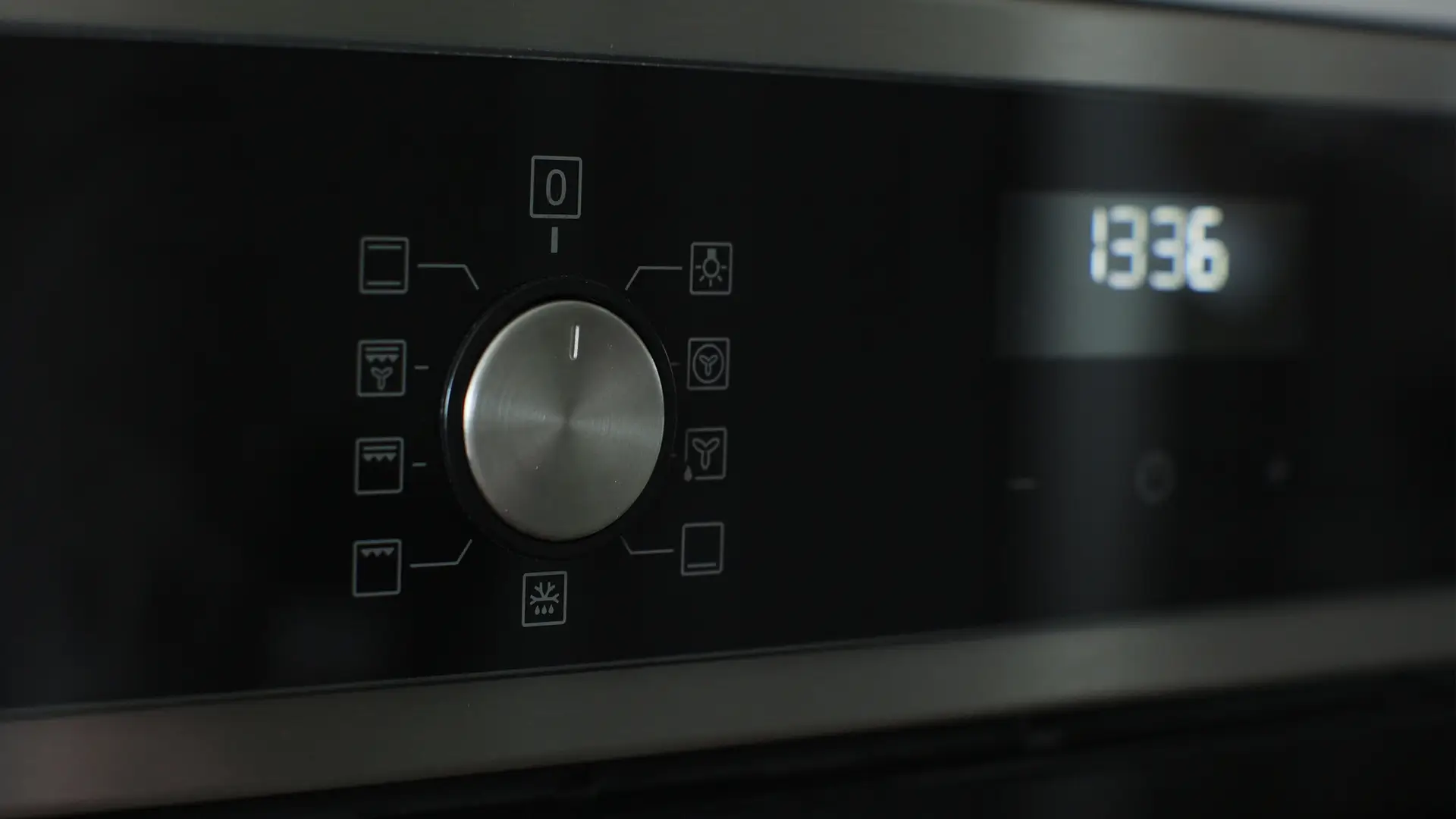
There is no universal standard for oven symbols. Each manufacturer uses their own iconography, which means the same function can look noticeably different across brands. The underlying principle is always the same: a fan shape represents fan circulation, horizontal lines represent heating elements (top or bottom depending on position), a zigzag line typically represents the grill, and a snowflake or water droplet represents defrost. Your appliance manual will show the exact symbols for your specific model alongside their names.
The pizza function is genuinely better for pizza than true fan alone because it emphasises base heat specifically, which is the key to a crisp crust. True fan distributes heat evenly from the rear, which is excellent for most cooking but does not concentrate heat at the base in the same way. If your oven has a pizza function, use it for pizza and flatbreads. If not, the closest alternative is true fan + base heat, or base heat + fan. Preheating the oven fully and using a preheated stone or dark metal tray on a low shelf makes a significant difference regardless of mode.
Vapour clean uses steam at a low temperature to loosen baked-on grease so it can be wiped off manually. It takes around 20–30 minutes, uses minimal energy, and is suited to lightly soiled ovens or routine maintenance. Pyrolytic clean heats the oven to around 470°C to incinerate all residue completely, leaving only ash. It takes 2–3 hours, uses significant electricity, and locks the oven door during the cycle for safety. Pyrolytic is necessary for a heavily soiled oven; vapour clean is suitable for maintenance between deep cleans.
Key takeaways
The two most important settings to understand are conventional (top and bottom heat, no fan; best for cakes and bread) and true fan (rear element and fan; best for roasting, batch baking, and even multi-shelf cooking).
Reduce temperature by 20°C when using any fan mode with a recipe written for a conventional oven.
True fan and fan assisted are different: fan assisted adds a fan to existing top and bottom elements; true fan has its own rear circular element and no top or bottom elements active.
For pizza and pastry with crisp bases, use the pizza function or true fan + base heat on a low shelf with a preheated tray.
For grilling thick food, grill and fan or grill and true fan gives more even results than full grill alone, as the fan carries heat to the sides and interior.
Vapour clean is for routine maintenance; pyrolytic clean is for a thorough deep clean. Always remove racks before pyrolytic cycles.
Not every oven has every function. Your oven’s manual is the definitive guide to which modes your specific model includes and how each symbol looks on your control panel.
Browse our latest articles covering appliance tips, energy-saving advice, and expert guidance – designed to help you choose, use, and get the most from your kitchen appliances.
Discover why your induction hob isn’t detecting your pan and how to fix it with our quick troubleshooting guide. Check compatibility, size, and setup today.