How Self-Cleaning Ovens Work: The Go-To Guide
What Is a Self-Cleaning Oven?
A self-cleaning oven is designed to reduce — or in many cases eliminate — the need for manual scrubbing and caustic chemical sprays. Rather than leaving you to tackle baked-on grease by hand, it uses a built-in cleaning system that works autonomously, either during a dedicated cleaning cycle or continuously as you cook.
The three main approaches use very different methods to achieve the same goal: a clean oven cavity with minimal effort on your part. Some burn residue away at extreme temperatures, others oxidise grease gradually at normal cooking heat, and some loosen light soiling with steam. The right one for you depends on how often you cook, how messy things tend to get, and how much energy you want to use.
The Three Types of Self-Cleaning Oven
Each cleaning method tackles grease and grime differently. Here’s a quick overview before we go into detail on each one.
Pyrolytic
Heats the cavity to 480–500°C, incinerating residue to fine ash. The most thorough clean available.
Catalytic
Porous liners absorb and oxidise grease during normal cooking above 200°C. Cleans continuously, no cycle needed.
Steam
Uses water at low temperatures (~100°C) to loosen light soiling. Quick, quiet, and energy-efficient.
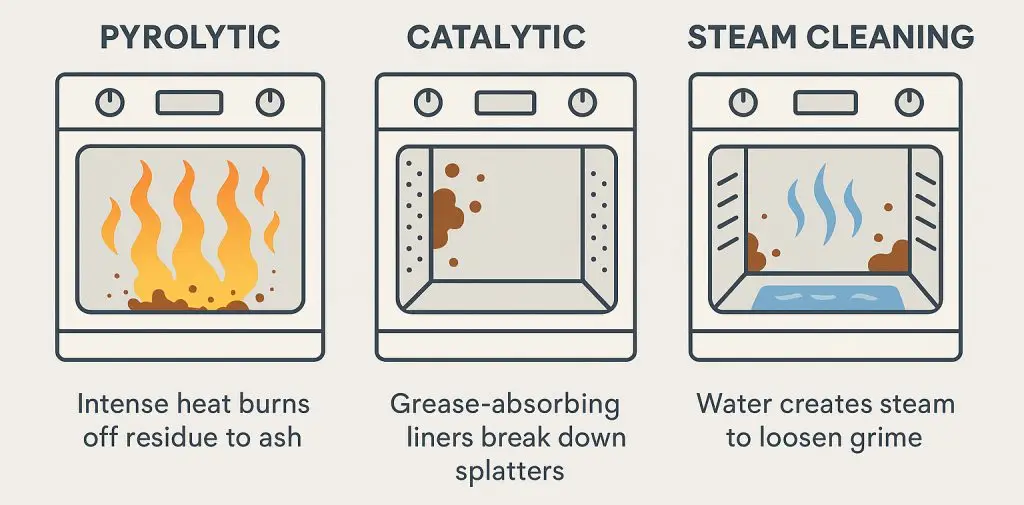
The three self-cleaning methods — pyrolytic, catalytic, and steam — each suit different cooking habits and cleaning preferences.
At a glance: comparison table
| Type | How it works | Cleaning power | Ease of use | Energy demand |
|---|---|---|---|---|
| Pyrolytic | 480–500°C cycle burns residue to ash | ★★★★★ | ★★★☆☆ | High |
| Catalytic | Porous liners oxidise grease during cooking | ★★★☆☆ | ★★★★☆ | Low |
| Steam | Water and heat loosen light grime at ~100°C | ★★☆☆☆ | ★★★★★ | Very low |
How Pyrolytic Cleaning Works
Pyrolytic cleaningFrom the Greek “pyro” (fire) and “lysis” (dissolution) — literally burning matter down to its simplest form. is the most powerful self-cleaning technology available in domestic ovens. During the cycle, the oven cavity reaches temperatures between 480°C and 500°C — far exceeding normal cooking heat — which causes all organic residue (grease, food splatter, sugary spills) to oxidise and reduce to a fine white ash. Once the oven cools, you simply wipe it away with a damp cloth.
The process is entirely chemical-free and, thanks to the oven’s heavy-duty insulation, the exterior remains much safer to touch than the extreme internal temperature might suggest. A mechanical interlock keeps the door firmly locked throughout and only releases once the internal temperature drops to a safe level — typically around 300°C or below, depending on the model.

Step-by-step: running a pyrolytic cycle
Prepare the ovenRemove all racks, trays, and accessories unless your model’s manual confirms they are pyrolytic-safe. Most standard racks will warp or discolour at these temperatures. Wipe away any large pieces of baked-on food first — this reduces smoke and shortens the cycle.
Select the cycleClose the door and choose the pyrolytic function on the control panel. Many models offer multiple intensity levels (for example, a 90-minute light clean or a 2–3 hour heavy clean) so you can match the cycle to how dirty the oven actually is.
Door locks automaticallyThe oven’s mechanical interlock engages immediately. The door cannot be opened while the cycle runs or while the cavity remains above a safe temperature. Keep children and pets away from the appliance.
High heat incinerates residueThe oven climbs to 480–500°C and holds that temperature, breaking down grease and food debris through pyrolysis. The full cycle typically takes between 1.5 and 3 hours depending on the model and the chosen setting.
Oven cools and unlocksOnce the cycle finishes, the oven begins to cool. The door automatically unlocks once the internal temperature falls to a safe level — this can take up to an hour after the cycle ends, so factor this into your timing.
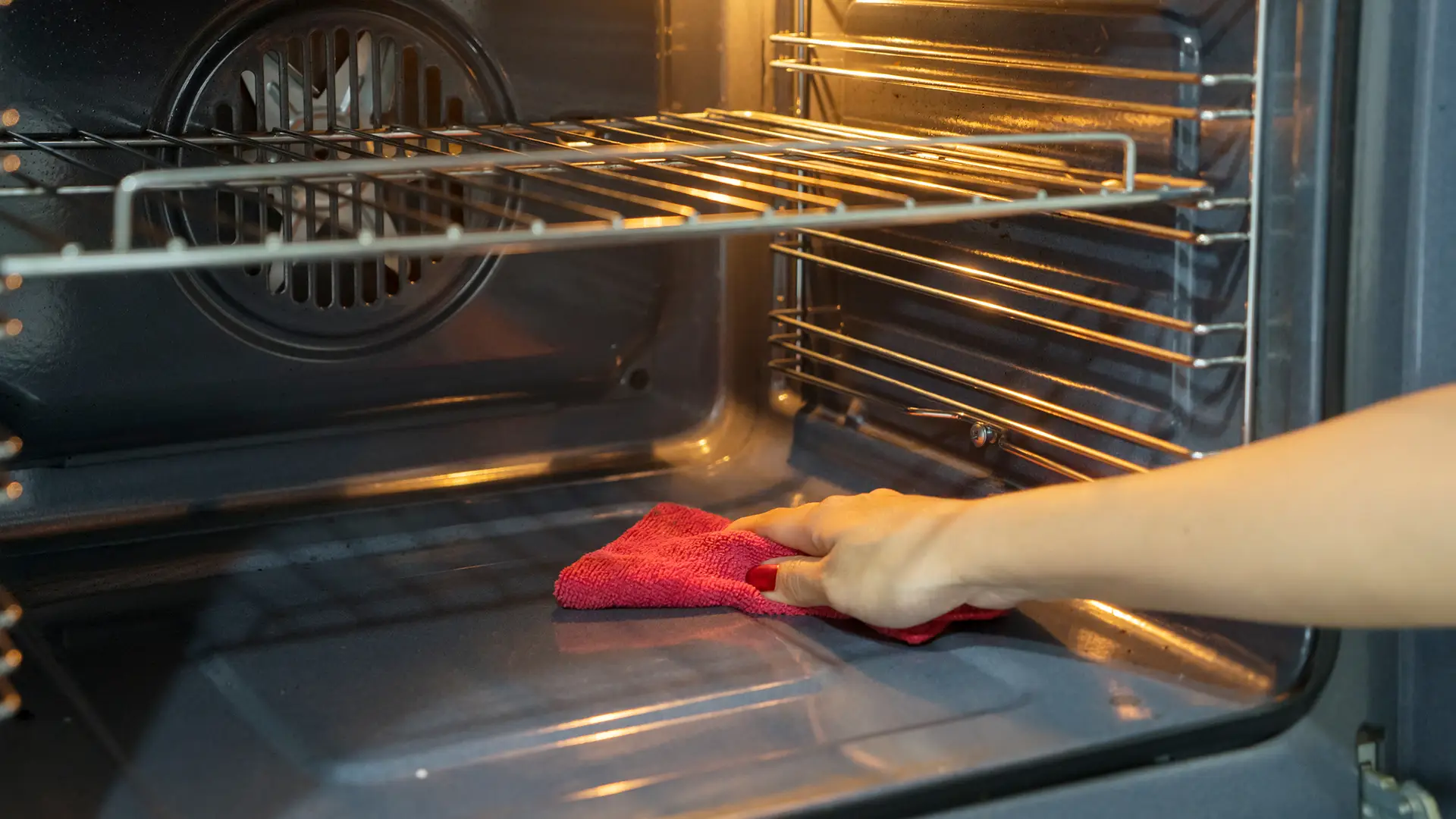
Wipe away the ashUsing a damp cloth or sponge, wipe out the fine residual ash. The oven should be almost entirely clean. A light wipe of the door glass with a mild cleaner finishes the job.
How Catalytic Cleaning Works
Catalytic cleaning takes a fundamentally different approach: rather than running a dedicated cycle, it works passively in the background every time you cook. The oven walls are lined with specially formulated porous enamel panels — usually containing metal oxide compounds such as cerium(IV) oxideA common catalytic agent that accelerates the oxidation of grease at relatively low temperatures., manganese oxide, or copper oxide — that act as oxidation catalysts. When the oven reaches above 200°C during normal use, these liners begin absorbing and breaking down grease splatters into carbon dioxide and water vapour.
The result is an oven that largely cleans itself as you roast, bake, and grill, without you ever selecting a dedicated cleaning function. It’s a practical, low-effort approach well suited to households that use their oven regularly at higher temperatures.

What catalytic liners can and cannot do
Catalytic liners are effective at handling everyday grease splatter from roasting and baking, but they have limits. The oven floor, door glass, and any areas not covered by a liner still require manual cleaning. Heavy sugar-based spills — from sauces, fruit, or baked puddings — can block the liner’s pores and reduce its effectiveness over time.
- Avoid scrubbing or using abrasive cleaners on catalytic liners — this damages the porous surface and reduces their performance permanently.
- Don’t cover liners with foil or large trays that prevent grease from reaching the catalytic surface.
- Liners do not clean at low temperatures — if you regularly cook below 200°C, grease will accumulate rather than oxidise.
- Expect to replace liners after approximately five to six years, depending on usage.
How Steam Cleaning Works
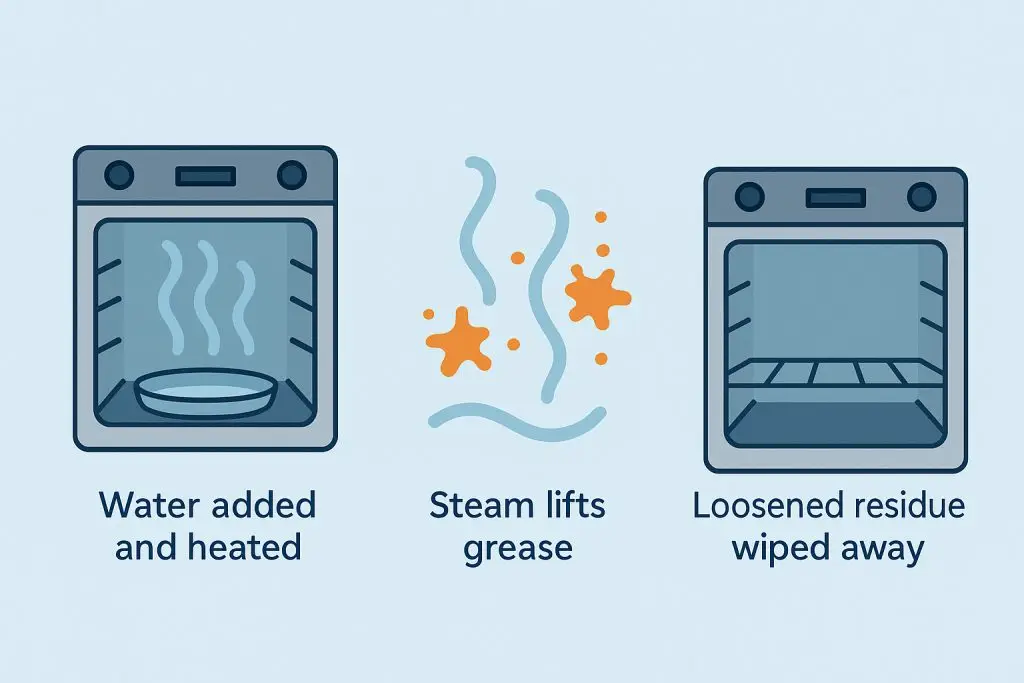
Steam cleaning — sometimes called hydrolytic cleaning — is the gentlest of the three methods. It uses a small amount of water, heated to around 100°C, to generate steam inside the oven cavity. The moisture softens light grease and fresh food residue, making it much easier to wipe away by hand. The whole process typically takes 20–40 minutes, and because temperatures remain low, there’s no locking mechanism and no need to wait for the oven to cool down before opening the door.
It’s best thought of as a regular maintenance tool rather than a deep-clean solution. Used frequently after messier meals, it keeps grease from building up to the point where more intensive cleaning becomes necessary.
Step-by-step: running a steam clean
Remove shelves and traysTake out any accessories, then pour the manufacturer’s recommended amount of water into the base of the oven or its designated reservoir. Check your model’s manual for the correct volume — overfilling can cause spills or damage.
Select steam cleanChoose the steam cleaning function from the control panel. The oven heats the water and circulates steam for 20–40 minutes.
Steam softens grimeAs the temperature rises, steam loosens grease, light stains, and fresh food residue from the oven walls and base.
Allow a brief cool-downOnce the cycle ends, leave the door closed for a few minutes before opening to avoid a face full of steam. The oven does not lock, but care is still needed.
Wipe cleanUse a damp cloth or sponge to remove the softened residue and any pooled water. Act promptly — if the grime dries again, you’ll be back to square one.
Energy Use and Safety Tips
Understanding the energy demands of each cleaning method helps you use your oven in the most cost-effective way. The differences are significant: a single pyrolytic cycle uses more electricity than multiple steam clean sessions combined.
🔥 Pyrolytic
High — a typical 150-minute cycle uses over 3 kWh. Best reserved for occasional deep cleans rather than routine use.✨ Catalytic
Low — cleans continuously at normal cooking temperatures. No additional energy cost beyond your usual cooking.💧 Steam
Very low — runs at ~100°C for under 40 minutes. Minimal electricity use, making it the most energy-efficient option.For guidance on running appliances efficiently at home, the Energy Saving Trust offers practical advice on reducing household energy consumption.
Safety by cleaning type
Pyrolytic
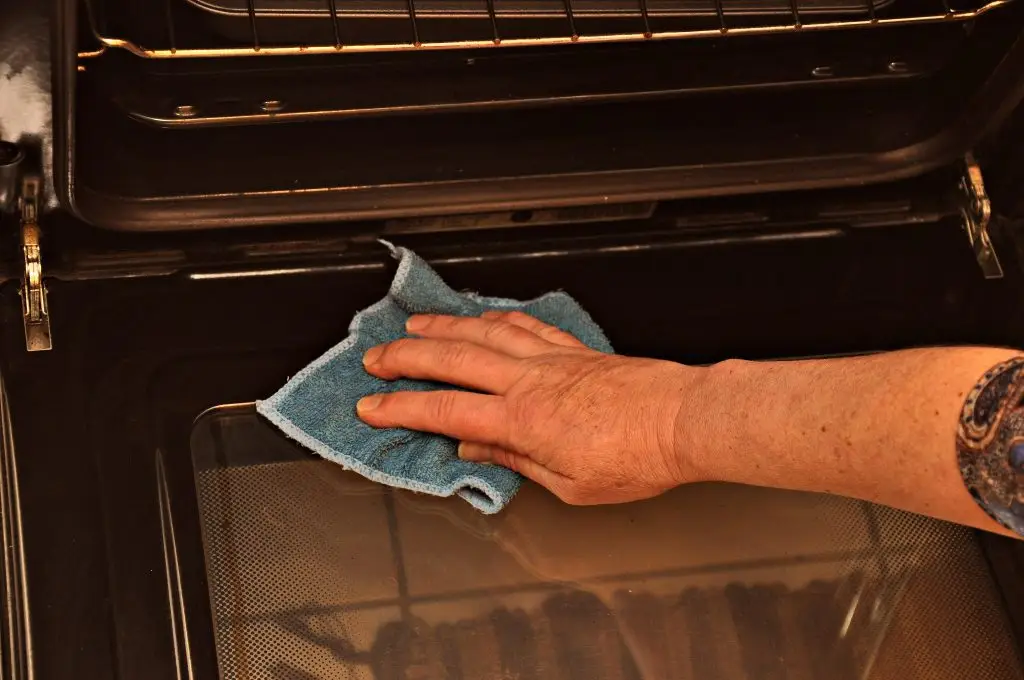
Ventilate the kitchen thoroughly — open windows and run the cooker hood before starting the cycle. Remove all racks and accessories unless the manual confirms they are pyrolytic-safe. Keep children and pets out of the kitchen throughout the cycle and during the cool-down period, since oven surfaces become significantly hotter than during normal cooking.
Catalytic
Never scrub catalytic liners or use chemical oven cleaners on them — both permanently damage the porous surface. Avoid blocking the liners with foil or oversized trays. If a liner becomes cracked or saturated, replace it rather than continuing to use it.
Steam
Only use the water amount specified in your oven’s manual — too much can cause spills or damage the base. Let the oven sit for a few minutes after the cycle before opening the door. Wipe away pooled water and loosened grime promptly so it doesn’t dry back onto the surface.
Maintenance Tips to Get the Most From Your Oven
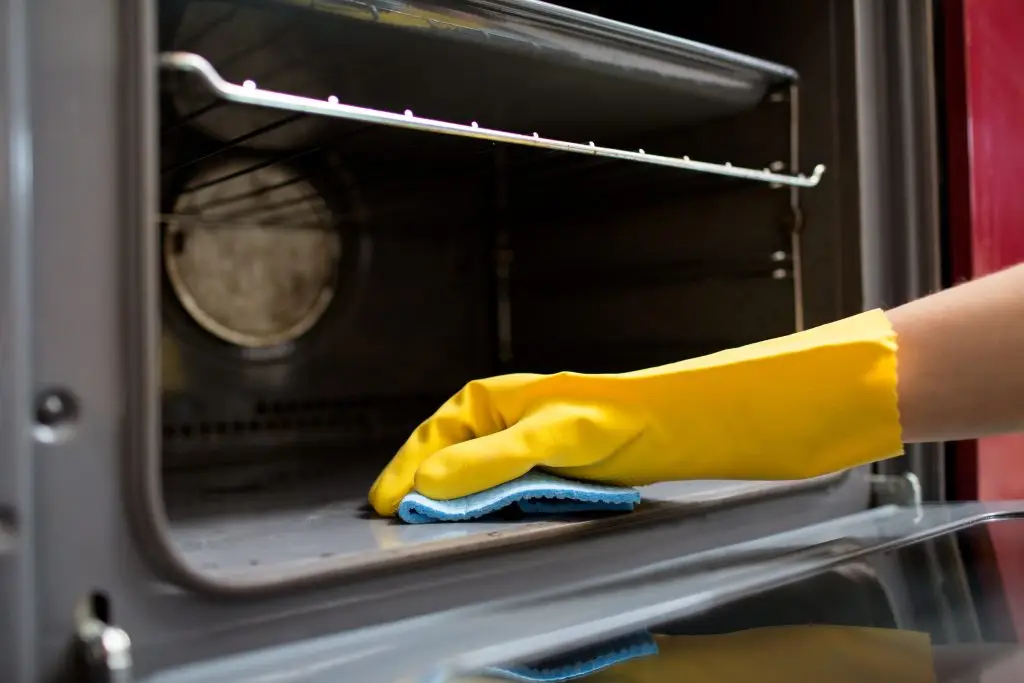
Even the best self-cleaning system works better when supported by a few simple habits. The single most effective thing you can do is wipe away visible spills once the oven has cooled — catching them early prevents the carbonised build-up that puts any cleaning system under strain.
For pyrolytic ovens, running the cycle every couple of months is sufficient for most households, though heavily soiled ovens may need it more often. Choose a time when windows can be opened and the kitchen left ventilated. For catalytic ovens, cooking regularly at high temperatures keeps the liners active — if you mostly use lower settings, supplement this with the occasional high-temperature empty run at 220–250°C. Steam cleaning ovens benefit most from frequent, short cycles after messy meals rather than being left until significant build-up has occurred.
One area all three systems leave largely to you is the oven door glass. This should be cleaned separately with a mild detergent and a non-abrasive cloth. If your oven has removable inner glass panels, cleaning them individually makes the job much easier. For more detail on keeping the wider appliance in good shape, see our guide to oven care and maintenance on the CATA blog.
Is a Self-Cleaning Oven Worth It?
For most households, the answer is yes — but the right type varies. A pyrolytic oven makes the most sense if you cook frequently and want a near-effortless deep clean every few months. The upfront cost is higher than a standard oven, but the saving in time, effort, and chemical cleaners adds up quickly over the appliance’s lifespan.
| Cleaning type | Best for | Cleaning frequency | Manual effort | Long-term value |
|---|---|---|---|---|
| Pyrolytic | Busy households, frequent roasting | Every 1–3 months | Low — wipe ash after cycle | High, thorough but energy-intensive |
| Catalytic | Regular cooks using high temperatures | Continuous during cooking | Low to moderate — light wiping still needed | Good — efficient but liners need replacing over time |
| Steam | Light or infrequent users | Weekly or after messy meals | Moderate — wipe after every cycle | Moderate — not suited to heavy build-up |
If you’re comparing specific models and weighing up the additional features that come with pyrolytic ovens — such as improved insulation, better energy retention during cooking, and greater temperature precision — it’s worth reading our detailed breakdown of oven buying guides on the CATA blog to find the right fit for your kitchen.
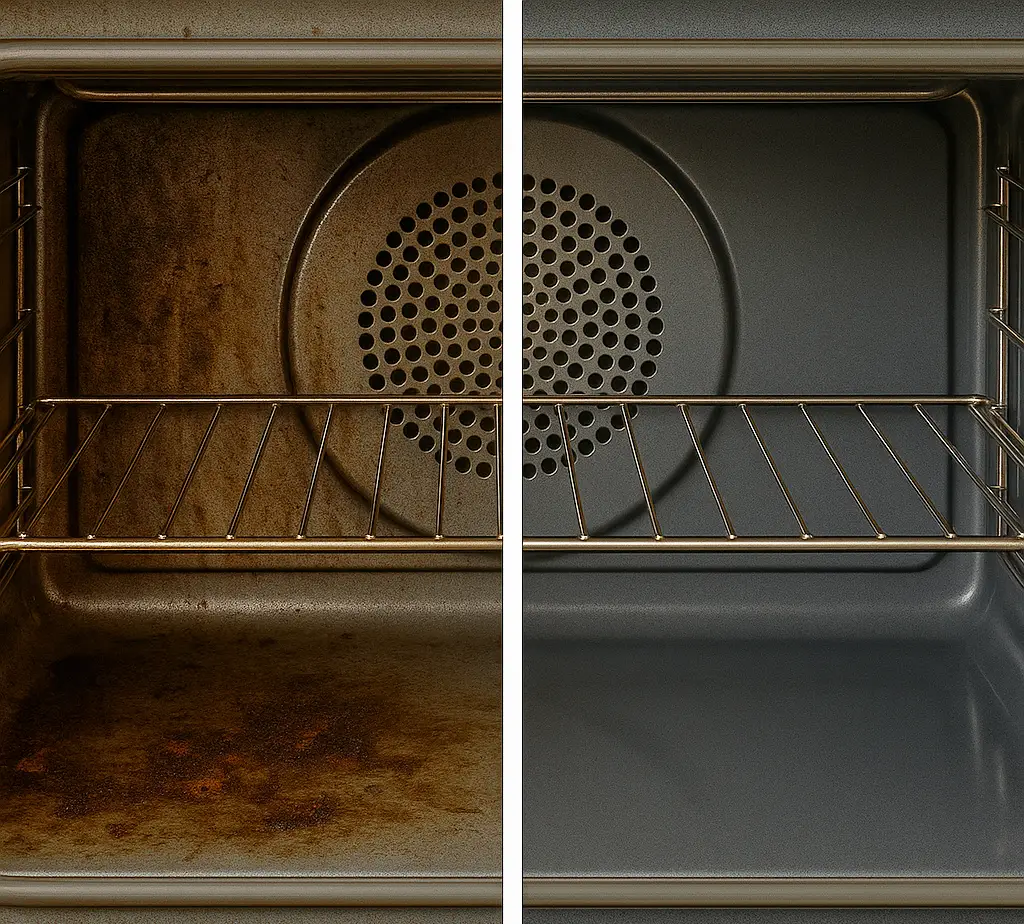
Before and after a pyrolytic cleaning cycle — residue is reduced to fine ash that wipes away easily.
Frequently Asked Questions
Key Takeaways
- Pyrolytic cleaning is the most powerful method, using 480–500°C heat to reduce residue to ash. It requires a dedicated cycle of 1.5–3 hours and uses the most energy, but delivers the deepest clean.
- Catalytic liners clean passively during normal cooking above 200°C. No separate cycle is needed, but liners require eventual replacement and won’t handle heavy spills unaided.
- Steam cleaning is fast, quiet, and energy-efficient, but only effective on light, recent soiling. Use it regularly to prevent build-up, not to shift it once it’s entrenched.
- All three systems still require a brief manual wipe after each cycle. The door glass almost always needs separate attention.
- Pyrolytic ovens are generally worth the higher purchase price for busy kitchens — the time and effort saved, and the avoidance of chemical cleaners, adds up considerably over the appliance’s lifespan.