How Long Does a Dishwasher Cycle Take? Times Explained
If you have ever set your dishwasher going after dinner and found it still running at bedtime, you are not alone. Modern machines can take a lot longer than people expect, and the programme you choose makes a big difference. Here is how long each cycle really takes, what the machine is doing all that time, and why the greenest setting is also the slowest.
Most dishwasher cycles take between 1.5 and 4 hours. A typical everyday (main or auto) programme runs around 2 to 3 hours, quick washes finish in 15 to 60 minutes, and eco cycles are the longest at up to roughly 4 hours.
How long does an average dishwasher cycle take?
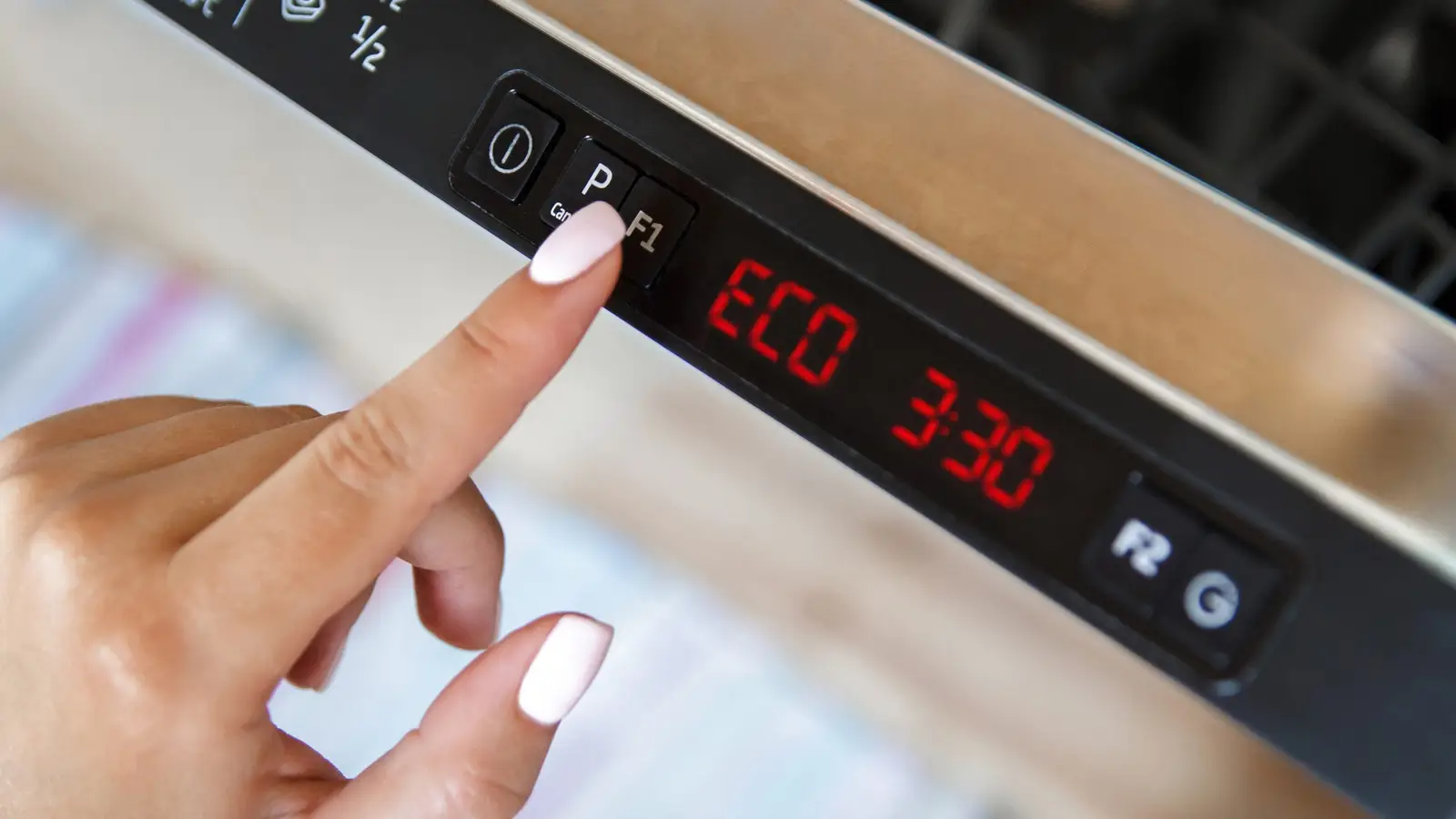
Across all the common programmes, a dishwasher cycle usually lasts somewhere between 1.5 and 4 hours. The everyday main or auto programme most people use sits in the middle of that range. Independent testing by consumer group Which? found the main wash averages about 2 hours 30 minutes, while eco mode runs closer to 4 hours.
The single biggest factor is which programme you select, so it helps to know roughly what each one is for and how long it takes.
Dishwasher cycle times by programme
| Programme | Typical time | Best for |
|---|---|---|
| Quick / rapid / express | 15 to 60 min | Lightly soiled dishes you need back fast |
| Glass / delicate | 1 to 2 hours | Fragile glassware at lower temperatures |
| Auto / sensor | 1.5 to 3 hours | Everyday mixed loads (adjusts to how dirty they are) |
| Everyday / normal / main | 2 to 2.5 hours | Standard daily washing |
| Intensive / pots and pans | 2 to 4 hours | Baked-on grease and heavily soiled cookware |
| Eco | 3 to 4 hours plus | Most loads, at the lowest running cost |
| Rinse / pre-rinse | About 15 min | Holding dishes between loads, no detergent |
Times vary between manufacturers and models, and adding options such as extra dry or a sanitise rinse will push them up. Always check your handbook for the exact figures on your machine.
Why is the eco cycle the longest?
It feels backwards that the setting designed to save energy takes the most time, but there is a good reason. Heating water is where a dishwasher spends most of its electricity. The eco programme heats the water to a lower temperature, usually around 45 to 55C instead of 65C or more, then makes up for the gentler heat by washing for much longer. That extra soaking time lets the enzymes in modern detergent do the hard work instead of brute-force heat.
The payoff is real. Which? estimates that switching to eco can cut your dishwasher running costs by around 30 percent over a year, even though each load takes longer. Our guide to the most energy-efficient dishwasher cycles goes into more detail on when to use it.
Does a quick wash actually save energy?
This is the one that surprises people. A quick wash saves time, but it does not save energy or water. To finish in a fraction of the time, the machine has to heat water fast and use more of it, so a rapid cycle often uses more energy and water than the longer main programme, and cleans and dries slightly less well. In other words, quick wash is about speed, not savings.
What happens during a dishwasher cycle?
All that time is not wasted. A full programme moves through several distinct stages, and drying in particular can add a big chunk to the total.
- Pre-wash. A quick rinse loosens and washes away loose food before the main event, usually without detergent.
- Main wash. Detergent is released and the water is heated to the programme temperature while the spray arms do the cleaning. This is the longest stage.
- Drain. The dirty, greasy water is pumped out of the machine.
- Rinse. Fresh water rinses detergent residue off the dishes.
- Hot rinse. A final hotter rinse, with rinse aid, helps sanitise the load and makes drying more effective.
- Dry. Depending on the model this uses a heating element, residual heat from the hot rinse (condensation drying), or an automatically opening door.
What affects how long a cycle takes?
- The programme you pick. By far the biggest factor, as the chart above shows.
- How dirty the dishes are. Auto and sensor cycles measure how cloudy the water is and run longer for heavily soiled loads.
- Your incoming water temperature. A cold-fill machine in winter has more heating to do, which adds time.
- Extra options. Adding extra dry, sanitise or a steam boost all extend the total.
- Load size and how you stack it. Overloading blocks the spray arms and can trigger a longer wash.
Why do modern dishwashers take longer than older ones?
Older machines blasted dishes with very hot water for a shorter time, which was quick but wasteful. Today energy and water efficiency standards, shown on the UK energy label, push manufacturers to use less of both. The way to clean well on less water and lower heat is to wash for longer and let modern detergents work. So the longer cycle is a sign your dishwasher is being economical, not slow for the sake of it. If you want the numbers behind this, see how much water a dishwasher really uses per cycle.
Key takeaways
- Most cycles take 1.5 to 4 hours; the everyday main or auto programme averages around 2.5 hours.
- Quick washes finish in 15 to 60 minutes but use more energy and water, so they only save time.
- Eco is the longest cycle at up to about 4 hours, yet it is the cheapest to run and can save roughly 30 percent a year.
- Lower temperatures and longer soak times are how modern machines clean while using less energy and water.
- Soil level, water temperature and extra options like heated drying all change the total time.
Frequently asked questions
The everyday or main programme usually takes 2 to 2.5 hours. Independent testing puts the average at around 2 hours 30 minutes.
Eco heats the water to a lower temperature and washes for longer so detergent enzymes do the work. It is the slowest cycle but the cheapest to run.
No. Quick washes often use more energy and water than the main cycle because the machine has to heat water rapidly. They save time, not money.
Yes, use a quick or express programme, or a speed or turbo option if your machine has one. Expect higher energy use and slightly poorer cleaning and drying.
Drying can add anywhere from 20 minutes to an hour, depending on whether the machine uses a heating element, condensation drying, or an auto-opening door.
Energy and water efficiency standards mean newer machines use lower temperatures and less water, and make up for it with longer wash times.
Looking for a quiet, efficient dishwasher that fits neatly into your kitchen? Explore the CATA range of integrated dishwashers.
Browse CATA dishwashers