Home » Oven Guides & Advice » How to Bake an Even Cake in a Fan Oven
How to Bake an Even Cake in a Fan Oven
A fan oven should be a baker’s best friend. The circulating air spreads heat right around the cavity, so in theory everything cooks at the same rate. In practice, that same moving air is exactly why cakes come out domed, lopsided or dry at the edges when the settings are not adjusted for it. Get a handful of things right and a level, evenly cooked sponge is completely repeatable.
Fan oven vs conventional oven: what actually changes
A conventional oven heats from top and bottom elements, and because heat rises it runs hotter near the top. A fan oven adds a fan at the back, usually with its own heating element around it, and pushes hot air around the whole cavity. That gives you a more uniform temperature top to bottom, faster cooking, and the freedom to use more than one shelf at a time.
The trade-off is the reason your cake misbehaves. Moving air transfers heat more aggressively and strips moisture from surfaces, so the edges of a cake set and colour noticeably faster than the middle. Manage that head start and everything else falls into place. If you want to go deeper on the modes themselves, our guide to true fan versus fan-assisted baking breaks down when to use each.
Why do cakes bake unevenly in a fan oven?
Almost every uneven bake traces back to one of these causes. Work through them and you will usually spot the culprit straight away:
- The temperature is too high. A fan effectively bakes hotter than the same number on a conventional dial, so a recipe written for a conventional oven will overcook the outside.
- The cake is too close to the fan. Push a tin to the back of the cavity and one side gets blasted with hot air while the front lags behind.
- The oven is overcrowded. Tins touching each other, touching the walls, or blocking the vents interrupt the airflow the oven relies on.
- The batter was not levelled. An uneven start bakes into an uneven finish.
- The real temperature is off. Oven dials drift over time, so the reading and the reality can be 10C to 20C apart.
- The door keeps opening. Every peek drops the temperature and disturbs the rise.
The right temperature for cakes in a fan oven
This is the single biggest fix. As a rule, drop the temperature by around 20C from what a conventional recipe tells you. If a recipe says 180C, set your fan oven to 160C. Most sponges are happiest around 160C fan. This 20C rule is the same guideline used by consumer testing body Which?, which notes that skipping the adjustment cooks the outside too quickly.
| Conventional recipe says | Set your fan oven to | Gas mark |
|---|---|---|
| 160°C | 140°C | 3 |
| 170°C | 150°C | 3 to 4 |
| 180°C | 160°C | 4 |
| 190°C | 170°C | 5 |
| 200°C | 180°C | 6 |
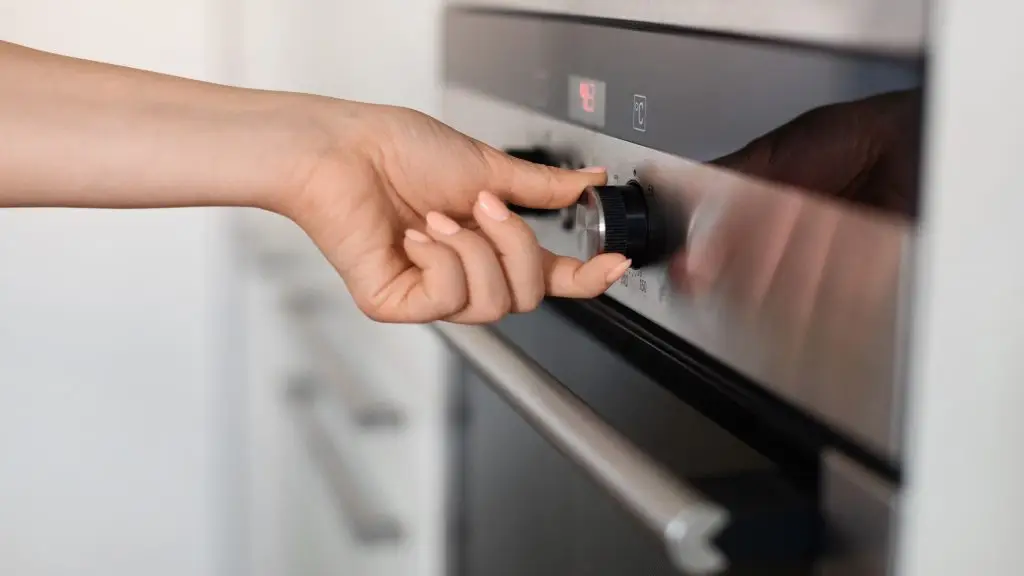
Two habits make the temperature stick. First, preheat fully so the cavity is at target before the tin goes in. Second, keep an inexpensive oven thermometer on the middle shelf for a week or two and compare it with the dial, so you know your oven’s true reading and can nudge the setting to match.
Where to put your cake: shelf position
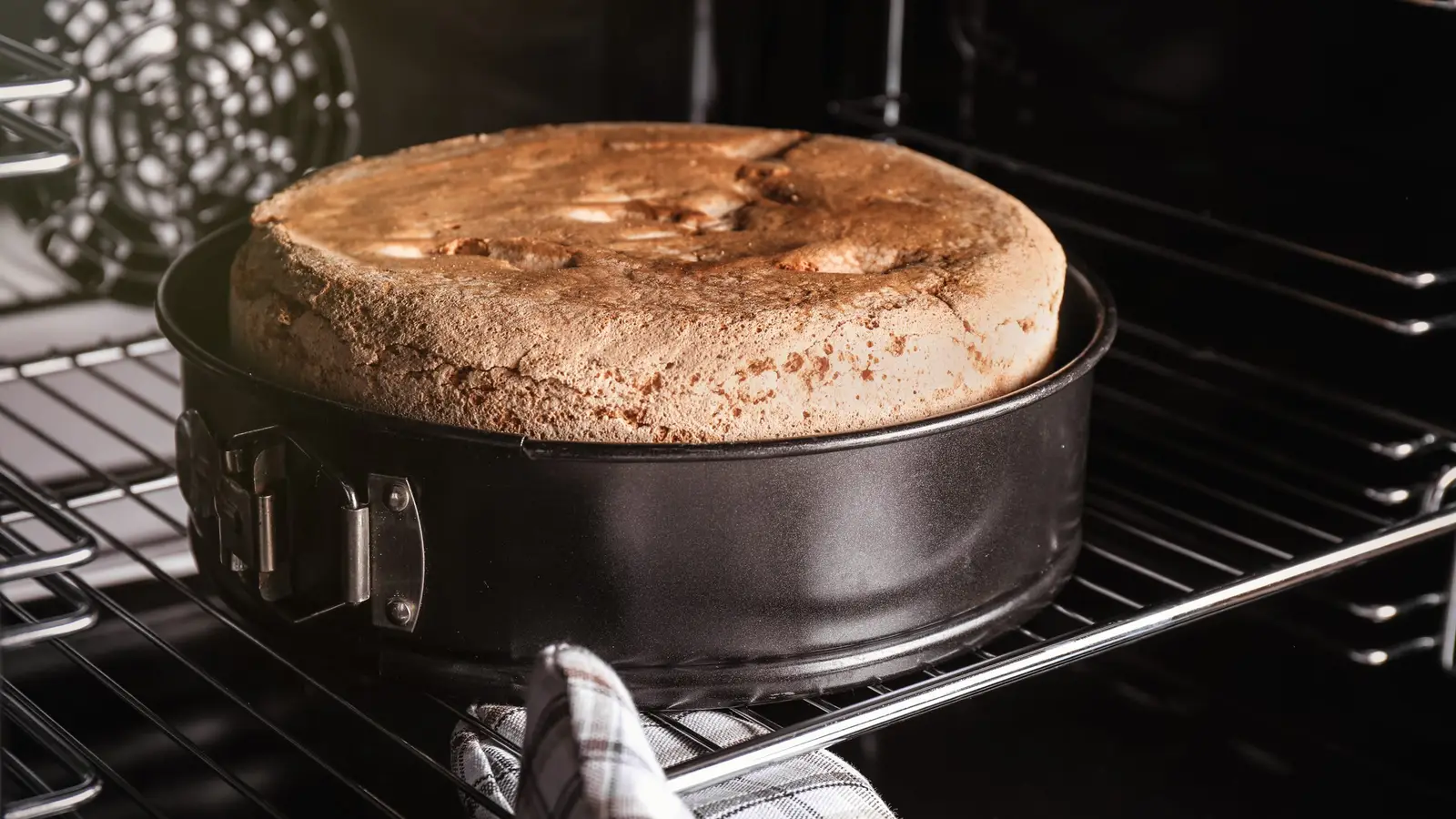
For a single cake, the middle shelf with the tin centred is the sweet spot. It sits in the most balanced part of the airflow, away from the fiercest push near the fan and the cooler zone by the door.
The genuine advantage of a fan oven is that you can bake more than one cake at once and expect them to cook at a similar rate. Space the shelves evenly, leave a gap around every tin so air can move, and if you know your oven has a hot spot, swap the tins around at the halfway mark.
Tins, lining and the cake-strip trick
Your tin plays a bigger role than most people expect. Light-coloured, dull metal tins reflect heat and brown gently and evenly. Dark or heavily non-stick tins absorb more heat and colour the crust faster, which fights against an even bake. Match the tin size to the recipe too, because batter spread too thin bakes fast at the rim.
The best-kept tip for a flat, even top is a cake strip. This is a damp, insulating band wrapped around the outside of the tin. It slows down the edges so the centre has time to catch up, which means far less doming and no dry, overcooked crust. You can buy purpose-made strips or make one from a folded strip of damp towel or foil pinned around the tin.
One more small move before the oven: level the batter with the back of a spoon and scoop a shallow hollow into the centre. As the cake rises, that dip fills in and helps the top finish flat rather than peaked.
Step-by-step method for an even bake
- 1Preheat fully. Set the fan oven to your recipe temperature minus 20C and let it come all the way up to heat before anything goes in.
- 2Prep the tin. Grease and line, and wrap a damp cake strip around the outside if you want a flat top.
- 3Fill and level. Divide the batter evenly, smooth the surface, and press a shallow hollow into the centre.
- 4Position it well. Middle shelf, tin centred, with space around it so air can circulate.
- 5Leave the door shut. Do not open it for at least the first three quarters of the baking time.
- 6Check early. Test with a skewer at the earliest time in the recipe range. It should come out clean or with a few dry crumbs.
- 7Cool properly. Rest in the tin as directed, then turn out onto a rack so the base does not go soggy.
Troubleshooting an uneven cake
| What you see | Likely cause | Fix |
|---|---|---|
| Domed or cracked top | Temperature too high, edges set first | Drop 10C, use a cake strip, hollow the batter |
| Dry, hard edges | Too hot or overbaked | Lower the temperature, check earlier, add a cake strip |
| One side taller or darker | Hot spot or blocked airflow | Rotate at halfway, reposition, do not overcrowd |
| Sunken middle | Underbaked, door opened, or too much raising agent | Bake longer, keep the door shut, check the recipe ratios |
| Pale top, cooked base | Shelf sitting too low | Move the tin to the middle shelf |
| Cooked outside, raw centre | Temperature too high | Lower the temperature and bake a little longer |
Key takeaways
- Reduce the temperature by around 20C from any conventional recipe, so 180C becomes 160C fan.
- Bake on the middle shelf with the tin centred and space around it.
- Use a light, dull metal tin and a damp cake strip for a flat, even top.
- Level the batter, add a shallow central hollow, and keep the door shut.
- Check your oven’s true temperature with a thermometer and adjust the dial to suit.
Frequently asked questions
Yes. Reduce it by around 20C from a recipe written for a conventional oven. If the recipe says 180C, set your fan oven to 160C.
Most sponges bake well at around 160C fan, which is a standard 180C conventional recipe minus 20C. Always cross-check your specific recipe.
The middle shelf, with the tin centred. It sits in the most balanced part of the airflow, away from the fan and the door.
Doming usually means the temperature is too high, so the edges set before the middle has finished rising. Lower the temperature and wrap a damp cake strip around the tin.
Yes, and it is one of the main advantages of a fan oven. Space the shelves evenly, leave room around each tin, and swap them over at the halfway point if your oven has a hot spot.
Less often than in a conventional oven, because the moving air already evens things out. If you notice one side browning faster, rotate the tin at the halfway mark.
Related reading
Upgrading your kitchen? Explore the CATA range of built-in fan ovens designed for even, reliable results.
Browse CATA ovensExplore More Kitchen Advice & Buying Guides
Browse our latest articles covering appliance tips, energy-saving advice, and expert guidance – designed to help you choose, use, and get the most from your kitchen appliances.