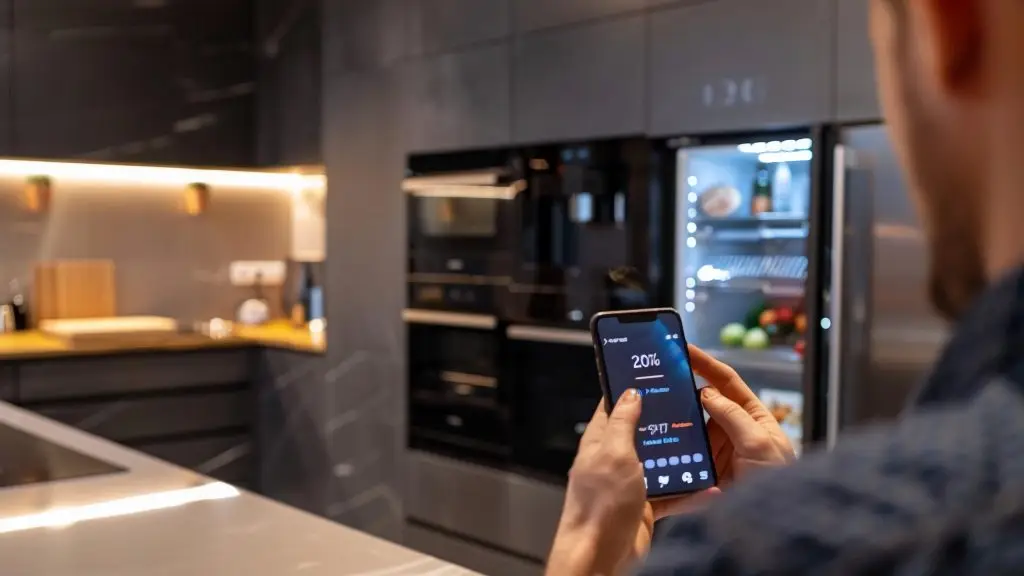
True Fan vs Fan-Assisted Baking: Which Oven Setting Should You Use?
True fan (also called fan-only or convection) circulates heat from a dedicated ring element around the fan, giving even temperature throughout the cavity. Fan-assisted uses the top and bottom elements with the fan to spread that heat more quickly. True fan suits batch baking and delicate items where consistency matters. Fan-assisted suits roasting and dishes that benefit from top browning. Most everyday ovens offer both — knowing which to reach for makes a noticeable difference to results.
How Each Mode Works
True fan (fan oven / convection)
Symbol: fan icon alone
A dedicated circular heating element mounted around the fan at the rear of the oven heats the air, which the fan then circulates continuously around the cavity. Because the heat source is the fan element rather than the top and bottom elements, the temperature is consistent across all shelf positions — food on the top shelf bakes at the same temperature as food on the bottom shelf.
This makes true fan the go-to mode for batch baking — multiple trays of biscuits, a full rack of mince pies — where you need the same result from everything in the oven simultaneously. It also runs efficiently at lower temperatures, which is why recipe books typically specify a temperature 20°C lower for fan ovens than for conventional ones.
The circulating air removes moisture from food surfaces more aggressively than static air, producing crispier exteriors and faster browning. For delicate bakes — soufflés, choux, meringues — this can be a disadvantage, as the moving air can disturb them before they have set.
Fan-assisted (fan with top and bottom heat)
Symbol: fan with top and bottom lines
The top and bottom elements heat the cavity in the traditional way — radiant heat from above and below — while the fan circulates that hot air to distribute it more evenly and speed up cooking. This mode delivers the benefits of radiant heat (better browning from the top element, more even base cooking from the bottom) combined with faster heat distribution from the fan.
Fan-assisted is more versatile for general cooking than true fan. Roast chicken, joints of meat, and casseroles all benefit from the combination of radiant top heat for browning and fan circulation to drive heat into the centre of the food quickly. It is typically the default mode on most ovens for everyday use.
The temperature in a fan-assisted oven is less perfectly even shelf-to-shelf than true fan — the top element creates a slightly hotter zone towards the top of the cavity. This is an advantage for browning the top of a dish while cooking the bottom through, but less suitable for multi-shelf baking where consistency matters.
Which Setting for Which Food
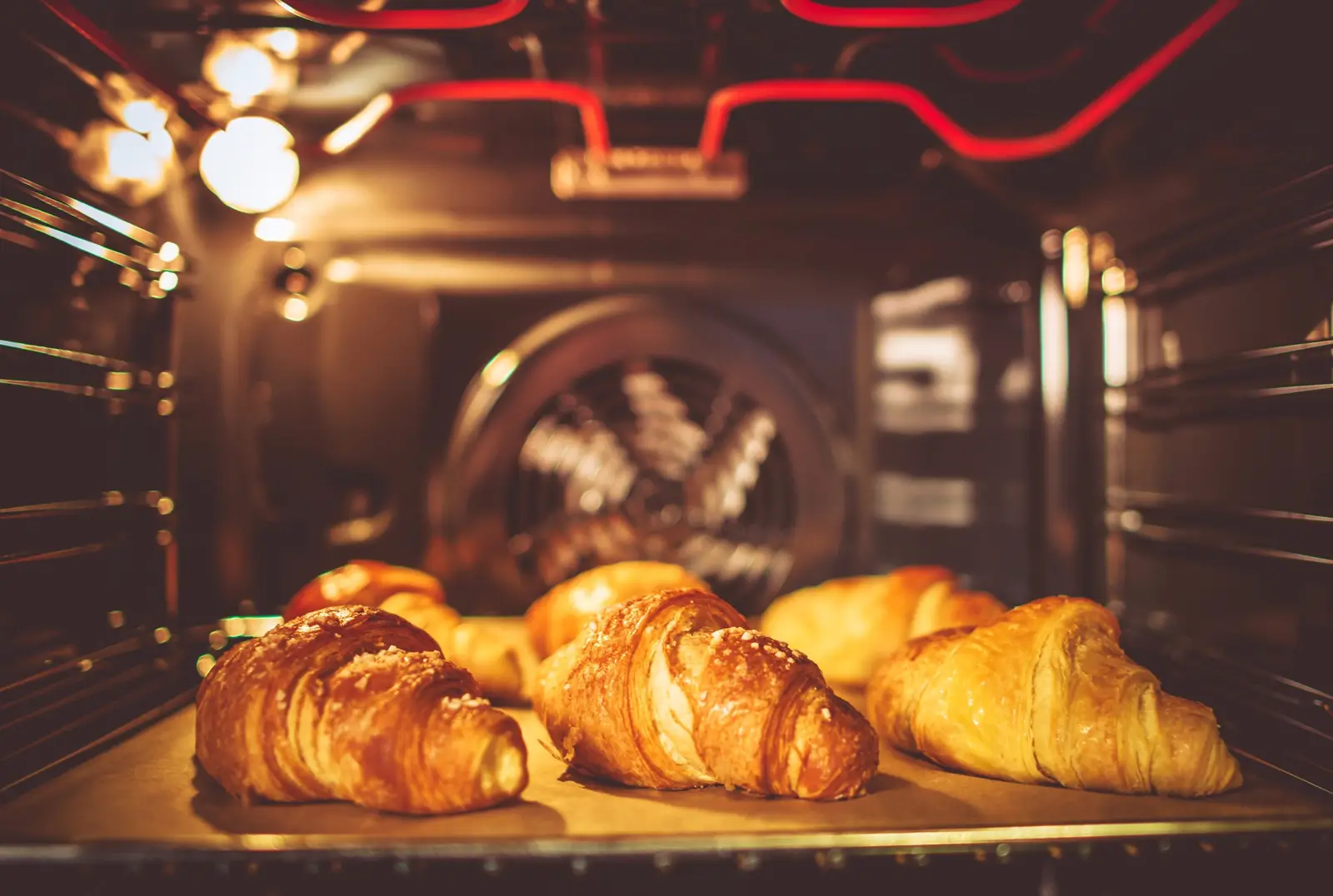
The right mode is determined by what the food needs: consistent even heat across every surface, or directional radiant heat for top browning. The table below covers the most common foods and which mode delivers better results.
| Food | Best mode | Why |
|---|---|---|
| Biscuits and cookies (multiple trays) | True fan | Even temperature across all shelves means every biscuit bakes identically regardless of position. No need to rotate trays. |
| Sponge cakes and layer cakes | True fan | Consistent temperature produces an even rise. Reduce temperature by 20°C compared to the recipe’s conventional setting. Avoid fan-assisted which can set the outer crust before the centre has risen. |
| Bread | Either | True fan gives a crisper crust and more even bake. Fan-assisted gives slightly better oven spring from the top heat. Both work — try true fan at 200°C for most white loaves. |
| Roast chicken and joints of meat | Fan-assisted | Top element browns the skin while the fan drives heat into the meat. Produces the classic combination of crisp exterior and cooked-through interior more reliably than true fan alone. |
| Roast potatoes and vegetables | Fan-assisted | Radiant top heat from the upper element crisps and colours the surface while the fan maintains even temperature throughout the tray. |
| Pastry (shortcrust, puff) | True fan | Even heat from all sides sets the pastry uniformly. True fan is particularly good for blind baking tart cases where a level base is important. Reduce temperature by 20°C from the recipe. |
| Meringues | True fan | Low and slow at 90–100°C. True fan dries meringues evenly without browning. Avoid fan-assisted — the top element risks discolouring the surface before the centre has dried. |
| Soufflés and choux pastry | Either — low fan | These rise from steam inside the batter. Strong fan circulation can disturb the structure before it sets. If your oven has a low fan speed setting, use it. Otherwise, true fan at a reduced temperature is preferable to full fan-assisted. |
| Casseroles and braises (in a dish with lid) | Either | A lidded dish is insulated from the oven environment. Mode makes little difference to the food inside — choose based on what else is in the oven or use fan-assisted for marginal energy efficiency. |
| Pizza | Fan-assisted | High temperature fan-assisted at 220–240°C gives a crisp base from bottom heat and browning on the cheese from the top element. Place the pizza on the lowest shelf. |
Temperature Conversion
Recipes written for conventional ovens (top and bottom heat without a fan) typically need their temperature reduced when using fan modes. The fan circulates hot air more efficiently, meaning the effective cooking temperature is higher than the dial setting — food cooks faster and surfaces can brown before the centre is done if the temperature is not adjusted.
Conventional oven → true fan or fan-assisted
The standard rule is subtract 20°C from the recipe’s conventional temperature when using a fan mode. Cooking time may also reduce by up to 10 minutes for longer-cooking dishes. Check 5 to 10 minutes earlier than the recipe suggests on your first attempt with a new oven.
Things Worth Knowing
True fan is better for batch baking
When baking two or three trays simultaneously, true fan produces the same result on every shelf. Fan-assisted, with its top element, creates a temperature gradient between shelves — the top shelf runs hotter, and trays need rotating to compensate. True fan eliminates this entirely.
Fan modes remove moisture faster
Circulating air is better at extracting moisture from food surfaces than static air, which is why fan modes produce crisper finishes in less time. This is an advantage for biscuits, pastry, and roast potatoes. For dishes you want to remain moist — steamed puddings, certain cakes — reduce the temperature and check earlier than the recipe suggests.
Recipes specify conventional temperature by default
Most UK and European recipe books quote temperatures for conventional ovens unless specifically stated otherwise. If a recipe says 180°C without qualification, assume it means conventional heat and reduce by 20°C for any fan mode. American recipes often assume a fan (convection) oven and may already be calibrated at the lower temperature.
Fan-assisted suits single-shelf cooking best
When cooking one item on one shelf, fan-assisted and true fan produce very similar results. The difference becomes most apparent when using multiple shelves — where true fan’s consistent temperature shows a clear advantage — or when you specifically need the top browning that the upper radiant element provides in fan-assisted mode.
Your oven’s fan does not turn off in fan-assisted mode
A common misunderstanding: fan-assisted mode runs the elements and the fan simultaneously — the fan does not run at reduced speed. The distinction from true fan is the heat source: fan-assisted heats from the top and bottom elements; true fan heats from the rear ring element. The fan circulates heat in both modes.
True fan is slightly more energy-efficient
Because true fan operates at lower temperatures and heats the cavity evenly without hot spots, it typically uses slightly less energy for equivalent cooking results than fan-assisted mode. The difference is modest but measurable over a year of regular baking — particularly relevant if you bake frequently or run multiple long cooking sessions.
CATA’s single oven range and double oven range include multifunction models with true fan, fan-assisted, conventional, and grill modes on a single dial. If your oven is taking longer than expected to reach temperature in either mode, the guide to common oven problems covers the most likely causes and checks.
Common questions answered
Can I use true fan for everything?
For most everyday baking and roasting, yes. True fan delivers excellent results across a wide range of foods and is the most energy-efficient general mode. The exceptions where fan-assisted or conventional may produce better results are dishes specifically benefiting from top radiant browning — gratins, some roasts — or extremely delicate bakes where strong air movement is a risk.
What if my recipe doesn’t say which mode to use?
Assume it means conventional (no fan) and subtract 20°C if using any fan mode. If the recipe is from a UK source published in the last decade, it may already be calibrated for fan ovens — check the recipe introduction or notes for any mention of oven type. When in doubt, start at the lower temperature and check 10 minutes early.
My cakes are sinking in the middle — could my oven mode be the cause?
Possibly. Sinking in the centre can happen when the outside of a cake sets too quickly from aggressive fan circulation, creating a crust before the centre has fully risen and cooked. Try reducing the temperature by a further 10°C and baking on true fan at a lower setting for longer. Position the cake on the middle shelf and avoid opening the door in the first two-thirds of the baking time.
Is fan-assisted the same as fan oven?
No — though the terms are often confused or used interchangeably in casual conversation. A fan oven (true fan) heats from a dedicated ring element around the rear fan only. Fan-assisted heats from the top and bottom elements with the fan circulating that heat. The distinction matters because they behave differently at multiple shelf levels and affect browning differently.