Power Boost on Induction Hobs: When It Helps and When It Wastes Energy
Boost function runs the induction coil at its maximum rated output: typically 3kW to 3.7kW on a single zone, compared with 1.5kW to 2.2kW at the highest standard power level. Used for the right tasks, it saves energy by shortening cooking time dramatically. Used for the wrong tasks, it draws maximum power while delivering results no better than a lower setting. The difference is knowing which is which.
What Boost actually does
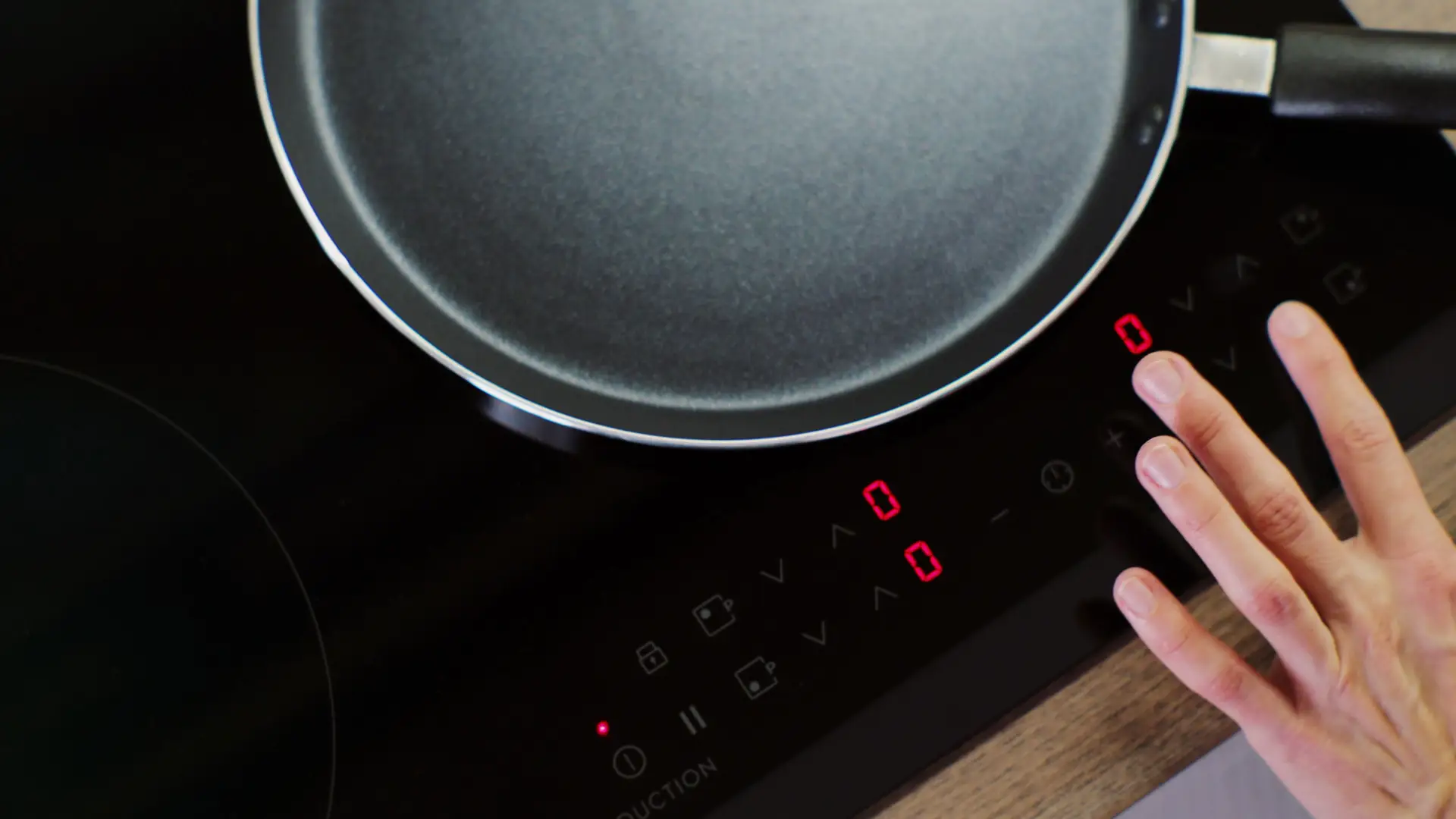
Every induction hob has a maximum power output per zone that it reserves for Boost mode, the setting above the highest numbered level on the dial or slider. When Boost is activated, the coil runs at full rated power continuously until you cancel it or the hob’s automatic time limit cuts in (typically 5 to 10 minutes on most models, to prevent the coil from overheating).
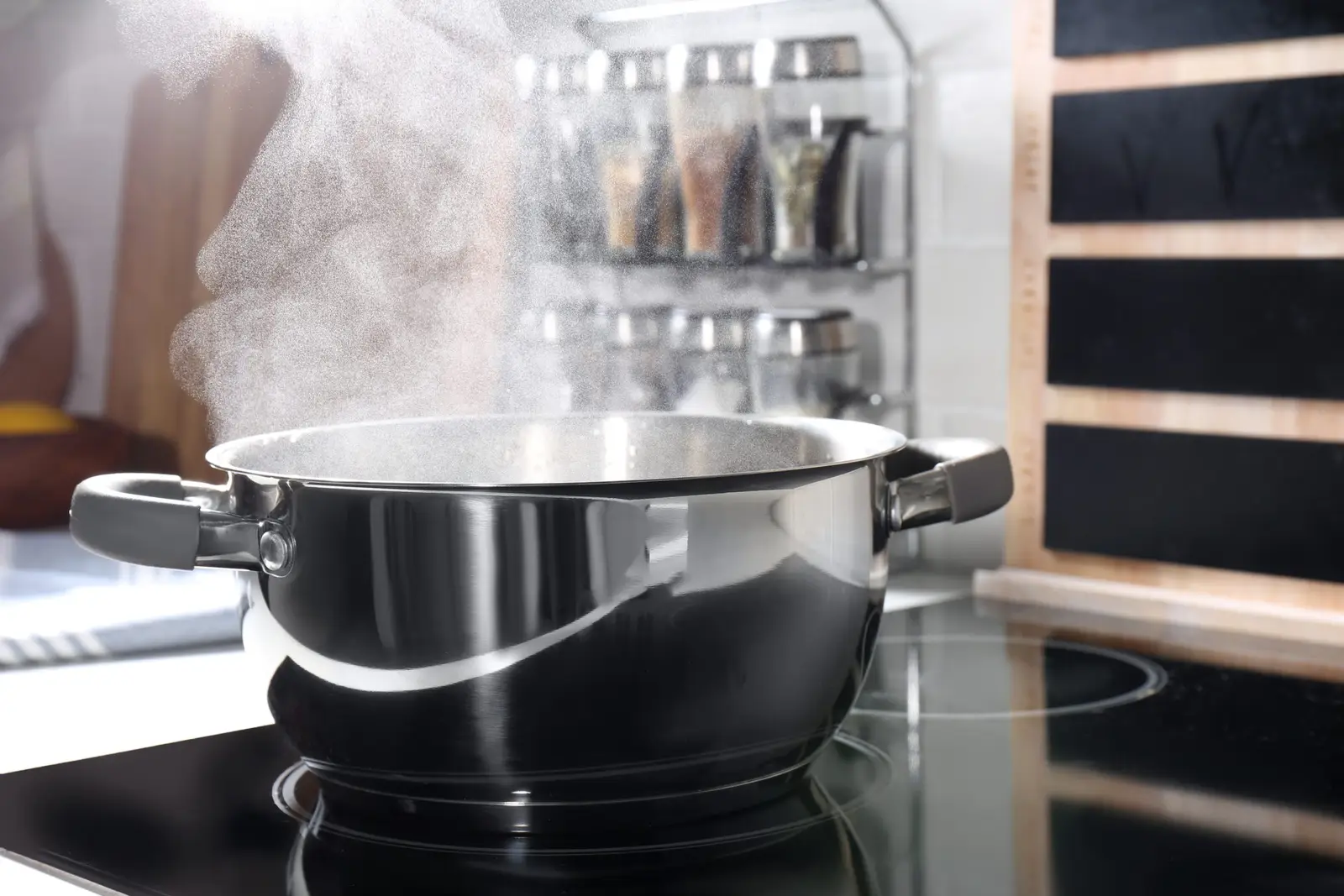
At this output, a litre of cold water reaches boiling in around 3 to 4 minutes instead of 7 to 9 minutes on a high standard setting. The energy consumed is higher per minute, but the total energy used to complete the task is lower because the task is completed much faster. This is the key point the original article stated but never explained: Boost uses more power for less time, and for tasks with a fixed energy requirement (bringing a specific volume of water to the boil), the shorter time wins.
The energy arithmetic of Boost
Boiling 2 litres of water from cold requires roughly the same amount of energy regardless of how fast you do it: around 0.2 kWh. On a 1.8kW standard high setting it takes about 7 minutes. On a 3.5kW Boost it takes about 3.5 minutes. Both use approximately 0.2 kWh. The Boost is not using more energy. It is using the same energy in half the time.
Where Boost genuinely wastes energy is when the task does not have a fixed endpoint that the heat is working toward. If you activate Boost to preheat an empty pan for searing, then sear the meat and immediately reduce to a simmer, the Boost phase brought the pan up to temperature correctly. But if you leave Boost running while trying to maintain a simmer (because the heat-up was fast and you forgot to reduce) you are using 3.5kW to achieve something that 0.8kW would manage perfectly, wasting the difference.
When to use Boost and when not to
| Task | Use Boost? | Why |
|---|---|---|
| Bringing water to the boil (pasta, blanching, stock) | Yes | Maximum power minimises total time and total energy used. Reduce to a simmer the moment the boil is reached. Boost is no longer needed once boiling is established. |
| Rapid preheating a heavy pan for searing | Yes | Cast iron and heavy pans take time to absorb heat. Boost reduces preheat time significantly. Switch to a high standard setting when the pan is up to temperature, before adding food. |
| Reheating a large volume of soup or sauce from cold | Yes | Same principle as boiling water: a fixed energy requirement reached faster. Reduce once hot. |
| Frying at high heat (shallow frying, stir frying) | Depends | Useful for the initial heat-up. Once the oil is at temperature, a high standard setting (level 8 or 9 on a 9-level scale) maintains frying temperature more controllably than Boost, which can overshoot. |
| Simmering sauces or stocks | No | A simmer needs 10 to 15 percent of Boost’s output. Running Boost for a simmer wastes the other 85 to 90 percent as unnecessary heat. Use the lowest setting that maintains a gentle bubble. |
| Melting butter or chocolate | No | Both require very low, controlled heat. Boost would overheat and burn them within seconds. Use setting 1 or 2. |
| Keeping food warm while serving | No | Keep-warm function or setting 1 is the appropriate choice. Boost would rapidly overcook the food. |
| Running multiple zones simultaneously | Use sparingly | Most hobs share total power across zones. Running Boost on one zone while others are active may cause the hob to reduce power to other zones automatically to stay within the circuit limit. Use Boost on one zone at a time. |
The multi-zone power sharing effect
This is the aspect of Boost that most users do not realise until they notice other zones running less powerfully than expected. Most induction hobs have a maximum total power draw, typically 7kW to 7.4kW across all zones. When Boost activates on one zone at 3.5kW, the remaining budget for other active zones drops to 3.5 to 3.9kW shared between them.
The hob manages this automatically, reducing power to other zones rather than tripping the circuit breaker. You may notice a zone that was running at high power drops to a lower effective setting when Boost is activated elsewhere. This is not a fault. It is the power management system working correctly. The practical implication is to activate Boost only when you need it for a specific brief task, then cancel it and return to standard settings rather than leaving it running.
The noise relationship is also worth knowing: Boost mode produces more audible buzzing and pan vibration than standard high settings. If hob noise is a concern, reducing from Boost to the highest standard level is the single most effective noise reduction step available. The induction hob noise guide explains why this happens.
For the broader picture on induction hob running costs and how cooking habits affect energy use, see the kitchen appliance running costs guide. For getting the most out of every zone and power setting, the induction hob beginner’s guide covers daily cooking habits that make a difference. Browse the CATA induction hob range for models across 60cm and 90cm formats with Boost on every zone.
Common questions answered
Does Boost use more electricity than standard high settings?
Per minute, yes. It draws roughly twice the power. For tasks with a fixed endpoint (boiling water, preheating a pan), it uses approximately the same total energy because it completes the task in half the time. For ongoing cooking tasks like simmering, it uses significantly more energy than needed because you are drawing maximum power for a task that requires a fraction of it.
Does Boost permanently damage the hob if used frequently?
Boost is a designed operating mode, not an overload. The hob’s cooling system and power electronics are rated for Boost operation. Most models have an automatic time limit (typically 5 to 10 minutes) that cancels Boost before thermal limits are reached. Using Boost for appropriate short-duration tasks is exactly what it is designed for.
Why does my hob cancel Boost automatically?
The automatic Boost time limit is a thermal protection feature. Running a coil at maximum rated power continuously generates heat in the electronics beneath the glass. The time limit ensures the cooling system can maintain safe temperatures. When Boost cancels, the zone drops to the highest standard power level, not to zero. Cooking continues without interruption.
Can I use Boost on more than one zone at a time?
Technically yes on most hobs, but the total power budget means both zones will not receive full Boost output simultaneously. The hob distributes available power across all active zones, so running Boost on two zones simultaneously gives each zone less than full Boost power. For the fastest boil, activate Boost on one zone at a time rather than splitting the budget.