Can You Put Wooden Boards and Knives in a Dishwasher?
It is tempting to let the dishwasher deal with a greasy board or a pile of knives, especially after preparing raw meat or fish. For both items, though, the honest answer is no. The same hot water, steam and strong detergent that cleans your plates is exactly what damages wood and good blades.
Wooden boards
Do notHeat and moisture make wood swell, warp, crack and lose its protective oils, often after a single cycle.
Kitchen knives
Do notDetergent dulls and corrodes the edge, handles loosen, and loose blades are a real injury risk.
Why wooden boards should not go in the dishwasher
Dishwashers run long cycles of hot water and steam, often at 50 to 70 degrees, paired with detergents that are far harsher than washing up liquid. Wood is porous, so it absorbs that water, swells, then dries and shrinks as it cools. Repeated over a wash, that movement is what warps, splits and cracks a board, sometimes noticeably after just one cycle.
There is a second problem. The detergent strips the natural oils that keep the surface sealed, leaving the wood dry, rough and grey. Once the surface is damaged and the grain has lifted, those cracks and grooves give bacteria somewhere to lodge, which defeats the point of a hot wash in the first place. End grain and glued or laminated boards are the most vulnerable, because heat and moisture weaken the glue joints that hold them together.
Bamboo deserves a mention here, since it looks tough but behaves much like wood. Bamboo boards are heavily glued and pressure treated, so they warp and split in the dishwasher just as readily. Treat them as hand wash only.
Why knives should not go in the dishwasher
Good knives suffer in three separate ways, which is why most knife makers and cooks insist on hand washing.
- The edge. Abrasive detergent dulls a fine edge over time and can pit or corrode the steel, while blades knocking against racks, baskets and other items chip the cutting edge.
- The handle. Heat and moisture loosen riveted or bonded handles, and wooden handles in particular dry out, swell and eventually split away from the tang.
- The machine and your hands. A blade can scratch the protective coating on the racks, which then rusts, and a sharp knife loose in the basket is an easy way to cut yourself when reaching in to unload.
Material matters too. Carbon steel knives will rust if left damp, and even stainless steel can develop spots and dullness with repeated detergent contact. A few seconds of hand washing protects an edge that took real money and sharpening to achieve.
What is usually fine, and what never is
Not every board or blade is off limits. The key is the material and any label the maker has given it.
- Usually finePlastic and polypropylene boards, ideally on the top rack away from the heating element. Replace them once they are deeply scored.
- Usually fineBudget stainless steel table knives and cutlery that are clearly marked dishwasher safe by the manufacturer.
- Hand washAll wooden and bamboo boards, unless a maker specifically states the board is treated to be dishwasher safe.
- Hand washQuality chef and Japanese knives, carbon steel blades, and anything with a wooden handle.
How to clean boards and knives properly
Wooden boards
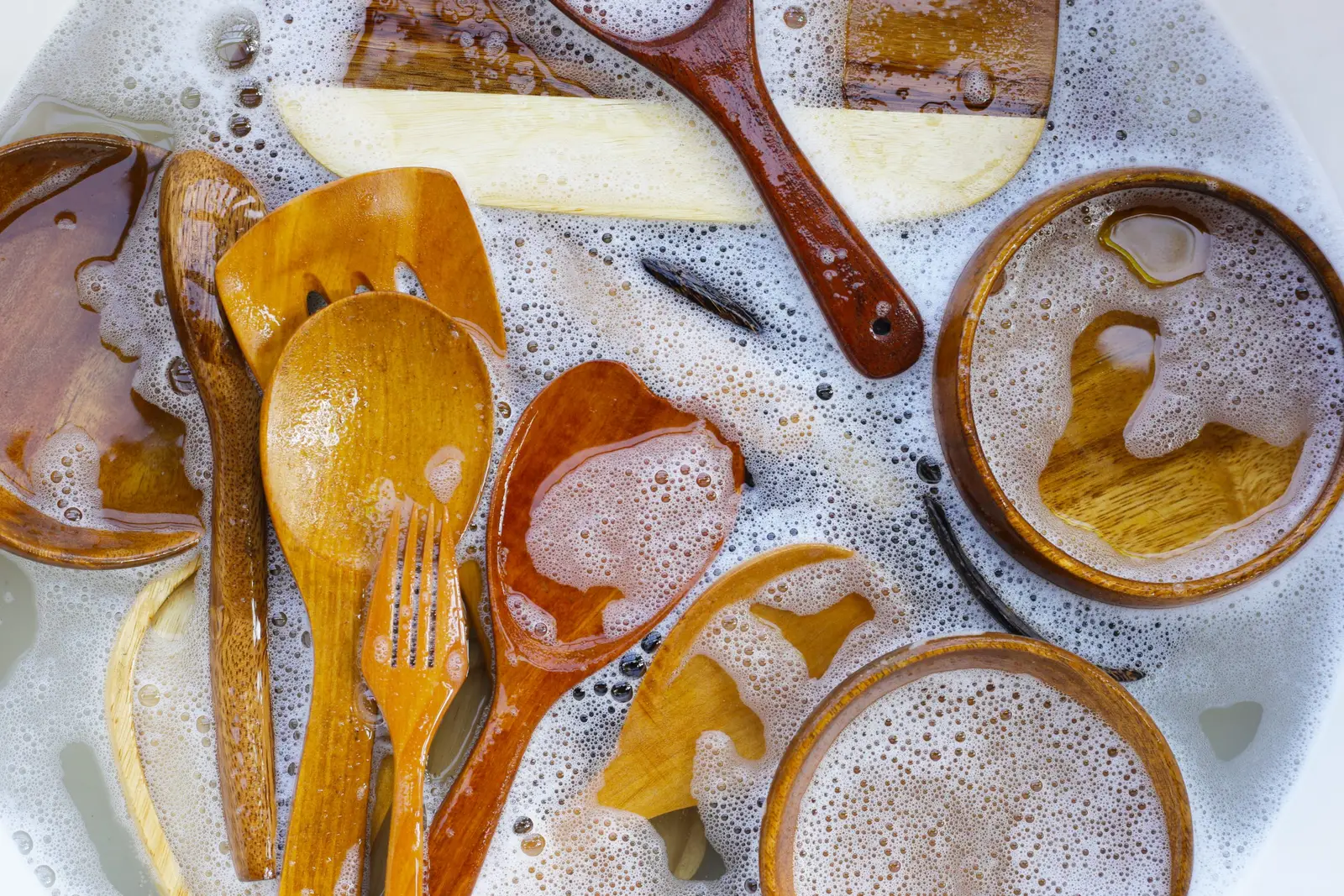
Scrape off any food, then wash both sides with warm water and a little washing up liquid. Rinse, and stand the board on its edge to air dry rather than leaving it flat or soaking, as standing water is what causes warping. After preparing raw meat, wipe the board with a sanitising solution such as one part white vinegar to four parts water. Every few weeks, treat it with a food safe board oil or mineral oil to keep the wood sealed and water resistant.
Kitchen knives
Wash knives by hand in warm soapy water straight after use, wiping the blade from spine to edge with the sharp side facing away from your hand. Dry immediately rather than leaving them to drip, which is what protects carbon steel from rust. Store them in a block, on a magnetic strip or with edge guards so the edges are not knocking against other tools.
Worried about hygiene?
People often reach for the dishwasher to kill bacteria after handling raw food. Hot soapy water and a quick sanitising wipe do the same job without the damage, and a well kept board stays more hygienic than a cracked one fresh out of the machine. For everyday wash quality on the dishes that do belong in there, keeping your salt and rinse aid topped up makes more difference than running a hotter cycle.
Quick summary
- Wooden and bamboo boards should not go in the dishwasher. Heat and moisture warp, crack and dry them out.
- Good knives should not either. Detergent dulls and corrodes the edge, handles loosen, and loose blades are a cut hazard.
- Plastic boards and dishwasher safe budget cutlery are usually fine, ideally on the top rack.
- Hand wash boards and knives in warm soapy water, dry promptly, and oil wooden boards regularly.
- Hot soapy water plus a vinegar wipe handles hygiene without the damage of a hot cycle.
Frequently asked questions
It can. Even a single hot cycle is enough to warp or crack some wooden boards, and the damage builds with every wash as the oils are stripped away.
No. Treat bamboo like wood. It is heavily glued and pressure treated, so it warps and splits in the dishwasher just as wooden boards do.
Some budget stainless steel table knives marked dishwasher safe by the maker are fine. Good kitchen knives, carbon steel blades and wooden handled knives should always be hand washed.
Wash with warm soapy water and rinse, then stand it on its edge to dry. After raw meat, wipe with a solution of one part white vinegar to four parts water. Oil the board occasionally to keep it sealed.
Hot water and detergent have stripped its oils and raised the grain. Let it dry fully, sand lightly if it is rough, then re-oil with a food safe board oil to restore the surface.
For a wider list of items best kept out of the machine, the consumer title Saga covers wooden boards, knives and the aftercare that keeps them in good condition.