How to Use an Induction Hob: The Ultimate Beginner’s Guide
Induction hobs heat the pan directly using a magnetic field — the glass surface around the pan stays cool, response to temperature changes is almost instant, and cleanup is a wipe rather than a scrub. If you have just switched from gas or ceramic, this guide covers everything you need to get comfortable quickly: how it works, which pans to use, how to operate the controls, and the habits that make the biggest difference to everyday results.
How an Induction Hob Works
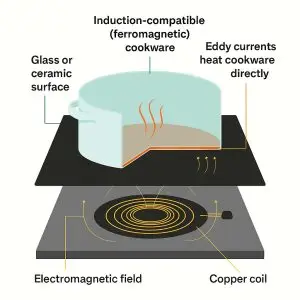
Beneath the glass-ceramic surface of an induction hob sit copper coils. When a zone is activated, electricity passes through these coils and generates an alternating electromagnetic field. Place a pan with a ferromagnetic base above the coil and the field induces electrical currents in the pan’s base material — those currents meet resistance in the metal and convert to heat, cooking the food inside.
The important consequence of this process is that the glass surface itself does not generate heat. It can become warm from contact with a hot pan base, but not from the electromagnetic field directly. This is why spills do not burn onto the surface in the way they do on gas or ceramic, and why the safety risk of an accidental touch is minimal compared to other hob types.
The coil switches off the moment a compatible pan is removed from above it. There is no residual heat element continuing to glow or stay warm — only the warmth the pan itself has conducted into the glass remains briefly, indicated by the residual heat warning on the display.
Why Choose Induction
Speed
Water boils in roughly half the time compared to gas, because the energy goes directly into the pan rather than heating the surrounding air first. The Boost function on most hobs maximises power for rapid heating — useful for bringing large volumes to the boil quickly.
Precision
Temperature response is almost immediate in both directions. Turn the power down and the pan cools within seconds rather than over a minute or more. This level of control matters most for delicate cooking — sauces, chocolate, custards — where a few degrees of difference produces a different result.
Safety
The glass surface does not heat independently of the pan. A child touching an inactive zone feels cool glass. Most models include a child lock that disables all zone controls, and zones only activate when a compatible pan is detected. The residual heat indicator warns when the glass is still warm from a pan that has been removed.
Easy cleaning
A flat glass surface with no grates, burner caps, or crevices. Spills that land on the glass beside a pan do not burn on because the surrounding surface stays cool. Most spills wipe away immediately with a damp cloth. Dried or sticky residue responds to the scraper tool supplied with most hobs.
Cookware Compatibility
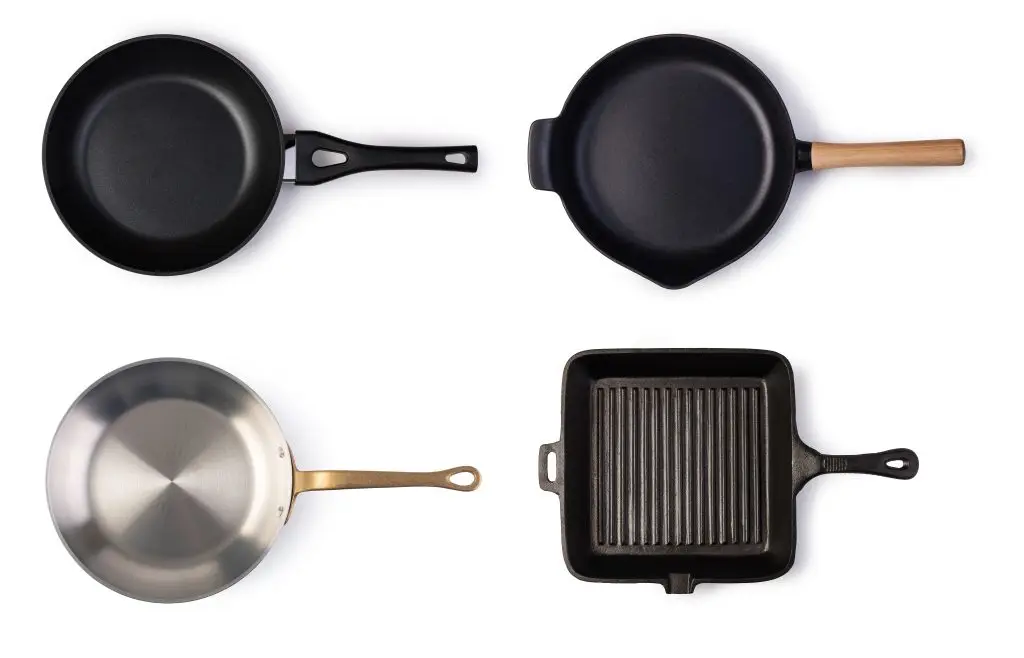
Induction compatibility depends on one property: the pan base must be ferromagnetic — it must respond to a magnet. The test is simple: press a fridge magnet firmly against the base of your pan. If it sticks securely, the pan will work. If it slides off or does not stick, the pan will not activate an induction zone.
| Material | Compatible? | Notes |
|---|---|---|
| Cast iron | Yes | Always ferromagnetic. Excellent heat retention. One of the best materials for induction. |
| Carbon steel | Yes | Ferromagnetic throughout. Lighter than cast iron, heats up faster. Needs seasoning. |
| Magnetic stainless steel (18/0) | Yes | Standard induction cookware material. Use the magnet test — 18/10 varies. |
| Enamelled steel | Yes | Magnetic steel core beneath the enamel. Works well if the base is flat. |
| Aluminium with induction disc | Depends | Many non-stick pans have a bonded ferromagnetic disc — check for the induction symbol. Disc size affects performance. |
| Pure aluminium | No | Not ferromagnetic. Will not activate any zone regardless of size or thickness. |
| Copper | No | Not ferromagnetic. Excellent conductor but will not respond to the magnetic field. |
| Glass and ceramic | No | Not ferromagnetic in any form. Safe to place on the surface but will not heat. |
Getting Started — Step by Step
- 1
Switch the hob on
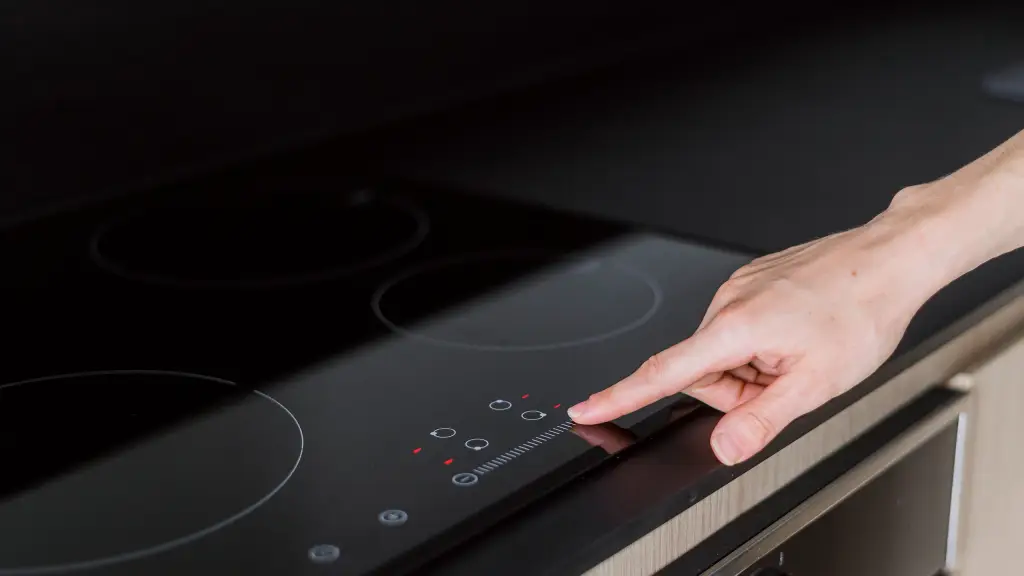
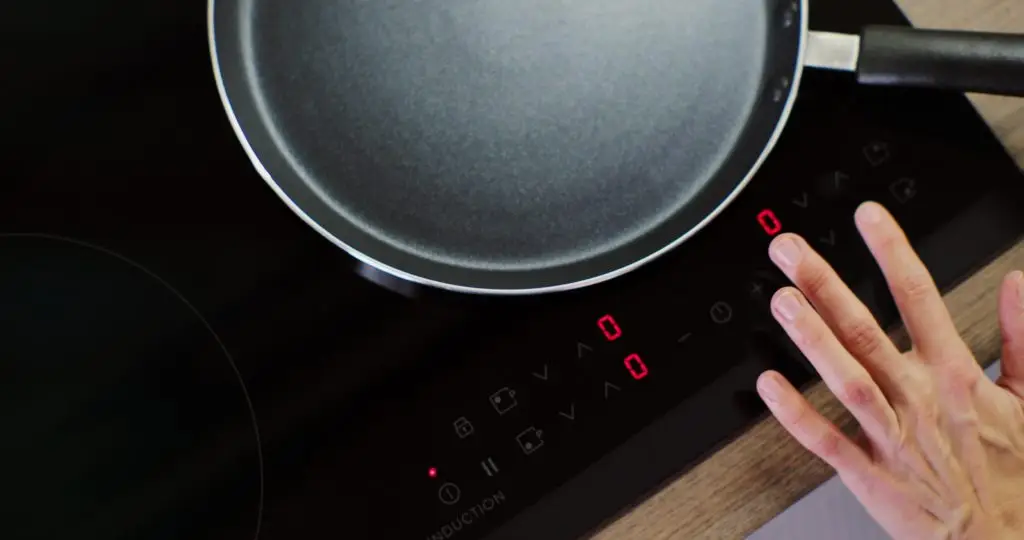
Press the power button — usually a symbol on the touch panel. The hob will indicate it is ready, typically with a sound and a display lighting up. On most models, zones are inactive until you select one.
- 2
Place your pan on the zone
Position a compatible pan centrally over the zone circle you want to use. The hob detects the pan’s magnetic load — if no compatible pan is detected, the zone will not activate and may beep or show a warning symbol. Place the pan before adjusting any settings.
- 3
Select the zone and set the power level
Touch the zone selector, then use the + and – controls or a slider to set the power level. Most hobs use a scale of 1 to 9 or 1 to 12. For a rapid boil, press the Boost or Power button if available — this runs the zone at maximum output for a short period. Start at medium for most everyday cooking and adjust as you go.
- 4
Cook — and adjust quickly
One of the most useful habits to develop with induction is adjusting the power level down earlier than you think you need to. Because the response is near-instant, the pan cools faster than on gas or ceramic. Bringing a sauce to a simmer and then dropping the power level one or two steps maintains a gentle simmer much more reliably than trying to manage a slow gas flame.
- 5
Switch off and check the residual heat indicator
When you are done, turn the zone off and then switch the hob off at the power button. The display may show an “H” or a residual heat warning next to zones that have been in use — this indicates the glass is still warm from the pan and will clear as it cools. Do not place anything heat-sensitive on the glass while this indicator is showing.
Cooking Tips
Prep everything before you switch on
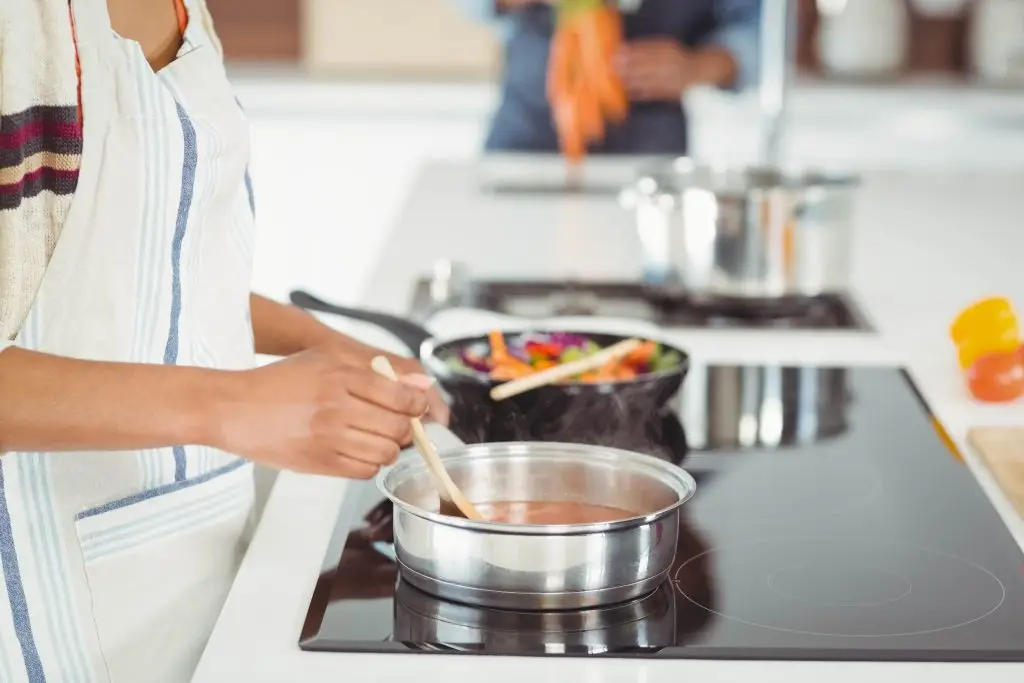
Induction heats so quickly that you have almost no buffer between placing a pan and needing to add your ingredients. Having everything chopped and measured before you turn on the hob makes the cooking process much more controlled.
Use a flat-based pan
A pan base with a slight warp or convex shape makes uneven contact with the glass, reducing the efficiency of energy transfer and producing uneven heat distribution across the base. A flat base gives consistent, even cooking across the full contact area.
Reduce power before you expect to need to
The pan responds immediately when you reduce power — there is no thermal lag from a hot element to account for. When simmering, searing, or melting, drop the power a step or two before you think you need to. You will overshoot less often.
Do not leave empty pans on an active zone
An empty pan on a high setting will overheat within a minute. Non-stick coatings degrade at high dry temperatures, and thin-based pans can warp. Either add oil or liquid before activating the zone, or switch on and immediately add your ingredients.
Slide, do not drag
The glass surface is durable but not scratch-proof. Move pans with a slight lift rather than dragging them across the surface. This is particularly important with cast iron, whose rough base can leave fine scratches on glass-ceramic over time.
Wipe spills while still warm
Most spills are easy to wipe immediately because the glass around the pan stays cool. Sugary spills are the exception — they can adhere to the glass if left to set. Wipe these as soon as safely possible with a damp cloth.
Cleaning and Maintenance
The flat glass surface is one of the most practical advantages of induction over gas. There are no grates, no burner caps, no crevices for food to hide in. Cleaning takes a fraction of the time.
For everyday cleaning, allow the hob to cool and wipe with a soft damp cloth and a small amount of mild kitchen cleaner. Dry with a clean cloth to prevent watermarks. For dried-on residue, use the flat glass scraper supplied with the hob — hold it at a shallow angle and push the residue gently rather than scratching across it. Avoid abrasive scouring pads or powder cleaners, which can scratch or dull the glass surface.
Specialised ceramic hob cleaning cream is worth keeping in the kitchen — it removes fine residue, maintains the glass surface, and leaves a protective film that makes the next clean easier. Apply a small amount to a cool surface, rub gently with a soft cloth, and buff dry.
Common Mistakes to Avoid
- Using an incompatible pan and expecting it to work. If the magnet test fails, the pan will not activate the zone under any circumstances. No amount of positioning adjustments or setting changes will overcome this — the pan material is the fundamental requirement.
- Adjusting settings before placing the pan. Most induction hobs require a compatible pan to be detected before a zone activates. Pressing the + button with an empty zone typically has no effect or produces a warning. Place the pan first, then set the power level.
- Leaving an empty pan on a high setting. Without food or liquid to absorb the heat, the pan overheats rapidly. Non-stick coatings can be permanently damaged within minutes at high dry temperatures. If you are interrupted mid-cooking, drop the power level rather than stepping away with the zone on high.
- Ignoring the hob’s beeps or warnings. Most hobs communicate through audio signals and display codes. A beep when you place a pan usually means it has not been detected. An error code on the display points to a specific condition the manual will explain. These signals are quick to diagnose and resolve — the hob is not simply malfunctioning.
- Not using the child lock when relevant. Most induction hobs have a child lock accessible by holding a button for two to three seconds. When active, the controls are unresponsive to touch. If you have young children in the kitchen, this is worth using consistently — even a curious touch on an active zone control can change the power level without you noticing.
For full compatibility information, the guide to what happens with a non-compatible pan explains the detection process in detail. If unusual sounds during cooking are a concern, the guide to induction hob noise covers what is normal and what is worth investigating. Browse CATA’s induction hob range for 60cm and 90cm models including the plug-in CATINDE60HF.
Common questions answered
Can I use my existing pans?
If a fridge magnet sticks firmly to the base, yes. Cast iron, carbon steel, and magnetic stainless steel pans all work reliably. Pure aluminium, copper, and glass pans do not. Many non-stick pans have a bonded induction disc — check for the induction coil symbol on the base or packaging.
Why is my hob beeping?
The most common cause is no compatible pan detected on the selected zone. Other causes include the child lock being active, a zone left on with the pan removed, or a setting error. The display code or your model’s manual will identify the specific reason. Most beep conditions clear immediately once the cause is resolved.
What does the “H” symbol mean?
It indicates that zone’s glass surface is still warm from a pan that was recently in use. It is a residual heat warning — not a fault. The symbol clears automatically as the surface cools to a safe temperature. Do not place heat-sensitive items, packaging, or your hand flat on that area while the indicator is showing.
Is induction safe if I have a pacemaker?
Most research suggests that induction hobs pose no significant risk at normal cooking distances. UK and EU medical device guidelines recommend maintaining a minimum distance of around 60cm from the active hob surface. If you have a pacemaker or implantable defibrillator, speak with your cardiologist for advice specific to your device before cooking regularly with induction.