What Happens If You Use a Non-Induction-Compatible Pan on an Induction Hob?
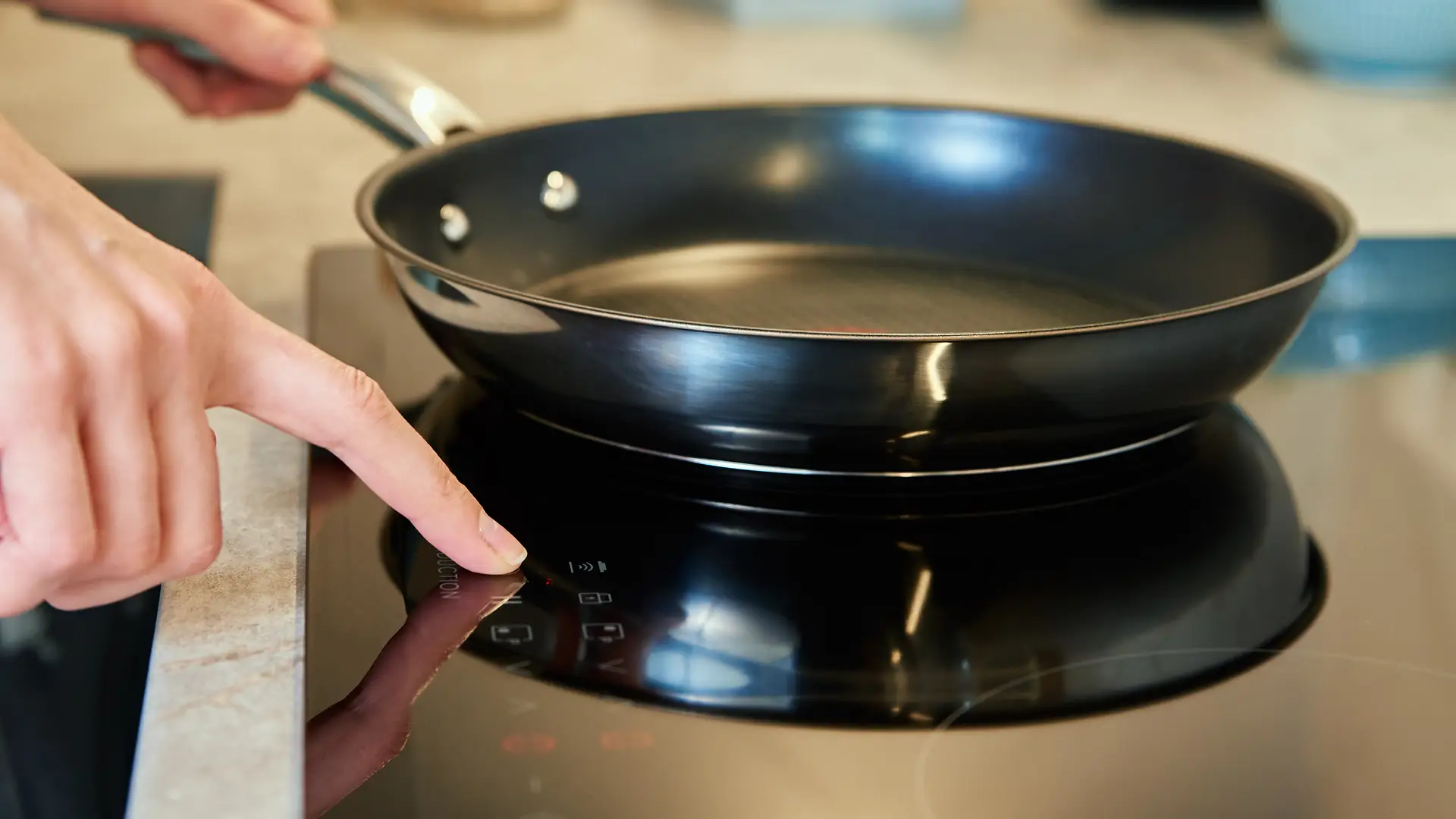
Nothing — in the most literal sense. The hob will not heat the pan, and in most cases will display an error or simply remain inactive. No damage is done to the hob, no heat is generated in the pan, and no energy is consumed beyond the brief detection attempt. The reason is fundamental to how induction cooking works: without a ferromagnetic pan base to interact with, the electromagnetic field has nothing to act on.
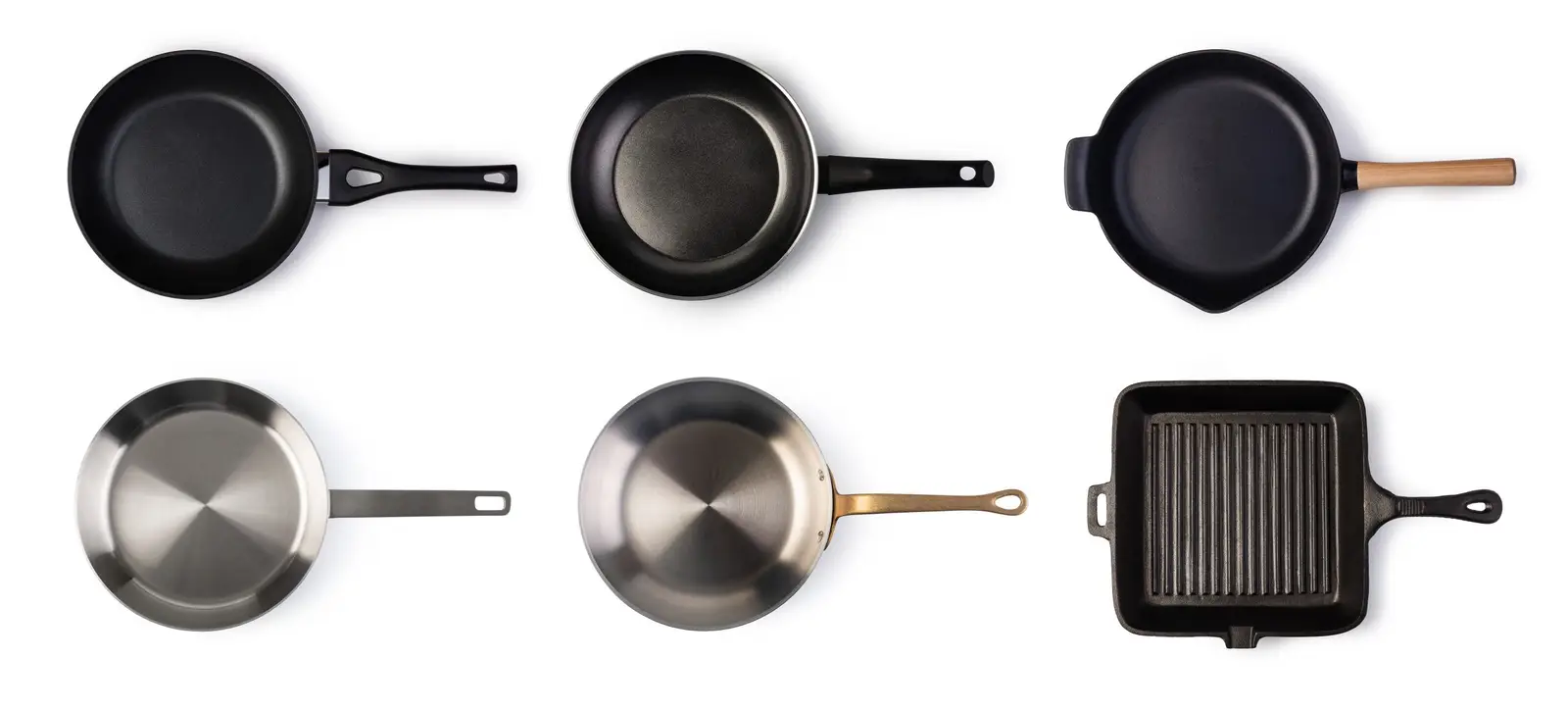
Which Materials Work and Which Do Not
Induction compatibility comes down to one property: ferromagnetism. A ferromagnetic material responds to a magnetic field strongly enough to have eddy currents induced within it, which generate heat through electrical resistance. Materials that do not respond magnetically produce no eddy currents, and therefore no heat. The magnet test — pressing a fridge magnet firmly against the base — is the reliable everyday check.
Cast iron
Highly ferromagnetic and one of the best materials for induction use. Activates zones reliably even when worn or well-seasoned. Retains heat exceptionally well once up to temperature. Suitable for all zone sizes above the minimum detection threshold.
Magnetic stainless steel
The standard material for purpose-made induction cookware. 18/0 stainless steel is ferromagnetic; 18/10 stainless steel may or may not be, depending on the chromium-nickel ratio and production process. Check with the magnet — some 18/10 pans work well, others do not. Where the magnet sticks firmly, the pan will work reliably.
Carbon steel
Ferromagnetic and effective on induction. Used in woks, crepe pans, and paella pans. Takes slightly longer to reach temperature from cold than cast iron due to lower mass, but responds quickly to power adjustments once hot. The magnet test is definitive.
Aluminium with induction disc
Many non-stick and aluminium pans have a bonded ferromagnetic disc on the base, added specifically for induction compatibility. These work, but the disc must be large enough relative to the zone’s minimum detection area. A disc that is too small produces a weak magnetic load and may fail to activate larger zones. The magnet test confirms whether the disc is present; a smaller zone on the hob may activate when a larger zone does not.
Aluminium (no induction base)
Not ferromagnetic. No eddy currents are induced regardless of pan size, wall thickness, or heat history. An aluminium pan without an induction base disc will never activate an induction zone under any circumstances. The magnet does not stick at all.
Copper
Not ferromagnetic. Despite being an excellent conductor of heat and electricity, copper does not respond to the specific type of magnetic field an induction coil generates. A copper pan placed on an induction zone will not heat and will not damage the hob. The magnet does not stick.
Glass and ceramic
Neither glass nor ceramic is ferromagnetic in any form. Oven-to-table ceramic dishes, glass lids used as improvised pans, and glass casseroles will not activate any induction zone. They are safe to place on the glass surface, but will not heat.
What the Hob Actually Does When It Detects the Wrong Pan
The hob’s response to a non-compatible or marginal pan varies by model, but the underlying behaviour is consistent: the coil activates briefly to measure the magnetic load above it, detects an insufficient response, and stops. No sustained current flows, no heat is generated, and no energy beyond the brief detection pulse is consumed.
Error code or indicator light
Most modern induction hobs display a symbol or code — often “U” or a pan-with-line-through icon — when a non-compatible item is placed on an active zone. The code clears immediately when the item is removed. It is not a fault with the hob.
Audible beep
Many hobs emit a short beep sequence when a zone is activated but no compatible pan is detected. The beep is the hob’s notification system, not a warning of damage. Some models beep repeatedly; others beep once and go silent.
Automatic zone deactivation
After a brief detection period, typically two to five seconds, the zone switches itself off if no compatible pan is confirmed. Some hobs allow a longer window; others deactivate almost immediately. The zone can be reactivated by placing a compatible pan on it.
No response at all
Some hobs simply do not respond when a non-magnetic item is placed on a zone. No beep, no error code, no activation. This is normal behaviour and does not indicate a problem with the hob.
One question that comes up frequently: does placing a non-compatible pan on the hob risk scratching the glass? The glass surface of an induction hob is the same material whether or not the pan is compatible — ceramic glass is the same whether a cast iron pan or a copper saucepan sits on it. The risk of scratching comes from the pan’s base material and how it is handled, not from whether it is induction-compatible.
The Grey Areas: Pans That Partially Work
Not every pan falls cleanly into “works” or “does not work”. Several situations produce inconsistent or degraded induction performance that can be frustrating to diagnose.
Pans that work on one zone but not another
Each zone on an induction hob has a minimum magnetic load threshold matched to its coil size. A small pan with a relatively weak magnetic base may generate enough load to activate a small zone but fall below the threshold of a larger zone. This is not a fault — it is the detection system working as designed. The solution is to use the pan on a zone whose diameter roughly matches the pan base diameter.
Pans that worked before but no longer activate
Pans with bonded induction base discs can delaminate over time, particularly if subjected to high dishwasher temperatures or thermal shock from being plunged into cold water while hot. If a pan that previously worked reliably has stopped activating, check whether the base disc has lifted, warped, or separated from the pan body. A disc that has separated no longer makes flat contact with the glass, reducing the magnetic load it presents to the coil below.
Pans that heat unevenly
A pan base that has warped from rapid temperature changes, or one with an induction disc that does not fully cover the base, will produce uneven heat distribution across the cooking surface. The induction field is strongest directly above the coil; areas of the pan base that are not in close contact with the glass receive less energy. A flat, even base is one of the more important characteristics of good induction cookware.
Non-stick pans marketed as induction-compatible but performing poorly
The induction symbol on a pan (concentric coil lines, typically on the base or packaging) confirms that the pan has been tested and found to activate an induction zone. It does not guarantee performance quality. A budget pan with a thin bonded disc may activate the zone but heat unevenly, have a short service life for the disc, or perform noticeably worse than a pan with a fully ferromagnetic base. The symbol is a minimum requirement, not a performance rating.
Induction Adapter Plates: Worth Using?
An induction adapter plate is a flat ferromagnetic disc that sits between the hob glass and a non-compatible pan. The disc itself is heated by the induction coil, and heat from the disc conducts into the pan above it. This allows copper, aluminium, and glass pans to be used on an induction hob, but with significant practical trade-offs.
Advantages
- Allows use of beloved copper or aluminium cookware on an induction hob
- Inexpensive and requires no modification to the pan
- Useful as a short-term bridge when switching from gas or ceramic to induction
- Works with any induction hob and any non-compatible pan material
Drawbacks
- Adds significant thermal mass — heat-up time is much slower than direct induction
- Eliminates one of induction’s main advantages: instant and precise temperature response
- The disc stores heat and continues releasing it after power is reduced — slow to cool down
- Efficiency drops noticeably as energy is lost in the disc rather than going directly into the pan
- Can scratch the hob glass if used without care, as the disc heats and expands slightly
For everyday use, an adapter plate is a compromise that negates most of the reasons people choose induction in the first place. It is most useful in the weeks after switching from gas or ceramic, when you are gradually replacing non-compatible pans. As a permanent solution, replacing the non-compatible pan with an induction-ready equivalent is almost always better.
What to Look for When Buying Compatible Cookware
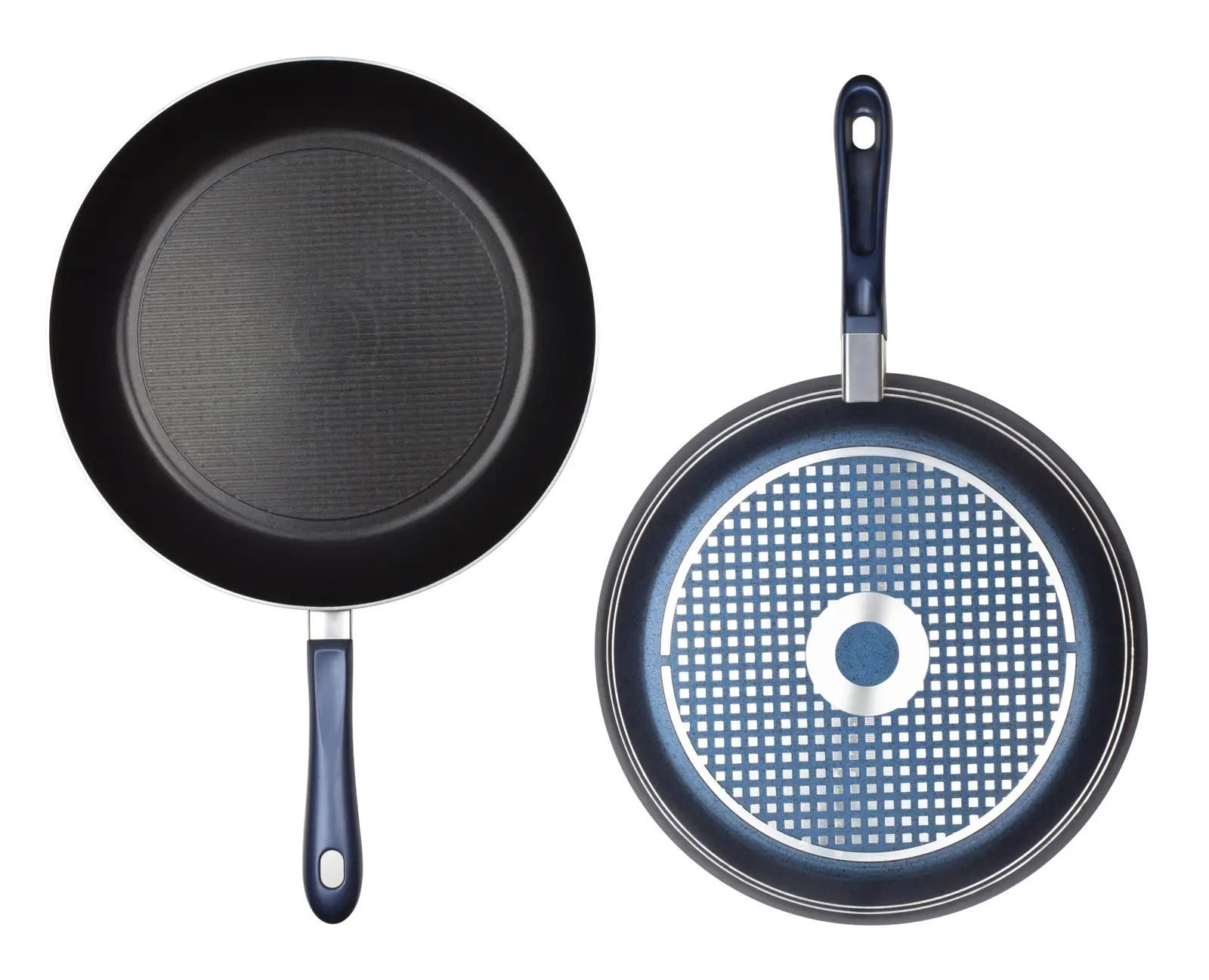
Check the base, not just the symbol
The induction symbol confirms the pan activates an induction zone. For reliable, even performance, the ferromagnetic base material should cover as much of the pan base as possible — ideally the full base diameter. Thin bonded discs on large-diameter pans perform significantly worse than pans built from a ferromagnetic material throughout.
A flat base matters more on induction than on gas
On gas, a slightly warped base still sits in the flame and heats. On induction, a warped base creates gaps between the pan and the glass that reduce electromagnetic coupling. Look for pans with a ground or machined flat base, particularly for frying pans and sauté pans where even heat distribution across the full base is essential.
Match pan diameter to zone diameter
Induction zones have both a minimum and maximum effective diameter. A very small pan on a large zone may fail to activate it, while a very large pan overhanging a small zone heats unevenly. Aim to match the pan base diameter to the zone circle within about 20 to 30 percent for consistent results.
Consider the full set, not just one pan
Switching from gas or ceramic to induction is a good moment to audit the whole pan collection rather than replacing incompatible pans one at a time. A matched set in a single base material — 18/0 stainless steel with an aluminium core, or cast iron — gives consistent performance across all zones rather than a mixed collection with varying detection reliability.
The guide to pan size detection myths explains exactly how the hob’s detection system measures magnetic load rather than pan diameter — useful background for understanding why some pans activate zones reliably and others do not. Browse CATA’s induction hob range for full specification details on zone sizes and minimum pan detection thresholds.
Common questions answered
Will a non-compatible pan damage my induction hob?
No. Placing a non-compatible pan on an induction zone causes no damage to the hob whatsoever. The coil detects insufficient magnetic load and does not sustain an active field. The only risk to the glass is the same mechanical risk as any other pan — scratching from a rough base or a heavy impact.
Does the glass surface heat up when an incompatible pan is placed on it?
No — or barely. An induction hob’s glass only heats from residual heat conducted from the pan above it. Since an incompatible pan does not heat, the glass beneath it stays at room temperature. This is one of the safety advantages of induction over ceramic — a zone that fails to heat poses no burn risk from the glass surface.
My stainless steel pan says “induction compatible” but it won’t heat. Why?
The most likely explanation is that the pan’s base does not generate sufficient magnetic load for the specific zone you are using. Try a smaller zone whose circle is closer in size to the pan base diameter. If the pan still fails to activate any zone, check the base with a magnet — some stainless steel alloys are only weakly magnetic and may fall below the zone’s minimum threshold even when technically ferromagnetic.
Can I use my old non-stick pans on an induction hob?
Only if they have an induction-compatible base. Check with a magnet — if it sticks firmly to the base, the pan will work. If the non-stick pan was designed for gas or ceramic and has no bonded induction disc, it will not activate any induction zone. The non-stick coating itself has no bearing on compatibility; the base material is the only relevant factor.