Home » Oven Guides & Advice » Self-Cleaning Ovens: Are They Worth It?
Self-Cleaning Ovens: Are They Worth It?
For most households that cook regularly, yes. A self-cleaning oven removes the most time-consuming and unpleasant maintenance task in the kitchen, and modern pyrolytic models do it so thoroughly that manual cleaning becomes largely unnecessary. The question is which type of self-cleaning technology suits your cooking habits and whether the price premium is justified by how you actually use the appliance.
The Three Self-Cleaning Technologies
Self-cleaning is not a single technology. Three distinct approaches exist, each with different cleaning thoroughness, energy demands, and maintenance requirements. Understanding the difference is the first step to choosing the right oven.
Pyrolytic
Burns all grease and food residue to fine ash at extreme temperature. The deepest and most thorough clean available — leaves only a small amount of ash to wipe away. The oven door locks automatically during the cycle.
Best for: heavy cooks, frequent bakers, anyone who wants a truly hands-off clean.
Catalytic
Porous liner panels on the oven walls absorb grease splashes and break them down during normal cooking at high temperature. Works continuously rather than in a dedicated cycle.
Best for: light to moderate cooking where preventing build-up matters more than removing existing residue.
Steam (hydrolytic)
Uses water and low heat to loosen fresh food residue, which can then be wiped away. Very low energy use. Effective for light, recent soiling but not for baked-on grease.
Best for: light users who clean regularly and want an energy-efficient option between deeper cleans.
How Each Type Works
How pyrolytic cleaning works
When you start a pyrolytic cycle, the oven heats to between 450°C and 500°C — far beyond normal cooking temperatures. At this heat, all organic matter inside the cavity is carbonised: fats, grease, burnt food, and baked-on residue all convert to a fine white or grey ash. The cycle typically runs for one and a half to three hours depending on the model and the degree of soiling selected.
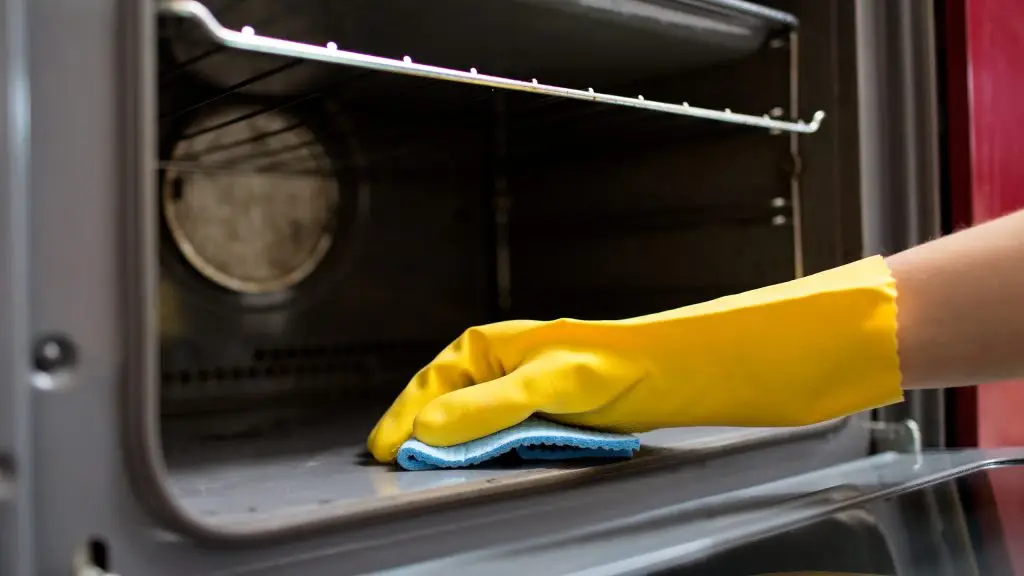
The door locks automatically as soon as the cycle begins and remains locked until the interior temperature drops to a safe level, typically below 200°C. Once the oven has fully cooled, a single wipe with a damp cloth removes the ash entirely. There is nothing to scrub, no chemicals required, and no residue left in corners.
- Remove all racks, trays, and accessories before starting — high heat damages non-pyrolytic coatings and can discolour metal finishes permanently.
- Ventilate the kitchen during the cycle — burning grease produces smoke and odour, particularly if the oven has not been cleaned for a long time.
- Run the cycle less frequently on an oven you clean regularly — a light cycle setting uses less energy and takes less time when soiling is not severe.
How catalytic cleaning works
Catalytic liners are specially textured panels fitted to the oven’s side and rear walls. Their surface is porous and rough at a microscopic level, which gives it a large effective surface area. When the oven is used at temperatures above around 200°C, a chemical reaction in the liner breaks down grease molecules that have been absorbed into the surface, converting them to water and carbon dioxide.
Catalytic cleaning happens passively during normal cooking rather than in a dedicated cycle. This means a catalytic oven keeps itself cleaner day by day with no extra effort or energy cost. The trade-off is that the liners only absorb grease — they do not remove baked-on food residue or burnt-on spillages at the bottom of the oven, which still need manual attention. The base of most catalytic ovens is smooth enamel and needs wiping by hand.
Liners typically last three to five years before they become saturated and lose their absorption capacity. When a liner starts looking shiny or greasy rather than matte and textured, it needs replacing. Never clean catalytic liners with oven spray or abrasive products — this seals the porous surface and renders them ineffective immediately.
How steam cleaning works
Steam cleaning (sometimes called hydrolytic cleaning) is the simplest and most energy-efficient approach. You pour a small amount of water — typically half a cup to a full cup — into a tray or reservoir in the oven base, select the steam clean programme, and the oven heats to around 100°C for 20 to 30 minutes. The steam penetrates and softens fresh food residue, making it easy to wipe away with a cloth once the cycle ends.
Steam cleaning is genuinely effective for recent spills and light soiling. What it cannot do is remove baked-on grease that has been through multiple cooking cycles, carbonised residue in corners, or old burnt-on deposits. For households that clean the oven frequently, a steam clean between deeper pyrolytic cycles is a practical and energy-efficient routine. As a stand-alone cleaning method for a heavily used oven, it is not sufficient on its own.
Energy Use and Running Costs
Energy consumption varies dramatically between cleaning types. Pyrolytic cleaning is the most energy-intensive kitchen process you are likely to run — more demanding per session than most cooking cycles. This is worth factoring into the decision, though in absolute terms the cost per cycle remains modest.
| Cleaning type | Typical energy use | Approx. cost per cycle | Cycle duration | Frequency needed |
|---|---|---|---|---|
| Pyrolytic | 2.0 to 3.0 kWh | 60p to 90p | 1.5 to 3 hrs | Every 2 to 3 months for regular cooks |
| Catalytic | Negligible — no separate cycle | No extra cost | Continuous during cooking | Replaces liners every 3 to 5 years |
| Steam (hydrolytic) | 0.2 to 0.3 kWh | 5p to 10p | 20 to 30 min | Monthly for light users |
Based on UK average electricity tariff of approximately 25p per kWh. Actual figures vary by model, soil level, and tariff.
A pyrolytic cycle every two months adds roughly £2 to £3 per year to a typical household’s electricity bill. Spread over the appliance’s lifetime, this is negligible. The energy cost argument against pyrolytic ovens is often overstated — the stronger consideration is the duration of the cycle, which locks the oven out of use for several hours and raises kitchen temperature noticeably in warm weather.
Safety During the Cleaning Cycle
Pyrolytic ovens are safe when used correctly. All UK-market models include automatic door locking, temperature sensors, and external cooling to protect surrounding cabinetry. The precautions below are not optional extras — they are necessary habits.
- 1Remove all racks, trays, and accessories before starting. Wire racks and non-pyrolytic coated trays will be permanently damaged or discoloured at pyrolytic temperatures. Most oven shelves are not rated for pyrolytic cleaning unless the manual specifically states otherwise.
- 2Ventilate the kitchen thoroughly. Burning food residue and grease produces smoke and carbon monoxide in small quantities. Open a window, run the cooker hood at full speed, and avoid spending extended time in the kitchen during the cycle.
- 3Keep pets out of the kitchen during pyrolytic cycles. Birds in particular are highly sensitive to fumes from overheated non-stick coatings and burning grease. Any bird should be moved to a different room well away from the kitchen before starting a pyrolytic cycle.
- 4Do not use chemical oven cleaners before a pyrolytic cycle. Residues from spray cleaners can produce toxic fumes at pyrolytic temperatures. If the oven has recently been chemically cleaned, wipe it down thoroughly and run a short empty cooking cycle at normal temperature before starting a pyrolytic clean.
- 5Allow the oven to cool fully before wiping away ash. The door unlocks automatically once the temperature drops to a safe level — typically below 200°C. Do not attempt to force the door open before the lock releases.
Is It Worth It for Your Household?
The value of a self-cleaning oven depends almost entirely on how often and how heavily you cook. For some households it is one of the most useful features on a modern oven; for others it adds cost with little practical benefit.
Worth it if you
- Cook most evenings and roast regularly
- Bake frequently, which produces grease splatter at high temperatures
- Find oven cleaning one of the most unpleasant household tasks
- Want to avoid chemical oven cleaners for environmental or health reasons
- Cook for a larger household and fill the oven regularly
- Value a consistently clean oven for cooking performance
Less compelling if you
- Use the oven only two or three times a week, mostly for reheating
- Cook at lower temperatures that produce minimal splatter
- Are comfortable with manual oven cleaning and do it regularly
- Are focused on the lowest possible purchase price
- Live alone and rarely cook large roasts or fatty dishes
One factor worth noting: the price gap between a good-quality standard oven and an equivalent model with pyrolytic cleaning has narrowed considerably. Many mid-range ovens now include pyrolytic as standard. If you are choosing between two similarly priced models, the one with pyrolytic cleaning is almost always the better long-term choice even for moderate cooks, simply because the option is there when needed.
CATA’s single ovens include pyrolytic models across the range. The guide to oven functions explained covers the full set of cooking modes available on modern multifunction ovens alongside the cleaning programmes.
Frequently Asked Questions
Every two to three months is adequate for most households that cook daily. If you roast or bake frequently, once a month may be more appropriate. Running a shorter, lighter pyrolytic cycle more regularly produces better results — and uses less energy — than waiting until the oven is heavily soiled and running the longest cycle. Many modern pyrolytic ovens offer light, medium, and heavy clean settings; the lighter setting is sufficient for routine maintenance cleaning.
No, unless the manual specifically states the racks are pyrolytic-safe. Standard wire racks and enamel trays will be discoloured, warped, or damaged at pyrolytic temperatures. Some manufacturers supply pyrolytic-rated shelves as an accessory or include them with specific models — check the documentation for your oven before assuming standard racks can remain inside.
Catalytic liners typically last three to five years with regular use. When they lose their matte, textured appearance and start looking shiny or greasy, they have reached the end of their effective life. Replacement panels are available for most models from the manufacturer or approved parts suppliers, typically costing £15 to £40 per panel depending on the brand and oven size. Always use manufacturer-specified replacements, as the liner dimensions and fixing method vary between models.
The smell is the accumulated grease and food residue burning off at high temperature. This is normal and expected, particularly on the first pyrolytic cycle after a period of heavy use. The smell and any smoke will be stronger if the oven has not been cleaned for some time. Thorough ventilation and running the cooker hood on full speed during the cycle minimises the impact. The smell diminishes significantly with subsequent cycles as the oven becomes and stays cleaner.
Yes, provided the kitchen is well ventilated during the cycle. In an open-plan space the fumes from a pyrolytic cycle disperse into a larger volume of air, which can actually reduce the concentration of odour in the immediate cooking area. The key precautions remain the same: open windows, run the cooker hood, and remove pets before starting the cycle. If the open-plan space includes a living area used by very young children, scheduling the cycle for a time when the space is less occupied is sensible.
Summary
Self-cleaning ovens are worth the investment for most households that cook regularly. The key points:
- Pyrolytic cleaning is the most thorough option, burning all residue to ash at 450 to 500°C. It uses 2 to 3 kWh per cycle but requires no manual scrubbing.
- Catalytic liners absorb grease passively during normal cooking at no extra energy cost, but do not remove baked-on residue and need replacing every three to five years.
- Steam cleaning is the most energy-efficient option, effective for light and recent soiling but insufficient for a heavily used oven on its own.
- Pyrolytic ovens require good ventilation during the cycle; racks and trays must be removed beforehand.
- The price premium over standard ovens has narrowed — pyrolytic cleaning is now available on many mid-range models.
- For regular cooks, the time saved and consistently clean cooking environment justify the modest additional running cost.
Explore More Kitchen Advice & Buying Guides
Browse our latest articles covering appliance tips, energy-saving advice, and expert guidance – designed to help you choose, use, and get the most from your kitchen appliances.