Home » Oven Guides & Advice » Can you put glass and Pyrex dishes in the oven safely?
Can You Put Glass and Pyrex Dishes in the Oven Safely?
Yes, in most cases you can. Glass and Pyrex bakeware is made for the oven, but only when it is genuinely oven-safe glass and you protect it from sudden temperature changes. The real risk is almost never the oven heat itself. It is thermal shock, the stress caused when one part of the glass heats or cools far faster than the rest.
Quick answer
Oven-safe glass and proper Pyrex are perfectly happy at normal baking and roasting temperatures. Problems almost always come from a fast change in temperature, such as moving a dish straight from the fridge into a hot oven, or sitting a hot dish on a cold worktop. Check the markings on the base, treat it sensibly, and you can roast, bake and reheat with confidence in any of our built-in ovens.
The Short Answer, With a Few Conditions
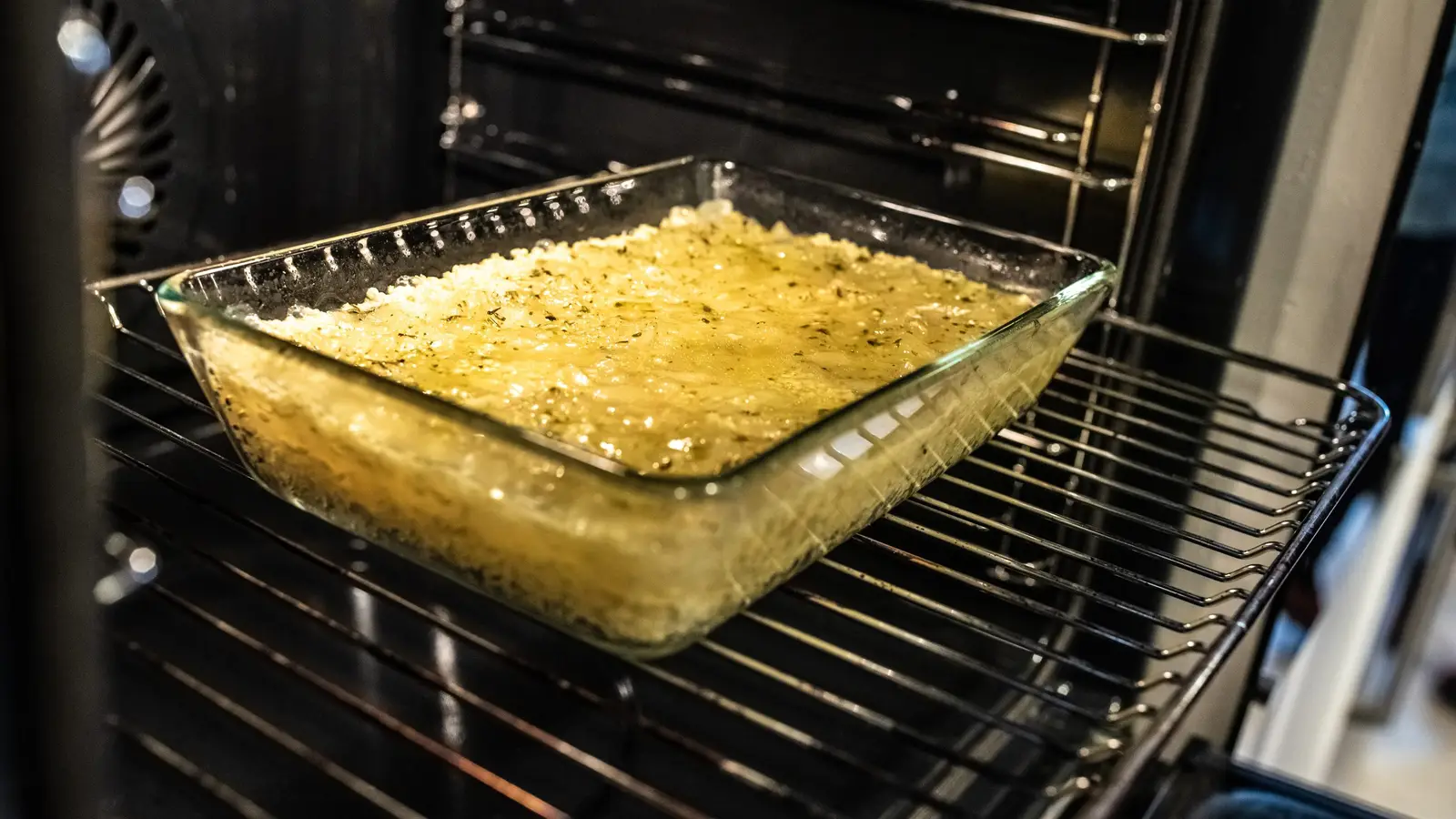
Glassware has been an oven cupboard staple for generations because it heats evenly, holds temperature well, does not react with acidic foods such as tomatoes or citrus, and lets you see exactly how the base of a dish is browning. For everyday roasting, baking and reheating, it is a genuinely excellent choice.
The catch is that glass is far more sensitive to how quickly the temperature changes than metal is. Treat it gently and it will last for years. Subject it to a sudden hot-to-cold or cold-to-hot jump and it can crack or, in the worst case, shatter. The rest of this guide explains how to stay firmly on the safe side.
Not All Glass Is the Same
This is the single most useful thing to understand, because the name on the dish does not always tell you what the glass is actually made of. There are two main types used in cookware, and they behave quite differently.
Borosilicate glass
BorosilicateA heat-resistant glass that expands very little as the temperature changes, giving it strong resistance to thermal shock. is the classic heat-resistant glass. It expands and contracts very little as the temperature changes, which gives it excellent resistance to thermal shock. Most Pyrex sold in the UK and the rest of Europe is borosilicate, which is one reason British cooks have trusted it for so long.
Tempered soda-lime glass
Soda-lime glass is toughened by heat treatment so it is strong against knocks and drops, but it expands more with heat than borosilicate does. That makes it more vulnerable to a sudden temperature change. A lot of glass bakeware sold elsewhere in the world, including some products carrying the Pyrex name in the United States, is tempered soda-lime rather than borosilicate.
Top tip: Whatever type you own, the safe-handling habits below will protect it. If you are buying new, look for the word borosilicate or a clear oven-safe rating, and keep the leaflet that comes with it.
What Is Thermal Shock, and Why Does It Matter?
When glass heats up, it expands. When it cools, it contracts. If one part of a dish changes temperature much faster than another, the two areas pull against each other and create stress inside the glass. Push that stress far enough and the glass fails, sometimes with a crack and sometimes with a sudden break.
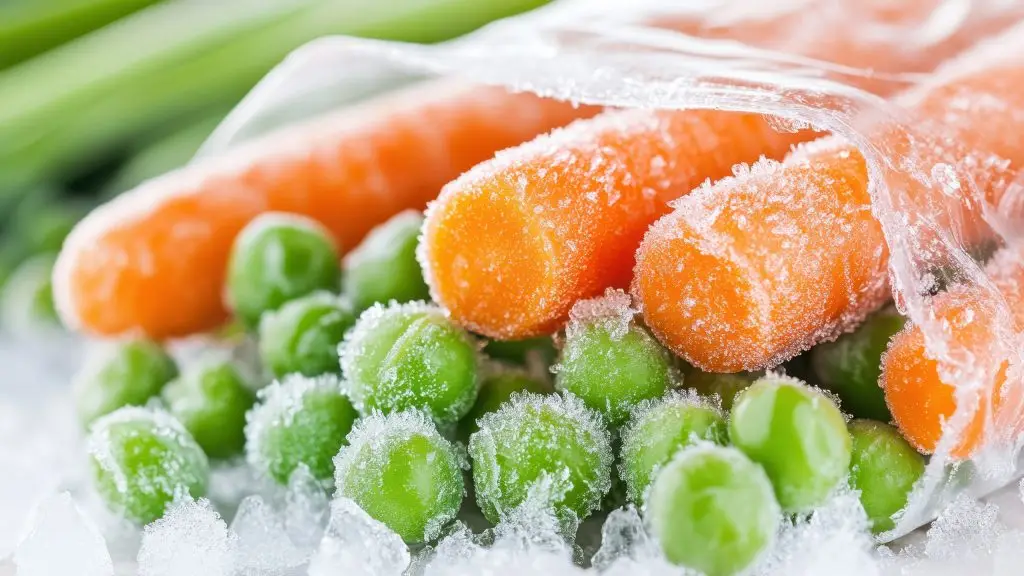
Classic triggers include lifting a dish out of the fridge or freezer and putting it straight into a hot oven, setting a piping hot dish down on a cold or wet surface, pouring cold liquid into a hot dish, or running cold water over glass that has just come out of the oven. Every one of these is avoidable once you know to watch for it.
The Golden Rules for Using Glass in the Oven
Let it come up to room temperature
Take chilled or frozen food out of the fridge and let the dish lose its deep chill before it goes into a hot oven. A gentler starting point means far less stress on the glass.
Add a little liquid or fat
A thin layer of oil, water or sauce in the base helps spread heat evenly. Heating an empty glass dish on its own creates hot spots and should be avoided.
Rest it on a dry, room-temperature surface
When the dish comes out, place it on a wooden board, a trivet or a folded dry tea towel. Never set hot glass on a cold, wet or metal surface.
Let it cool before washing
Allow the dish to cool down before it meets water. Plunging hot glass into a cold sink is one of the quickest ways to crack it.
The same logic applies to preheating. It is perfectly fine to bring a room-temperature glass dish up to heat with the oven, much as you might with metal trays. If you want the detail on that, see our guide to whether you can leave oven trays inside while preheating. For batch cooking, the rule simply runs in reverse: defrost in the fridge first rather than going straight from freezer to a hot cavity.
What to Avoid
A few uses fall outside what most oven glass is designed for. Steer clear of these unless the manufacturer specifically says otherwise.
- The grill. Most glass bakeware is not made for grilling. The intense, direct radiant heat creates fierce hot spots that ordinary oven use never produces, and it is a common cause of breakage. Use a metal tin or a grill-rated dish instead.
- The hob. Standard glass oven dishes are not designed for direct flame or a hot ceramic or induction surface. Only use glass on the hob if it is explicitly sold as flameproof or hob-safe.
- Sudden temperature jumps. No fridge-to-hot-oven shortcuts, no cold liquid into a hot dish, and no cold water over hot glass.
- Heating it empty. An empty dish in a hot oven is far more likely to develop hot spots and fail.
- Using it when damaged. A chip, crack or deep scratch is a weak point that thermal stress will find. Damaged glass should be retired, not risked.
Get the best from your oven and your cookware
Choosing the right dish is only half the story. The cavity it sits in matters too. A well-distributed fan oven heats glassware far more evenly than an old hot-spot-prone cavity ever could.
- Compare features across the full CATA built-in oven range
- Get to grips with every setting in our oven functions explained guide
- See which materials are safe in the microwave too with microwave containers: which materials are safe
How to Check Your Dish Is Oven-Safe
Before anything goes in the oven, give the base a quick look. Manufacturers mould or print their guidance onto the underside, and it takes seconds to read.
- Look for an oven-safe symbol, usually a small drawing of an oven, or the words oven safe or oven proof.
- Check for a maximum temperature printed in degrees Celsius, and stay at or below it.
- Note the glass type if it is stated, since borosilicate handles temperature change more comfortably.
- Keep the leaflet that came with a new set, as it spells out any limits on grilling, hob use and lids.
Important: If a dish has no markings at all and you cannot trace what it is, treat it with extra caution. Decorative glassware, drinking glasses and storage jars are not the same as cookware and should never be assumed oven-safe.
Temperature Limits in Practice
Oven-safe glass copes easily with the temperatures used for everyday cooking. It is the change in temperature, not the peak figure, that does the damage. The table below shows how the same dish reacts to different situations.
| Situation | Is it safe? | Why |
|---|---|---|
| Room-temperature dish into a preheated oven | Yes | The change is gradual and even. |
| Roasting at a normal temperature within the rating | Yes | Within what the glass is designed to handle. |
| Frozen dish straight into a hot oven | Risky | A large, fast temperature jump stresses the glass. |
| Hot dish onto a cold or wet worktop | Risky | The base cools far faster than the rest. |
| Adding cold liquid to a hot dish | Risky | One area contracts sharply against the rest. |
| Under the grill | Avoid | Direct radiant heat creates severe hot spots. |
As a rule of thumb, always check the figure printed on your own dish and treat it as the ceiling rather than a target.
Lids and Accessories
Many glass dishes come with a lid, and the lid is often where people slip up. A matching glass lid is usually fine in the oven up to the dish rating, but a plastic or rubber-sealed lid almost never is. Plastic lids are designed for storage and the fridge, not heat, so take them off before the dish goes in and keep them for leftovers afterwards.
If you want to cover food while it cooks, kitchen foil or a sheet of baking paper is a safer bet than a snap-on lid, unless the lid is clearly marked oven-safe.
When to Replace Your Glassware
Glass cookware does not last forever, and a tired dish is a risk rather than a saving. Retire any piece that has a chip on the rim, a visible crack, a heavily scratched base, or cloudy etched patches from years of dishwasher use. Each of these weakens the glass and gives thermal stress somewhere to start.
Safety reminder: If hot glass ever does break, let it cool fully and clear it carefully, as fragments scatter widely. For treating any minor burn, the NHS burns and scalds guidance is a useful reference. Note that borosilicate cookware should not go in your normal glass recycling, since it melts at a different temperature to bottles and jars. Check disposal options on Recycle Now.
Frequently Asked Questions
Pyrex bakeware is designed for the oven, and the borosilicate Pyrex commonly sold in the UK has excellent heat resistance. The important habit is still to avoid sudden temperature changes and to check the maximum temperature printed on the base. Storage items such as plastic lids are not oven-safe and should be removed first.
It is best not to. Let the dish lose its chill at room temperature first, or build in a little extra cooking time so the change is gentler. Going straight from a cold fridge into a hot, preheated oven is one of the most common causes of cracking.
Almost always it is thermal shock rather than the oven being too hot. A fast temperature change, an existing chip or crack, heating the dish empty, or use under the grill are the usual culprits. Inspecting the dish before use and avoiding sudden hot-to-cold or cold-to-hot moves prevents nearly all of these failures.
As a rule, no. Most glass bakeware is not rated for the grill because the direct radiant heat creates intense hot spots that ordinary oven cooking does not. Use a metal tin or a dish that is specifically marked as grill-safe instead.
A matching glass lid is usually fine in the oven up to the dish rating, but plastic and rubber-sealed lids are not. Plastic lids are meant for storage and will warp or melt with heat, so take them off before cooking and use foil or baking paper if you want to cover the food.
Final Verdict
Glass and Pyrex are safe and brilliant in the oven when used with a little care. Heat is rarely the problem. Sudden changes in temperature are.
- Use only dishes marked oven-safe, and check the maximum temperature.
- Avoid fridge-to-hot-oven jumps and cold surfaces under a hot dish.
- Keep glass away from the grill and the hob unless it is rated for them.
- Remove plastic lids, and never heat a dish empty.
- Retire any chipped, cracked or heavily scratched glassware.
Explore More Kitchen Advice & Buying Guides
Browse our latest articles covering appliance tips, energy-saving advice, and expert guidance – designed to help you choose, use, and get the most from your kitchen appliances.