Home » Wine Cooler Guides & Advice » What is a wine cooler?
What Is a Wine Cooler?
If you have ever wondered whether a wine cooler is really different from an ordinary refrigerator, the answer is yes. A wine cooler is built specifically to help keep bottles in the right conditions for serving and short- to medium-term storage.
Unlike a standard kitchen fridge, a wine cooler is designed with wine in mind. That means steadier temperature control, less vibration, and features that help protect flavour and overall quality.
Why Use a Wine Cooler?
Wine is sensitive to changes in temperature, excessive light, and constant movement. A wine cooler helps create a more controlled environment, which can make a noticeable difference to how your bottles taste and how well they keep over time.
- Better temperature control:
Wine coolers are designed to keep bottles within a more suitable temperature range than a standard fridge, making them ideal for both serving and storage. - Stable storage conditions:
Consistency matters with wine. Frequent temperature swings can affect quality, so a dedicated cooler helps provide a steadier environment. - Reduced vibration:
Lower vibration helps keep sediment settled and avoids unnecessary disturbance to the wine. - Protection from light:
Many models include glass doors designed to reduce UV exposure, helping protect the contents from damaging light.
Types of Wine Coolers
There are several types of wine coolers, and the right one depends on your available space, how many bottles you want to store, and whether you prefer one or two temperature zones.
| Type | Best for | Main benefit |
|---|---|---|
| Freestanding wine cooler | Flexible placement around the home | Easy to position without built-in cabinetry |
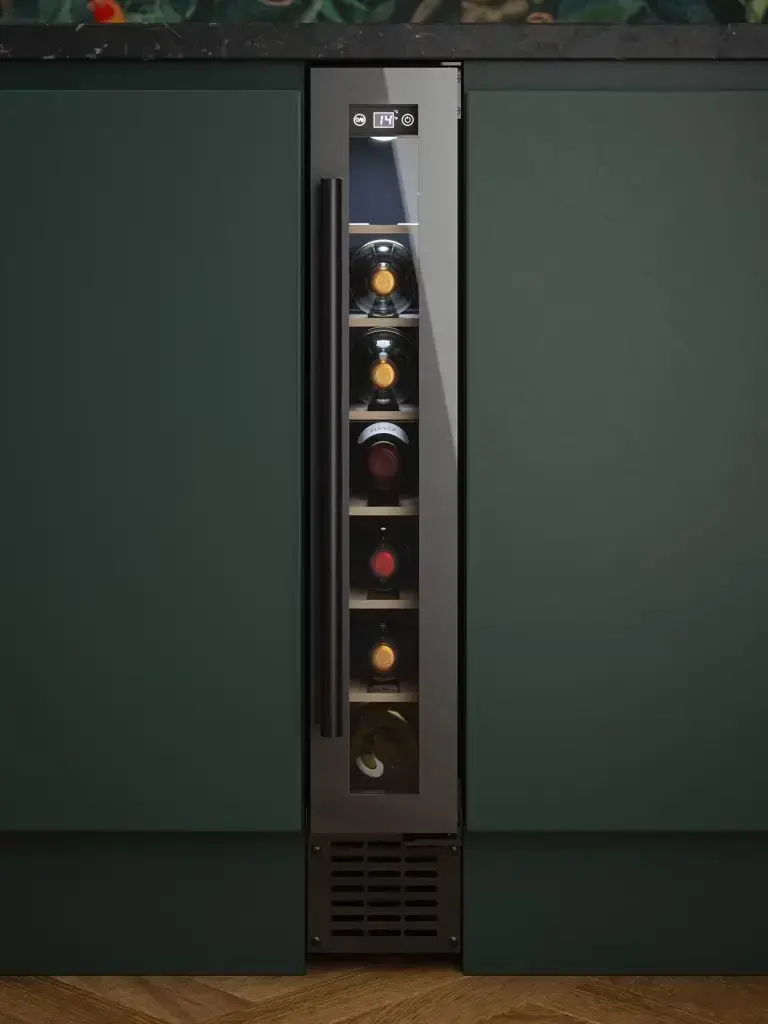
| Built-in wine cooler | Modern kitchens and seamless layouts | Designed to fit neatly into cabinetry |
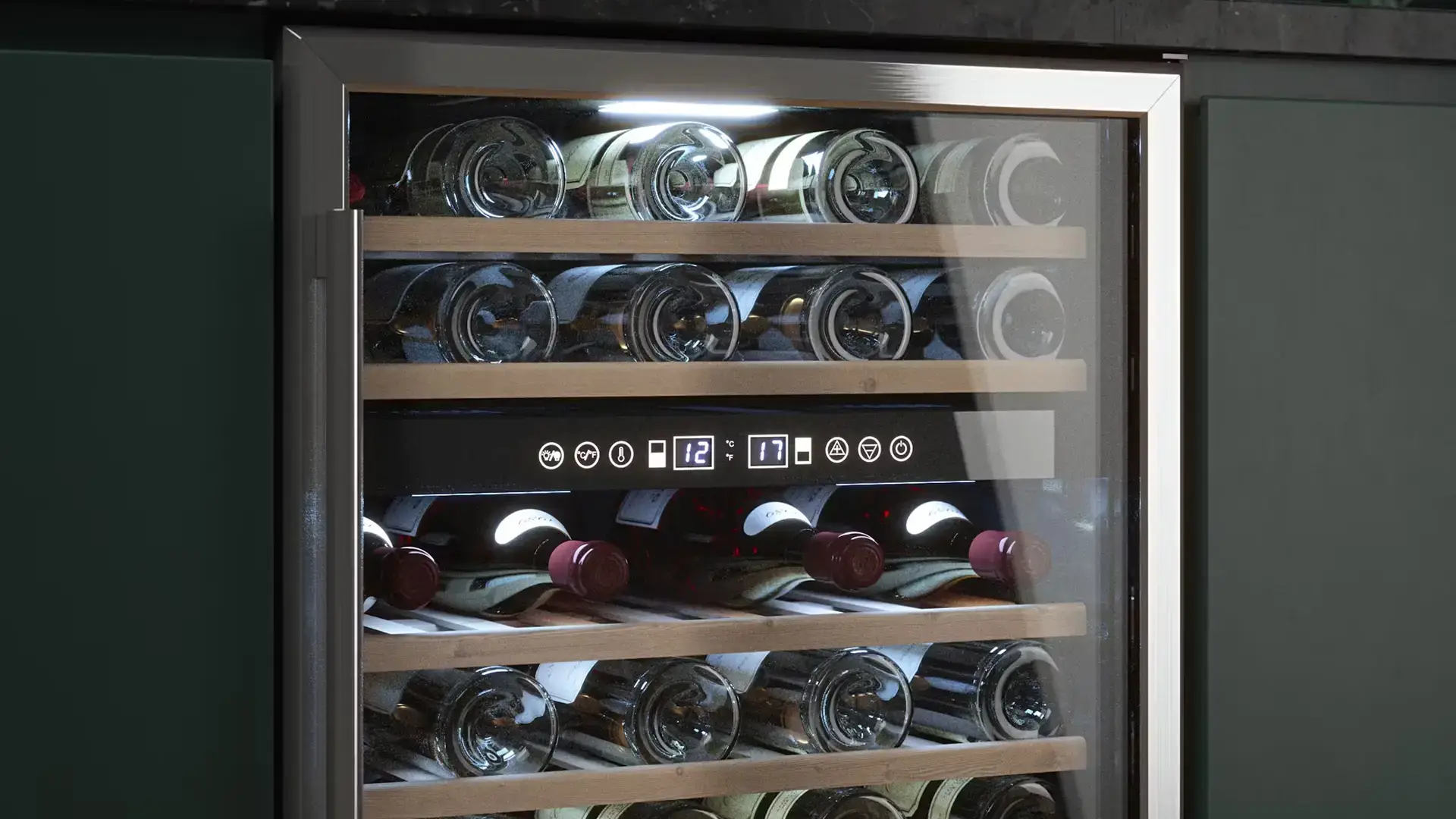
| Dual-zone wine cooler | Mixed wine collections | Lets you store red and white wines at different temperatures |
| Single-zone wine cooler | Collections focused on one wine style | Maintains one consistent temperature throughout |
How Does a Wine Cooler Work?
Wine coolers use dedicated cooling systems to hold bottles at a steady temperature. The two most common approaches are thermoelectric cooling and compressor cooling.
- Thermoelectric wine coolers:
These use an electronic cooling module and are often appreciated for quieter, low-vibration operation. They are commonly suited to smaller collections and calmer indoor spaces. - Compressor wine coolers:
These work more like a traditional fridge and are usually better suited to larger collections or situations where stronger, more consistent cooling is needed.
Many modern models also include features such as digital temperature controls, adjustable shelves, and LED lighting, giving you a mix of practicality and style.
Wine Cooler vs Wine Cellar
A wine cooler and a wine cellar both store wine, but they are designed for different needs. A wine cooler is an appliance-based solution that fits into everyday homes, while a wine cellar is a much larger dedicated storage space designed more for serious long-term ageing.
| Feature | Wine Cooler | Wine Cellar |
|---|---|---|
| Size | Compact appliance | Usually a dedicated room or large storage area |
| Best for | Serving and short- to medium-term storage | Long-term ageing and large collections |
| Installation | Simple compared with a cellar | Far more complex and space-dependent |
| Practicality | Ideal for most households | Better suited to dedicated collectors |
How to Choose the Best Wine Cooler
Before buying a wine cooler, think about how you actually plan to use it. The right model depends on your collection size, available space, and whether you want to store different wine styles together.
- Capacity:
Consider how many bottles you want to store now and whether your collection is likely to grow. - Size and fit:
Measure carefully, especially if you are choosing a built-in model for cabinetry. - Temperature zones:
A dual-zone model is a smart choice if you enjoy both red and white wines and want to keep each at a more suitable setting. - Energy efficiency:
Looking at energy performance can help reduce long-term running costs. - Style and finish:
Choose a design that works with your kitchen or entertaining space as well as your storage needs.
Final Thoughts
A wine cooler is a simple but effective way to store wine in better conditions than a standard fridge can usually provide. For many households, it offers the right balance of convenience, temperature control, and style without needing the space or cost of a dedicated cellar.
If you enjoy keeping bottles ready to serve or want to protect a growing collection, a dedicated wine cooler can be a worthwhile addition to your kitchen or dining space.
Explore More Kitchen Advice & Buying Guides
Browse our latest articles covering appliance tips, energy-saving advice, and expert guidance – designed to help you choose, use, and get the most from your kitchen appliances.