How Energy-Efficient Are Modern Wine Coolers?
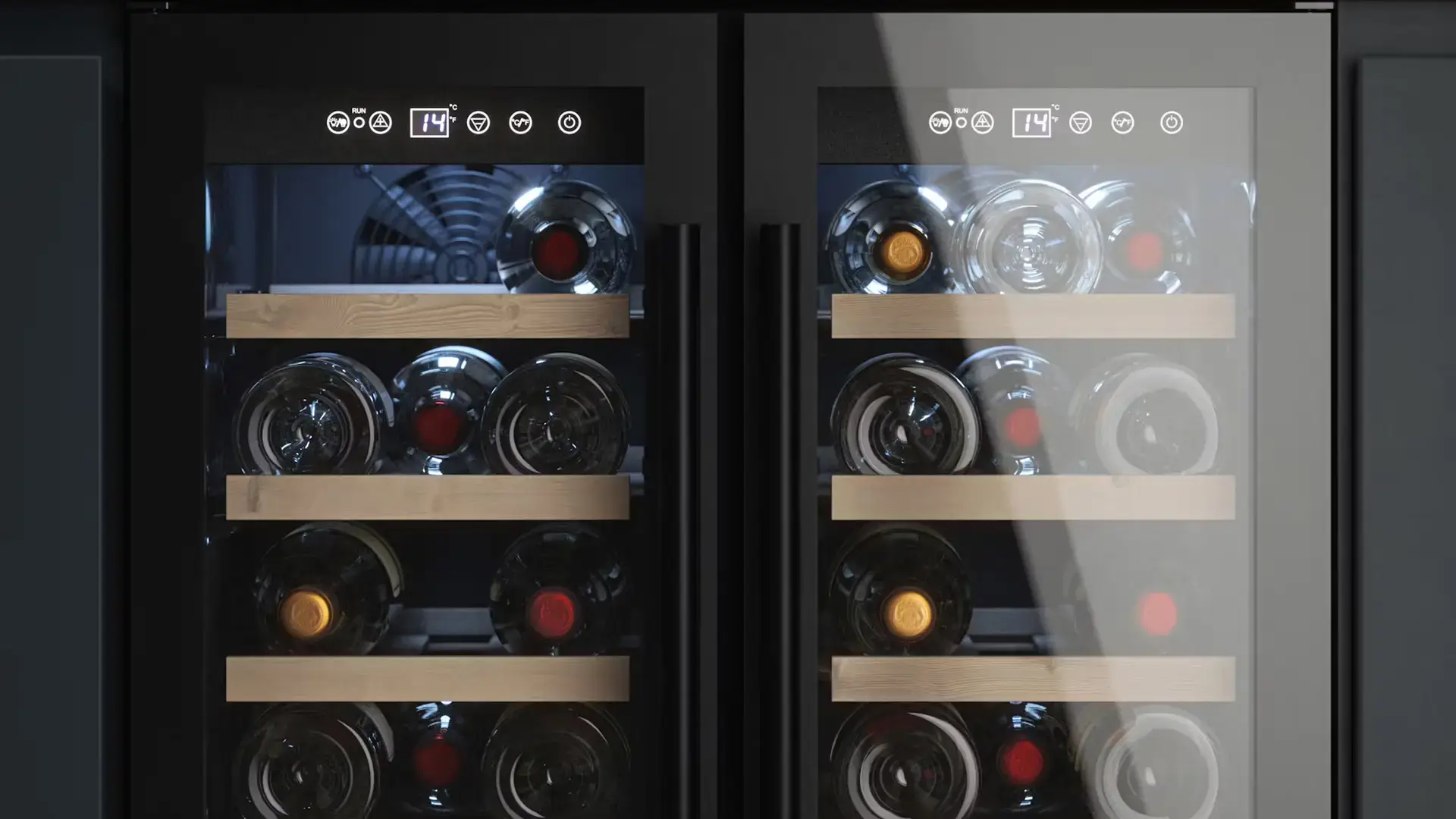
A modern wine cooler typically uses 80 to 150 kWh per year — costing around £24 to £45 annually at current UK electricity rates. That is comparable to a small fridge and a fraction of what older models consumed a decade ago. Improvements in insulation, compressor technology, and LED lighting have made today’s wine coolers among the most efficient appliances in the kitchen category.
How Far Wine Coolers Have Come
The energy consumption of domestic wine coolers has fallen dramatically over the past decade. Models from ten or more years ago were built with basic foam insulation, incandescent lighting inside the cabinet, and older compressor designs that ran inefficiently. A typical unit from that era consumed 300 to 450 kWh per year — costing £90 to £135 annually at today’s tariffs.
Modern coolers benefit from high-density foam insulation with better thermal properties, double or triple-glazed glass doors that reduce heat gain from the room, low-power LED lighting that generates almost no heat inside the cabinet, and variable-speed compressors that adjust their output to maintain temperature rather than cycling on and off at full power. The result is a category that has cut its typical energy consumption by 60 to 70 percent in a single generation of product development.
| Feature | Older wine coolers (10+ years) | Modern wine coolers |
|---|---|---|
| Insulation | Basic foam, often poor door seals | High-density foam, airtight seals |
| Door glazing | Single pane — high heat gain | Double or triple glazed, UV-resistant |
| Interior lighting | Incandescent — generates heat | Low-power LED — negligible heat |
| Compressor | Single-speed, frequent cycling | Variable speed, sustained low power |
| Thermostat accuracy | Manual dial, ±3°C variance | Digital, ±0.5°C stability |
| Typical annual use | 300 to 450 kWh | 80 to 150 kWh |
What Affects Energy Consumption
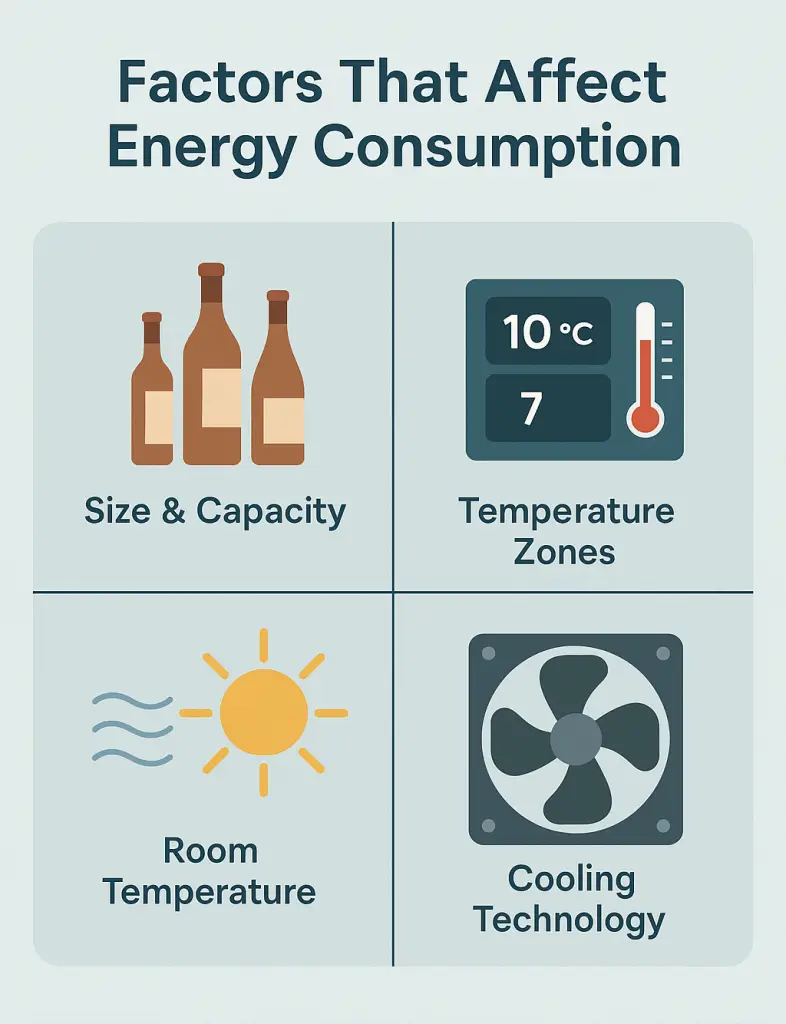
The figure on the energy label gives you the manufacturer’s tested annual consumption under standard conditions. Real-world consumption varies depending on how and where the cooler is used. These are the factors with the most practical impact.
Ambient room temperature
This is the single biggest variable. A wine cooler in a cool cellar or north-facing utility room will use significantly less energy than the same model sitting in a warm kitchen or south-facing conservatory. The compressor’s job is to maintain the difference between the cabinet temperature and the room temperature — the larger that gap, the harder it works.
Cooler size and capacity
Larger coolers with more internal volume naturally require more energy to cool. However, a fully loaded cooler is more efficient per bottle than a large cooler that is half-empty — the thermal mass of the bottles themselves helps maintain temperature, reducing how often the compressor needs to run.
Single zone vs dual zone
A dual-zone wine cooler maintains two independent temperature compartments simultaneously. This requires more compressor work than a single-zone model of equivalent size and increases annual consumption by roughly 20 to 40 percent compared to single-zone equivalents. This is a worthwhile trade-off for households storing both red and white wine at their correct serving temperatures, but worth accounting for when comparing specifications.
How often the door is opened
Each time the door opens, warm room air enters the cabinet. The compressor then cycles on to restore the set temperature. A cooler opened frequently — as a drinks fridge for daily access — uses more energy than one opened only for wine retrieval once or twice a week.
Running Costs by Cooler Size
The figures below are approximate annual running costs based on typical consumption ranges for each capacity category, at a UK electricity tariff of 25p per kWh. Always check the specific model’s energy label for the tested annual kWh figure before calculating.
Estimated annual running cost by cooler size
Based on 25p per kWh. Running cost (£/year) = annual kWh × tariff. Check your energy label for the tested figure specific to your model.
How to Reduce Your Wine Cooler’s Energy Use
Position away from heat sources
Keep the cooler away from ovens, radiators, direct sunlight, and dishwashers. Every degree of additional ambient heat increases the compressor’s workload. A cool, shaded position can reduce consumption by 15 to 25 percent compared to a warm spot in the same room.
Ensure adequate ventilation
Compressor coolers expel heat from the rear and base. Blocked ventilation causes the condenser to run hotter, reducing efficiency and longevity. Maintain the clearances specified in the manual — typically 5 to 10cm at the rear and sides for freestanding models.
Keep it appropriately full
A cooler loaded to roughly two-thirds capacity performs more efficiently than one that is nearly empty. The thermal mass of the bottles helps stabilise the cabinet temperature, reducing compressor cycling. Avoid blocking air circulation vents inside the cabinet when loading.
Minimise door openings
Each door opening introduces warm, humid air. If the cooler is used as a serving fridge for frequent access, consider whether a dedicated drinks fridge at a less precise temperature might be more energy-efficient for everyday use, keeping the wine cooler for longer-term storage.
Clean condenser coils annually
On compressor models, dust on the condenser coils acts as insulation, forcing the compressor to work harder to expel heat. A soft brush or vacuum once a year — with the unit unplugged — maintains full efficiency. This is particularly important in kitchens where airborne cooking particles accumulate on surfaces.
Check and replace the door seal
A damaged or compressed door seal allows warm air to enter continuously. Test by closing the door on a thin piece of paper — if it slides out freely, the seal needs replacing. A good seal is one of the most cost-effective maintenance actions available for any compressor-cooled appliance.
All CATA wine coolers display their energy rating and annual kWh consumption on the product page. The guide to how often to clean your wine cooler covers the maintenance routine — including condenser coil cleaning and door seal inspection — that keeps any model running at its rated efficiency.
CATA Wine Coolers
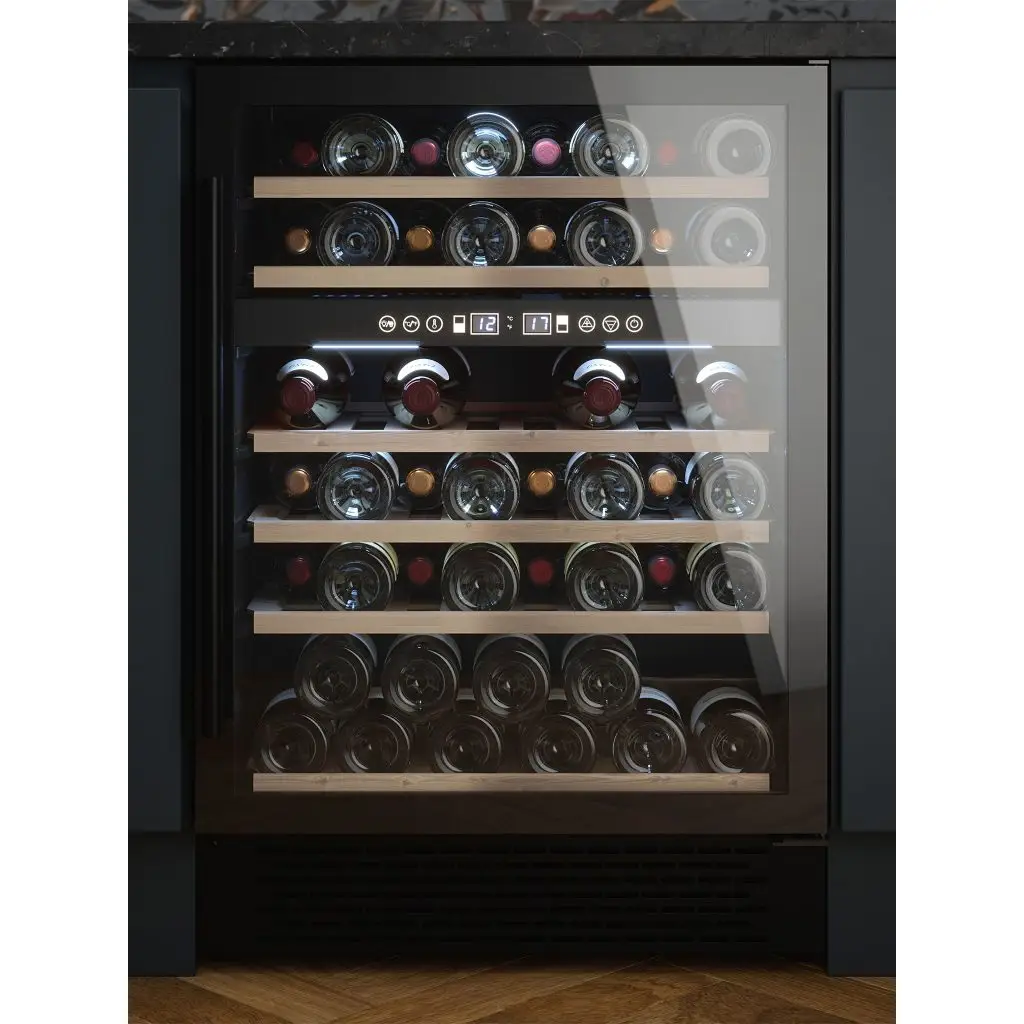
UBBKWC60 — 60cm Dual Zone Wine Cooler
- Two independent temperature zones
- Holds up to 38 bottles
- Low-energy LED lighting
- Digital temperature control
- Black glass finish
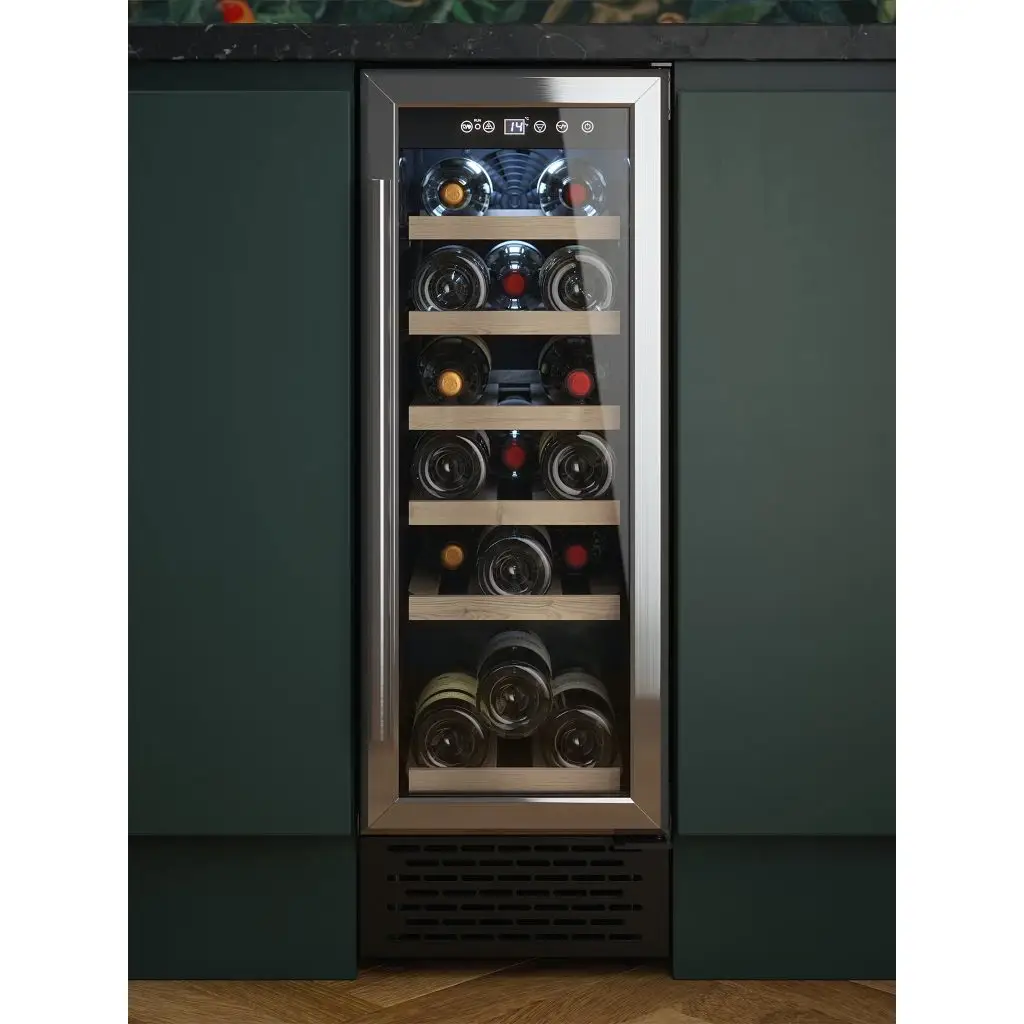
UBSSWC30 — 30cm Wine Cooler Stainless Steel
- Compact 30cm width for smaller spaces
- Holds up to 16 bottles
- Low annual energy consumption
- Digital thermostat with LED display
- Stainless steel finish