Home » General Appliance Guides & Advice » Smart Kitchen Appliances: What Are the Real Benefits?
Smart Kitchen Appliances: What Are the Real Benefits?
The honest answer is that smart features vary enormously in usefulness depending on the appliance and the feature. Some genuinely change how you use the appliance: automatic extraction linking between a hob and a hood, or a dishwasher that adjusts its cycle based on soil level. Others add complexity without much practical value: Wi-Fi connectivity on an appliance you interact with directly anyway is a good example. This guide separates the features that earn their place from those that rarely get used in practice.
Where Smart Features Genuinely Help
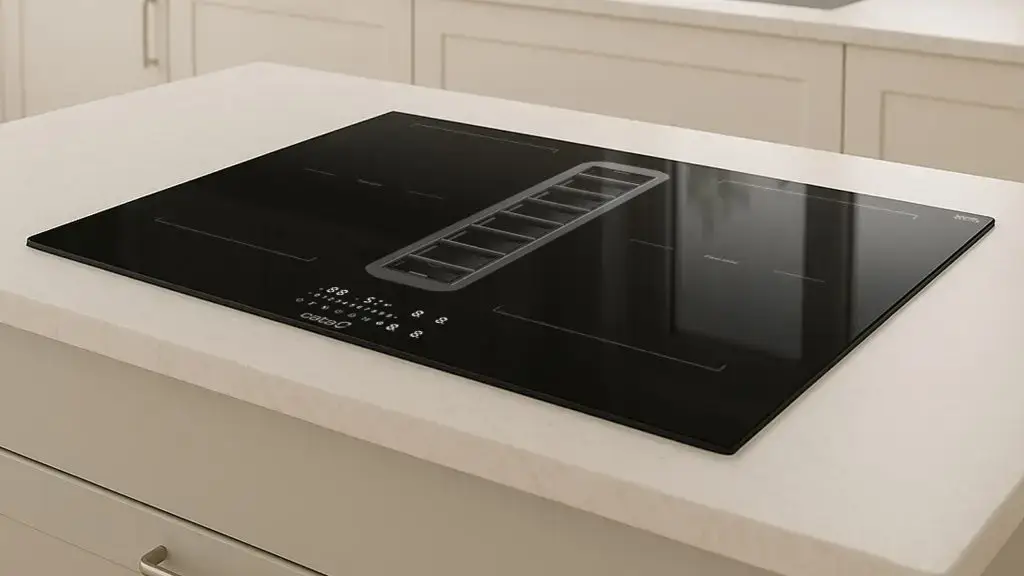
When a compatible hob and cooker hood are connected, the hood automatically adjusts its extraction speed based on which hob zones are active and at what power level. Switch on the Boost zone and the hood ramps up; reduce to a simmer and the hood drops back to a lower speed. You never need to touch the hood controls during cooking.
This is a genuine quality-of-life improvement for everyday cooking. The hood always runs at the right speed without requiring a separate adjustment every time you change the hob setting. It also ensures extraction is never running at lower than required speed, which means cooking odours and steam are cleared more reliably. The linked auto-extraction function on CATA’s compatible cooker hood and hob combinations is one of the more practically useful smart features in the current range.
Dishwashers with soil sensors and adaptive programme logic adjust water temperature, cycle duration, and water volume based on how dirty the load actually is, rather than running the same standardised cycle regardless. A lightly loaded machine with barely soiled dishes runs a shorter, cooler, more economical cycle. A heavily soiled full load gets the temperature and time it needs for a proper clean.
This matters for running costs. A dishwasher running an appropriate cycle rather than a standardised one uses less water and energy on lighter loads, potentially saving 20 to 30 percent of energy costs on everyday washes compared with a fixed programme at the same nominal setting. For more on dishwasher efficiency, see the guide to how much water a dishwasher uses per cycle.
Appliances that send a notification when the filter needs cleaning, when the rinse aid is running low, or when a fault code is triggered are genuinely useful, particularly for appliances people tend to ignore between uses. A dishwasher that reminds you the filter has not been cleaned in six weeks is more likely to keep running efficiently than one that relies on you remembering. A fridge that alerts you when the door has been left ajar prevents food spoilage without you noticing the problem first.
The maintenance reminder function is most useful for appliances with components that need periodic attention: dishwashers, wine coolers, and cooker hoods with filter-change intervals. It converts maintenance from a task you forget to a task you receive a prompt for.
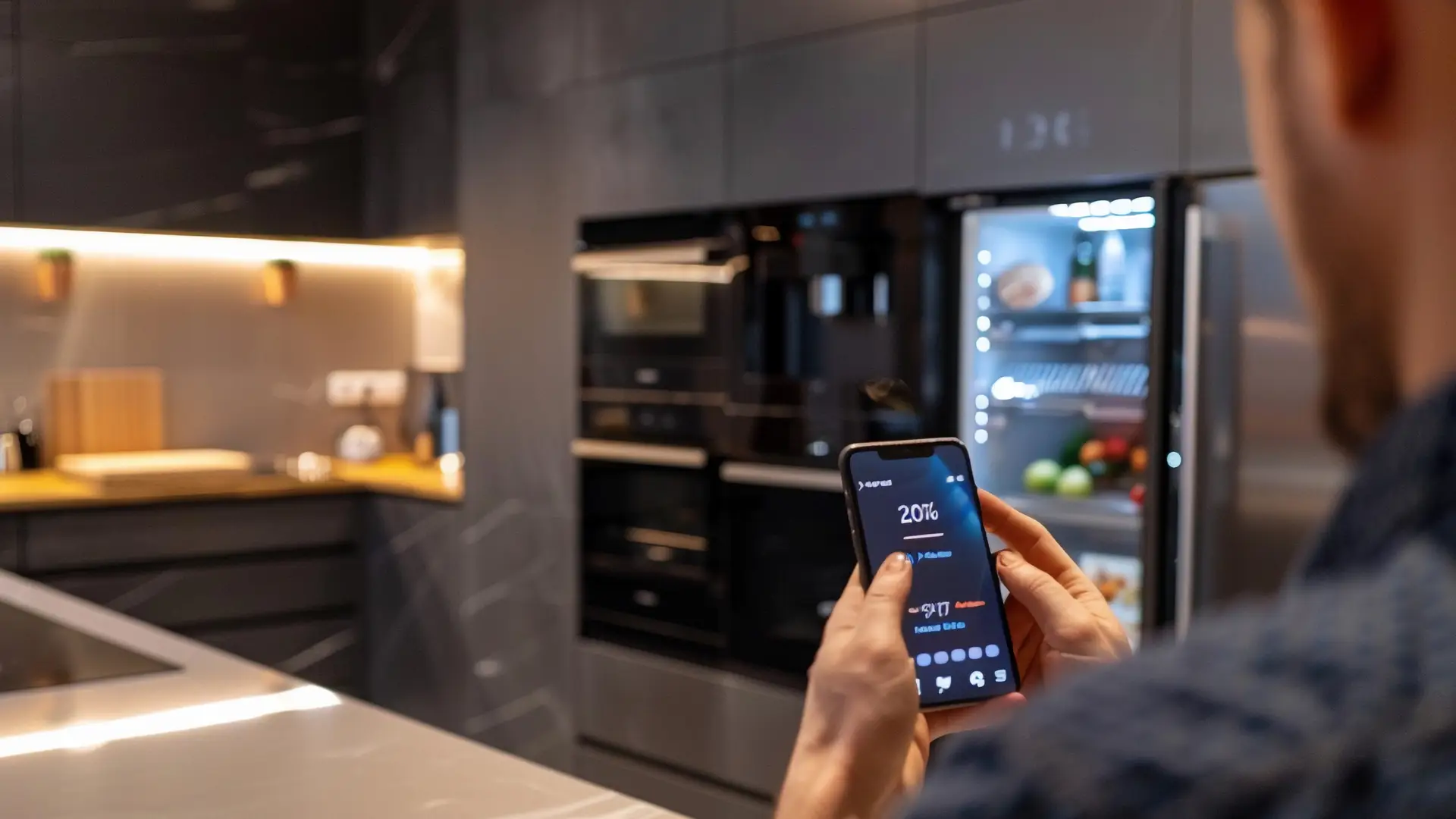
The ability to start the oven preheating from your phone before you arrive home is the most frequently cited smart oven feature, and it is genuinely useful for households with predictable routines. If you commute and know you want the oven ready at a specific time, remote preheat eliminates the 15-minute wait between arriving home and being able to cook.
Its value is moderate rather than high because it solves a convenience problem that the programmable timer on most conventional ovens also solves, and because its usefulness is limited to households with consistent, predictable schedules. For households that cook spontaneously or whose schedule varies, the remote preheat feature rarely gets used in practice. The oven preheat guide covers how to reduce wait time without smart features, including rapid preheat modes available on standard multifunction ovens.
Appliances that report energy consumption per cycle, or those that track usage patterns over time, provide data that can meaningfully inform how you use them. Knowing that your oven accounts for a disproportionate share of kitchen energy use, or that the dishwasher’s eco cycle at 45°C uses 40 percent less energy than the standard programme at 60°C, makes it easier to make behavioural changes that actually reduce bills.
The value of this feature depends on whether you engage with the data. For households that actively manage energy use, consumption reporting is useful. For those who do not check the app regularly, it adds little. The guide to kitchen appliance running costs covers the highest-impact changes by appliance without needing any smart monitoring.
Wi-Fi connectivity is the feature most prominently marketed on smart appliances and the one that, in practice, often adds the least to everyday use. For most appliances including hobs, ovens, and microwaves, you are already standing in the kitchen when you operate them. The ability to change an oven’s temperature from your phone has limited practical advantage when the oven is two metres away.
The exception is appliances you operate at a distance from where you are, such as turning on a slow cooker from the office, or checking whether the washing machine has finished from another room. For kitchen appliances specifically, Wi-Fi connectivity is more useful as an infrastructure layer that enables other features (notifications, energy monitoring, linked control) than as a direct control mechanism in its own right.
Worth It vs Rarely Used in Practice
Features that earn their place
- Hob-to-hood automatic extraction linking: used every time you cook
- Adaptive dishwasher cycles based on soil and load: reduces energy on every wash
- Filter and maintenance reminders: prevents neglect and preserves efficiency
- Fault and error notifications: faster diagnosis without needing to check physically
- Door-open alerts on fridges and wine coolers: prevents food spoilage silently
- Programmable start times (even on non-smart ovens): removes the preheat wait
Features that often go unused
- Voice assistant integration with hobs and ovens: proximity makes it faster to use the controls directly
- Recipe app auto-configuration: useful only if you use that specific app and recipe format
- Remote on/off for appliances you operate in the kitchen: most people are already there
- Usage history dashboards: valuable only for households who regularly review energy data
- Multi-appliance ecosystem apps: value increases only when multiple compatible appliances are present
The practical test for any smart feature is simple: would you use this functionality at least once a week? Features that pass that test (extraction linking, maintenance alerts, adaptive cycles) typically justify any price premium. Features that you would use occasionally or never do not, and a well-specified non-smart appliance in the same category will often deliver better cooking performance per pound spent.
For guidance on choosing the right appliance specifications without overpaying for features, see the hob buying guide and the integrated microwave buying guide. For reducing running costs through habits rather than smart features, the kitchen appliance running costs guide covers the highest-impact changes by appliance. Browse the full CATA range for current models across all appliance categories.
Common questions answered
Are smart appliances significantly more expensive than standard ones?
In most categories, the price premium for smart connectivity is modest, typically £50 to £150 over an equivalent standard model at the same specification tier. The more significant cost consideration is whether the smart features offered on a specific model are ones you will actually use. A standard appliance with strong core performance is usually better value than a smart model with the same base performance but features you will not engage with.
Do smart appliances become useless if the manufacturer stops supporting the app?
The appliance continues to function normally. All smart features work through the physical controls regardless of app availability. What is lost if an app is discontinued is any remote or app-dependent functionality, such as push notifications, remote control, and energy monitoring. The core cooking or cleaning performance is unaffected. This is a real consideration for appliances where smart features are a significant part of the value proposition.
Is the hob-to-hood linking feature available on CATA appliances?
Yes. Select CATA hob and hood combinations support automatic extraction linking where the hood adjusts speed in response to hob zone activation. Check the product pages for compatible pairings, as the feature requires both the hob and the hood to support the linking protocol. The CATA cooker hood range lists compatible models.
Do smart appliances require a strong Wi-Fi signal in the kitchen?
For app connectivity and remote features, yes. A reliable signal in the kitchen is necessary. Most modern routers cover a typical kitchen adequately, but if the kitchen is far from the router or separated by thick walls, a Wi-Fi extender may be needed for consistent connectivity. The appliance’s physical controls and non-connected features work regardless of Wi-Fi signal quality.
Explore More Kitchen Advice & Buying Guides
Browse our latest articles covering appliance tips, energy-saving advice, and expert guidance – designed to help you choose, use, and get the most from your kitchen appliances.