Integrated Microwaves: The Smart Choice for Modern Kitchens
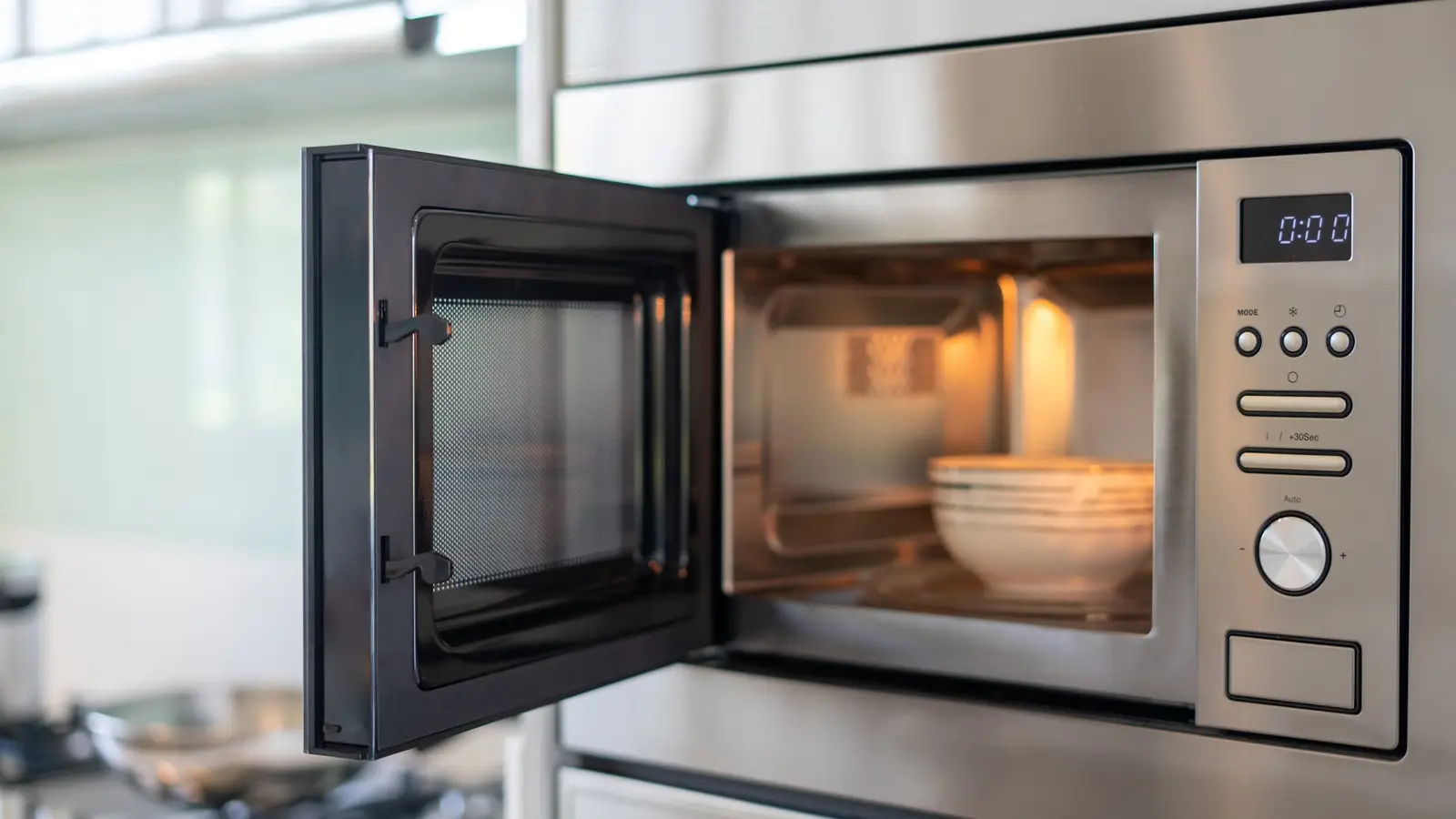
An integrated microwave fits flush inside kitchen cabinetry, freeing up worktop space and giving the kitchen a seamless, purpose-built appearance. Beyond aesthetics, the main practical choice is which type suits your cooking: a solo model for everyday reheating, a microwave grill for browning and crisping, or a combination microwave that can also bake. This guide covers what to look for and which CATA models to consider.
Why Choose an Integrated Microwave
Worktop space
A freestanding microwave on the worktop typically occupies 45 to 55cm of counter depth. An integrated model reclaims that space entirely, keeping the worktop clear for food preparation. In smaller kitchens this is a meaningful practical gain, not just an aesthetic one.
Ergonomic positioning
Built-in microwaves are installed at eye or chest height in a tall appliance housing, rather than at worktop level where reaching into a freestanding model requires leaning down. This is particularly useful for anyone who uses a microwave frequently or has mobility considerations.
Kitchen design coherence
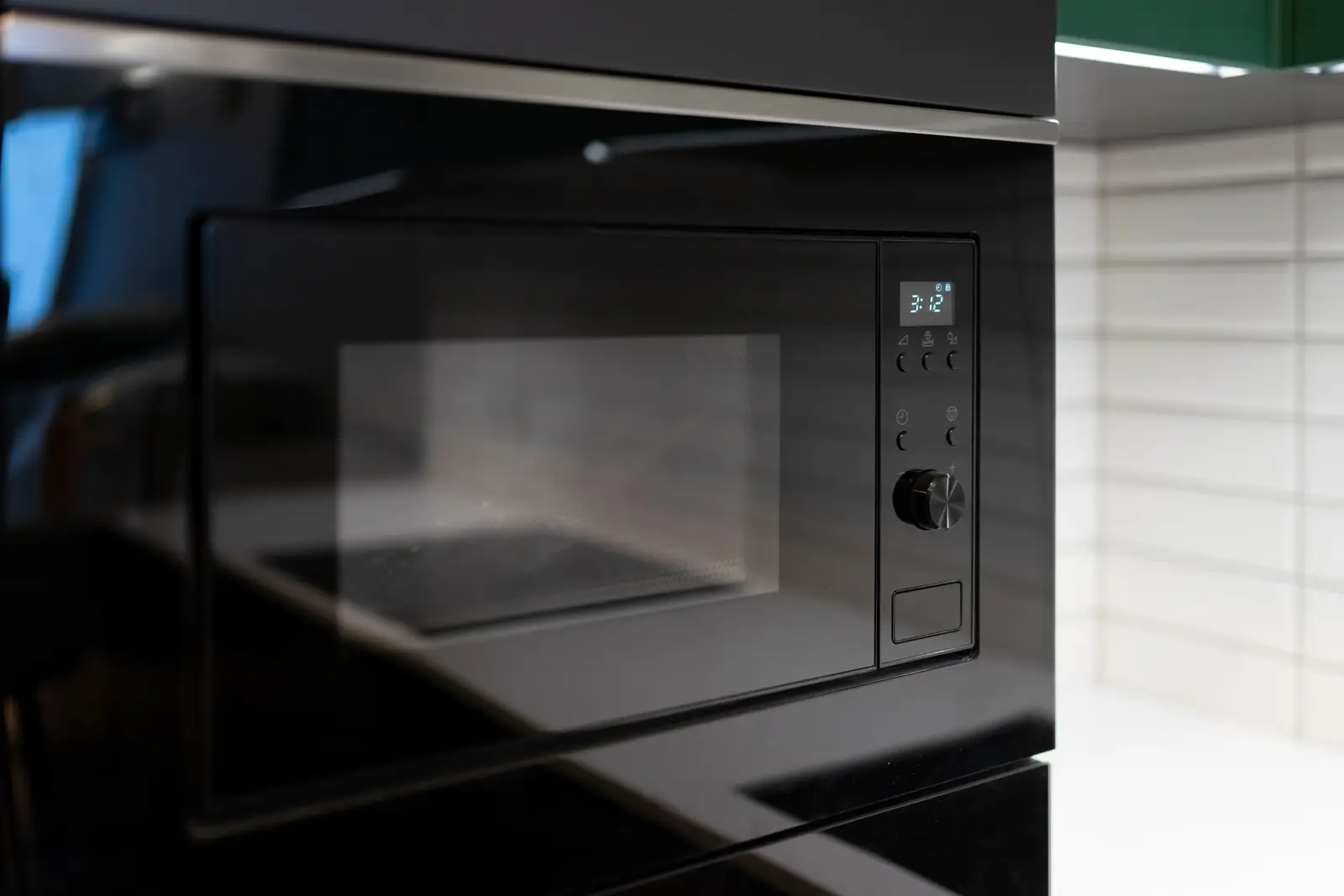
An integrated microwave with a matching trim kit and door handle coordinates with adjacent built-in ovens for a unified fitted kitchen appearance. Freestanding microwaves rarely match the finish and proportions of other kitchen appliances precisely.
Ventilation is handled by design
Integrated microwaves are designed with ventilation that works within a cabinet installation. Unlike freestanding models, which need clearance on all sides, built-in models vent correctly within the housing their specifications require — no improvised clearance gaps needed.
The Three Types of Integrated Microwave
The most important decision when buying a built-in microwave is which type of cooking functionality you need. Each type adds capability at an increasing price point and installation depth.
Microwave only
Handles reheating, defrosting, and simple cooking using microwave energy alone. No grill element or fan oven function. Compact capacity — typically 17L to 20L — and the simplest control interface. The right choice for a household that primarily wants quick reheating and does not need browning or baking capability from the microwave.
Microwave with grill element
Adds a radiant grill element at the top of the cavity. The grill can be used independently to brown and crisp food surfaces, or in combination with the microwave to heat food through and brown the top simultaneously. Ideal for cheese on toast, jacket potatoes with crisp skin, and grilled chicken pieces. Capacity typically 20L to 25L.
Microwave, grill, and convection oven
The most versatile type. A fan and heating element circulate hot air around the cavity in the same way a conventional oven does, allowing baking, roasting, and full cooking alongside microwave and grill functions. A combination microwave can replace a second oven in many households. Capacity typically 25L to 32L. Larger models fit a 45cm housing rather than a standard 60cm width.
Key Features to Look For
| Feature | Why it matters | What to look for |
|---|---|---|
| Capacity | Determines the size of dishes that fit inside | 20L for one or two people; 25L+ for families or combination cooking |
| Wattage (microwave) | Higher wattage means faster, more even cooking | 800W minimum; 900W or above for better performance |
| Grill wattage | Determines how quickly the grill element browns food | 1,000W minimum; 1,200W+ for faster, more effective grilling |
| Power levels | More levels allow more precise cooking | 5 power levels as a minimum; 10 levels preferred for delicate cooking |
| Auto programmes | One-touch cooking for common tasks | At minimum: reheat, defrost by weight, and a few food-specific programmes |
| Child lock | Prevents accidental operation | Standard on most current models; activated by holding a button combination |
| Interior light and turntable | Visibility and even cooking rotation | LED interior lighting preferred; turntable should cover the full base diameter |
Installation Considerations
Built-in microwaves are not a direct drop-in replacement for a freestanding model. A few planning points are worth checking before purchase.
Cabinet cutout dimensions
Most integrated microwaves are designed for a standard 60cm wide cabinet, but the height cutout varies by model — typically between 32cm and 40cm depending on capacity. Combination models in a 45cm format need a different housing. Always confirm the exact cutout dimensions from the installation guide for the specific model before ordering the housing.
Ventilation clearance
Built-in microwaves require ventilation at the rear or top of the housing. The installation guide specifies exactly how much clearance is needed and where the vents must be. An incorrectly ventilated installation can cause the microwave to overheat and trip its thermal cutout repeatedly.
Electrical connection
Microwaves up to 3kW can connect to a standard 13A socket within the housing. A socket at the rear of the cabinet allows connection without trailing cables. Some models with combination cooking above 2.5kW may benefit from a dedicated supply — check the installation guide for the specific model.
Height positioning
The microwave should be positioned so the interior base is roughly at elbow height — typically 90cm to 110cm from the floor depending on user height. Positioning it too high makes reaching inside and reading the display awkward; too low defeats the purpose of an integrated installation. Most appliance towers allow shelf height adjustment to fine-tune this.
CATA Integrated Microwave Range
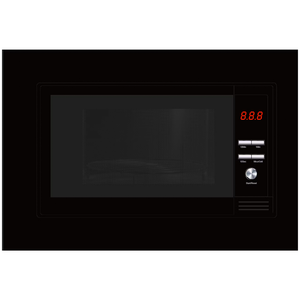
UBMICL20BK.1 — 20L Integrated Microwave Grill
Compact 20L microwave grill in black. Grill element for browning and crisping, multiple power levels, and a straightforward control interface. Suited to everyday reheating and simple grill cooking in a standard 60cm housing.
View product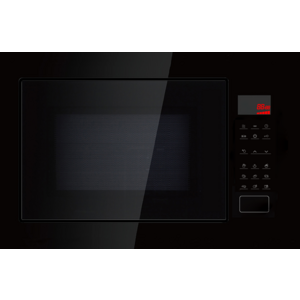
UB25MGBK — 25L Built-In Microwave Grill
25L capacity microwave grill with increased interior space for larger dishes. Grill function for browning, combination mode for simultaneous microwave and grill cooking, and a black glass finish suited to modern fitted kitchens.
View product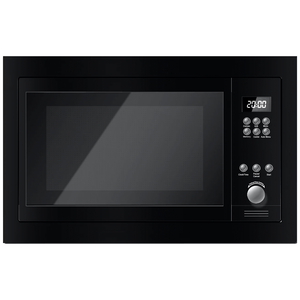
UBCOMBI25BK — 25L Integrated Combi Microwave
25L combination microwave with microwave, grill, and convection oven functions. Fan-assisted hot air cooking allows baking and roasting alongside standard microwave and grill use. Fits a standard 60cm housing.
View product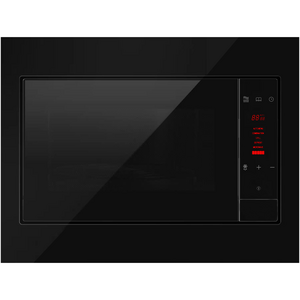
UB45CM31BK — 31L Built-In Combi Microwave
31L combination microwave in a 45cm format — larger capacity for family cooking with microwave, grill, and full convection oven modes. Designed for a 45cm appliance housing, often paired with a matching 45cm compact oven above or below.
View productFor guidance on getting the most from a combination microwave’s grill function, the guide to how a microwave grill works covers the difference between microwave, grill, and combination modes and which foods suit each. The guide to metal in a microwave grill covers which accessories are safe in which mode.
Common questions answered
Can any integrated microwave replace a second oven?
A combination microwave with convection cooking can handle most tasks a second oven would — baking, roasting, reheating at full oven temperature. A solo microwave or microwave grill cannot. If replacing an oven is the goal, a combination model with at least 25L capacity and a convection mode is the right starting point.
Do I need a special cabinet for an integrated microwave?
Most built-in microwaves fit into a standard 60cm wide kitchen unit, but the height cutout and ventilation requirements vary by model. Check the installation guide for the exact cutout dimensions before ordering cabinetry. Some combination models in the 45cm format require a different housing size entirely.
Is a built-in microwave harder to install than a freestanding one?
The installation itself — placing the appliance in the housing and connecting the power — is straightforward. The planning ahead of installation is what takes more thought: confirming the cutout dimensions, ventilation clearance, and electrical supply are all correct before the appliance arrives. Most kitchen fitters will handle built-in microwave installation as part of a kitchen fit.
What is the difference between the 60cm and 45cm models?
The 60cm format is the standard width for most kitchen units and suits the majority of installations. The 45cm format is designed for compact appliance towers where space is limited, or where a pairing with a 45cm compact oven is planned. The 45cm CATA model offers a larger 31L capacity despite the narrower housing width.