Home » Microwave Guides & Advice » Microwave Containers: Which Materials Are Safe?
Microwave Containers: Which Materials Are Safe?
Not all containers behave the same in a microwave. Some pass energy straight through to the food; others absorb it, warp, spark, or leach chemicals when heated. The short answer is that glass and labelled ceramic are always safe, plastic requires careful checking, and metal should never go in. The material guide below sets out exactly where each common container type stands.
Material-by-Material Guide
Microwaves heat food by causing water molecules in the food to vibrate rapidly. A container that absorbs microwave energy instead of transmitting it will heat up itself, potentially warping, cracking, or releasing chemicals into the food. The colour coding below reflects how each material behaves under normal microwave use.
Glass (plain, heat-resistant)
Microwaves pass through glass almost entirely, heating the food rather than the container. Borosilicate glass — the kind used in ovenproof dishes and Pyrex-style containers — handles temperature changes without cracking. Standard soda-lime glass (most drinking glasses and jars) is generally fine for reheating but should not be used for prolonged cooking at high power. Avoid glass with metallic trim or decoration, which can cause arcing.
Ceramic and stoneware
Plain ceramic and stoneware are safe provided they carry a microwave-safe symbol. The microwave-safe label indicates the glaze and clay body have been tested and do not absorb significant microwave energy. Avoid anything with gold, silver, or metallic glazing, which sparks reliably. Earthenware with a porous, unglazed base can absorb moisture and become very hot — check that the base is fully glazed before using.
Food-grade silicone
High-quality food-grade silicone is stable at microwave temperatures and does not leach into food. It is widely used for microwave lids, steaming bags, and flexible containers. Check that the product is specifically rated for microwave use and carries a food-safe marking — not all silicone-look products are the same material. Cheap decorative silicone items may contain fillers that behave differently under heat.
Parchment paper and plain paper towels
Unbleached parchment paper and plain white paper towels are safe for covering food during short reheating cycles — they allow steam to escape and reduce splatter without reacting with microwave energy. Do not use printed paper, brown paper bags, or paper with any plastic or foil coating, as these can ignite or release chemical residues. Paper is suitable for covering, not as a container for liquid or high-fat foods.
Plastic — labelled microwave-safe only
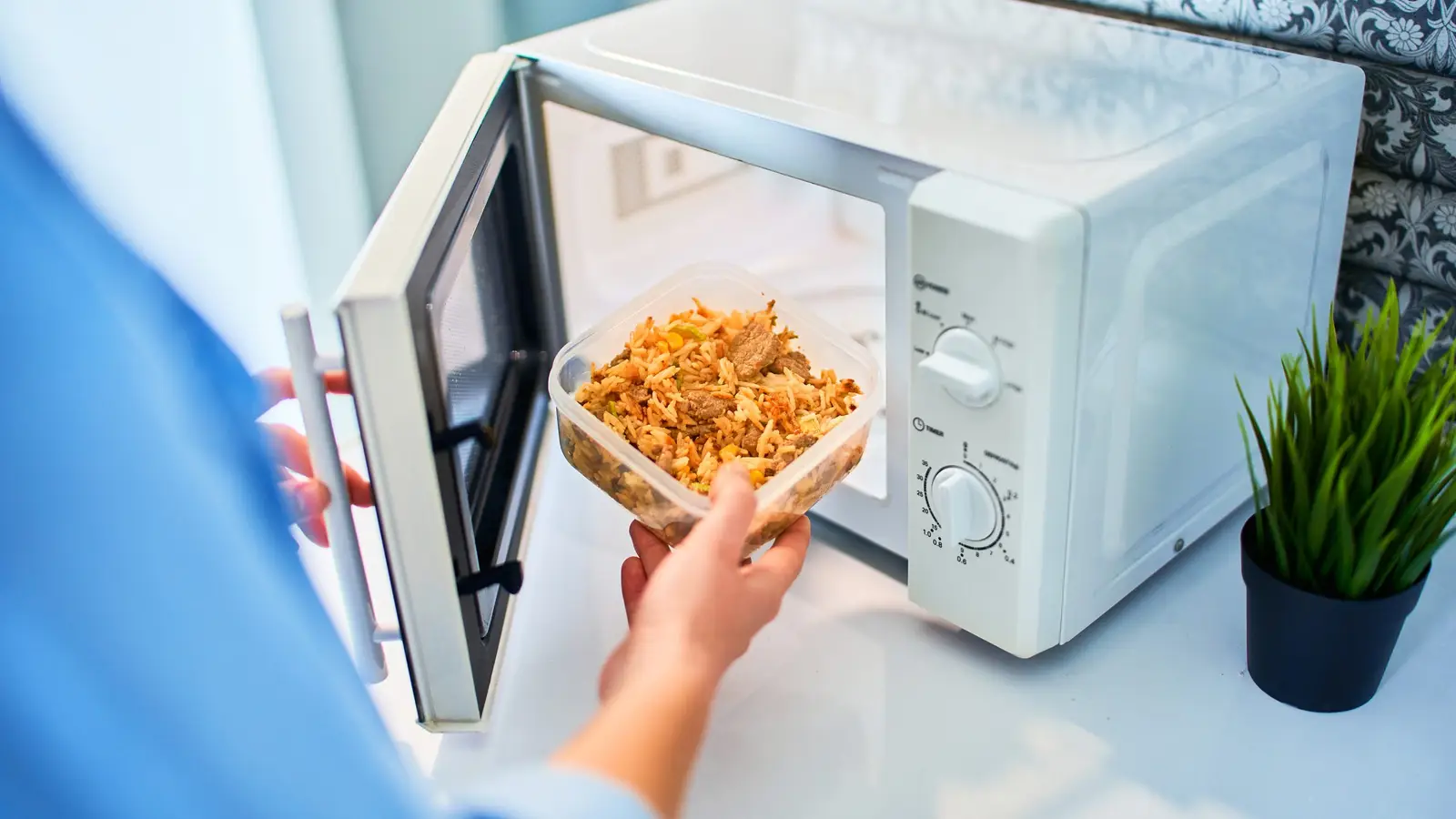
Plastic is not a single material. Some plastics are formulated to be chemically stable under microwave heat; many are not. The microwave-safe symbol (a box with wavy lines) means the container has been tested and approved for this use. Without that symbol, do not use it. Takeaway containers, yoghurt pots, margarine tubs, and single-use food packaging are almost never microwave-safe regardless of how they look. See the section below for detail on plastic types and recycling codes.
Microwave-safe plastic wrap / cling film
Only use cling film that is explicitly labelled microwave-safe. It should not touch the food surface directly — leave a gap and vent one corner to allow steam to escape. Standard cling film from a catering roll is not necessarily microwave-safe. PVC-based cling film should be avoided as it can transfer plasticisers to fatty foods when heated.
Metal (all types)
Metal reflects microwave energy rather than absorbing or transmitting it. This causes arcing — visible sparking between metal surfaces or between the metal and the oven walls — which can damage the magnetron and in some cases cause fire. This applies to all metal: stainless steel, aluminium, cast iron, foil trays, and twist ties on packaging. Some microwave combination ovens specify limited metal use in particular modes; in those cases follow the appliance manual precisely and only in the specified mode.
Polystyrene foam / expanded polystyrene
Foam takeaway containers, coffee cups, and supermarket meat trays are made from polystyrene that is not designed for heat. Microwaving causes them to soften, warp, or melt, and the material can transfer styrene compounds into food during this process. Transfer food into glass or ceramic before heating — it takes less than a minute and eliminates the risk entirely.
Melamine
Melamine tableware is common in canteens and children’s crockery because it is durable and lightweight. It is not microwave-safe. When heated, melamine can absorb microwave energy, become very hot, and release formaldehyde into food, particularly at higher temperatures or in contact with acidic foods. The Food Standards Agency advises that melamine should not be used for heating food.
Bamboo-plastic composite products
A number of bamboo-blended cups, bowls, and containers have been sold as eco-friendly alternatives to plastic. The Food Standards Agency has issued specific warnings about these products, noting that some release melamine and formaldehyde when used with hot food or liquids. They should not be used in the microwave, and the FSA has advised against using some of these products for hot food even without microwaving.
Plastic: The Detail
Plastic is the material that generates the most confusion because there are dozens of distinct plastic types, and their safety profiles differ significantly. The recycling number on the base of a container — the number inside the triangle symbol — identifies the plastic type and gives a reasonable indication of microwave suitability, though it is not a substitute for the manufacturer’s microwave-safe label.
Recycling codes and microwave suitability
Polypropylene (#5 PP) is the most commonly used plastic in purpose-made microwave containers and storage boxes. It remains stable at typical microwave temperatures and does not leach at normal operating conditions. It is the plastic most likely to carry a genuine microwave-safe symbol from the manufacturer.
PET (#1) — used in water bottles, fizzy drink bottles, and many food trays — is designed for single use and cold storage. It can deform when heated and is not appropriate for microwave use even when the recycling symbol is present. PVC (#3) should be avoided in any food heating context.
The recycling code tells you the material type, not whether the specific product has been tested for microwave use. A #5 PP container without a microwave-safe label has not been certified for this use — the label is the confirmation, not the number alone.
Safe Use Tips
Choosing the right container is the foundation, but a few consistent habits when using the microwave eliminate most of the remaining safety risks.
Always vent lids and covers
Steam builds up rapidly inside sealed containers and can cause them to burst open. Leave the lid slightly ajar or lift one corner of any covering before microwaving, regardless of the container type.
Transfer from packaging before heating
Supermarket trays, takeaway containers, and ready-meal packaging are designed for storage and display, not microwave heating. Transfer food to a glass or ceramic dish first — it takes seconds and removes any uncertainty.
Handle with care after heating
A microwave-safe container will not heat up from microwave energy directly, but it absorbs heat from the hot food inside it. Glass and ceramic dishes can become very hot, particularly from the bottom. Use oven gloves or a folded cloth when removing them.
Retire damaged containers
Cracked, crazed, or heavily scratched containers — including previously microwave-safe plastic — should not be reused. Damage creates points where the material can begin to break down more readily under heat. Discoloured or warped plastic containers should also be replaced.
Check the label every time for plastics
Not every container in a set will necessarily carry the same microwave-safe designation. Storage sets sometimes combine microwave-safe bases with lids that are not rated for microwave use. Check each component separately rather than assuming uniformity across a set.
When in doubt, use glass
Plain glass is always safe, always transparent so you can see the food, and easy to clean. If you are ever uncertain whether a container is appropriate, switching to glass removes the question entirely. A basic set of glass storage containers covers most microwave heating needs.
The Food Standards Agency publishes guidance on safe use of food containers and materials, including specific warnings about bamboo composites and melamine, at food.gov.uk. CATA’s built-in microwaves include combination models where specific cooking modes may permit limited metal use — always follow the mode-specific guidance in your appliance manual.
The Rules of Thumb
- ✓Glass and labelled ceramic are the safest and most versatile options. Use them as your default.
- ✓Plastic is safe only when labelled microwave-safe by the manufacturer. The label is the qualification — not the recycling number, not the appearance, not how it has behaved before.
- ✗Metal of any kind will cause arcing and risk damage to the appliance. No exceptions in standard microwave mode.
- ✗Foam, polystyrene, and melamine are not safe regardless of what food is in them or how briefly they are heated.
- !Takeaway and ready-meal packaging is almost never microwave-safe. Transfer food to a proper container before reheating.
- !Food-safe does not mean microwave-safe. A container approved for food contact has not necessarily been tested for heating. The two labels are different and both matter.
Explore More Kitchen Advice & Buying Guides
Browse our latest articles covering appliance tips, energy-saving advice, and expert guidance – designed to help you choose, use, and get the most from your kitchen appliances.