Dishwashers with Cutlery Drawers vs Baskets: Which Is Better?
The cutlery system is one of the more consequential spec choices on a dishwasher. It affects capacity, loading time, cleaning results, and how awkward it is to put the cutlery away. The short answer: drawers clean better and free up lower rack space; baskets load faster and suit households that prioritise speed over organisation. The right choice depends on how you actually use your dishwasher.
How each system works
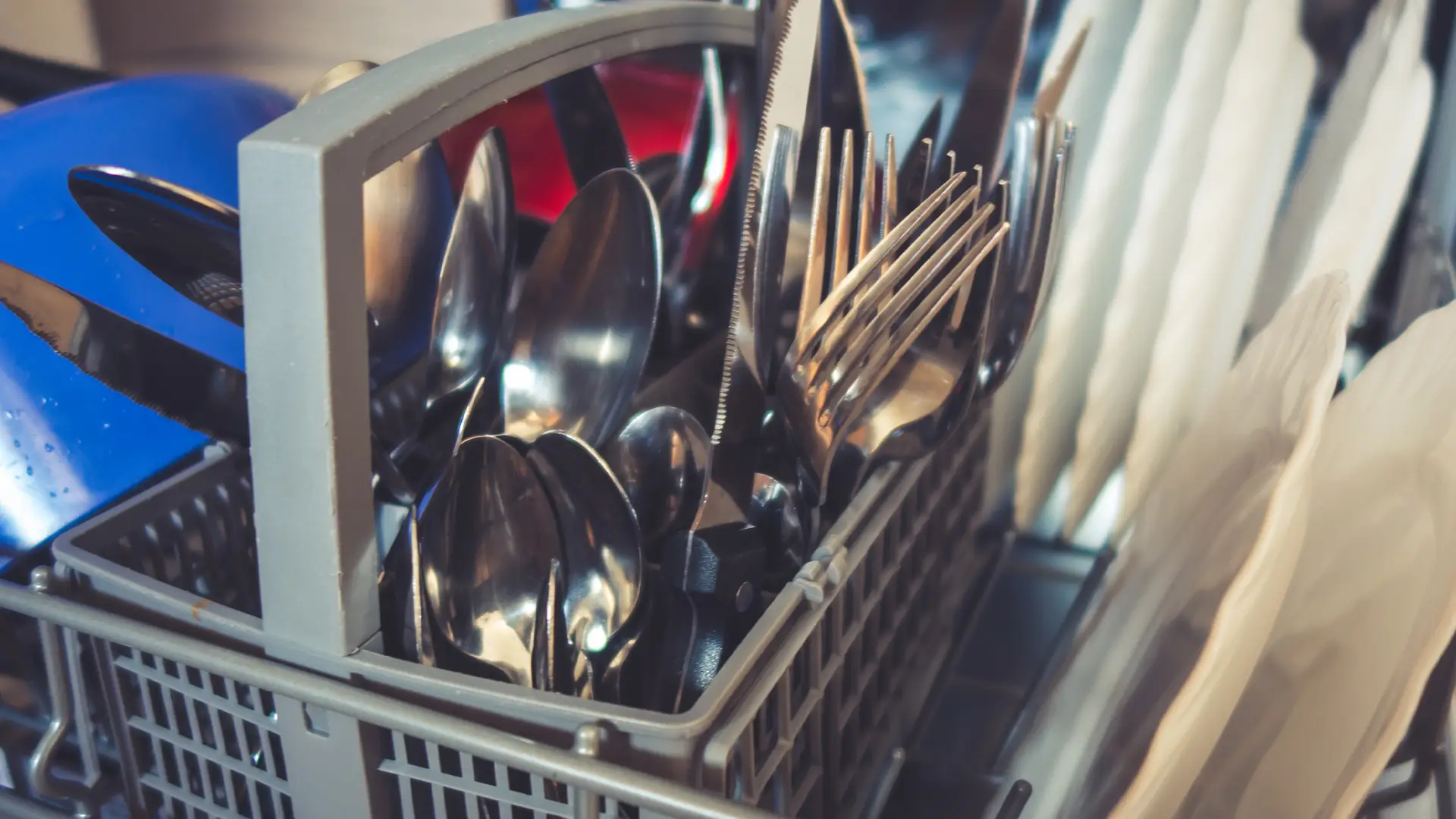
A cutlery basket is a removable container on the lower rack where knives, forks, and spoons stand upright. It has been the standard configuration for decades. Quick to load, easy to remove, familiar to everyone in the house.
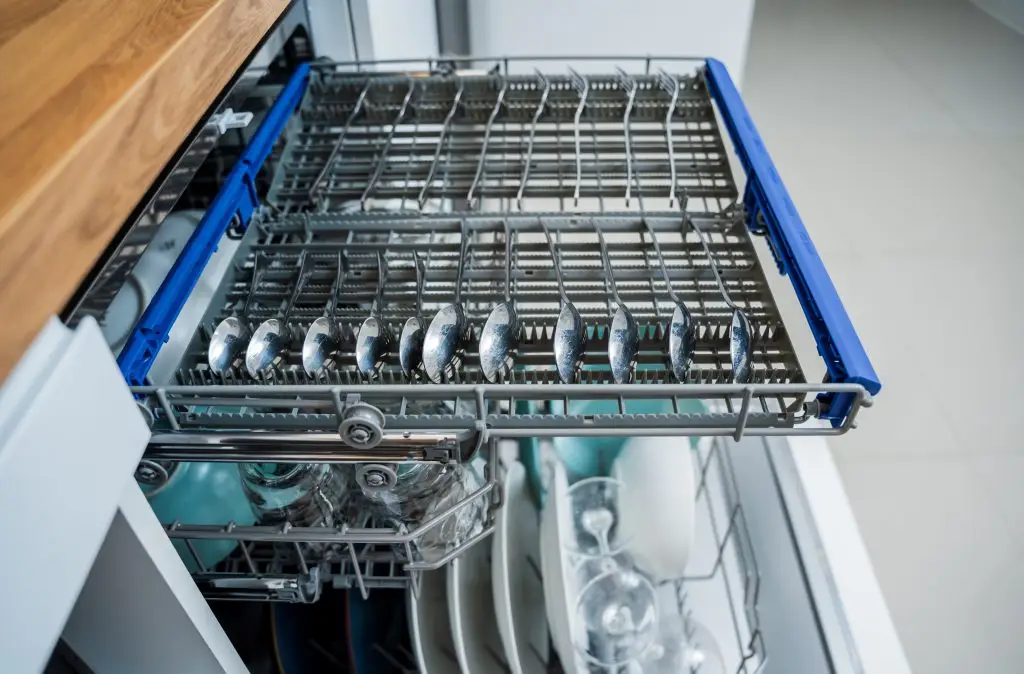
A cutlery drawer (sometimes called a third rack) is a slim pull-out tray at the very top of the dishwasher where cutlery lies flat in individual slots. It sits above the upper rack, adding a separate storage tier without taking space from either of the main racks.
The honest trade-off at a glance
| Feature | Cutlery drawer | Cutlery basket |
|---|---|---|
| Cleaning performance | Better — items separated, water reaches all surfaces | Good if loaded carefully; nesting reduces coverage |
| Loading speed | Slower — each item has a slot | Faster — drop items in and go |
| Lower rack space | Fully available for dishes and cookware | Partially occupied by the basket |
| Upper rack height | May reduce clearance for tall glasses | No impact on upper rack |
| Unloading | Easier — everything is visible and separated | Requires picking through the basket |
| Long utensils | Handles spatulas, serving spoons well | Tall items often protrude awkwardly |
| Typical availability | Mid-range and above | All price points |
Cleaning: why the drawer has an edge
When cutlery stands upright in a basket, pieces that touch each other create a contact point that the spray arm cannot reach. A teaspoon inside a tablespoon is a familiar outcome: the outer spoon comes clean, the inner one does not. Alternating handles up and down helps, but it adds to loading time and requires consistency that not everyone maintains.
In a drawer, each piece lies separately in its own slot. There is no contact between items, and the spray arm dedicated to the top section reaches all surfaces with consistent coverage. The result is more reliable cleaning on every cycle without any particular loading discipline required.
Space and capacity
The basket takes up a footprint on the lower rack — typically one of the lower rack zones. Removing it frees that space for a large baking tray or saucepan. Some models let you slide the basket to different positions or split it into two halves, which helps, but the space is still occupied.
A drawer adds a third tier without removing anything from the two main racks. On a 60cm dishwasher with a drawer, the lower rack remains entirely available for plates and cookware, the upper rack holds glasses and bowls as normal, and the cutlery occupies a layer that was otherwise unused. This is particularly valuable if you regularly run full loads or frequently wash large cookware alongside a full set of cutlery.
Whatever system you use, load cutlery with handles pointing down so the working ends face the spray arm. The exception is sharp knives, which should have handles up for safety when unloading.
Who each suits best
A basket suits households that prioritise speed and simplicity. Families loading the dishwasher quickly after meals, shared kitchens where multiple people load it differently, and anyone who has never had a reason to think about cutlery placement will find a basket adequate. A basket on a carefully loaded full cycle produces results that are excellent for everyday cutlery.
A drawer suits households that cook with a range of utensils beyond basic cutlery, run full loads regularly, and want the lower rack clear for larger items. Home cooks who use spatulas, tongs, and serving spoons will find the drawer handles these far more gracefully than a basket does. The loading time is slower, but the unloading is significantly faster. Everything is separated, visible, and easy to sort directly from the drawer.
CATA dishwasher with cutlery drawer
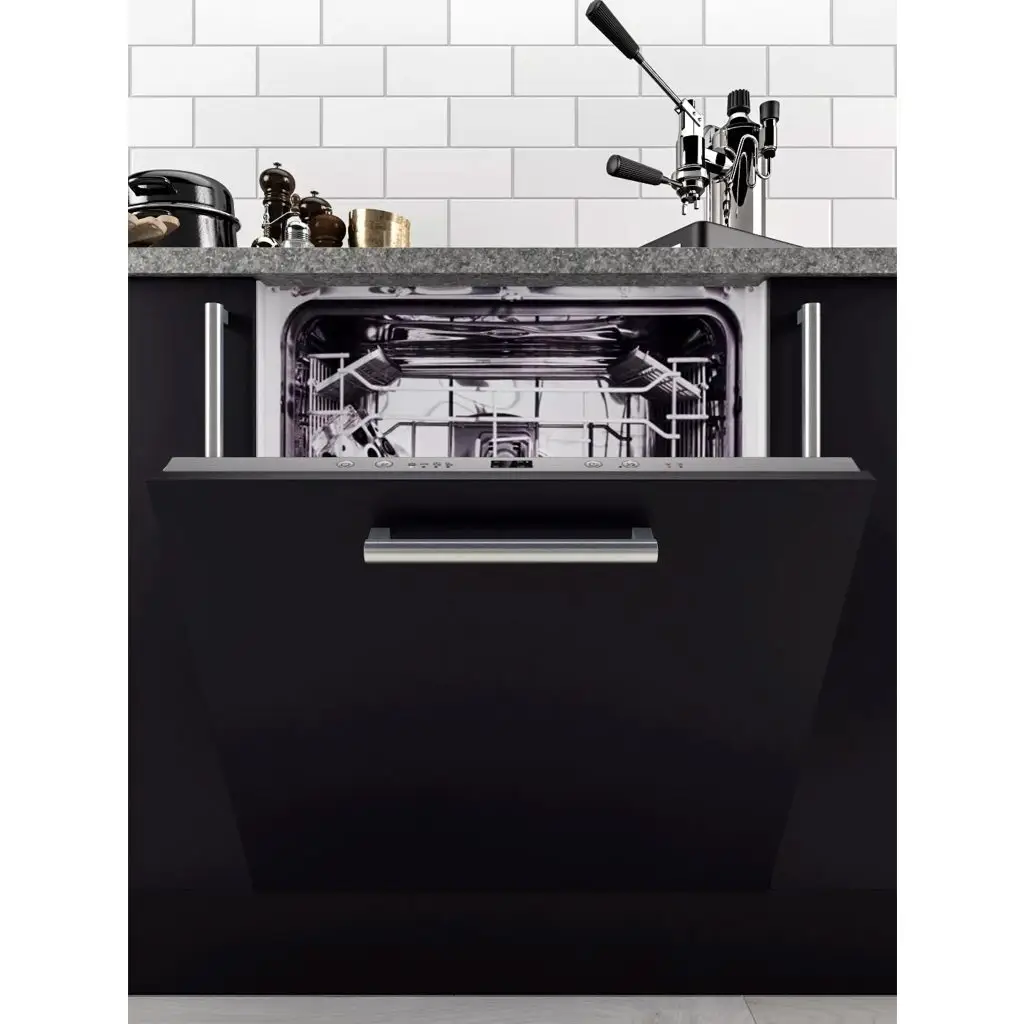
UBMD60M.1 — Integrated Dishwasher with Cutlery Drawer
14-place-setting integrated dishwasher with a dedicated cutlery drawer, six programmes including a 30-minute quick wash, and auto door-opening for improved drying. B-rated energy efficiency.
View productFor dishwasher maintenance including filter cleaning and odour prevention, see the guides to why dishwashers smell and cleaning with vinegar and bicarbonate. Browse the full CATA dishwasher range for integrated and slimline models.