Home » General Appliance Guides & Advice » Can You Use Vinegar or Baking Soda to Clean a Dishwasher?
Can You Use Vinegar or Baking Soda to Clean a Dishwasher?
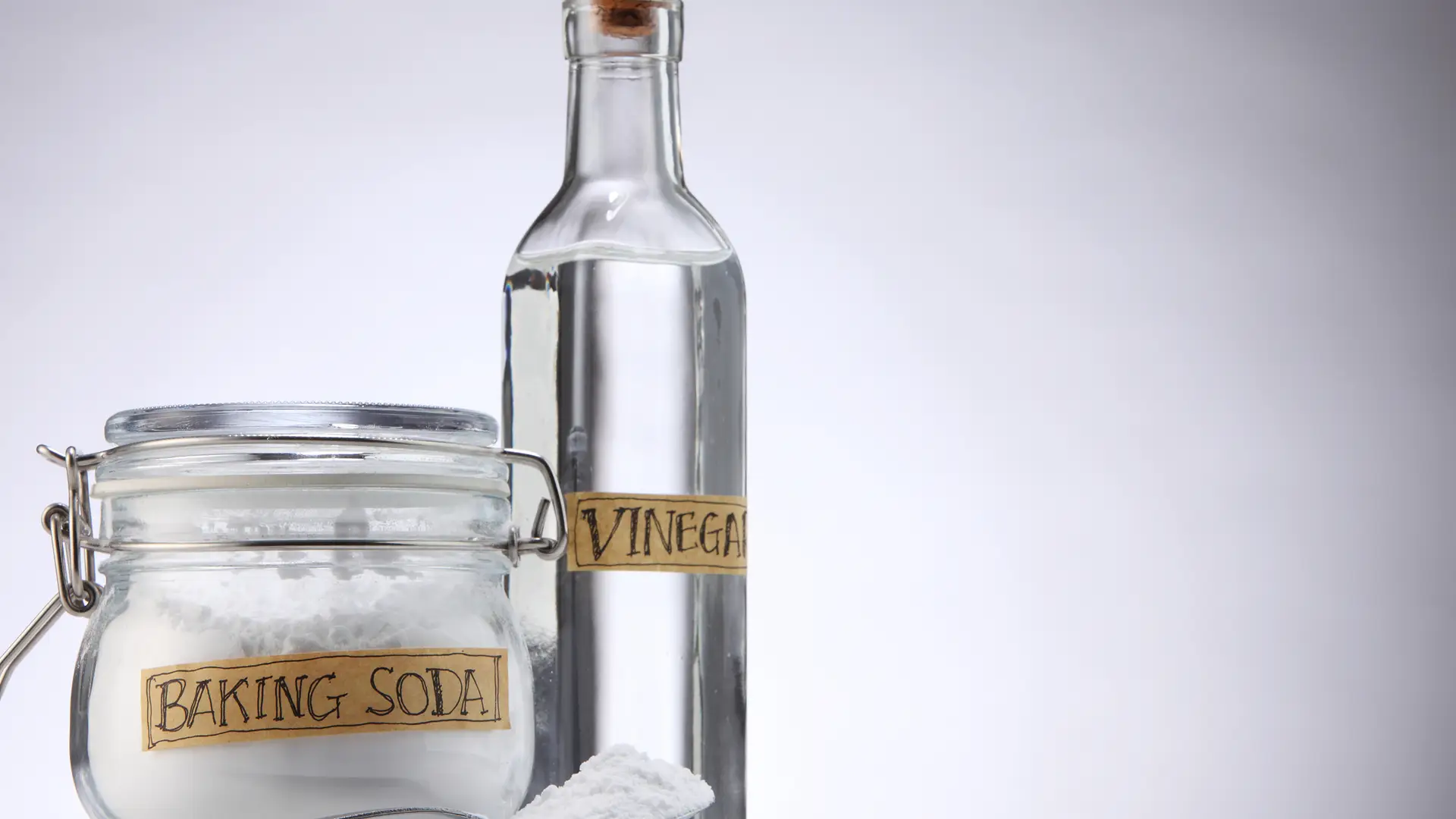
Yes — white distilled vinegar and bicarbonate of soda are both safe and effective for cleaning a dishwasher. Vinegar is a weak acid that dissolves mineral scale and cuts through grease residue. Bicarbonate of soda is mildly alkaline and neutralises the acidic odours that cause the characteristic stale dishwasher smell. Used in the right sequence they complement each other; used simultaneously in the same cycle they cancel each other out and do very little.
What each ingredient actually does
White distilled vinegar
Acetic acid at around 5% concentration. Dissolves calcium carbonate deposits (limescale) from hard water that build up on spray arm holes, the heating element, and interior surfaces. Also cuts through fatty residue and soap scum that accumulates over repeated cycles.
Works best in a hot cycle at 60°C or above, which helps the acid penetrate and loosen scale more effectively than at lower temperatures. Effective as a monthly maintenance clean and particularly useful in hard water areas where limescale accumulation is faster.
Do not use malt vinegar — it contains colouring that can stain the interior. White distilled vinegar only.
Bicarbonate of soda
A mild alkali (sodium bicarbonate). Does not dissolve limescale or grease in the way vinegar does — its primary action is neutralising acidic odour compounds, particularly those produced by food residue decomposing inside the machine.
Works best as a follow-up to the vinegar cycle rather than as the primary cleaner. Sprinkled across the base of the tub, it deodorises during a short hot cycle and lifts any remaining surface deposits loosened by the vinegar. Also leaves the interior looking cleaner and brighter due to its mild abrasive action on surface residue.
Bicarbonate of soda and baking soda are the same compound — both names are used interchangeably and both work identically for this purpose.
Why you should not mix them in the same cycle
Vinegar (acid) and bicarbonate of soda (alkali) react when combined, producing carbon dioxide and water in a neutralisation reaction. The effervescence looks satisfying but the result is that both cleaning agents are consumed in the reaction rather than acting on the dishwasher’s surfaces. You are essentially turning two useful cleaning agents into water and bubbles.
Run the vinegar cycle first, allow it to complete fully, and then run the bicarbonate of soda cycle as a follow-up. The two cycles complement each other correctly in sequence — the vinegar loosens scale and grease, the bicarbonate neutralises any remaining acidic odours and brightens the interior.
Full cleaning sequence
- 1
Remove and clean the filter
Lift out the filter assembly from the base of the tub and rinse thoroughly under hot running water. Use a soft brush to clear any compacted food from the mesh sections. Replace securely before running any cleaning cycles. A dirty filter circulates food particles through the machine during cleaning — cleaning it first ensures the cycles are working on the machine itself, not on redistributed debris.
- 2
Run the vinegar cycle
Place a dishwasher-safe cup or bowl containing 250ml of white distilled vinegar on the top rack. Run the hottest available programme — typically 65°C or above — with an otherwise empty machine and no detergent. The cycle distributes the vinegar throughout the interior during the wash phase, breaking down scale and grease on the spray arms, walls, and base. The smell of vinegar during the cycle is normal and clears completely once the cycle finishes and the door is opened.
- 3
Run the bicarbonate of soda cycle
Sprinkle 200g of bicarbonate of soda evenly across the base of the empty tub. Run a short hot cycle — an eco programme or a quick wash at 60°C works well for this step. The bicarbonate neutralises any remaining acidic odour compounds and removes the last traces of residue. Leave the door ajar after the cycle to allow the interior to cool and dry fully.
- 4
Wipe the door seal and inner rim
Run a damp cloth around the rubber door seal and the inner door frame — the area the spray arms do not reach during a cycle. This is where food particles and moisture accumulate and where most dishwasher smells originate. A few minutes of manual cleaning here has a greater effect on odour than any number of cleaning cycles alone.
If your dishwasher smells persistently even after a full vinegar and bicarbonate clean, the filter and door seal are almost always the source. The guide to why dishwashers smell covers the full diagnostic including spray arm blockages and drain hose issues that cleaning cycles alone will not resolve.
Vinegar vs dishwasher cleaning tablets — which is better?
| Aspect | White vinegar + bicarbonate | Proprietary cleaning tablet |
|---|---|---|
| Limescale removal | ✓ Effective — acetic acid dissolves calcium deposits | ✓ Effective — usually contains citric acid or phosphates |
| Grease and residue | ✓ Effective at hot temperatures | ✓ Effective — surfactants specifically formulated for the purpose |
| Odour removal | ✓ Bicarbonate neutralises acidic odour compounds | ✓ Most tablets include a deodorising component |
| Rubber seal safety | ⚠ Repeated frequent use of vinegar may degrade rubber seals over time — monthly use is fine | ✓ Formulated to be safe on all internal materials |
| Cost | ✓ Very low — a few pence per clean | Moderate — typically 50p to £1.50 per tablet |
| Convenience | Requires two separate cycles | ✓ Single cycle, no measuring |
Both approaches are effective for monthly maintenance cleaning. Proprietary dishwasher cleaning tablets are more convenient and formulated to avoid any risk of seal degradation from repeated acid exposure. The vinegar and bicarbonate method is equally effective and considerably cheaper — the caveat being to keep it to monthly use rather than treating it as a weekly routine.
For a full dishwasher cleaning and maintenance routine including filter cleaning frequency and spray arm care, see the guide to why dishwashers smell. If your dishwasher tablet is not dissolving during normal cycles, the dishwasher tablet not dissolving guide covers the dispenser, spray arm, and temperature causes. Browse the CATA dishwasher range for models with self-cleaning filters and auto door-opening for improved ventilation between cycles.
Common questions answered
Can I put vinegar in the detergent dispenser instead of a bowl on the rack?
It is better to use a bowl or cup on the top rack. The detergent dispenser releases its contents at a specific point in the cycle — using it for vinegar means the acid is diluted into the full wash water at once rather than being released from the rack position where it can distribute more gradually. The bowl method is more effective and how most manufacturers recommend it.
Is it safe to use vinegar in a dishwasher with a stainless steel interior?
Yes — white distilled vinegar at 5% acetic acid is not strong enough to damage stainless steel at the concentrations and temperatures used in a dishwasher cleaning cycle. The risk of damage from vinegar is to rubber components with repeated use, not to the stainless steel tub or door interior.
How often should I clean my dishwasher with vinegar?
Once a month is sufficient for most households. In hard water areas where limescale builds up faster, every three weeks is reasonable. More frequent than monthly is unnecessary for cleaning effectiveness and increases the cumulative acid exposure to rubber components over time.
My dishwasher still smells after cleaning. What am I missing?
Almost always the door seal or the filter. The door seal folds trap food particles and moisture that cleaning cycles do not reach — they need manual wiping. The filter needs physical removal and scrubbing, not just a cycle with cleaning agents. Check both before concluding the cleaning method is not working.
Explore More Kitchen Advice & Buying Guides
Browse our latest articles covering appliance tips, energy-saving advice, and expert guidance – designed to help you choose, use, and get the most from your kitchen appliances.