Home » General Appliance Guides & Advice » Does a Built-In Oven Need Ventilation?
Does a Built-In Oven Need Ventilation?
Yes. Every built-in oven requires adequate airflow around its housing to operate safely. The oven’s internal electronics, insulation, and cabinetry all have maximum temperature limits. When those limits are exceeded because heat cannot escape, components fail earlier, cabinetry can discolour or warp, and in the worst cases surrounding materials can be damaged. Ventilation is not optional. It is a structural requirement of the installation.
How the ventilation system works
Modern built-in ovens use a cooling fan to manage heat in the electronics and housing. This fan draws cool air in, typically from a gap at the base of the oven front or from a clearance at the sides, passes it around the outer casing and control electronics, and exhausts warm air at the top or through the front fascia above the door. This cooling circuit is separate from the cooking cavity and runs whenever the oven is in use, and often for a period after it is switched off while components cool down.
The housing unit the oven sits in must allow this airflow to work. A sealed cabinet with no gap for air to enter or exit forces the cooling system to recirculate already-warmed air, which rapidly reduces its effectiveness. The result is that the oven runs hotter on its outer surfaces than it is designed to, the cooling fan works harder, and internal components are subjected to sustained elevated temperatures.
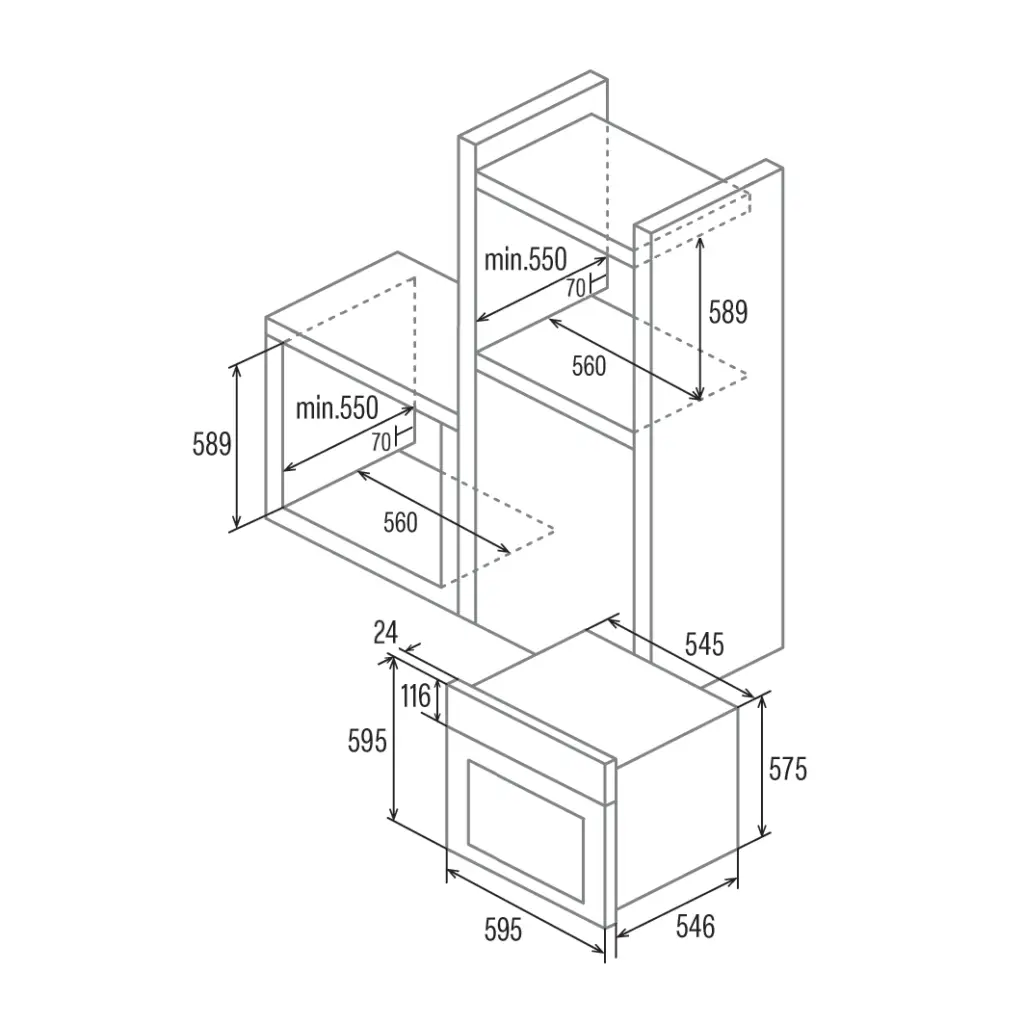
Required clearances
These figures are indicative. The definitive clearances for any specific model are in that model’s installation guide, which should always be followed over general guidance. Manufacturers design their ventilation systems around specific clearance assumptions. Using different figures voids the warranty and can damage the appliance and surrounding cabinetry.
What happens without adequate ventilation
An oven installed with insufficient clearance will initially appear to work normally. The degradation is gradual. Over weeks and months of regular use, sustained elevated temperatures in the housing cause the electronics to age faster than designed, control displays and interfaces to develop faults, and the oven’s thermostat accuracy to drift. The cabinetry immediately above and beside the oven (typically the underside of the worktop or the adjacent cabinet panel) may show heat discolouration before any functional fault appears.
By the time symptoms are obvious, damage may already have occurred. Correct ventilation from installation prevents all of this at no cost beyond following the installation guide.
If your oven feels hotter than usual on its outer surfaces or the cooling fan seems to run longer after cooking, check that nothing has been pushed in behind or beside the oven unit since installation, particularly at the rear of the cabinet where items are sometimes stored.
The housing unit
A purpose-designed oven housing column provides the correct clearances by construction, with ventilation slots built into the back panel and shelf positions calculated to give the required gap above the oven. A worktop-height base unit adapted for an oven may not provide the same clearances and should be checked against the installation guide before use.
When the oven is installed below a countertop, ensure the underside of the worktop provides the specified clearance above the oven fascia and that the exhaust vent above the door is not restricted. A false panel directly above the oven with no gap is a common installation error.
For CATA oven installation guides and specific clearance requirements by model, visit the product support pages. Browse the CATA single oven range and double oven range for current models with installation dimensions.
Explore More Kitchen Advice & Buying Guides
Browse our latest articles covering appliance tips, energy-saving advice, and expert guidance – designed to help you choose, use, and get the most from your kitchen appliances.