
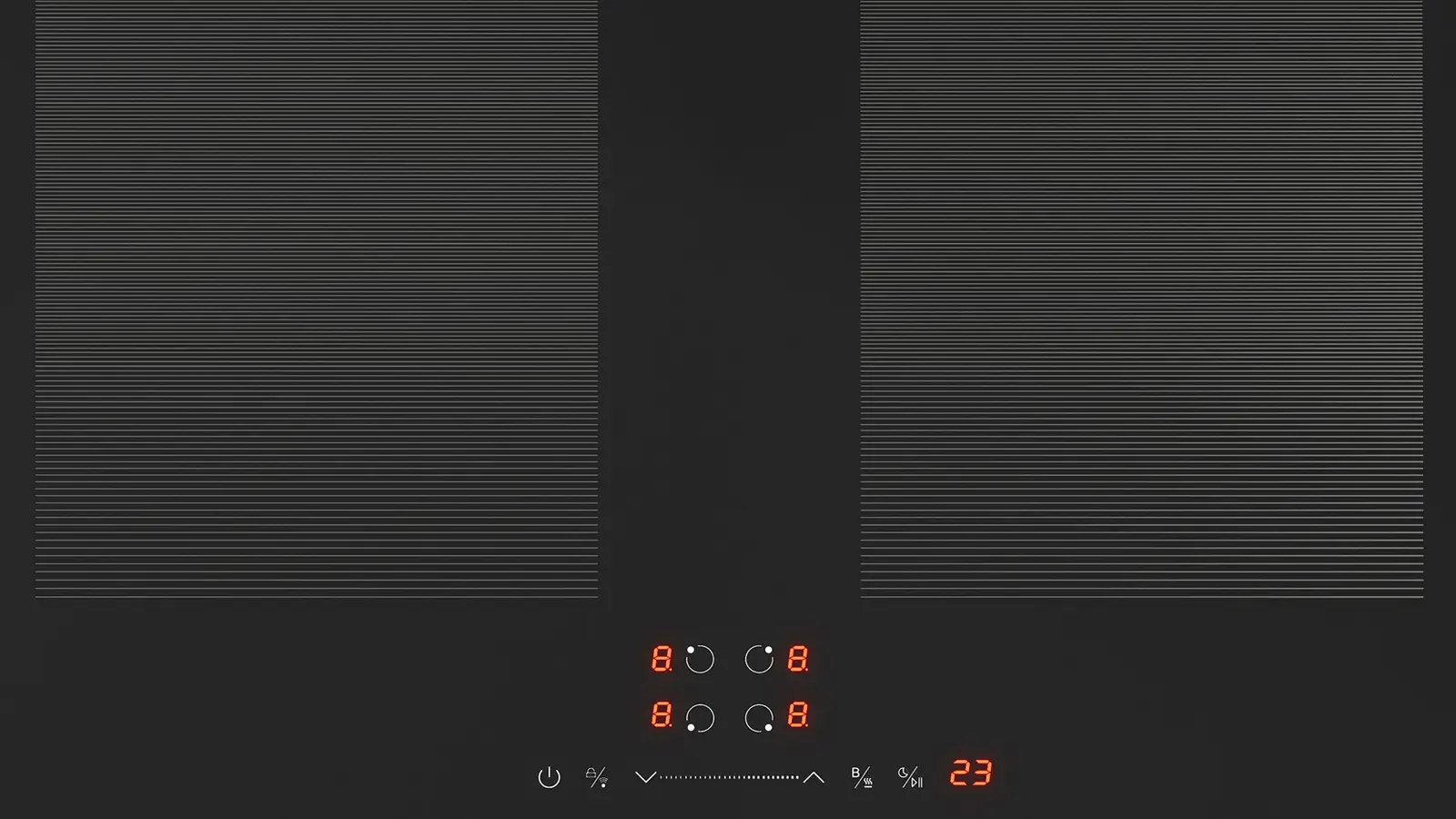
How Flex Zone Induction Hobs Work
Flex zone induction hobs are designed to give you more freedom when cooking. Instead of limiting you to a set of fixed circular rings, they let you use larger cookware, awkwardly shaped pans, and even griddles more easily by linking cooking areas together.
If you have ever wondered what makes a flex induction hob different from a standard model, the answer comes down to how the hob detects pans and controls heat beneath the glass.
Large pans and griddles can use more than one cooking area at the same time.
Heat is generated directly in the pan base for quick, precise temperature changes.
The hob detects suitable cookware and activates only the area being used.
What Is a Flex Zone Induction Hob?
A flex zone is a section of the hob where multiple cooking zones can work together as one. On a traditional induction hob, each ring is separate. On a flex zone model, those separate zones can be linked to create a larger usable space.
This means you are not restricted to one small circle for one small pan. Instead, the hob can adapt better to the cookware you are using.
- Ideal for long griddle pans and larger saucepans
- Useful when cooking for families or guests
- Helps make better use of the hob surface
How Induction Technology Works
All induction hobs use electromagnetic induction rather than a traditional heated element.
When the hob is switched on, electricity flows through a coil underneath the glass. This creates a magnetic field. If you place induction-compatible cookware on top, that magnetic field causes the pan itself to heat up.
Because the heat is created inside the cookware, induction cooking is usually quicker, more responsive, and more energy-efficient than many older hob types.
How Flex Zones Actually Work
On a flex zone induction hob, there are multiple induction coils arranged under a larger section of the glass. These coils do not all have to run independently. Instead, the hob’s controls can coordinate them so they behave as one larger cooking area.
When you place a pan across part of the zone, the hob detects where the pan is sitting and activates the relevant coils. If you place a larger item across two areas, the hob can bridge them together so heat is spread more evenly across the full base.
Pan Detection
Modern flex zone models use smart pan detection to identify where cookware is positioned. This means the hob can direct energy only where it is needed, helping improve both safety and efficiency.
Bridging Cooking Areas
One of the main benefits of a flex zone hob is that it can join two areas together. This is especially useful for:
- Fish pans
- Rectangular griddles
- Large sauté pans
- Oversized cookware for batch cooking
Flex Zone vs Standard Induction Hobs
| Feature | Standard Induction Hob | Flex Zone Induction Hob |
|---|---|---|
| Cooking layout | Fixed circular zones | Flexible zones that can link together |
| Pan placement | Best when centred on each marked ring | More adaptable within the flex area |
| Large cookware | Can be restrictive | Better suited to larger or longer pans |
| Cooking flexibility | Good for everyday use | Excellent for mixed pan sizes and batch cooking |
| User convenience | Simple but more fixed | More versatile and practical |
What Are the Benefits of a Flex Zone Hob?
For many households, the biggest advantage is convenience. You can cook more freely without having to match each pan to a fixed ring quite so precisely.
- More flexibility for different cookware sizes
- Fast heating with responsive temperature control
- Efficient energy use by heating only the active area
- A sleeker cooking experience for busy modern kitchens
If you are comparing models, you can browse the full CATA range of induction hobs for more options.
Are Flex Zone Induction Hobs Worth It?
If you often cook with larger pans, enjoy entertaining, or simply want a hob that adapts better to how you cook, a flex zone induction hob can be a very worthwhile upgrade.
They tend to offer more versatility than standard induction models, which makes them particularly appealing in family kitchens and open-plan spaces where flexibility matters.
Featured CATA Induction Hobs
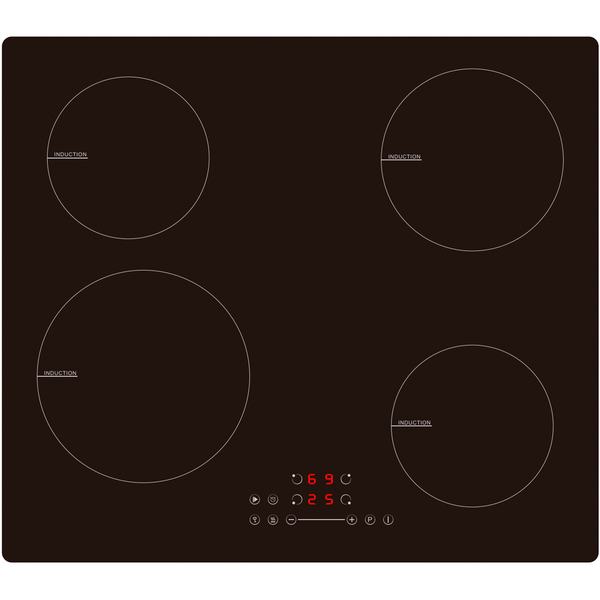
CATA 300 – 60cm 4 Zone Induction Hob
A sleek black glass induction hob with 4 cooking zones, 9 power settings + boost, and touch slider controls for fast, precise everyday cooking.
- 4 cooking zones
- 7kW total power
- Touch slider control with red LED display
- 3 warming functions: Defrost, Keep Warm and Simmer
- Cooking timer and child safety lock
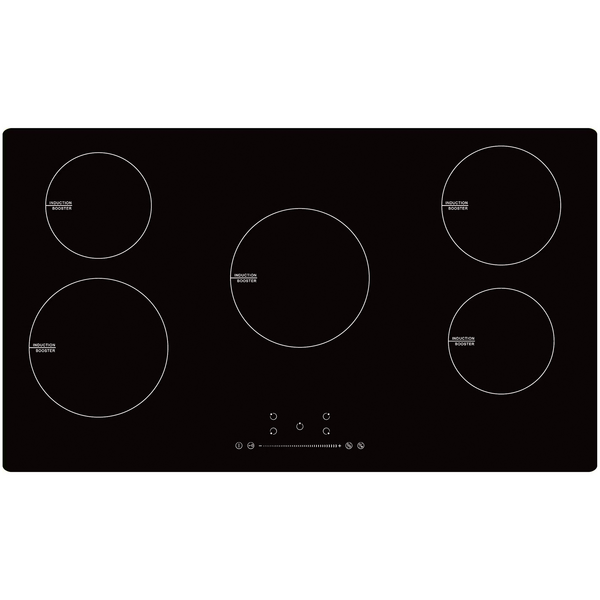
CATA 300 – 90cm 5 Zone Induction Hob Black
A wider induction hob designed for busy kitchens, with 5 cooking zones, 5 boost zones, and responsive touch slider control.
- 5 cooking zones
- 9 power levels
- 5 boost zones
- Pause and keep warm functions
- Auto pan detection system
- All Posts
- Cooker Hood Guides & Advice
- Dishwasher Guides & Advice
- General Appliance Guides & Advice
- Hob Guides & Advice
- Laundry Guides & Advice
- Microwave Guides & Advice
- Oven Guides & Advice
- Wine Cooler Guides & Advice

Master the perfect Sunday roast in your built-in oven with our step-by-step guide. Learn timings, temperatures, and pro tips for...
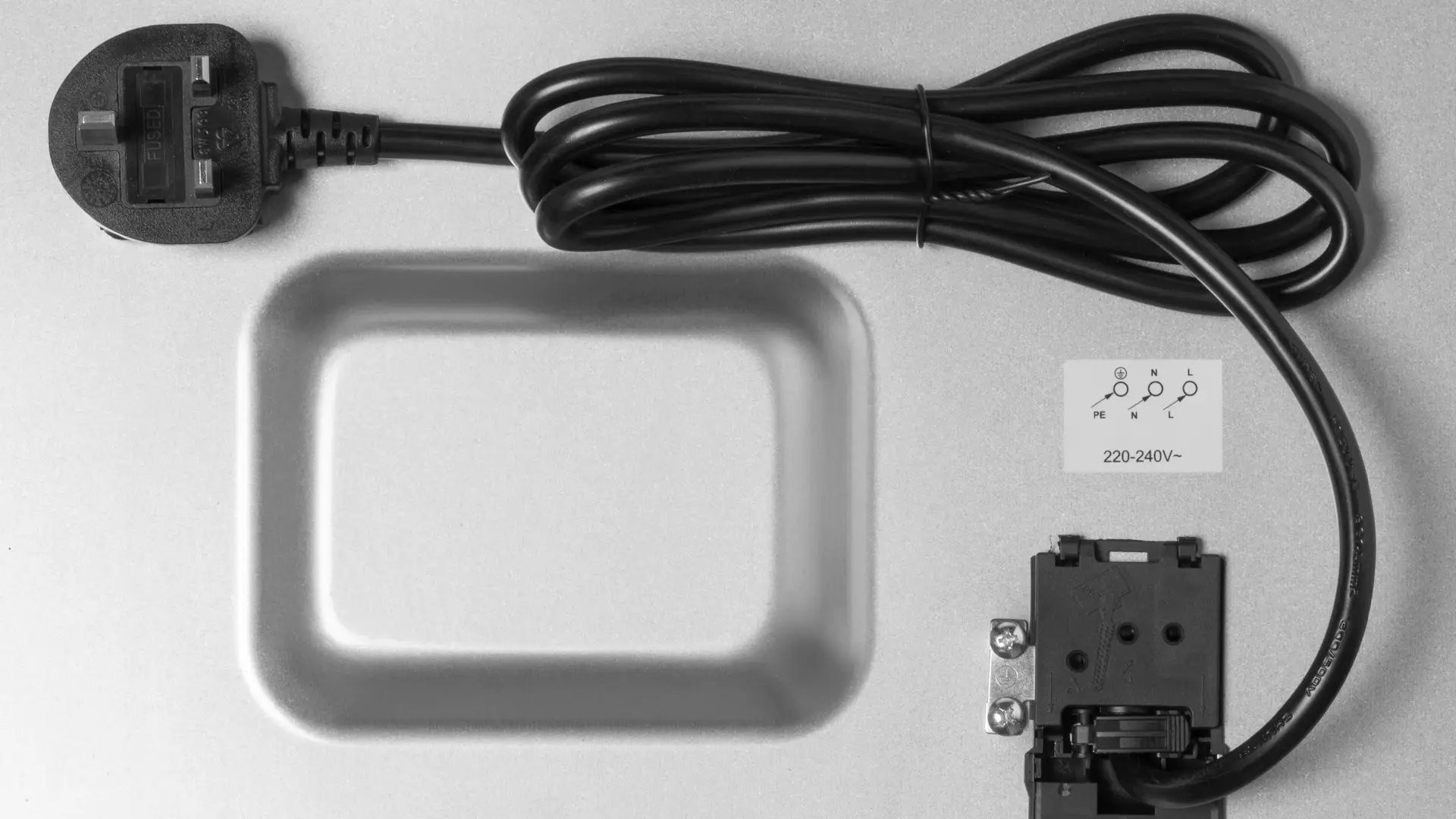
Not sure if your oven needs hardwiring? Find out if you can plug your oven into a regular socket and...

Cut your electricity bills with smart washing habits. Discover 10 easy ways to reduce energy use with your washing machine....