The Safest Way to Clean Burnt Spills on an Induction Hob
Burnt spills on an induction hob can be frustrating, but using the wrong cleaning method can scratch the glass or leave dull marks behind. The safest approach is to soften the residue first, then lift it away gently with the right tools.
Safe for glass surfaces
No abrasive pads
Best for burnt-on food
Helps prevent scratches
Your safest cleaning routine at a glance
1. Let it cool
Wait until the hob is warm or fully cool before cleaning.
2. Soften the spill
Use a damp cloth and mild cleaner to loosen the burnt residue.
3. Lift, don’t scrub
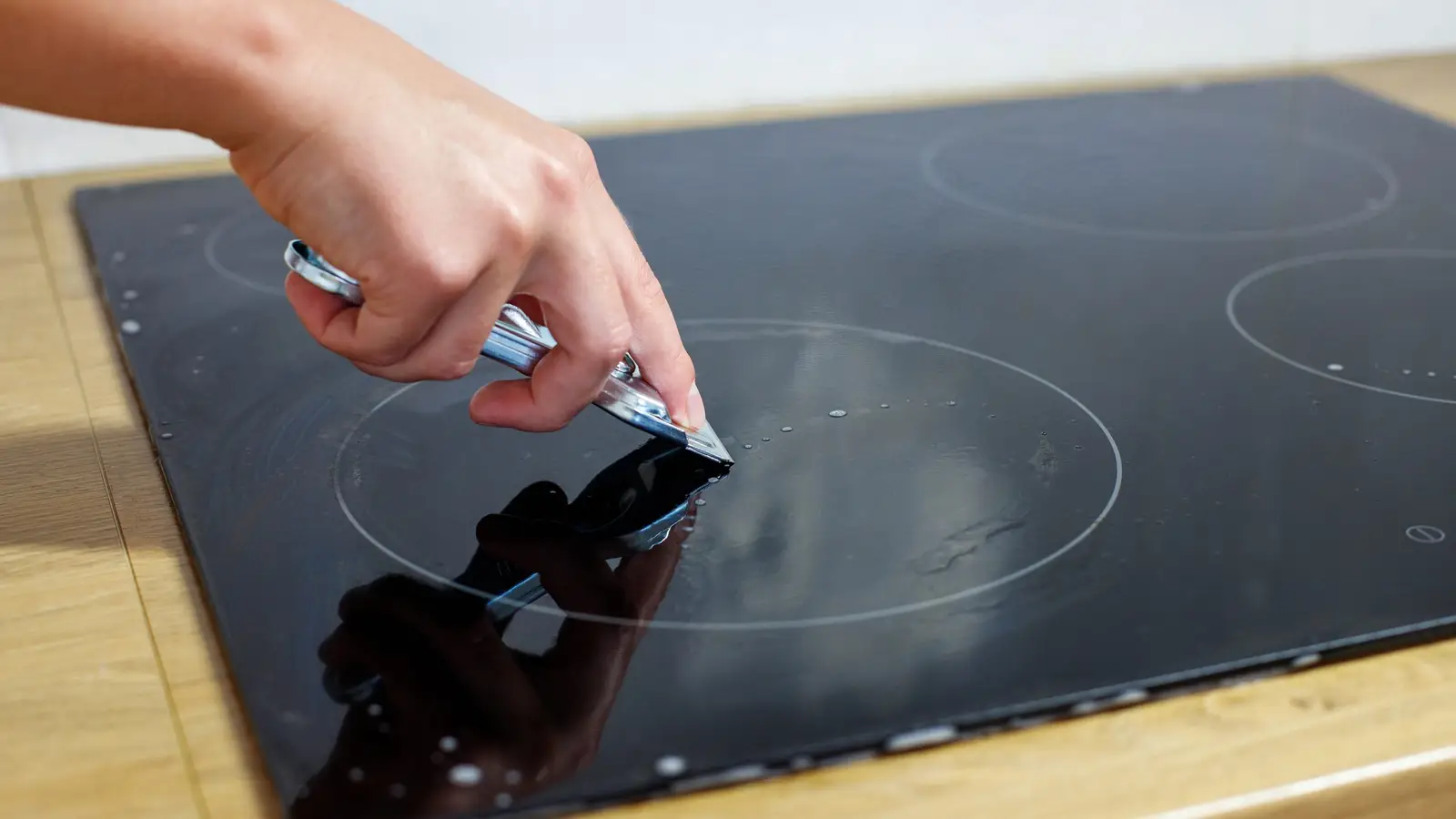
Gently remove stubborn marks with a proper hob scraper.
4. Wipe and polish
Finish with a microfibre cloth for a clean, streak-free shine.
Important: Never use steel wool, abrasive scourers, oven cleaner or harsh chemicals on an induction hob, as these can permanently damage the glass surface.
Why burnt spills need a careful approach
Induction hobs have a sleek glass top that is easy to wipe down day to day, but burnt-on food and sugary spills can cling tightly to the surface. Scrubbing too hard often creates scratches instead of solving the problem, so a gentler method is always the safer option.
What you need before you start
- Microfibre cloth
- Warm water
- Mild washing-up liquid or specialist hob cleaner
- Glass hob scraper
- Dry cloth for polishing
Step-by-step: the safest cleaning method
Step 1: Make sure the hob is safe to touch
Allow the surface to cool before cleaning. A slightly warm hob can help loosen residue, but it should never be hot enough to risk a burn.
Step 2: Remove loose debris
Wipe away crumbs and surface mess with a soft cloth so you do not drag particles across the glass while cleaning.
Step 3: Apply cleaner
Use a small amount of hob cleaner or warm water with mild washing-up liquid, then leave it for a minute or two to soften the burnt spill.
Step 4: Use a scraper carefully
For stubborn spots, use a hob scraperA flat-bladed tool designed to lift burnt residue from glass hobs without scratching the whole surface. held at a shallow angle. Gently slide it under the burnt deposit rather than pressing down hard.
Step 5: Wipe clean
Use a damp microfibre cloth to remove the loosened residue and any remaining cleaner.
Step 6: Dry and polish
Buff the surface with a clean dry cloth to remove streaks and restore the shine.
What not to use
- Abrasive scourers or rough sponges
- Steel wool
- Oven cleaners
- Bleach-based products
- Sharp kitchen knives or unsuitable metal tools
Safe vs unsafe cleaning methods
| Cleaning method |
Safe? |
Why |
| Microfibre cloth |
Yes |
Soft and non-abrasive on glass |
| Mild hob cleaner |
Yes |
Made for glass ceramic surfaces |
| Glass hob scraper |
Yes, with care |
Lifts burnt residue without harsh scrubbing |
| Scouring pad |
No |
Can scratch and dull the surface |
| Oven cleaner |
No |
Usually too harsh for the hob finish |
How to prevent burnt spills
- Wipe the hob after each use
- Avoid overfilling pans
- Clean sugary spills as soon as it is safe
- Check cookware bases are clean before cooking
- Use pans that match the zone size properly
Top tip: Removing spills early is the easiest way to stop them turning into stubborn burnt-on residue.
For more kitchen care advice, visit our CATA guides & advice or browse our induction hobs.