Why Is My Dishwasher Tablet Not Dissolving?
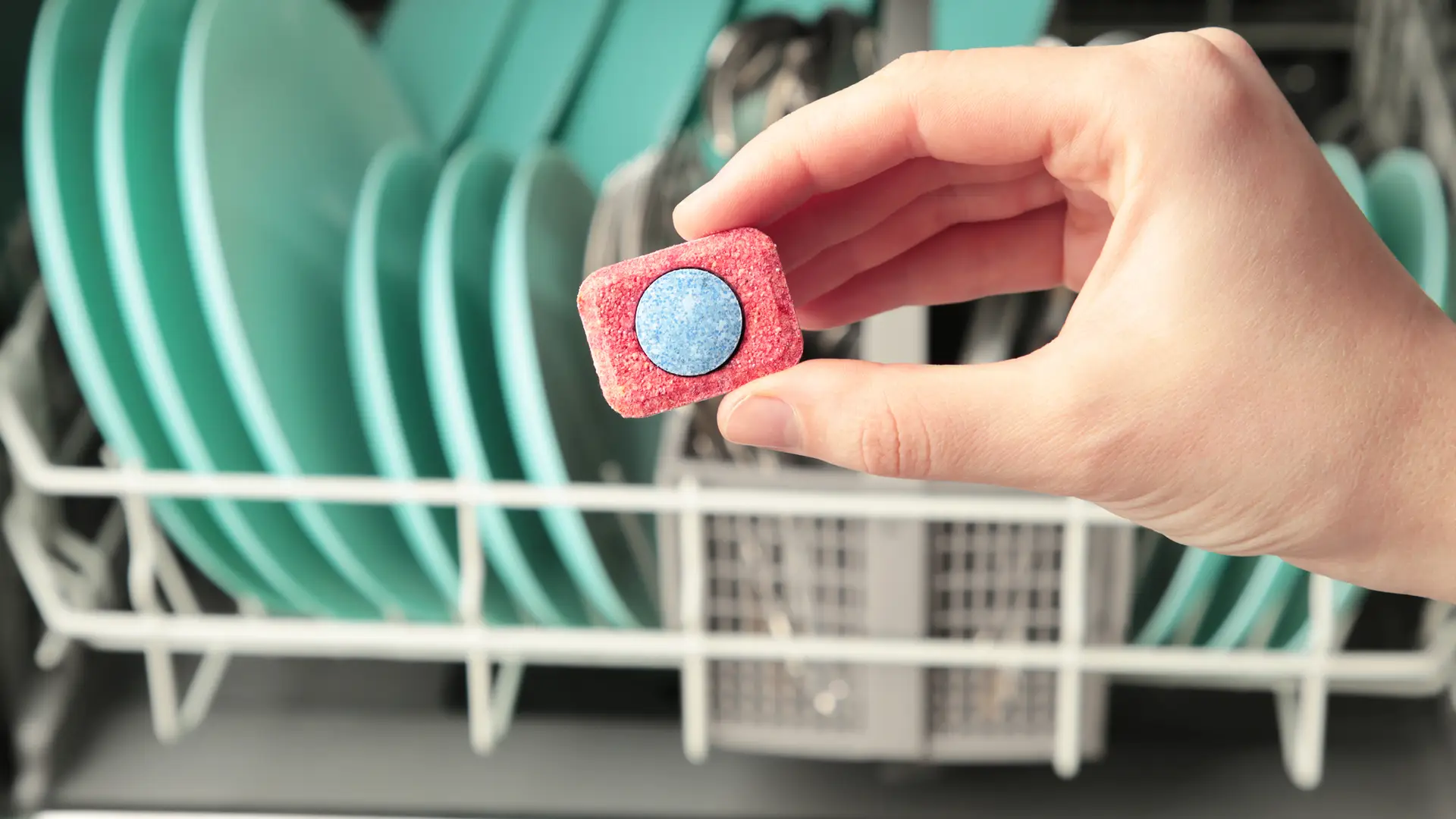
Finding an intact or partially dissolved tablet at the end of a cycle means your dishes almost certainly did not get a proper wash. The good news is that undissolved tablets are almost always caused by something simple — a blocked dispenser flap, clogged spray arms, or the wrong cycle for the detergent you are using. Work through the likely causes below and you will almost certainly find the answer in under five minutes.
The dispenser flap is being blocked
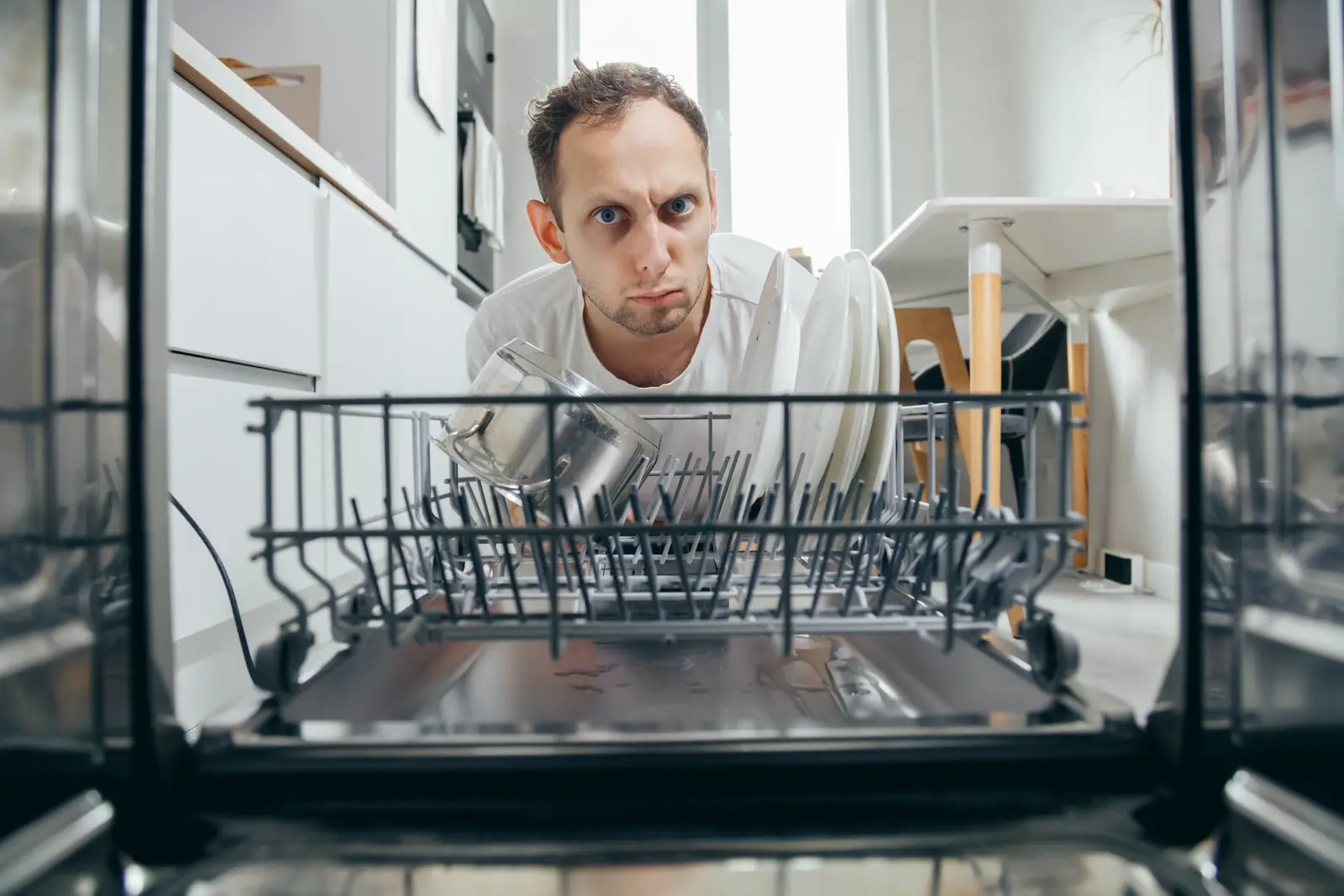
This is the most common cause by a significant margin. The tablet sits in a spring-loaded compartment on the inner door. When the cycle reaches the main wash phase — typically 20 to 40 minutes in — a timer mechanism releases the flap and the tablet drops into the water below. If a large item in the lower basket is in the path of the flap, the tablet lands on top of the obstruction rather than into the water, partially dissolves or not at all, and sits there for the rest of the cycle.
Check that tall pans, baking trays, and large utensils in the lower basket are not positioned directly in front of the door-side of the machine. The flap needs a clear trajectory of about 20 to 25cm into the lower basket to release the tablet properly into the wash water.
The spray arms are not reaching the dispenser
Even when the flap opens correctly, the tablet needs hot water hitting it directly to dissolve. The lower spray arm is positioned to direct water up towards the dispenser at the start of the main wash. If the spray arm holes are partially blocked by food debris, limescale, or a small piece of broken crockery, water pressure is reduced and the tablet may only partially dissolve — particularly the compressed inner layers of a multi-tablet.
Remove the lower spray arm (it usually unclips from its central mount with a quarter-turn or by unscrewing a central nut) and hold it up to the light. Any holes that appear dark or significantly smaller than the others are blocked. Clear them with a toothpick, rinse under the tap, and refit. This takes less than five minutes and is worth doing as part of any routine maintenance.
The water is not hot enough
Dishwasher tablets — particularly premium multi-layer tablets with separate compartments for rinse aid and salt — are engineered to dissolve in stages across a cycle that reaches 50°C to 65°C. A quick wash or eco cycle at 40°C or 45°C may not generate enough heat to fully dissolve the denser compressed layers, particularly in colder months when incoming mains water is cooler than usual.
Running the hot tap briefly before starting the dishwasher is an old trick that genuinely works — it displaces the cold water sitting in the supply pipe and ensures the machine’s first fill is with water that is already at a useful temperature rather than stone cold.
The tablet itself has absorbed moisture in storage
Compressed dishwasher tablets absorb ambient humidity slowly, causing the outer coating to soften and partially dissolve in storage. A tablet that has been sitting in an open box in a humid kitchen for several weeks may have a tacky surface that causes it to stick to the dispenser compartment rather than releasing cleanly when the flap opens. You may notice the tablet stuck to the inside of the door at the end of the cycle.
Store tablets in a sealed container or the original resealable bag, away from the steam that rises from the dishwasher at the end of a cycle. Do not store them in the cabinet directly above the dishwasher unless it is well-ventilated — this is one of the warmest and most humid spots in the kitchen.
The dispenser mechanism itself has a fault
If you have checked the above and the tablet is still not dissolving, the dispenser’s spring-release mechanism may have failed. This is less common but does occur — particularly in older machines. The sign is that the flap remains closed at the end of a cycle despite the tablet being positioned correctly and no blockage being present.
You can confirm this by running a short cycle and stopping the machine shortly after the main wash phase begins. If the flap is still closed, the release mechanism is not functioning. Dispenser units are a replaceable part on most dishwasher models and are not expensive, but replacement involves disassembling part of the inner door — a job for a qualified engineer on most built-in models.
If your dishwasher is also leaving dishes dirty or streaky alongside the dissolving issue, the guide to why dishwashers smell covers filter and spray arm maintenance that overlaps with this issue. For a broader overview of running costs and programme selection, see how much water a dishwasher uses per cycle. Browse CATA’s dishwasher range for models with intensive and auto programmes that maintain consistent wash temperatures.
Quick checklist — things to try before calling an engineer
- Check nothing in the lower basket is blocking the dispenser flap from opening
- Remove the lower spray arm and clear any blocked holes with a toothpick
- Run the hot tap for 30 seconds before starting the dishwasher to pre-warm the supply water
- Switch to a 60°C standard cycle rather than eco or quick wash
- Check the tablet for stickiness or moisture damage and replace the storage container if humid
- Run an empty cycle and watch through the door to confirm the dispenser flap releases at the correct point
- If the flap stays closed in an empty cycle, the dispenser mechanism needs professional inspection