Home » Cooker Hood Guides & Advice » Can Cooker Hood Filters Go in the Dishwasher?
Are Cooker Hood Filters Dishwasher Safe?
Types of Cooker Hood Filter
Before reaching for the dishwasher tablets, it helps to understand what kind of filter your cooker hood actually uses. There are three main types, and each one is made from different materials, designed for a different job.
Metal grease filters
These are the most common type and are found in the vast majority of modern cooker hoods. They are typically made from aluminium meshA layered metal mesh that traps grease as air passes through or stainless steel baffles. Their job is to capture airborne grease and oil particles before they reach the motor and ducting. Because they are made from metal, they are reusable and can be cleaned many times over their lifespan.
Charcoal (carbon) filters
These are fitted to recirculating cooker hoodsHoods that filter air and return it to the kitchen rather than extracting it outside that do not vent to the outside. Rather than trapping grease, charcoal filters use activated carbon to absorb cooking odours. They cannot be cleaned once their absorption capacity is spent — they must be replaced.
Paper and foam filters
Found on some older or more basic cooker hood models, these are disposable filters designed to be discarded once dirty. They offer no resistance to water or heat and should never be put in a dishwasher or soaked.
| Filter type | Material | Dishwasher safe? | What to do when dirty |
|---|---|---|---|
| Aluminium mesh | Aluminium | Usually yes | Wash and reuse |
| Stainless steel baffle | Stainless steel | Usually yes | Wash and reuse |
| Charcoal / carbon | Activated carbon | No — never | Replace entirely |
| Paper / foam | Paper or synthetic foam | No — never | Replace entirely |
If you are uncertain which type of filter your hood uses, check your product manual or look up the model number. For a broader explanation of how these two filter types differ in function, the CATA guide to carbon filters vs grease filters covers the differences in detail.
Which Cooker Hood Filters Are Dishwasher Safe?
In most households, the answer is: your metal grease filter is likely dishwasher safe — but the charcoal filter is not. The distinction matters, because treating one like the other can damage the filter and reduce how well your cooker hood performs.
Aluminium mesh filters
These are the most widely used reusable grease filters and are generally dishwasher safe. They cope well with standard dishwasher cycles, although repeated exposure to high temperatures and strong detergents can cause the aluminium to dull or discolour slightly over time. This is cosmetic and does not usually affect how the filter performs, but it is worth bearing in mind if appearance matters.
Stainless steel baffle filters
Stainless steel baffles are a step up in durability and are often found on higher-specification cooker hoods. They tend to be more resistant to heat and detergent than aluminium and hold up well to regular dishwasher cleaning. Many manufacturers explicitly label these as dishwasher safe. Even so, a gentle or normal cycle is preferable to an intensive programme, particularly for extended-use filters.
When to Avoid Using the Dishwasher for Cooker Hood Filters
Even if your metal filter is technically dishwasher safe, there are some situations where hand washing is the better option.
⚠ Avoid the dishwasher in these situations:
- The filter is extremely greasy — heavy grease deposits can coat the inside of your dishwasher drum and spray arms.
- The filter has plastic components or trims, which may distort under high heat.
- The filter is already bent or structurally compromised — the wash cycle can accelerate deterioration.
- Your manufacturer’s instructions specifically advise against machine washing.
- You want to preserve the finish, particularly on anodised or brushed aluminium filters.
If the filter has significant grease build-up, a quick pre-rinse under warm running water before loading it into the dishwasher is always a good idea. It removes the bulk of the residue, helps the dishwasher clean more effectively, and keeps the machine itself cleaner.
How to Clean Cooker Hood Filters in the Dishwasher
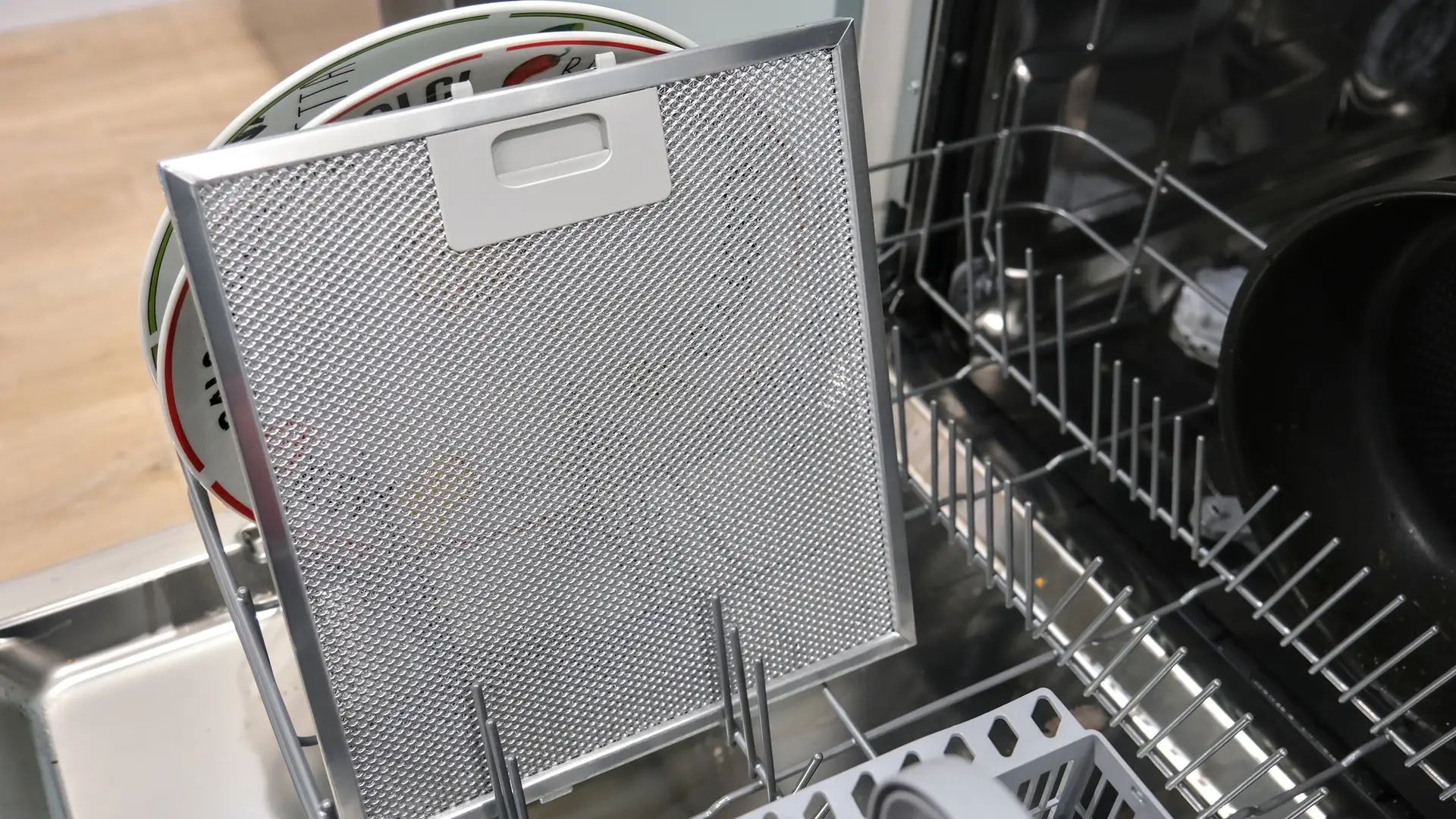
For metal grease filters that are confirmed dishwasher safe, the process is simple. The most important thing is to keep the cycle gentle and give the filter time to dry fully before it goes back into the hood.
- 1 Remove the filter carefully following your cooker hood’s instructions. Most slide out or unclip from below — avoid bending the mesh or baffle panels.
- 2 Pre-rinse under warm water to remove the worst of the grease. This single step makes a noticeable difference to the dishwasher result and protects the machine.
- 3 Place on the top rack of the dishwasher where possible, or flat in the bottom rack if the filter is large. Ensure it is secure and will not shift or flex during the cycle.
- 4 Select a normal or gentle cycle rather than an intensive programme. High-temperature settings offer little extra benefit for grease removal and can be harder on aluminium.
- 5 Use a standard dishwasher detergent — there is no need for specialist products. Avoid highly caustic or industrial-strength tablets, which can react aggressively with aluminium.
- 6 Allow to dry fully before refitting. A damp filter returned to a warm cooker hood can encourage grease residue to re-adhere more quickly. Air drying for an hour is usually sufficient.
How to Hand-Wash Cooker Hood Filters
Manual cleaning is often the best approach for heavily soiled filters, aluminium filters where you want to preserve the finish, or any situation where you do not want to put grease residue through your dishwasher. It is also the method recommended by some manufacturers over machine washing.
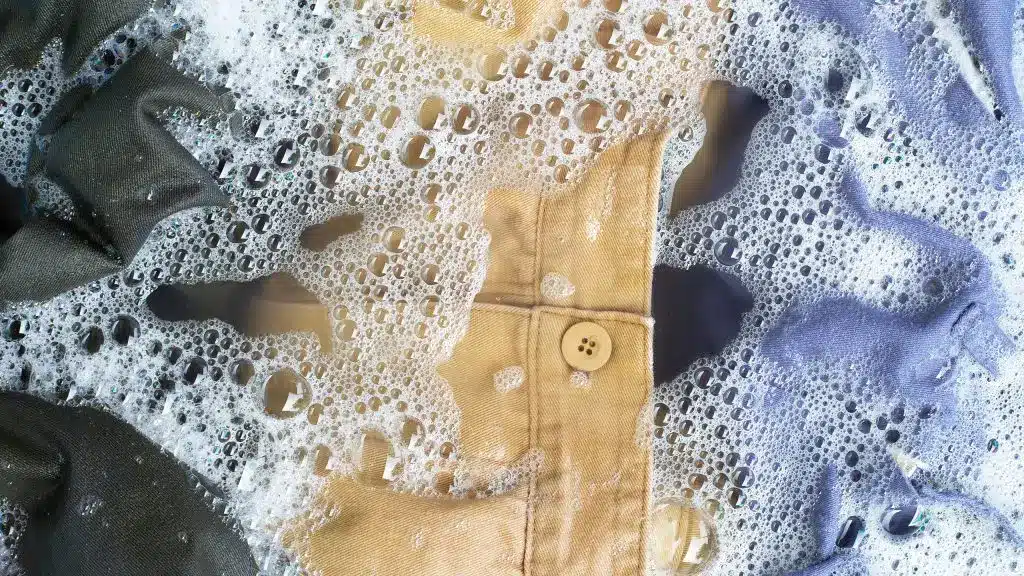
- 1 Fill a sink or large basin with hot water and a generous squeeze of washing-up liquid. For heavy grease, add two or three tablespoons of bicarbonate of soda to boost degreasing action.
- 2 Submerge the filter and leave it to soak for 15 to 30 minutes. The longer it soaks, the more grease softens and loosens from the mesh or baffle surfaces.
- 3 Scrub gently with a soft brush or non-abrasive sponge. Pay attention to corners and mesh openings where grease tends to build up. Avoid wire wool or abrasive scourers, which can scratch the surface.
- 4 Rinse thoroughly under clean running water until all soap residue is gone. Any detergent left in the mesh can attract grease more quickly on the next use.
- 5 Leave to air dry completely on a clean surface or dish rack before refitting into the cooker hood.
What About Charcoal and Carbon Filters?
This is one of the most common points of confusion, so it is worth being clear: charcoal filters and carbon filters should never be washed, either in the dishwasher or by hand. They are not designed for it, and attempting to wash them will not restore their effectiveness.
Activated carbon works by physically adsorbing odour molecules into its porous structure. Once those pores are saturated, the filter is spent. Washing with water does not flush those molecules out — it simply wets the carbon and can cause the filter housing to deteriorate. After drying, the filter will not perform better. It will simply be a wet, damaged filter that still needs replacing.
The correct approach is to replace charcoal filters on a regular schedule. How long they last depends on how often you cook and what you cook. Frying, grilling, and other high-heat, high-odour cooking methods exhaust charcoal filters more quickly than light, everyday use.
If your cooker hood is a recirculating model rather than one that extracts to the outside, understanding the role of your charcoal filter is particularly important. The CATA guide to whether cooker hoods need to vent outside explains the difference between extraction and recirculation, which determines which filter types your hood requires.
How Often Should You Clean or Replace Cooker Hood Filters?
How frequently you need to clean grease filters depends on your cooking habits. A household that cooks every evening — particularly with frying, roasting, or anything generating a lot of steam and oil — will need to clean filters more often than one that uses the hob occasionally.
As a general guide, cleaning metal grease filters every one to three months is appropriate for most households. If the filter looks visibly discoloured or greasy when you check it, that is a reliable signal it needs attention regardless of when it was last cleaned. A clogged filter restricts airflow through the hood, which reduces extraction efficiency and can cause the motor to work harder than it should.
For charcoal filters, replacement every three to six months is the standard recommendation. Some manufacturers specify shorter intervals for their particular filter design, so checking the product documentation for your exact model is always the most reliable guide.
Frequently Asked Questions
Summary
- Metal grease filters (aluminium mesh and stainless steel baffle) are generally dishwasher safe — but always confirm with your product manual.
- Charcoal (carbon) filters must never be washed. They should be replaced every 3 to 6 months depending on use.
- Paper and foam filters are disposable and should be replaced when dirty — not washed.
- Pre-rinsing a greasy filter before putting it in the dishwasher protects both the filter and the machine.
- Use a gentle or normal dishwasher cycle rather than an intensive programme for metal filters.
- Always allow filters to dry fully before refitting them into the cooker hood.
- Clean grease filters every 1 to 3 months — more frequently if you cook often or do a lot of frying.
Explore More Kitchen Advice & Buying Guides
Browse our latest articles covering appliance tips, energy-saving advice, and expert guidance – designed to help you choose, use, and get the most from your kitchen appliances.