How Do Vented Induction Hobs Work?
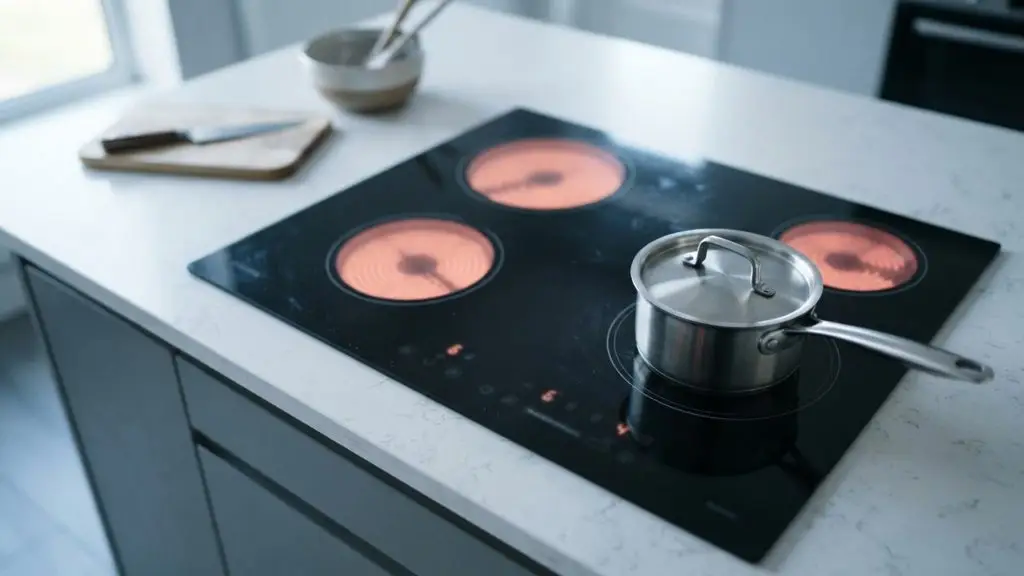
A vented induction hob combines an induction cooktop with a built-in extractor fan in a single flush unit. It cooks using electromagnetic induction and captures steam, grease, and odours at worktop level, drawing them down through a vent in the hob surface rather than letting them rise into the room. The result is a cleaner kitchen layout, no overhead hood required, and extraction performance that improves as it gets closer to the source.
How the Technology Works
Induction cooking
Induction hobs heat pans using electromagnetic induction rather than a radiant element or gas flame. A copper coil beneath the glass generates an alternating magnetic field when energised. Place a pan with a magnetic base on the zone and the field induces an electrical current directly in the pan’s base, which generates heat. The glass surface itself stays relatively cool because the heat is created in the pan, not transferred to it from below. This makes induction faster to respond, more precise, and more energy-efficient than ceramic or gas alternatives.
Only pans with a ferromagnetic base work on induction: cast iron, magnetic stainless steel, and carbon steel all perform well. Aluminium, copper, and most older non-stick pans will not work unless they have an induction-compatible base layer. If a magnet sticks firmly to the base of your pan, it will work on induction.
Built-in extraction
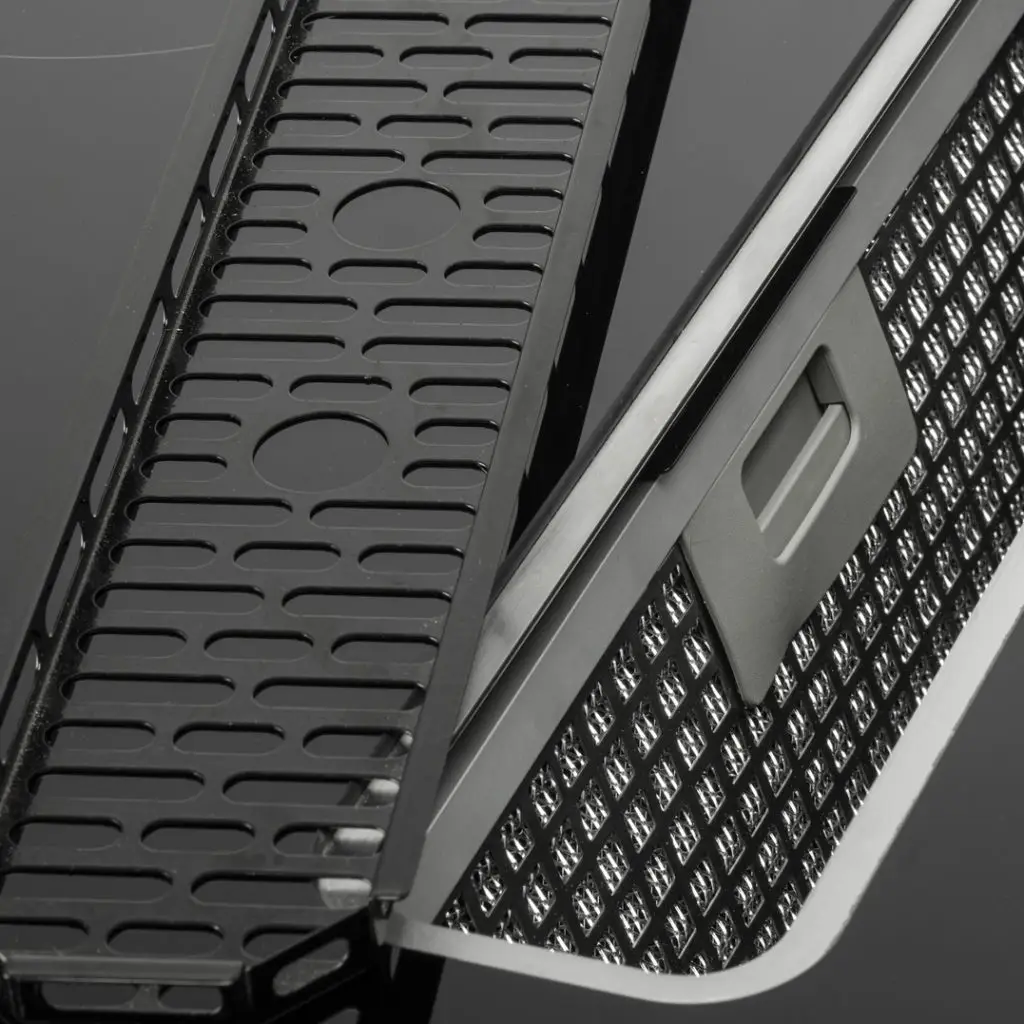
The extraction system sits below the hob surface, typically accessed through a grille positioned at the centre or rear of the cooking area. An internal fan draws cooking air downward through this grille as you cook, rather than allowing steam and odour to rise and disperse across the room.
The air passes through a grease filter first — usually a fine stainless steel mesh — which captures airborne fat particles and prevents them from coating the motor and internal ducting. In ducted installations, the filtered air then travels through ductwork to an external vent. In recirculating installations, the air passes through a carbon filter to absorb odours before being returned to the kitchen.
The downdraft principle — capturing vapour at worktop level rather than above head height — is particularly effective for open-plan spaces where a ceiling-mounted hood would need to be very powerful to capture dispersed steam. Because the vent is close to the source, a lower extraction rate can achieve the same result as a higher-rated overhead hood positioned further away.
Many current models include automatic extraction sensors. These detect changes in humidity or temperature above the cooking surface and adjust fan speed accordingly — increasing when you start to boil or fry and dropping back when you reduce the heat. It removes the need to manage extraction manually while cooking.
Ducted vs Recirculating Extraction
The extraction system operates in one of two modes depending on your installation. Both remove grease at the filter stage; they differ in how they handle odours and moisture.
Ducted extraction
Filtered air is expelled outside the building through rigid or flexible ducting installed beneath the worktop and through the kitchen unit or wall. This removes moisture and odours from the room entirely.
Ducted extraction offers better overall performance, particularly for high-heat cooking — frying, wok cooking, or sustained boiling. It is the right choice for kitchens where ducting can be installed without significant disruption.
Requires access to an external wall or ceiling void. Rigid round ducting in the largest practical diameter gives the best airflow and lowest noise.
Recirculating extraction
Filtered air passes through a carbon (activated charcoal) filter to neutralise cooking odours, then returns to the kitchen. No external ducting is required, making installation simpler and suitable for any kitchen configuration.
Grease removal is equivalent to ducted, as both use the same mechanical filter. The difference is that moisture remains in the kitchen, and carbon filters need replacing every three to six months to maintain odour absorption.
The better choice for island installations with no convenient route to an external vent, or for rental properties where structural modification is not possible.
Key Features to Look For
Extraction rate (m³/h)
Measures how much air the fan moves per hour. 400 to 600 m³/h is adequate for most domestic kitchens; higher rates suit large open-plan spaces or frequent high-heat cooking. Because vented hobs extract at source, a lower rate achieves more than the same figure on an overhead hood.
Noise level (dB)
Open-plan kitchens demand quieter operation. Look for models rated at 65 dB or below on standard settings. Many include a quiet mode for background ventilation. Fan noise also depends on ducting quality — short, straight runs with minimal bends produce significantly less turbulence noise.
Flex zones and pan detection
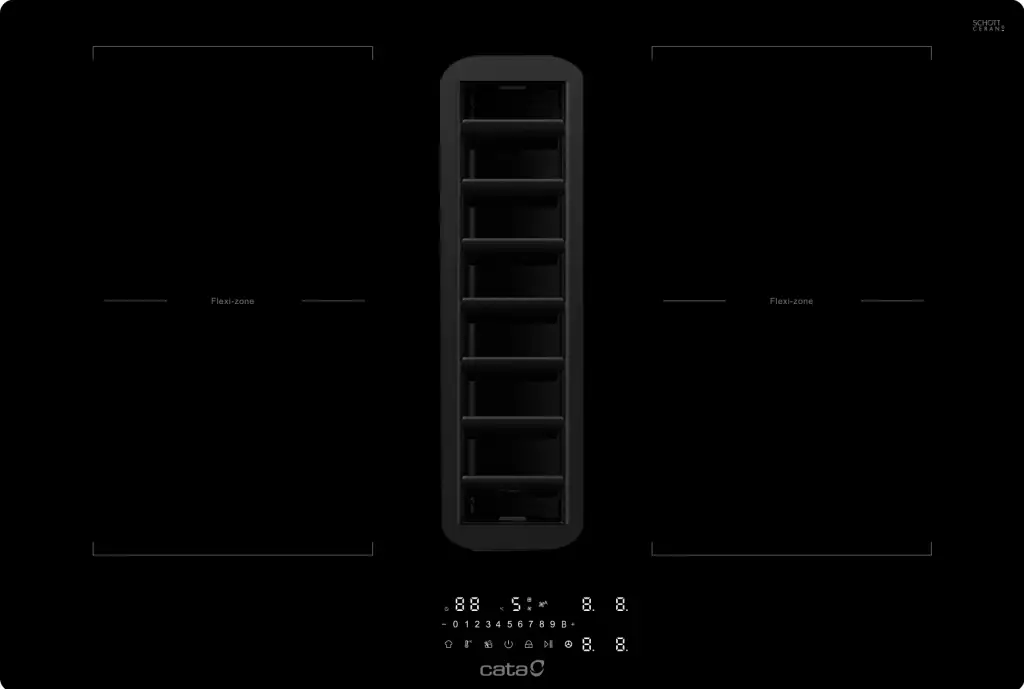
Flex zone technology allows two adjacent cooking zones to merge into one larger area, useful for griddle pans and long roasting trays. Some models use pan detection to activate only the area beneath the pan, avoiding wasted energy heating empty zones.
Automatic extraction sensors
Humidity or temperature sensors adjust fan speed automatically in response to cooking intensity. Useful for hands-free operation and for optimising energy use — the fan only runs as hard as the cooking requires.
Filter accessibility
Grease filters should be removable for cleaning without tools. Dishwasher-safe filters simplify maintenance considerably. For recirculating models, check how the carbon filter is accessed and what the replacement cost is before purchasing — it is an ongoing running expense.
Touch and slide controls
Most vented hobs use a touch panel with separate controls for cooking zones and fan speed. Slide controls allow continuous adjustment rather than stepped settings. Look for responsiveness with damp or lightly greasy fingers, which is the typical cooking condition.
Pros and Cons
| Advantages | Considerations |
|---|---|
| Space-saving 2-in-1 designEliminates the need for a separate cooker hood, freeing up wall and ceiling space for lighting, cabinetry, or an unobstructed view. | Higher upfront costA vented hob costs more than a standalone induction hob of equivalent quality, though the saving on a separate hood partially offsets this. |
| Cleaner kitchen sightlinesNo overhead hood means a genuinely open ceiling, which suits island installations and open-plan spaces where a hood would dominate the visual space. | Under-counter space requiredThe motor unit, ducting, and filter housing take up some of the cabinet space beneath the hob. Check dimensions against your existing cabinetry before purchasing. |
| Extraction at sourceCapturing vapour at worktop level is inherently more efficient than waiting for it to rise to an overhead hood. Particularly noticeable in open-plan kitchens where steam would otherwise travel widely. | Filter maintenanceGrease filters need cleaning every few weeks; carbon filters (recirculating only) need replacing every three to six months. Neither is demanding, but both require consistent attention. |
| Induction efficiencyInduction cooking is inherently more energy-efficient than gas or ceramic. Combined with precise zone control and pan detection, running costs are lower than other hob types at comparable cooking intensity. | Magnetic pans requiredExisting pan sets may not be compatible if they use aluminium or copper construction. Worth checking before switching from gas or ceramic. |
| Modern featuresAuto extraction, flex zones, slide controls, and pan detection are standard on current models rather than premium additions. | Installation complexityDucted installation may require worktop modifications, cabinet adjustments, and a clear route to an exterior wall. Worth factoring into total project cost. |
Installation Considerations
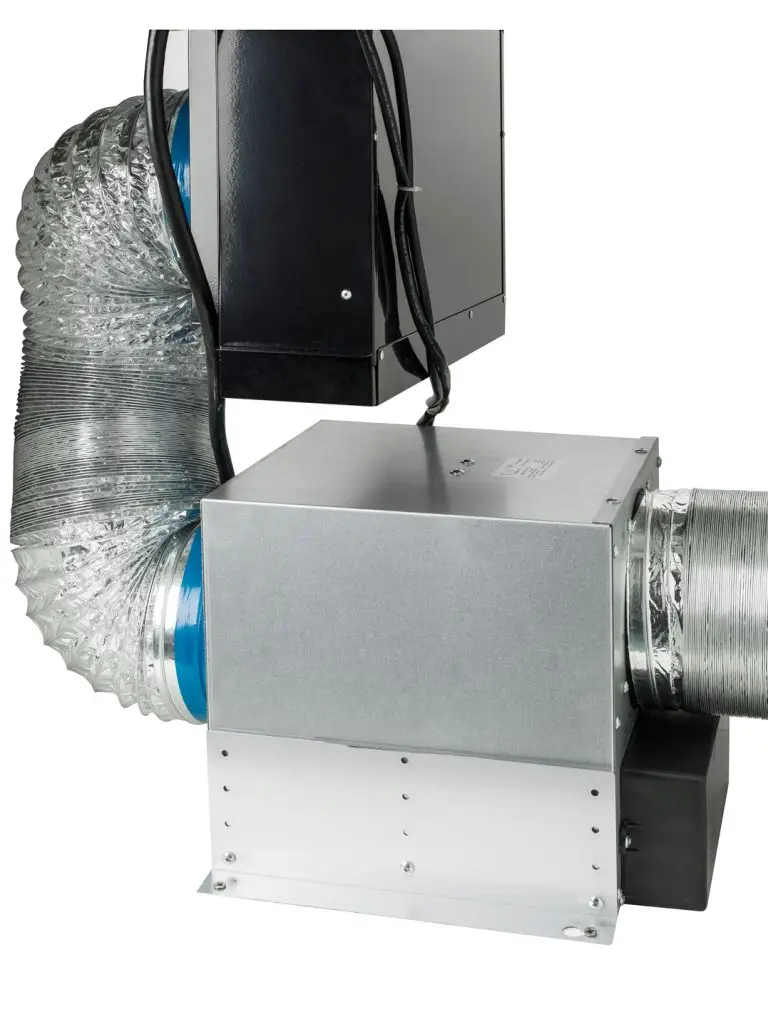
Vented induction hobs require more installation planning than a standard hob, primarily because of the space needed beneath the worktop for the motor unit and filter housing. Most models require a clear space of around 150 to 200mm below the hob in addition to standard worktop depth. Check your specific model’s installation manual for exact dimensions before ordering cabinetry.
For ducted installations, the duct run should be as short and straight as possible. Each 90-degree bend in the ductwork reduces effective airflow by the equivalent of roughly 1 metre of straight duct. Round rigid ducting of 150mm or 200mm diameter gives significantly better airflow than flat oval ducting of equivalent cross-section, because it presents less resistance to the airflow.
The electrical connection follows the same requirements as any induction hob: a dedicated radial circuit rated for the appliance’s total load, installed by a qualified electrician and notified under Part P of the Building Regulations. For combined units drawing up to 7 kW, a 32A circuit is typically sufficient; higher-powered models may require a 40A circuit. Your electrician will advise based on the specific appliance specification.
Island installations are a natural fit for vented hobs because they avoid the need for an island hood, which would otherwise require structural ceiling work. For recirculating models on an island, no external ducting is needed at all — the motor and filter housing sit in the cabinet beneath, and cleaned air returns through vents in the hob or adjacent unit.
CATA’s vented induction hob range includes both 60cm and 77cm models with flex zone cooking and auto extraction. Full installation dimensions, ducting requirements, and electrical specifications are provided in each product’s installation manual, available on the product page.
CATA 700 — CATDD77CHF 77cm Vented Flex Zone Induction Hob
The CATA 700 combines a 77cm flex zone induction surface with a built-in downdraft extractor. The flex zone allows up to three cooking areas to be combined for large pans, and the integrated extraction system operates in either ducted or recirculating mode. Auto extraction sensors and touch-slide controls are included as standard.
View vented hob rangeCommon Questions Answered
Do vented hobs need external ducting?
No. Recirculating models return filtered air to the kitchen without any external connection. Ducted installation offers better moisture removal but is not required.
How often do filters need cleaning or replacing?
Grease filters should be cleaned every three to four weeks — most are dishwasher safe. Carbon filters on recirculating models need replacing every three to six months.
Are vented hobs noisy?
Most operate at 60 to 65 dB on standard settings, broadly comparable to a conventional extractor hood. Quality of ducting installation has a significant effect on noise — short, straight runs are much quieter than long runs with multiple bends.
Can any pans be used?
Only pans with a magnetic base work on induction. Cast iron, magnetic stainless steel, and carbon steel are all compatible. Test with a fridge magnet — if it sticks firmly to the base, the pan will work.
Are they suitable for kitchen islands?
Yes — island installations are one of the strongest use cases for vented hobs, avoiding the need for structural overhead hood installation. Recirculating models require no external ducting at all.
What if liquid spills into the vent?
Most models include a collection tray beneath the grille to catch small spills. Clean it promptly and refer to the installation manual for your specific model’s guidance on larger spills.