How Does a Pyrolytic Oven Work – and Is It Worth It?
Quick answer
A pyrolytic oven cleans itself by heating the cavity to an extremely high temperature, usually around 450°C to 500°C, burning food residue and grease into ash that can be wiped away once the cycle finishes. For busy households or anyone who wants less scrubbing and fewer chemical cleaners, a pyrolytic oven can be well worth the extra cost.
Jump to
Keeping an oven clean is one of those kitchen jobs that nobody really looks forward to. Burnt-on grease, baked food spills, and stubborn marks can take serious effort to remove. That is why pyrolytic ovens have become such a popular option for modern kitchens. Instead of relying on harsh chemical sprays and heavy scrubbing, they use intense heat to do the hard work for you.
If you are comparing different ovens and wondering whether a self-cleaning model is worth the upgrade, this guide breaks down how pyrolytic cleaning works, how it compares with other systems, and whether it is the right fit for your home.
What is a pyrolytic oven?
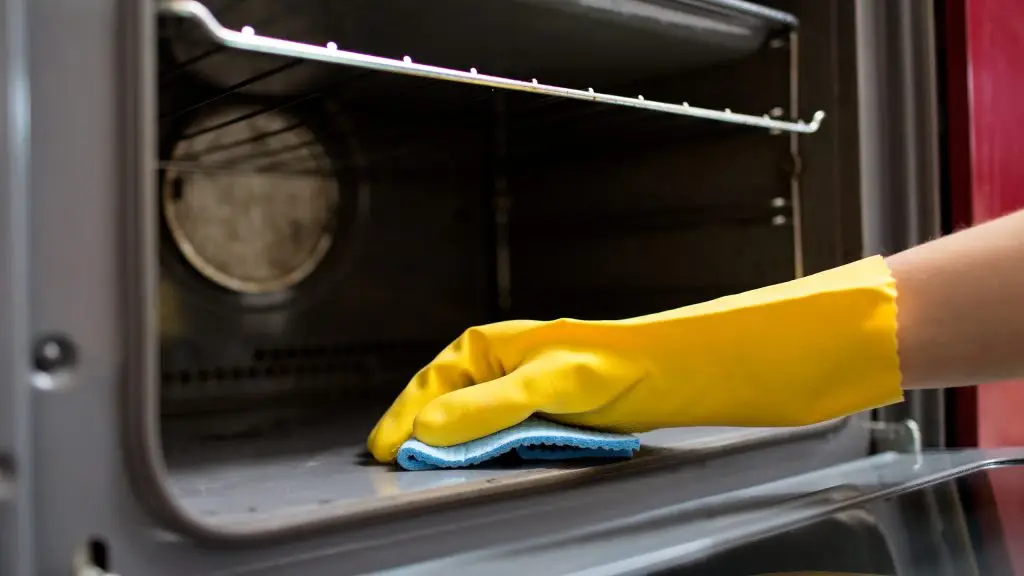
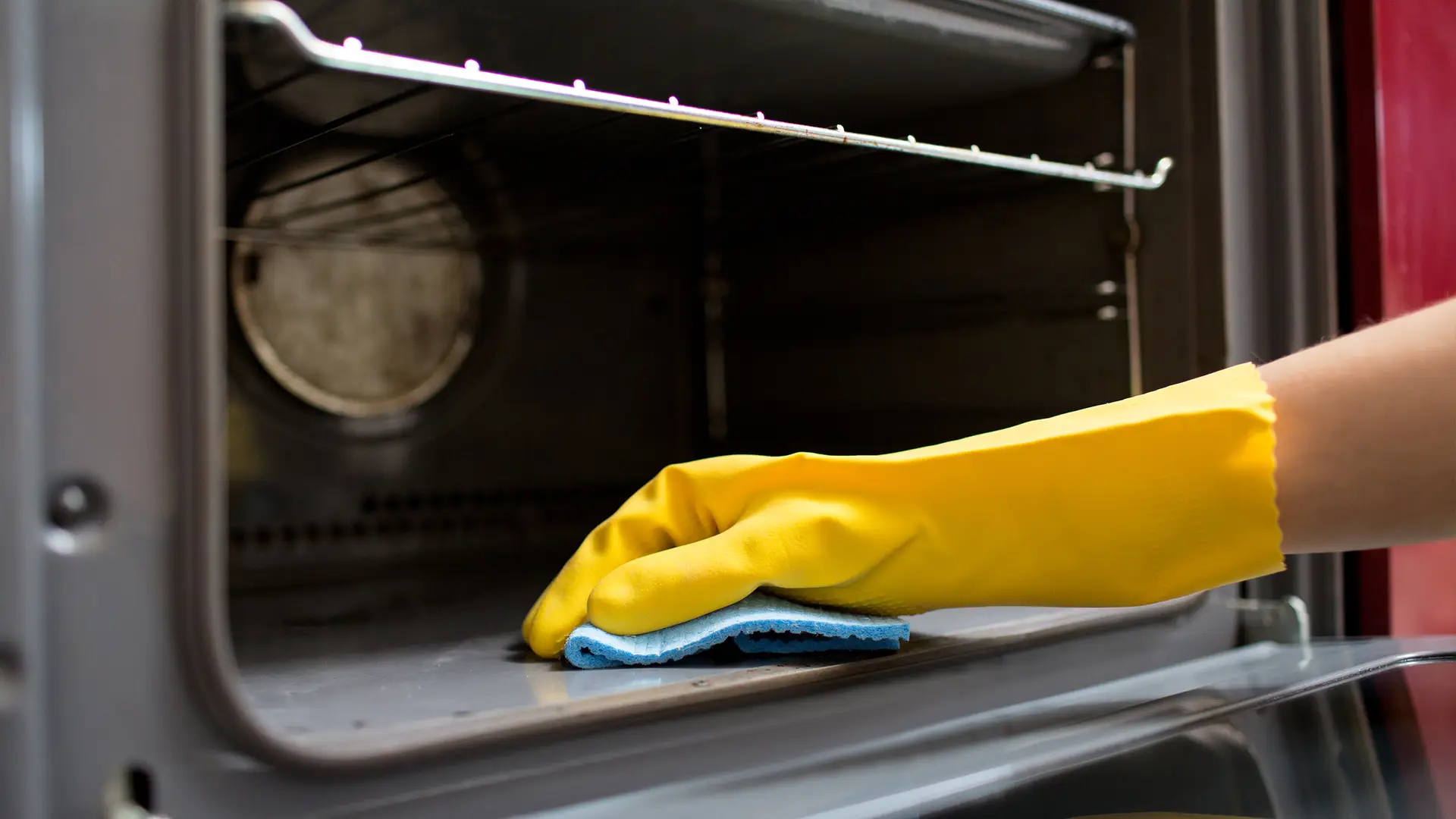
A pyrolytic oven is a self-cleaning oven that uses extremely high temperatures to turn grease, food residue, and splashes into fine ash. Rather than loosening dirt with water or absorbing grease with liners, it burns away the mess completely. Once the cycle ends and the oven cools down, the remaining ash can simply be wiped out with a damp cloth.
This makes pyrolytic technology especially appealing for households that cook often, roast regularly, or just want a more hygienic and low-maintenance kitchen routine. It is one of the most convenient cleaning systems available in a modern built-in oven.
In simple terms: a pyrolytic oven cleans itself by using heat instead of scrubbing, sprays, or replaceable liners.
How does a pyrolytic oven work?
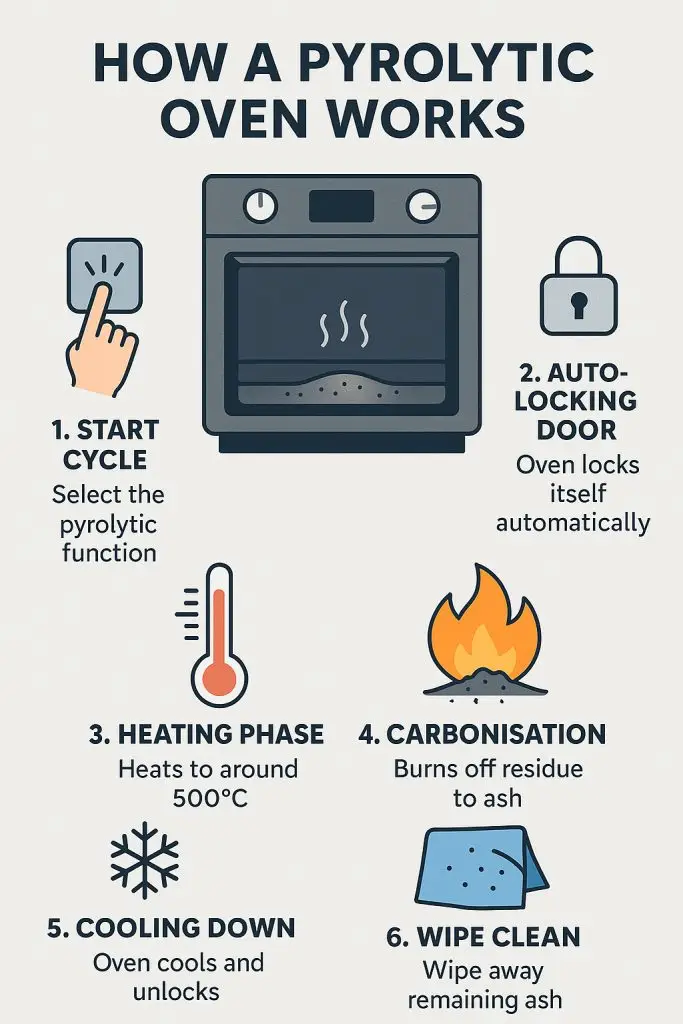
During a pyrolytic cleaning cycle, the oven reaches a much higher temperature than it would during normal cooking. This intense heat carbonises grease and leftover food particles, reducing them to ash. For safety, the door locks automatically while the cycle is running and stays locked until the oven has cooled to a safe level.
What happens during the cleaning cycle?
- Select the pyrolytic cleaning function from the control panel.
- The oven door locks automatically for safety.
- The cavity heats up to roughly 450°C to 500°C.
- Burnt-on grease and food residue are reduced to ash.
- The oven cools down and unlocks once it is safe.
- You wipe away the remaining ash with a soft damp cloth.
Most cleaning cycles take between around 1.5 and 3 hours depending on the model and the level of build-up inside the cavity. Some ovens offer different cycle lengths so you can choose a shorter clean for lighter dirt or a longer one for heavier residue.
Pyrolytic vs other oven cleaning methods
Pyrolytic ovens are not the only low-maintenance option on the market, so it helps to compare them with other common cleaning systems. Catalytic liners and steam cleaning both reduce manual effort, but they work in very different ways and usually do not deliver the same level of deep cleaning.
| Cleaning type | How it works | Manual effort | Main drawback |
|---|---|---|---|
| Pyrolytic | Burns grease and residue into ash at very high temperatures | Very low | Higher upfront cost and added energy use during the cycle |
| Catalytic liners | Special liners absorb and break down grease during cooking | Moderate | Liners can wear out and may need replacing |
| Steam cleaning | Steam softens grime so it can be wiped away more easily | Moderate | Usually less effective on heavy burnt-on residue |
If you want the lowest-effort cleaning option and a more complete reset of the oven interior, pyrolytic cleaning is usually the strongest performer. If you cook less often or prefer a lower purchase price, catalytic or steam-assisted models may still be enough.
Pros and cons of pyrolytic ovens
Advantages
- No need for chemical oven cleaners.
- Excellent for removing stubborn grease and burnt-on residue.
- Helps reduce manual scrubbing.
- Can support a cleaner, more hygienic cooking space.
- Ideal for households that use the oven frequently.
Things to consider
- Pyrolytic models usually cost more than standard ovens.
- The cleaning cycle uses additional electricity.
- Shelves and trays often need to be removed before cleaning.
- The outside of the oven can become warmer during the cycle, so ventilation and safe use matter.
Is a pyrolytic oven worth it?
For many households, the answer is yes. A pyrolytic oven can save a surprising amount of time and effort over the years, especially if you cook regularly and want an easier way to keep your appliance looking fresh. If you roast often, bake frequently, or dislike cleaning the oven by hand, the convenience alone can make it feel like a worthwhile upgrade.
It can also be a smart long-term choice if you want to cut down on chemical cleaners and keep maintenance simple. While the purchase price is usually higher, the day-to-day convenience often makes up for it.
A pyrolytic oven is most worth it for busy kitchens, frequent home cooks, and anyone who wants a genuinely low-maintenance oven cleaning solution.
If you only use your oven occasionally, or do not mind the odd deep clean by hand, a standard model or an oven with catalytic liners may be enough. It really comes down to how often you cook and how much value you place on convenience.
Final thoughts
A pyrolytic oven offers one of the easiest ways to keep your oven interior clean, using intense heat to turn stubborn residue into ash with minimal effort afterwards. For many homes, that convenience makes it a very appealing upgrade. If you are looking for a modern oven that helps cut down on scrubbing and simplifies maintenance, a pyrolytic model is well worth considering.
If you are ready to compare features and styles, take a look at the full CATA range of built-in ovens to find the right fit for your kitchen.
FAQs
A pyrolytic oven is a self-cleaning oven that uses extremely high heat to burn off food residue and grease, leaving behind ash that can be wiped away once the cycle ends.
It uses more electricity during the cleaning cycle than normal cooking, but because the cycle is only run occasionally, the overall impact is usually manageable for most households.
In most cases, yes. Many oven racks, trays, and accessories are not designed to stay inside during pyrolytic cleaning, so check your model instructions first.
Most pyrolytic cycles take around 1.5 to 3 hours depending on the oven and how dirty it is.
For frequent cooks and busy households, it often is. The higher initial cost can be worth it for the time saved and the much lower cleaning effort over the life of the oven.