Gas vs Ceramic vs Solid-Plate vs Induction Hobs: Pros and Cons
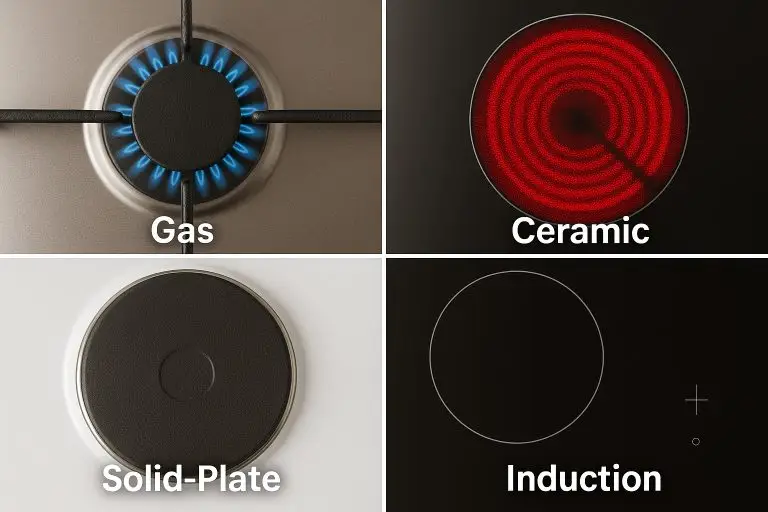
Four different hob technologies, each with a distinct approach to turning energy into heat. The right choice depends on what supply you have, how you cook, your budget, and how much cleaning you want to do. This guide covers each type honestly, with a side-by-side comparison and a per-type breakdown to help you decide.
Side-by-side comparison
| Feature | Gas | Ceramic | Solid-plate | Induction |
|---|---|---|---|---|
| Heat response | Instant | Fast | Slow | Instant |
| Temperature control | Excellent | Good | Basic | Precise |
| Energy efficiency | Low (40–55%) | Medium (55–65%) | Low | High (85–90%) |
| Safety | Open flame | Residual heat risk | Hot surface | Cool touch |
| Cleaning | Fiddly | Easy | Moderate | Very easy |
| Cookware | Any | Any | Any | Magnetic only |
| Upfront cost | ££ | £££ | £ | ££££ |
| Running cost | Low | Medium | High | Low |
Gas Hobs
Gas
Gas hobs burn fuel to produce a flame beneath the pan. Heat is instant and continuously variable. Turn the knob and the flame changes immediately. This makes gas well-suited to techniques that require rapid heat adjustment: high-heat stir-frying, wok cooking, charring over an open flame, and any task where visual heat feedback helps.
The efficiency disadvantage is significant. Only 40 to 55 percent of the energy produced by combustion reaches the pan. The rest heats the air, the pan supports, and the kitchen. Gas also produces indoor combustion by-products including nitrogen dioxide and particulate matter, which UK building regulations require to be extracted. A functioning cooker hood is not optional with a gas hob. Additionally, new gas hob installations are subject to increasing regulatory scrutiny as the UK moves toward electrification of domestic heating and cooking.
Cleaning is the main day-to-day disadvantage. Burner caps, pan supports, and the hob surround all trap grease and food. Thorough cleaning requires disassembly and scrubbing, straightforward but time-consuming compared with flat electric hobs.
Pros
- Instant heat, instantly adjustable
- Excellent visual control
- Works with any cookware
- Low running cost per unit of energy
- Functions during power cuts
Cons
- Low energy efficiency (40–55%)
- Combustion produces indoor air pollutants
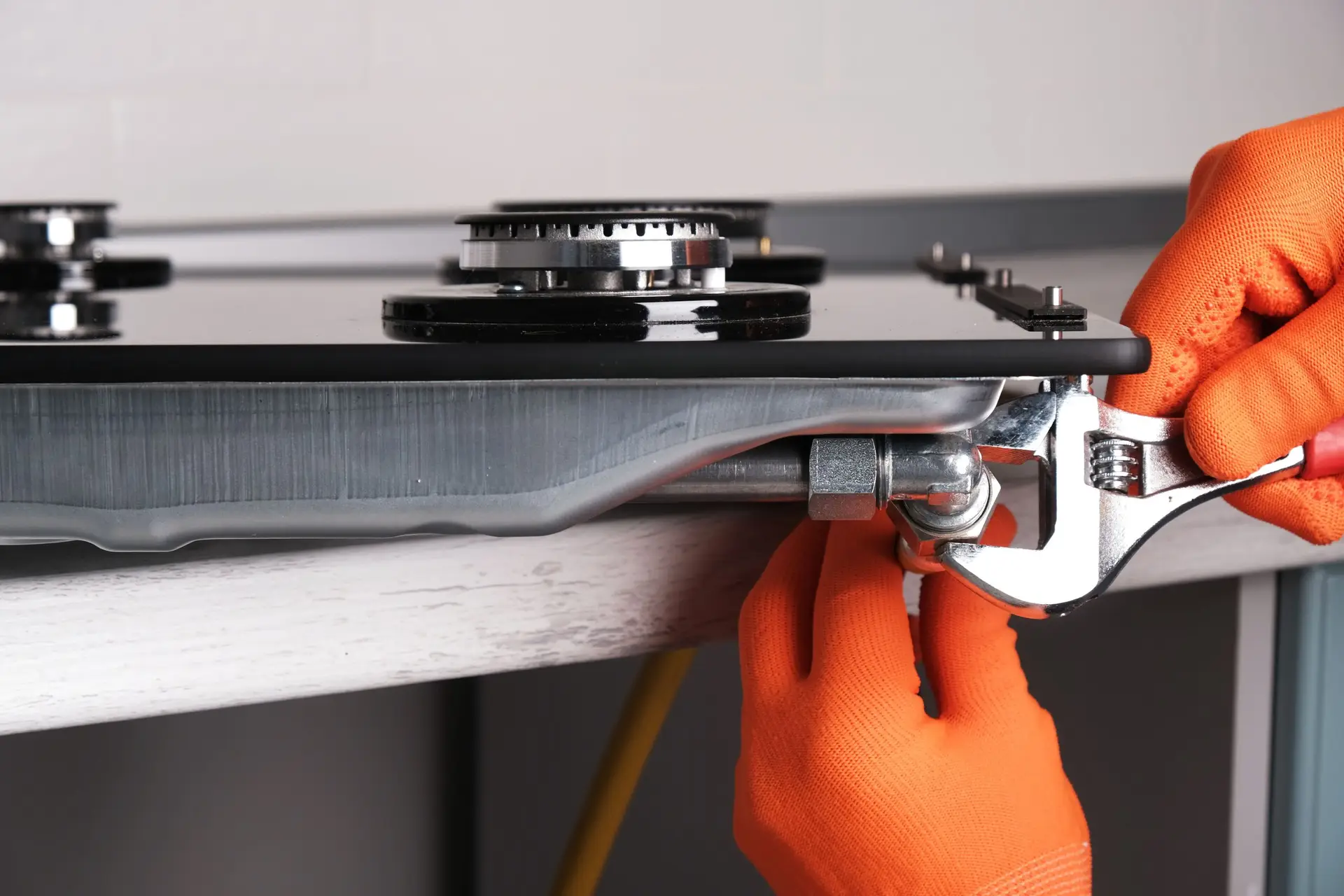
- Requires gas supply and Gas Safe installation
- Fiddly to clean thoroughly
- Open flame risk with children or loose clothing
Ceramic Hobs
Ceramic
Ceramic hobs use radiant heating elements beneath a smooth glass-ceramic surface. The elements heat the glass, which transfers heat to the pan by conduction. The flat surface is visually clean, easy to wipe down, and works with any pan material, making ceramic a popular upgrade from gas for households switching to electric without the additional cost of induction.
The principal disadvantage is residual heat. After switching off, the glass surface retains significant heat for several minutes. The surface looks identical whether hot or cold, which creates a burn risk if touched accidentally. Most models include a residual heat indicator for this reason. Heat-up is also slower than induction, and the glass can develop scratches from rough pan bases over time.
Efficiency sits between gas and induction at around 55 to 65 percent. A ceramic hob uses more energy per cooking session than induction for the same task, primarily because energy is wasted heating the glass surface and the air around it rather than going directly into the pan.
Pros
- Clean, flat surface: easy to wipe
- Works with any cookware
- No gas supply required
- Relatively affordable
- Heats faster than solid-plate
Cons
- Residual heat: burn risk and wasted energy
- Less efficient than induction (55–65%)
- Surface can scratch or crack under impact
- Slower heat response than gas or induction
Solid-Plate Hobs
Solid-plate
Solid-plate hobs use cast iron or steel heating plates wired to resistive heating elements. They are the oldest surviving electric hob technology and the least expensive to buy. Their primary appeal is simplicity and durability: no glass surface to crack, straightforward controls, and robust construction.
The disadvantages are substantial for everyday cooking use. Heat-up is slow. A solid plate can take 5 to 8 minutes to reach cooking temperature from cold. Cool-down is equally slow: the thermal mass of the plate retains heat long after power is reduced, making responsive temperature control difficult. Boiling, reducing, and any technique requiring a rapid heat change is less convenient than on other hob types.
Energy efficiency is low, comparable to gas, because the plates heat the surrounding air as well as the pan. Running costs per cooking session are the highest of the four types. Solid-plate hobs are most appropriate for very light cooking use where low purchase price is the decisive factor, or for replacement in an existing installation where changing the hob type would require additional electrical work.
Pros
- Lowest purchase price
- Durable, hard to break
- Simple controls
- Works with any cookware
Cons
- Very slow to heat and cool
- Poor temperature control
- Highest running cost of the four types
- Plates can stain or corrode over time
- Least efficient option overall
Induction Hobs
Induction
Induction hobs generate an alternating electromagnetic field beneath the glass surface. When a ferromagnetic pan is placed over the coil, electrical currents induced in the pan’s base convert directly into heat inside the pan itself. The glass surface, the surrounding air, and any non-magnetic object placed on the hob receive no heat from the coil. This is why induction is both the most efficient and the safest technology available.
Energy efficiency of 85 to 90 percent means the vast majority of electrical energy consumed becomes useful heat in the pan. Combined with fast heat-up (comparable to or faster than gas) and instant power reduction, induction is well-suited to tasks across the full temperature range: bringing large volumes of water to the boil, maintaining a precise simmer, and anything in between.
The two considerations specific to induction are cookware compatibility and electrical supply. Cookware must be ferromagnetic. A fridge magnet sticking firmly to the base confirms compatibility. Most cast iron, carbon steel, and magnetic stainless pans work; pure aluminium and copper do not. Induction hobs above 3kW require a dedicated 32A or 40A circuit rather than a standard 13A socket, which may require an electrician if one is not already installed. See the full guide to induction-compatible cookware for detail on specific materials.
Pros
- Highest energy efficiency (85–90%)
- Instant heat response and precise control
- Cool-touch surface: safest type for families
- Very easy to clean
- Low running cost per cooking session
- Pan-detection safety: no heat without a compatible pan
Cons
- Higher upfront cost than ceramic or gas
- Requires magnetic cookware
- Needs dedicated electrical circuit (most models)
- Can produce buzzing noise at high power with some pans
Most households that switch from gas or ceramic to induction do not go back. The cleaning advantage alone is significant. Spills do not burn onto a cool surface. For a detailed guide to the buying decision including power supply, cut-out size, and zone count, see what questions to ask when buying a new hob.
For a full buying guide across all hob types with efficiency figures and use-case recommendations, see the complete hob buying guide. Browse the full CATA hob range across gas, ceramic, induction, and vented formats.
Common questions answered
Which hob type is most energy-efficient?
Induction, by a considerable margin. Around 85 to 90 percent of electrical energy converts to useful heat in the pan, compared with 55 to 65 percent for ceramic and 40 to 55 percent for gas. Solid-plate efficiency is comparable to gas. Over years of regular use, the efficiency difference between induction and gas produces a meaningful reduction in energy costs per cooking session.
Is gas or induction better for cooking control?
Both offer excellent control but in different ways. Gas responds instantly and visually. You can see and adjust the flame continuously. Induction responds instantly and precisely. Digital power levels allow exact repeatable settings without the variability of flame size. Most experienced cooks find induction at least as controllable as gas once accustomed to it, with the additional advantage of instant full-power reduction.
Can I switch from gas to induction without major building work?
In most cases, yes. You need a Gas Safe engineer to cap the gas supply (typically £80 to £150) and a qualified electrician to install a dedicated 32A circuit if one does not already exist (typically £150 to £400). The worktop cut-out may need enlarging if switching from a four-burner gas to a different-width induction hob. For plug-in induction models, no dedicated circuit is required. See the plug-in induction hob guide.
Which type is safest for a home with young children?
Induction. The glass surface only heats through residual warmth from the pan itself. It does not reach dangerous temperatures from the coil alone. Pan-detection means the coil is inactive without a compatible pan above it. Combined with child lock controls available on most induction models, it is the safest hob technology for households with young children.