Home » Uncategorized » How Long Can You Keep Food in the Freezer? Storage Chart
How Long Can You Keep Food in the Freezer? Storage Chart
The short answer surprises most people. Food kept at a steady minus 18 degrees stays safe to eat almost indefinitely, because freezing pauses the bacteria that cause it to spoil. What changes over time is quality, not safety. The chart below shows how long each food keeps at its best, so you can plan your freezer rather than guess.
Safe to eat or at its best?
These two things are different. At minus 18 degrees, frozen food does not become unsafe. The times in the chart are the point at which flavour and texture start to fade, so think of them as best before, not use by.
Freezer storage chart
These are typical times for food kept at a constant minus 18 degrees, wrapped well. Past these windows the food is still safe, it simply will not taste as good.
| Food | Keeps well for |
|---|---|
| Raw meat | |
| Mince and sausages | 3 to 4 months |
| Steaks and chops | 4 to 12 months |
| Joints and roasts | 4 to 12 months |
| Bacon and ham | 1 to 2 months |
| Poultry | |
| Whole chicken or turkey | Up to 12 months |
| Chicken or turkey pieces | Up to 9 months |
| Cooked poultry | 2 to 4 months |
| Fish and seafood | |
| White fish such as cod | Up to 6 months |
| Oily fish such as salmon | 2 to 3 months |
| Prawns and shellfish | 3 to 6 months |
| Cooked dishes and leftovers | |
| Cooked meat and leftovers | 2 to 3 months |
| Soups and stews | 2 to 3 months |
| Fruit and vegetables | |
| Vegetables, blanched | Up to 12 months |
| Fruit | 6 to 12 months |
| Dairy and bread | |
| Butter | Up to 3 months |
| Hard cheese | Up to 6 months |
| Bread | Up to 3 months |
| Milk | Up to 1 month |
| Other | |
| Ice cream | 1 to 2 months |
| Shop bought frozen meals | Follow the pack |
Why frozen food stays safe but loses quality
A freezer works like a pause button. At minus 18 degrees the bacteria that spoil food cannot grow, so the food does not go off in the way it would in the fridge. That is why, kept at a steady temperature, it stays safe to eat for far longer than the chart suggests.
What does change is quality. Over months in the freezer, air slowly reaches the surface of the food and draws out moisture, leaving dry, greyish patches known as freezer burn. It is not harmful, but it makes food tough and bland. Wrapping items tightly and squeezing out air is the simplest way to slow it down. Frost free freezers circulate dry air, which keeps ice from building up but can dry unwrapped food a little faster, so good packaging matters even more. Our guide on what frost free means for a freezer explains how that system works.
How to freeze food well
- Freeze it fresh. Food is only as good as the day it went in. Freeze items while they are at their best, and you can do this right up until midnight on the use by date.
- Cool cooked food first. Let leftovers cool before freezing, and freeze them as soon as possible rather than leaving them in the fridge for days first.
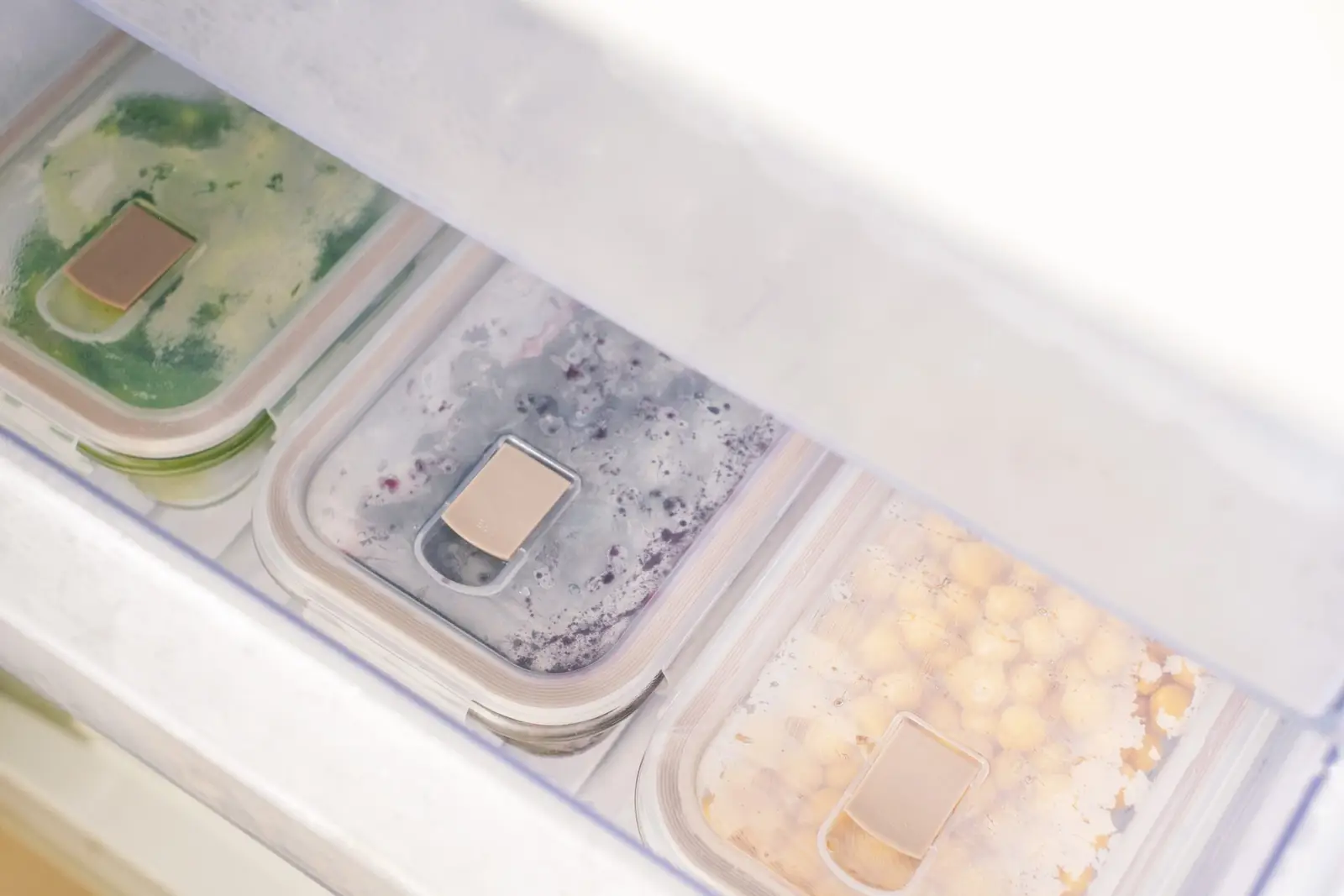
- Wrap airtight. Use freezer bags or sealed containers and press out the air. This is your main defence against freezer burn.
- Label and date everything. A name and a date turns a mystery container into a planned meal and stops good food being thrown away.
- Keep the freezer at minus 18 degrees. A freezer thermometer is the reliable way to check, since the dial alone can drift.
Defrosting safely
How you thaw food matters as much as how you freeze it. Defrost in the fridge rather than on the worktop, so the outside does not sit in the warm while the centre is still frozen. Make sure the dense middle is fully thawed before cooking, as partly frozen food can cook unevenly and leave harmful bacteria behind.
Once food is fully defrosted, treat it like fresh food and use it within 24 hours. Do not refreeze raw food that has thawed. You can, however, cook defrosted raw food and then freeze the cooked dish once.
Quick summary
- At a steady minus 18 degrees, frozen food stays safe to eat almost indefinitely.
- The chart times are about quality. After them food is still safe, just less tasty.
- Raw meat and poultry keep longest, often up to a year. Cooked dishes and oily fish are best within two to three months.
- Wrap airtight, label and date, and freeze food while it is fresh to avoid freezer burn.
- Defrost in the fridge, use within 24 hours, and refreeze only once the food has been cooked.
Frequently asked questions
Yes, as long as it has been kept at a steady minus 18 degrees the whole time. The flavour and texture may have faded, but the food itself is not unsafe.
For best quality, two to three months. Cool the food first, freeze it promptly, and once defrosted use it within 24 hours.
Do not refreeze raw food that has thawed. You can refreeze it once it has been cooked, so thawed raw mince can be made into a cooked dish and that dish frozen once.
It is the dry, greyish patches that form when air reaches the food and pulls out moisture. It is not unsafe, just dry and bland. Wrapping food airtight prevents it.
Around minus 18 degrees. A freezer thermometer is the most reliable way to check, as the dial setting can drift over time.
The safety guidance here, including freezing before the use by date and defrosting in the fridge, follows the Food Standards Agency. Storage times reflect best quality rather than safety.
Explore More Kitchen Advice & Buying Guides
Browse our latest articles covering appliance tips, energy-saving advice, and expert guidance – designed to help you choose, use, and get the most from your kitchen appliances.