Home » Wine Cooler Guides & Advice » Best Places to Install a Wine Cooler in Your Home
Best Places to Install a Wine Cooler in Your Home
Where you place a wine cooler affects how well it performs and how long it lasts. The core requirements are the same wherever it goes: stable ambient temperature, adequate ventilation clearance, no direct sunlight, and a level surface away from significant vibration sources. Get those right and the location itself is largely a matter of convenience and kitchen design.
What every location needs
Before choosing a spot, the three environmental conditions that matter most are temperature, light, and ventilation. A wine cooler in a warm room works harder to maintain its set temperature, consuming more energy and putting more load on the compressor. Direct sunlight accelerates this and introduces UV light that degrades wine over time. And every compressor-cooled wine cooler needs clearance around its ventilation grilles, typically 5cm minimum at the rear and sides for freestanding models, with built-in models designed for zero clearance on sides and rear but requiring ventilation through the front kick plate.
The best locations
Kitchen — under-counter built-in
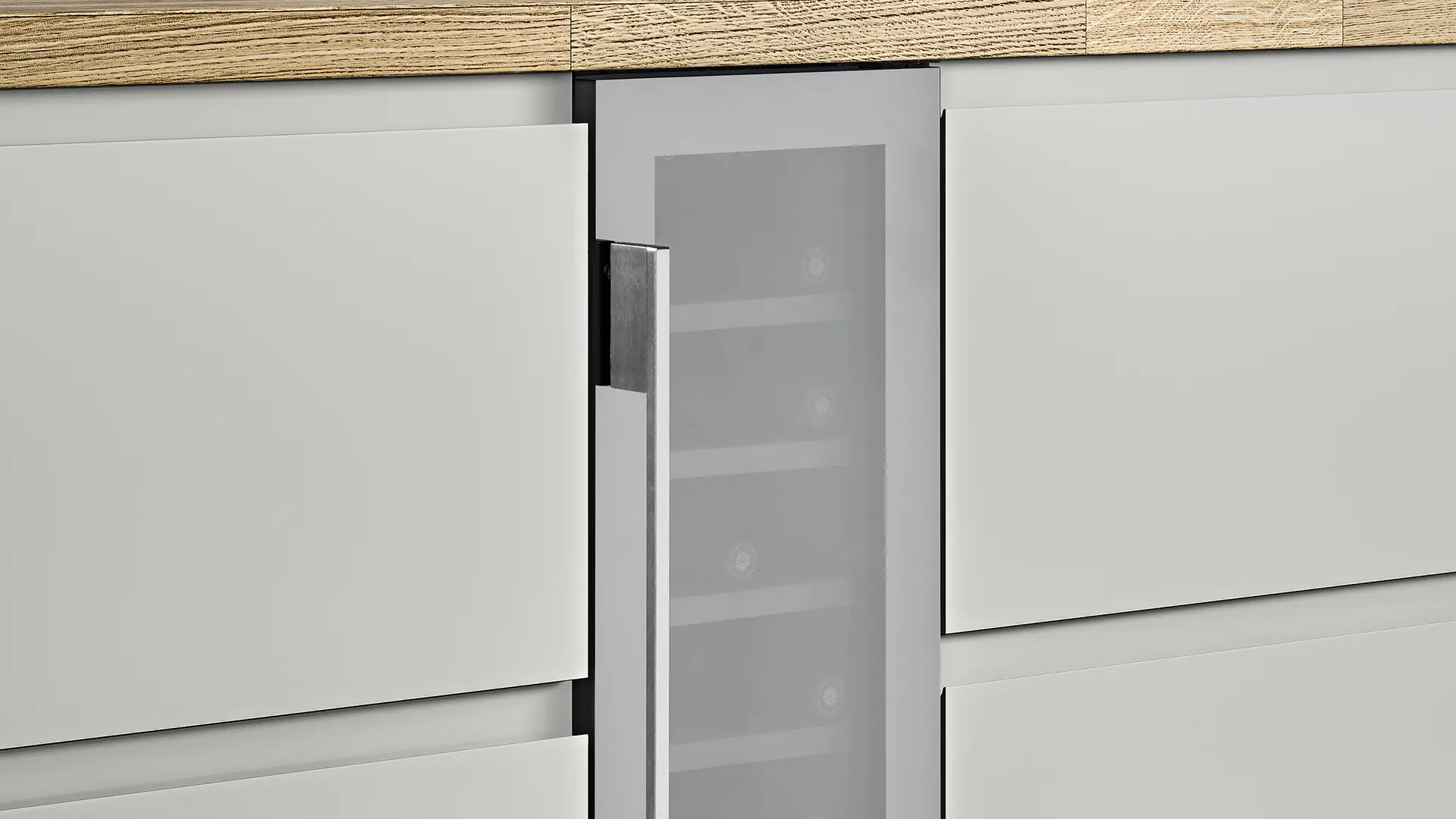
Most popularIntegrating a wine cooler into the kitchen run under the worktop keeps it out of sight while keeping it accessible during cooking and entertaining. A built-in wine cooler is designed specifically for this: the front-ventilating design allows it to sit flush behind a cabinet door without the air circulation problems that would occur with a freestanding model in an enclosed space.
The main consideration in a kitchen is heat proximity. Avoid positioning a wine cooler directly adjacent to an oven, dishwasher, or any appliance that generates significant ambient heat. A few cabinets of separation reduces the thermal load and helps the wine cooler maintain temperature more consistently.
Dining room or open-plan entertaining area
Best for hostingPlacing the wine cooler in or adjacent to the dining space keeps bottles accessible during meals without trips to the kitchen. A freestanding model works well here if it can sit against an external wall with adequate ventilation. A dual-zone model in this position serves both purposes simultaneously. Whites and rosés chilled to serving temperature in one zone, reds at cellar temperature in the other.
In an open-plan kitchen-diner, a built-in unit in the lower cabinetry of a kitchen island or peninsula is an elegant solution that keeps the wine near the dining table without occupying worktop or floor space.
Living room
Freestanding modelsA compact freestanding wine cooler fits into a living space as a considered piece of furniture rather than an appliance. Position it away from south-facing windows and away from radiators, both of which significantly raise the ambient temperature and increase running costs. The best position is against an internal wall that does not receive direct sun at any time of day.
Compressor noise is worth considering in a living room more than elsewhere. Thermoelectric wine coolers (which have no compressor) are quieter and better suited to a living space, though they are less efficient in warmer rooms and suit smaller collections.
Utility room or pantry
Best for storageA utility room or pantry is often the closest domestic equivalent of a cellar: lower ambient temperature than the main living areas, away from sunlight, and with enough space for a larger freestanding model. Temperature stability is the key variable: if the utility room is an unheated space attached to an external wall, temperatures in winter may fall below the wine cooler’s operating minimum (typically 10°C for the ambient environment). Check the operating temperature range of the specific model before placing it in a very cold utility room or garage.
For long-term wine storage, this is frequently the best location in the house purely on environmental grounds.
Home bar or drinks area
Premium setupsA dedicated home bar is the most natural setting for a wine cooler and typically the most considered installation. Whether freestanding or built-in, the wine cooler becomes part of a purposefully designed drinks station. Ventilation is rarely an issue in an open bar area. The main practical consideration is whether the space has sufficient ambient temperature stability. A cellar bar will perform very well, while a conservatory bar may be too warm in summer to run a wine cooler efficiently.
For guidance on temperature settings to get the best from any placement, see the guides to ideal wine serving temperatures and how long wine can be stored in a wine cooler. Browse CATA freestanding and built-in wine coolers across a range of capacities and zone configurations.
Explore More Kitchen Advice & Buying Guides
Browse our latest articles covering appliance tips, energy-saving advice, and expert guidance – designed to help you choose, use, and get the most from your kitchen appliances.