Home » Oven Guides & Advice » How to Clean Glass Oven Door Windows
How to Clean Glass Oven Door Windows: a Simple, Streak-Free Guide
Oven door glass gets dirty in three distinct ways: the outer surface picks up fingerprints and light grease; the inner surface accumulates baked-on splatter from cooking; and the gap between the glass panels can trap vapourised grease that condenses and bakes in place over time. Each needs a slightly different approach. None requires harsh chemicals or specialist tools.
What you need
Bicarbonate of soda, white vinegar, warm water, a plastic scraper or old credit card, and microfibre cloths cover all three cleaning scenarios below. For stubborn baked-on residue, a dedicated glass oven cleaner rated as glass-safe can be used on the inner surface. Avoid wire wool, metal scrapers, abrasive sponges, and any oven cleaner not specifically labelled as safe for glass. All of these can scratch or etch the surface permanently.
Cleaning the outer surface
Outside of the door: light grease and fingerprints
The outside faces the kitchen rather than the oven cavity, so it rarely needs more than a light clean. Confirm the oven is completely cool before starting.
- Mix equal parts white vinegar and warm water in a spray bottle or bowl.
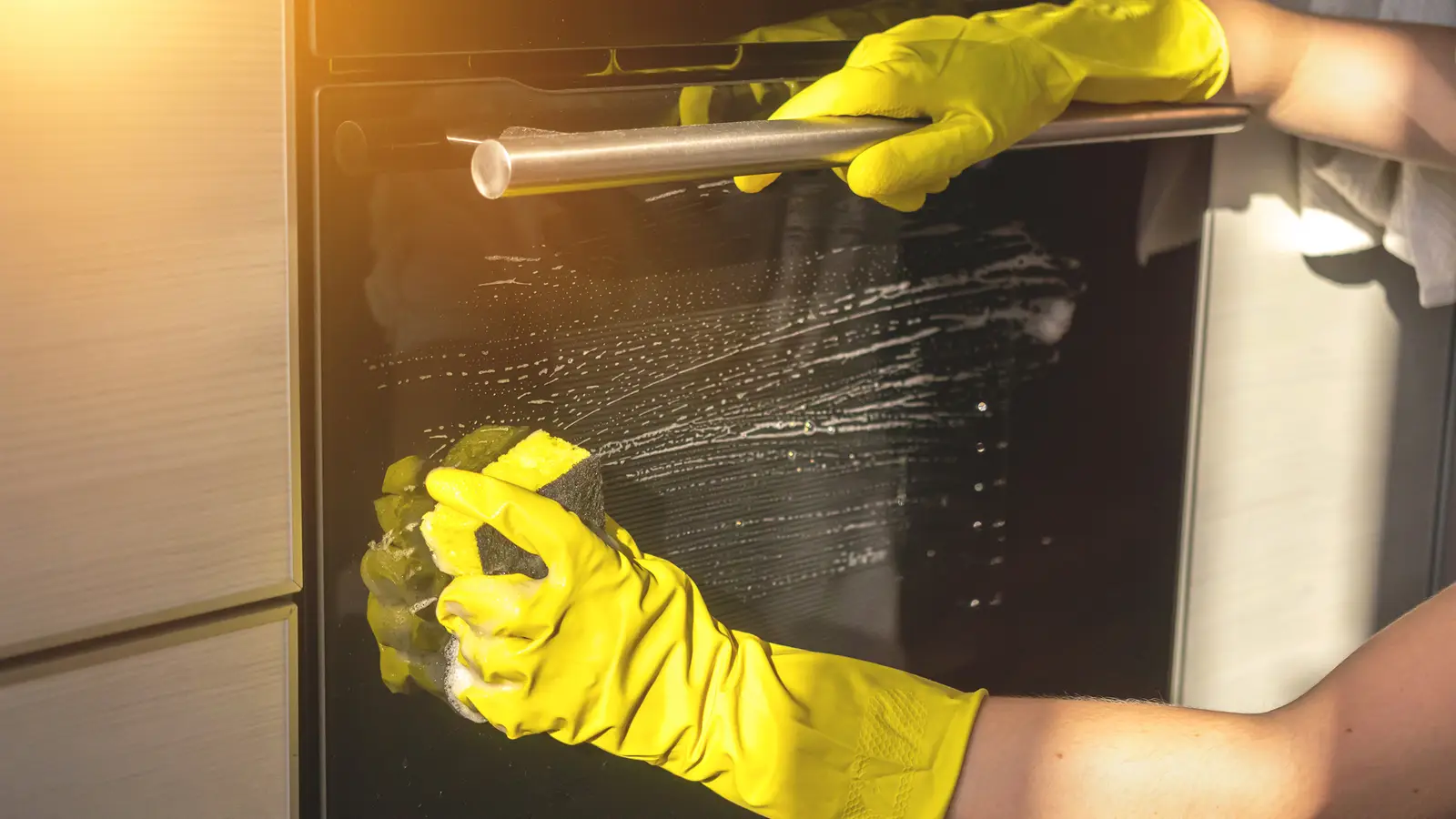
- Apply to the outer glass surface with a soft cloth or spray directly.
- Wipe in circular motions, working from the top of the glass down.
- Buff dry immediately with a clean dry microfibre cloth to prevent streaks.
Cleaning the inner surface
Inside of the door: baked-on grease and splatter
The inner glass is exposed directly to cooking heat and grease. Baked-on residue here needs dwell time to loosen before wiping. Do not attempt to clean while the oven is warm.
- Mix bicarbonate of soda with just enough water to form a thick paste.
- Spread the paste generously over greasy or burnt-on areas using a cloth or spatula.
- Leave for at least 20 minutes, longer for heavy build-up. Up to an hour for very stubborn grease.
- Use a plastic scraper or the edge of a credit card to gently loosen softened residue. Work at a low angle to avoid scratching.
- Wipe away the paste and loosened residue with a damp cloth. Rinse the cloth and repeat until the surface is clean.
- Buff dry with a clean microfibre cloth.
Cleaning between the glass panels
Between the panels: trapped grease and condensation staining
If the door still appears cloudy or streaked after cleaning both accessible surfaces, grease has condensed between the inner panels. This is common after years of use and cannot be cleaned from outside.
Some oven models allow the inner glass panel to be removed by unscrewing fixings at the top or sides of the door. On others, the entire door can be unhinged and laid flat for panel removal. The procedure varies significantly between models.
- Check your oven manual for the door removal or inner panel access procedure specific to your model. Do not proceed without this.
- If the door can be removed, unhinge it carefully and lay it flat on a folded towel to protect both surfaces.
- Remove the inner panel or access hatch as described in the manual. Keep all fixings together in a small container.
- Clean the exposed inner surfaces with the bicarbonate paste method above. Wipe completely dry before reassembly.
- Reassemble in reverse order, ensuring all fixings are secure and the door seal seats correctly before use.
What not to use
- Wire wool or metal scourers: scratch glass permanently
- Razor blades or metal scrapers: risk of deep scratches and chipping edges
- Abrasive powder cleaners: same scratching risk as metal pads
- Oven cleaners not labelled as glass-safe: may etch or discolour the glass or damage surrounding seals
- Cleaning the glass while the oven is warm: thermal shock risk and cleaning products become less effective on hot surfaces
Keeping it cleaner for longer
- Wipe the inner glass with a damp cloth as soon as the oven cools after cooking. Fresh splatter takes seconds to remove and hours if left to bake on.
- Cover dishes that bubble or spit: a lid or foil tent keeps grease in the dish rather than on the glass.
- Avoid overfilling baking dishes. The closer food is to the top of the dish, the more likely it is to splatter onto the glass during cooking.
- A light clean every two to three weeks prevents build-up from hardening to the point where it needs the paste method.
For full oven cavity cleaning including walls, racks, and self-cleaning features, see the guide to cleaning oven racks. Browse the CATA single oven range and double oven range for models with easy-clean liners and pyrolytic self-cleaning that reduce manual cleaning significantly.
Explore More Kitchen Advice & Buying Guides
Browse our latest articles covering appliance tips, energy-saving advice, and expert guidance – designed to help you choose, use, and get the most from your kitchen appliances.