Can I Plug a Ceramic Hob into a Normal Socket?
Why Ceramic Hobs Draw So Much Power
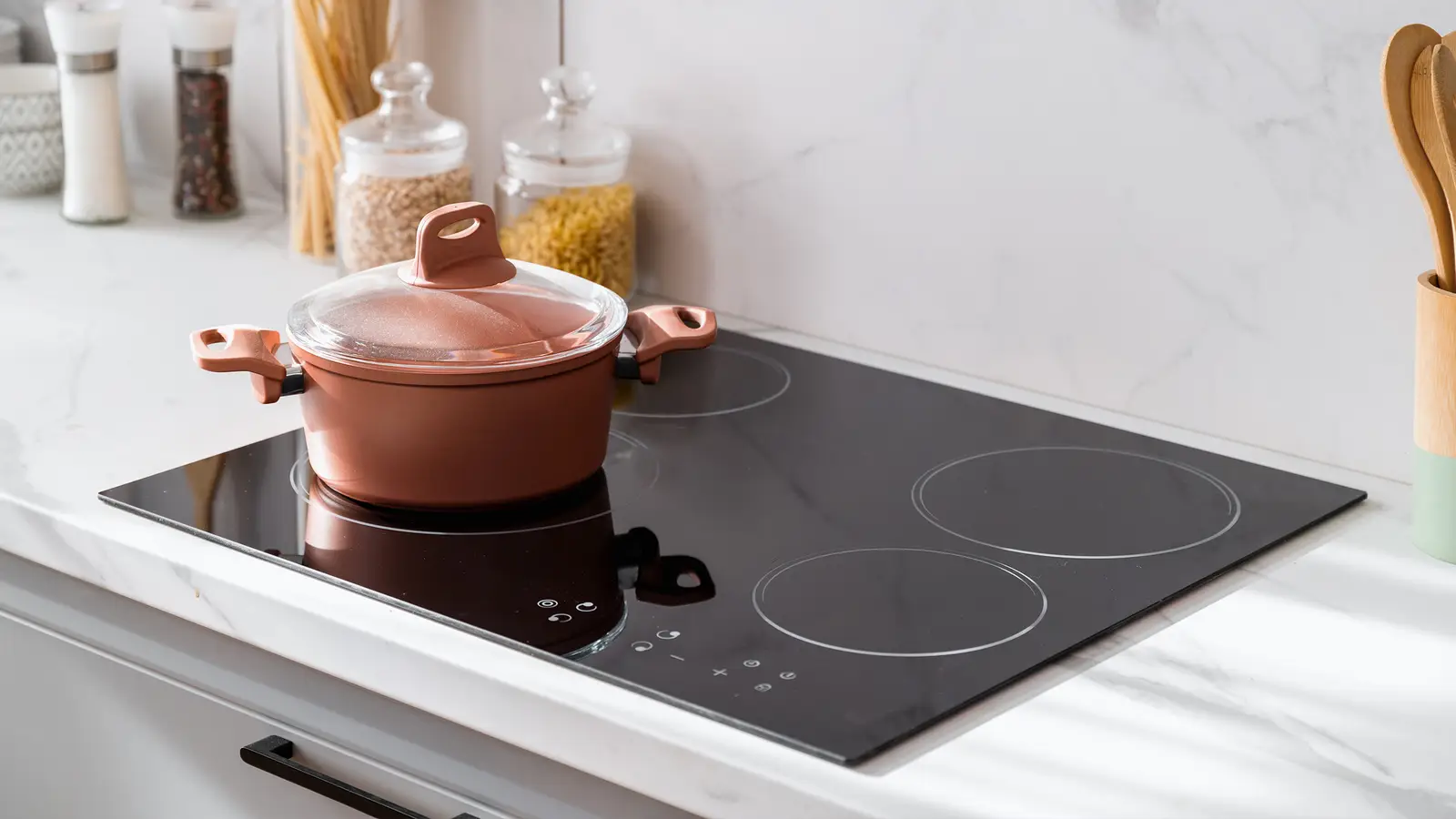
A ceramic hob heats food by passing electrical current through resistive heating elements beneath the glass surface. Unlike induction, which generates heat inside the pan itself, a ceramic element must heat up, transfer that heat through the glass, and then into the pan from below. This is a significantly less efficient process, which is why ceramic hobs need more electrical power to achieve the same cooking temperatures as induction.
The issue for socket compatibility is not any single zone’s power draw — it is the combined load when multiple zones are active simultaneously. A typical four-zone ceramic hob has zones rated between 1,200W and 2,200W each. Running two or three at full power produces a total draw that a 13A socket — rated to approximately 2,990W — cannot safely sustain.
In real cooking, it is unusual to run every zone at maximum simultaneously. But a hob’s electrical installation must be rated for its total possible load, not its typical use. Running two or three zones for an extended period at full power — common when cooking a full meal — sustains a current draw that would overheat a standard socket, cable, and plug fuse over time.
This is fundamentally different from the situation with most microwave grill combinations, which have a total draw within the 13A limit. For a full breakdown of which kitchen appliances can and cannot use a standard socket, the guide to plugging a microwave grill into a normal socket covers the 13A compatibility question for that appliance category.
How Ceramic Hobs Are Connected
There are three ways a ceramic hob can be connected to a power supply, and only one of them involves a standard plug. The right method for your hob is determined by its rated power and the manufacturer’s installation requirements — both of which are printed on the rating plate.
Hardwired to a dedicated cooker circuit (most common)
The overwhelming majority of ceramic hobs are hardwired directly to a dedicated radial circuit from the consumer unit, via a cooker control unit with an isolation switch fitted within 2 metres of the hob. This circuit is protected by a 32A or 40A circuit breaker, uses appropriately rated cable, and has no plug. The hob is connected permanently — not unplugged between uses. This is the standard installation for all full-size ceramic hobs and must be carried out by a qualified electrician.
Switched fused connection unit (SFCU)
Some installations use a switched fused connection unit rather than a cooker control unit. The SFCU is hardwired to a dedicated circuit and provides a local isolation point. The hob connects to the SFCU via a short length of flex. This is functionally equivalent to the cooker circuit method — it still requires a dedicated circuit and qualified installation, and is not a standard plug-and-socket connection.
Standard 13A plug socket
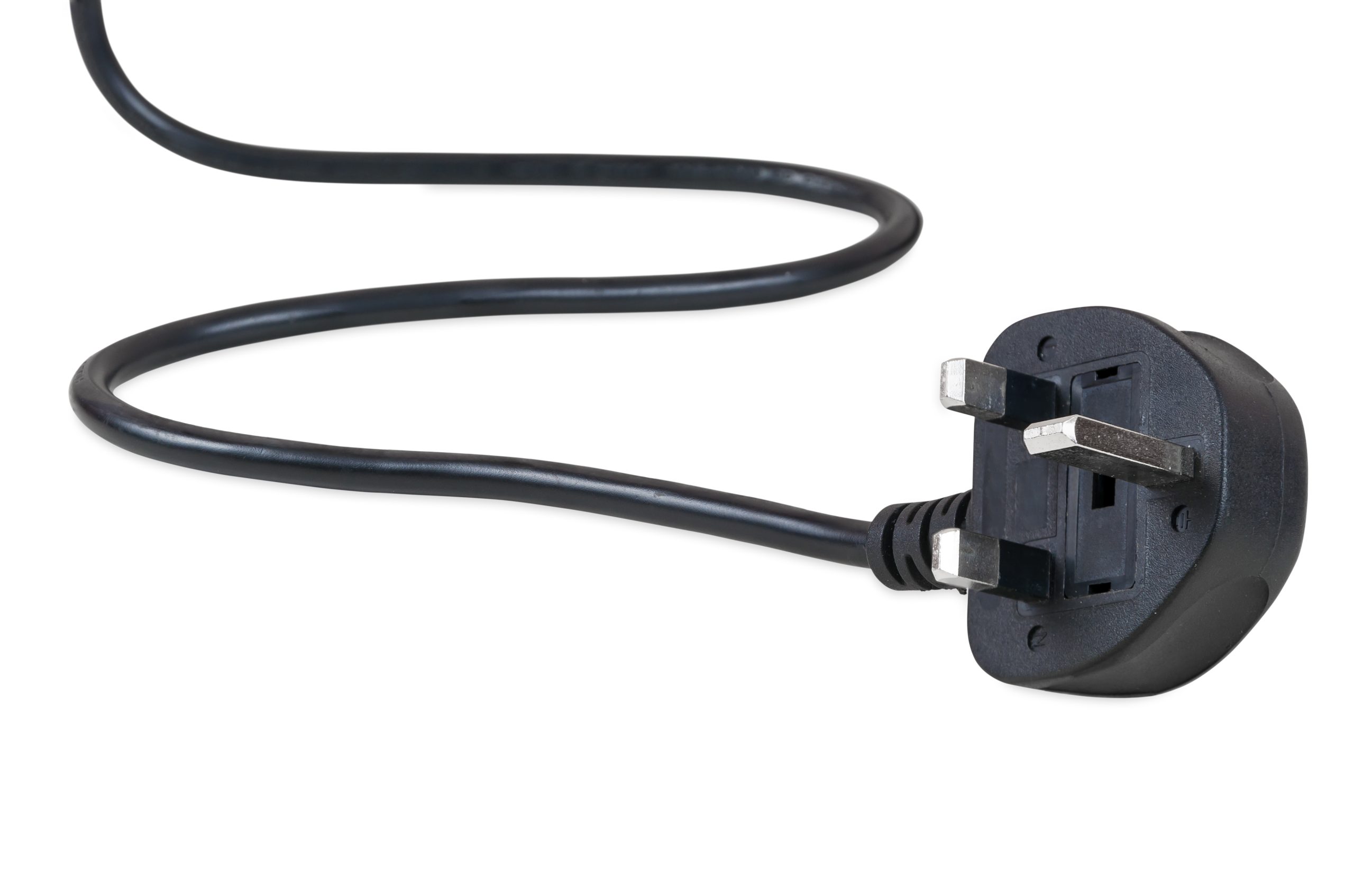
A small number of compact or single-zone ceramic hobs are designed for socket connection, with a total rated input power below 3,000W. These models come supplied with a 13A plug fitted and are explicitly labelled as suitable for socket use in the product documentation. If the rating plate shows a total input power at or below 2,500W and the installation manual specifies socket connection, plugging into a standard socket is permissible. This does not apply to full-size four-zone hobs, regardless of how they appear or what zone is being used at any given time.
What Installation Involves
Installing a ceramic hob on a dedicated circuit is a job for a qualified electrician. It is notifiable work under Part P of the Building Regulations in England and Wales, meaning it must be carried out by a registered competent person or notified to local authority building control. A registered electrician will issue a Building Regulations compliance certificate on completion.
Dedicated radial circuit
A new circuit run from the consumer unit to the hob location, separate from the ring main. No other appliances share this circuit. Typically protected by a 32A breaker for hobs up to 7.4kW, or 40A for higher-rated models.
Correctly rated cable
The cable cross-section must match the circuit’s rated current. For a 32A circuit, 6mm² twin and earth cable is standard. The cable route and any thermal insulation around it affect the required rating — your electrician will calculate this.
Cooker control unit
A double-pole isolation switch fitted within 2 metres of the hob and in line of sight, so the hob can be isolated safely without moving to a separate room. The control unit is rated to match the circuit breaker.
Worktop cut-out and ventilation
Built-in ceramic hobs require a cut-out in the worktop to the manufacturer’s specified dimensions, with clearances maintained to adjacent cabinetry and the oven below if applicable. Some models specify ventilation requirements beneath the hob.
Consumer unit capacity
Your consumer unit must have a spare way for the new circuit breaker and sufficient overall capacity. An older consumer unit with a full complement of MCBs, or a property with a limited incoming supply, may need the consumer unit upgrading before installation can proceed.
Building Regulations compliance
New circuit installation in a kitchen is notifiable under Part P. Using a registered electrician enrolled in a competent person scheme means they self-certify the work, avoiding the need for a separate building control application. See Approved Document P for the full requirements.
Are There Any Exceptions?
The genuine exceptions to the “no standard socket” rule for ceramic hobs are narrow. A single-zone portable ceramic hob — the kind designed for studio flats, caravans, or use as a supplementary cooking surface — draws 1,500W to 2,000W from a single element and comes with a 13A plug. These are sold as standalone countertop appliances rather than built-in kitchen hobs, and they are clearly marketed and specified for socket use.
A compact two-zone built-in hob with a total rated input below 3,000W also exists in the market, though these are uncommon. If one is genuinely rated for socket connection, the installation manual will say so explicitly, and the appliance will come with a 13A plug or a specification sheet confirming socket compatibility.
The test is simple: if the total rated input power on the rating plate is above 3,000W, or if the appliance comes without a 13A plug fitted, it is not suitable for a standard socket regardless of how it is being used or how many zones are active at the time.
CATA’s ceramic hob range includes the installation specification for each model on the product page, covering rated input power, connection type, and the circuit requirements. If you are comparing ceramic with induction, CATA induction hobs operate on the same dedicated circuit principle but use significantly less power per zone due to their higher efficiency.
Common questions answered
Can I plug in just one zone and use a normal socket?
No. The electrical installation for a hob must be rated for its total possible load, not the load of a single zone in use at one time. Even if you habitually use one zone, the hob’s wiring, connection, and circuit protection must handle the full rated input. A socket connection on a full-size hob is not safe regardless of which zones are active.
Do I need a new socket or a new circuit?
A new dedicated circuit — not a socket. A dedicated circuit runs directly from the consumer unit to the hob, protected by its own circuit breaker, with no shared load. This is fundamentally different from adding a high-current socket to an existing ring main, which does not provide the same protection or capacity.
How much does it cost to have a ceramic hob wired in?
Electrician costs vary by region and the complexity of the cable run. A straightforward installation in a property with a modern consumer unit and a short cable route typically costs £150 to £300 for the electrical work alone, excluding the cooker control unit and any consumer unit upgrades. Get two or three quotes from registered electricians before committing.
Is the wiring different for induction vs ceramic?
The connection method is the same — both typically require a dedicated radial circuit with a cooker control unit. The difference is in the cable and breaker rating. Induction hobs, despite being more powerful per zone in terms of cooking performance, often have a similar or lower total rated input than ceramic hobs because of their higher efficiency. Check the specific model’s rated input power either way.