Home » General Appliance Guides & Advice » Microwave Steamers: Healthy Weeknight Cooking with Less Mess
Microwave Steamers: Healthy Weeknight Cooking with Less Mess
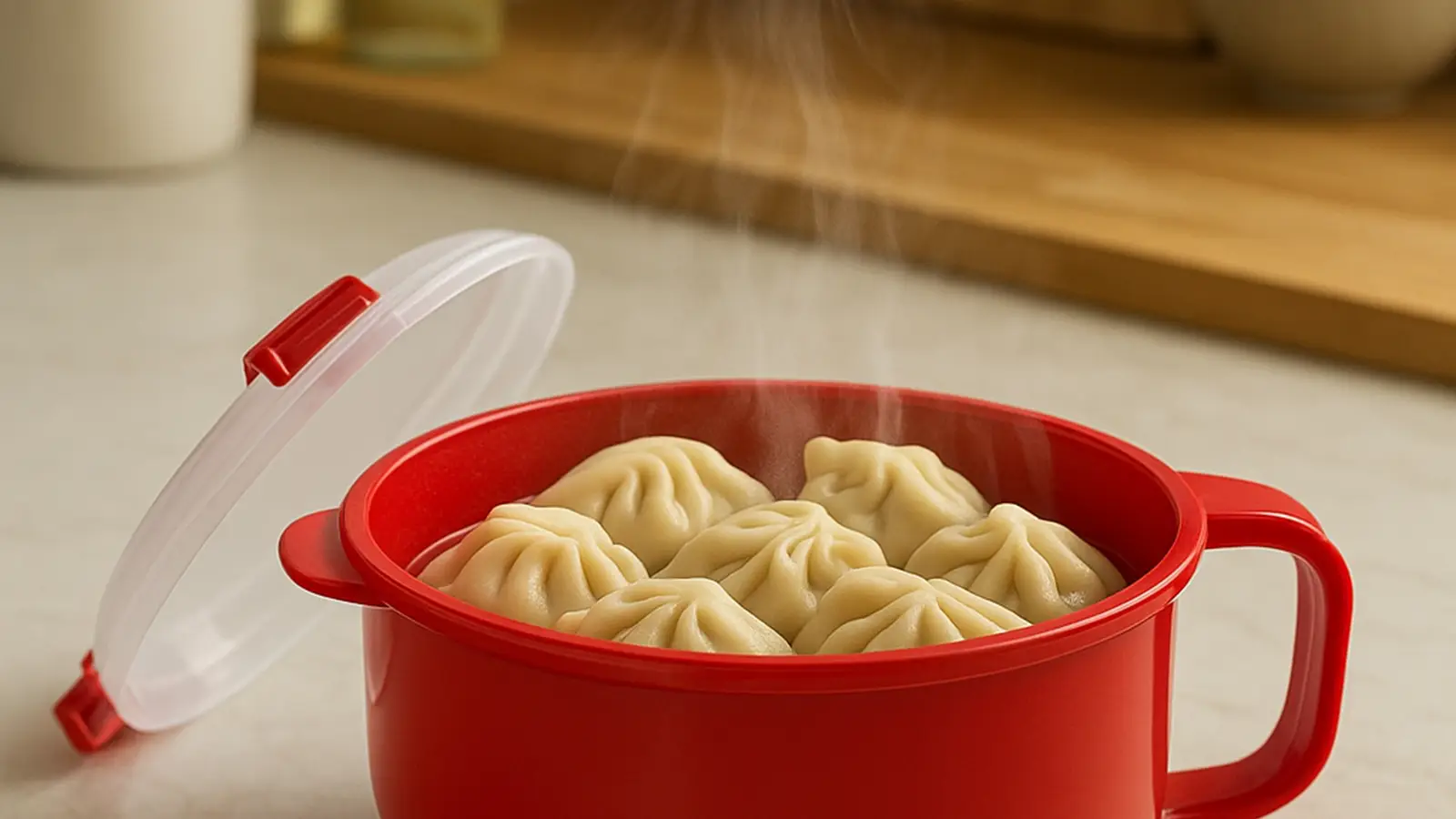
A microwave steamer is a sealed, microwave-safe container that traps steam inside to cook food quickly and evenly. It is one of the most practical accessories for a built-in microwave — vegetables are done in four minutes, fish in six, and the only washing up is the steamer itself. No splattered microwave interior, no separate saucepan, no watching a hob.
Why Microwave Steaming Works
Microwave ovens heat food by exciting water molecules inside it — the energy goes directly into the food rather than heating the surrounding air first. A steamer container takes advantage of this in two ways. The small amount of water added to the base of the steamer is excited by the microwaves and turns to steam very quickly. That steam fills the sealed container and surrounds the food, cooking it from the outside in via moist heat while the microwave energy continues to cook from inside the food outward. The result is faster, more even cooking than placing food directly on a microwave-safe plate.
The sealed environment also prevents the moisture loss that makes microwaved food dry. Fish heated on an open plate loses steam into the cavity; fish in a steamer retains it. This is why microwaved chicken breast is often rubbery and microwaved fish often tough — moisture escaping from an unsealed container during heating. A steamer solves this.
Speed
Most vegetables, fish portions, and rice portions are ready in 4 to 8 minutes — faster than hob steaming and without waiting for a pan of water to boil.
Less mess
The sealed lid contains splatter inside the steamer rather than the microwave cavity. One container to wash rather than a pan, lid, and steamer basket.
Nutrient retention
Steaming preserves more vitamins than boiling because food does not leach water-soluble nutrients into a pan of cooking water that gets discarded.
Food Guide and Timing
Timing varies with microwave wattage, steamer capacity, and how much food is in the container. These figures are a starting point at 800W — check earlier on the first attempt, especially for fish and chicken. A fully cooked piece of fish will flake easily when pressed; chicken must reach 75°C at the thickest point.
| Food | Typical time (800W) | Water in steamer | Key tip |
|---|---|---|---|
| Broccoli florets | 3–4 min | 2–3 tbsp | Cut into even-sized pieces; check at 3 minutes — overcooked broccoli loses both texture and colour rapidly. |
| Carrots (sliced) | 4–5 min | 2–3 tbsp | Thinner slices cook faster; cut to a consistent thickness for even results. Stand 1 minute after cooking. |
| Green beans | 3–4 min | 2 tbsp | Trim ends. Cook until just tender with a little bite — they continue cooking briefly after the steamer is opened. |
| White fish fillet (150g) | 3–4 min | 2 tbsp | Season before steaming. Check at 3 minutes — fish is done when it flakes at the thickest point. Do not overcook. |
| Salmon fillet (150g) | 4–5 min | 2 tbsp | Salmon needs slightly longer than white fish. Check the centre — it should be just opaque with no raw translucent flesh. |
| Chicken strips (thin) | 5–7 min | 3 tbsp | Cut into even strips no thicker than 1.5cm. Always check the centre reaches 75°C. Stand 2 minutes before eating. |
| Rice (per portion) | 10–12 min | Follow steamer guide | Rice needs a specific water-to-grain ratio — follow the instructions for your steamer model. Stand with lid on for 2 minutes after cooking. |
| Dumplings / dim sum | 4–6 min | 3 tbsp | Arrange in a single layer without touching — they can stick together if packed too tightly. Check one from the centre of the batch. |
What Works Well and What Does Not
- Most vegetables — broccoli, carrots, courgettes, asparagus, green beans, peas
- Fish fillets and prawns — quick, moist, and easy to season
- Lean chicken strips — provided they are thin and evenly sized
- Rice and grains — consistent results with the right water ratio
- Eggs (in steamer-specific egg inserts)
- Reheating leftovers — retains moisture that dry microwaving destroys
- Dumplings, gyoza, bao buns
- Anything requiring browning or crisping — needs a grill or oven
- Large or thick cuts of meat — uneven cooking, food safety risk
- Whole fish — too large for most steamer containers, uneven results
- Pasta — absorbs water differently from rice and does not steam well
- Foods that need caramelisation — onions, root vegetables for roasting
- Baked goods — require dry, even radiant heat
Tips for Better Results
- Cut everything to the same size. This is the single most impactful thing you can do for even steaming. A batch of broccoli with a mix of large and small florets will have half undercooked and half overcooked by the time the largest pieces are done. Five minutes spent on prep makes a genuine difference.
- Season before steaming, not after. Salt and flavourings penetrate the food during the moist heat of steaming — seasoning after means the flavouring sits on the surface only. Lemon zest, herbs, garlic, and a drizzle of olive oil on fish or chicken before steaming produces noticeably more flavourful results than seasoning once it is on the plate.
- Do not overfill the steamer. Steam needs to circulate around the food. A densely packed steamer with food piled in layers cooks unevenly — the top layer may still be undercooked when the bottom is overdone. A single layer is ideal; two layers with air circulation between them is the maximum for most containers.
- Let it stand before opening. Food continues to cook from residual steam and heat for 60 to 90 seconds after the microwave stops. Opening the steamer immediately loses this carry-over cooking and releases the steam that is still doing useful work. A brief stand period also lets the internal temperature equalise.
- Use short cooking bursts for fish. Fish goes from perfectly cooked to rubbery in under a minute at microwave power. The first time you cook a new fish type in your steamer, set it for two-thirds of the expected time, check, and add 30-second bursts until it is just done. Over time you will learn exactly how long your specific microwave and steamer take.
- Adjust water by food type. Watery vegetables (courgette, spinach) need less added water as they release their own moisture during cooking. Dry vegetables (carrots, green beans) and fish need more. A rough guide: 2 tablespoons for watery veg, 3 tablespoons for firm veg and fish, and follow steamer instructions for rice and grains where the water ratio is critical.
CATA Microwaves for Steaming
A steamer works in any microwave with sufficient internal capacity — at least 17 litres for a standard steamer basket. These two CATA built-in models suit everyday steaming use well.
BM17LBS — 60cm 17L Integrated Microwave
Compact 17-litre built-in microwave with 700W power output and 11 cooking programmes. Fits a standard 60cm wall cabinet. A practical option for smaller kitchens or secondary cooking spaces where steaming replaces hob cooking for everyday vegetables and fish.
View productUBMICL20BK.1 — 60cm 20L Integrated Microwave + Grill
20-litre built-in microwave with grill function. Steaming for fish, vegetables, and grains; grill for browning and crisping when you want it. Five power levels and a 245mm turntable. Combines the convenience of steaming with a finish that a solo microwave cannot provide.
View productFor a full comparison of built-in microwave types — solo, grill, and combination — and guidance on which suits different kitchens, see the integrated microwaves buying guide. For understanding what a grill microwave can do beyond steaming, the guide to how a microwave grill works explains the difference between microwave, grill, and combination modes. Browse the full CATA built-in microwave range for all available models.
Common questions answered
Do I need a special microwave steamer or will any container work?
A purpose-made microwave steamer with a vented lid gives the best results — it traps steam correctly while allowing pressure to escape safely. Improvising with a plate over a bowl or clingfilm with holes is less reliable and can be a burn hazard when opening. Microwave steamers are inexpensive and widely available.
Is steamed food actually healthier than boiled?
Generally yes, because vitamins and minerals that dissolve in water — particularly vitamin C and B vitamins — leach into the cooking water when vegetables are boiled. That water is typically discarded. With steaming, those nutrients remain in the food. The difference is most significant for green vegetables cooked for more than a few minutes.
Can I use my microwave steamer for meal prep?
Yes — steaming batches of vegetables or chicken strips takes only a few minutes and the food keeps well in the fridge for two to three days. The steamer doubles as a storage container if it has a well-sealing lid. Steamed fish is best eaten fresh rather than stored.
My steamed chicken was still pink inside. Is it safe?
No — chicken must reach an internal temperature of 75°C throughout to be safe. Pink chicken from a microwave steamer means it needs more time. Add 30-second bursts and check again. Always use a food thermometer for chicken until you are confident in the timing for your specific microwave and steamer with the cuts you regularly use.
Explore More Kitchen Advice & Buying Guides
Browse our latest articles covering appliance tips, energy-saving advice, and expert guidance – designed to help you choose, use, and get the most from your kitchen appliances.