Home » Microwave Guides & Advice » Why Is My Microwave Door Hard to Open or the Latch Stuck?
Why Is My Microwave Door Hard to Open or the Latch Stuck?
A microwave door that is stiff, hard to open, or will not release is usually caused by one of three things: food residue or grease jamming the latch mechanism, a pressure effect immediately after cooking that clears on its own within seconds, or a worn or broken latch component. The first two are straightforward to address. A broken latch hook or door switch is a professional repair — and an important one, since the door switches are safety interlocks, not just mechanical latches.
Why microwave door latches are safety-critical
Unlike most appliance doors, a microwave door latch is not purely mechanical. When the door closes, the latch hooks engage a series of door switches — typically two or three — that the microwave’s control board uses to confirm the door is closed and safe before allowing the magnetron to operate. If any switch does not register correctly, the microwave will not start. This is a deliberate safety interlock: microwave energy must be fully contained before the appliance can operate.
This means that a stuck or damaged latch is not just an inconvenience — it can affect whether the microwave operates safely or at all. It also means that forcing a stuck latch risks breaking the switch mechanism rather than just the plastic hook, which makes the repair more involved. The guidance in this article is clear about which checks you can make yourself and where the safe boundary lies.
Pressure inside the cavity after cooking
After a cooking cycle ends, the air inside the microwave cavity is warmer than the surrounding air and at a marginally higher pressure. On some microwaves — particularly models with a tight door seal — this pressure differential can make the door feel briefly harder to open immediately after cooking. It clears within five to ten seconds as the temperature equalises.
If the door is difficult to open immediately after a cycle but opens easily if you wait a few seconds, this is the cause. It is not a fault and does not need any repair. The original article mentioned this as a cause of a permanently stuck door — it is not. It is a temporary and entirely normal characteristic of some models.
Food residue or grease on the latch
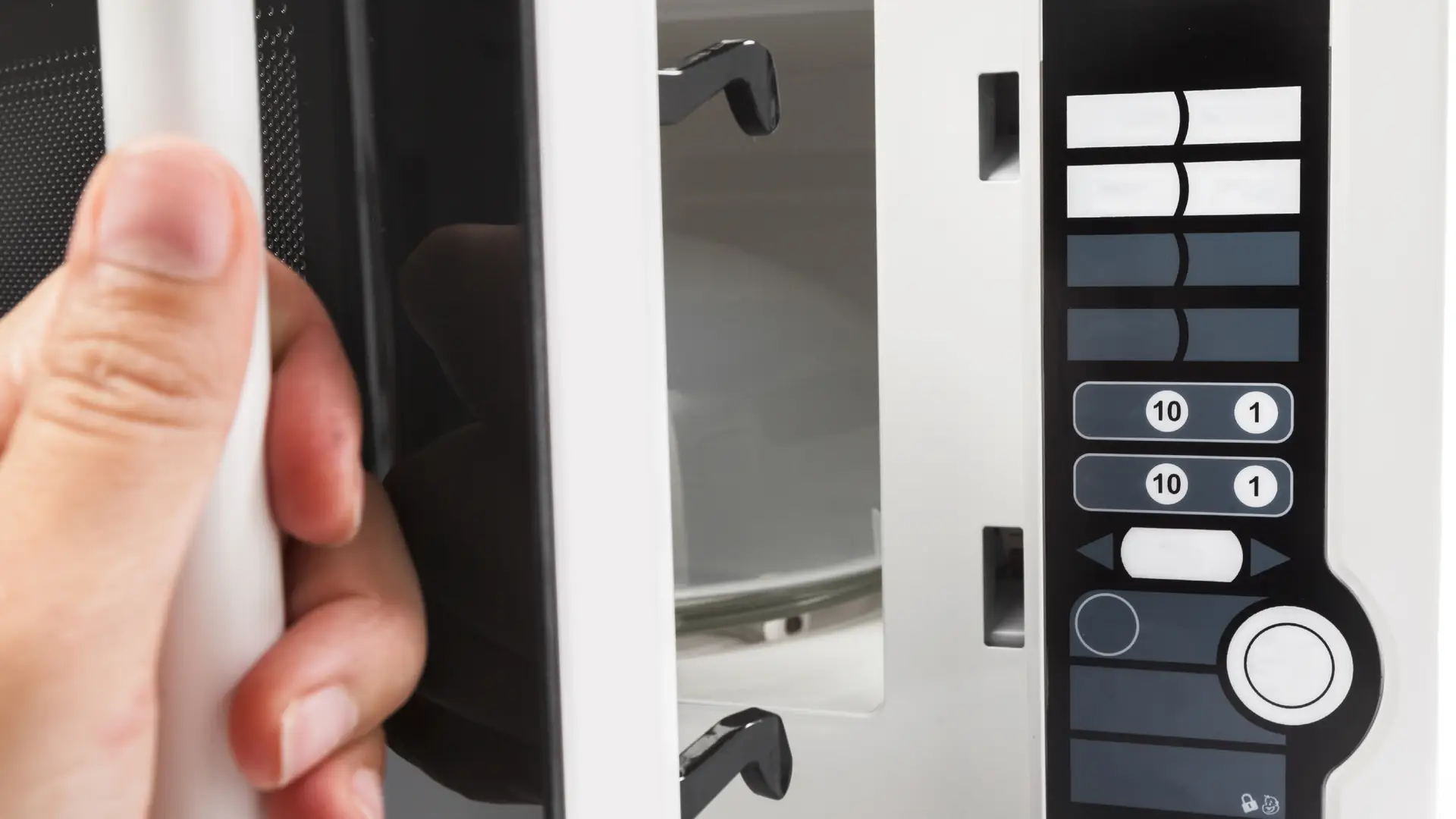
The most common genuine cause of a stiff or sticking door. The latch hooks are small plastic projections that pass through slots in the door frame and engage the door switches. Food splatter that lands in or around the latch area during normal use dries and hardens into a residue that makes the mechanism increasingly stiff over time. The door button may still press but take noticeably more force, or the latch may not release cleanly at all.
Clean the latch area thoroughly with a damp cloth and mild kitchen cleaner. Work the cloth into the slot where the latch hooks pass through the door frame — this is where residue most commonly accumulates. Use a soft toothbrush for dried or hardened deposits. Do not use sharp implements that could score the plastic hooks. After cleaning, press the door button a few times to confirm the latch moves freely before closing the door and testing.
Keeping the microwave interior clean prevents latch problems from developing. Splatter that dries on the cavity walls around the door frame eventually migrates to the latch mechanism. Wiping the interior after every session takes under a minute and is the most effective prevention.
Worn, broken, or misaligned latch hook
The latch hooks are made of plastic and subject to wear from thousands of opening and closing cycles over the appliance’s lifetime. On older microwaves, or models that have been used heavily, the hooks can wear thin, develop a small crack, or break entirely. A broken hook will typically cause the door to feel loose, fail to latch properly, or release without pressing the button. A hook that has bent slightly out of alignment produces stiffness — it still engages but catches rather than releasing cleanly.
Do not attempt to open or repair the latch mechanism yourself beyond external cleaning. The door of a microwave contains capacitors that store high-voltage charge — a charge that can remain present even when the microwave is unplugged. Accessing internal components without specialist discharge equipment is dangerous. Latch hook and door switch replacement should be carried out by a qualified appliance engineer.
The visible sign of a broken hook is a door that no longer clicks solidly when closed, or that opens without pressing the button. A door that releases only if the button is pushed at a very specific angle or with excessive force points to a worn or misaligned hook. Both require professional repair — typically a straightforward and relatively inexpensive job for a qualified engineer, but not one to attempt at home.
Faulty door switch
If the latch mechanism itself appears intact but the microwave will not operate — or operates intermittently — a door switch may be failing. Door switches can fail in two ways: failing open (the microwave will not start because the board cannot confirm the door is closed) or failing closed (the microwave runs when it should not — a more serious fault). Both require professional diagnosis and replacement.
A door switch fault is usually signalled by the microwave failing to start despite the door appearing closed, or by an error code on the display. If the microwave starts but runs without the door fully closed, stop using it immediately and contact an engineer.
For CATA microwave models, spare parts guidance, and service contacts, visit the product support pages. If a latch repair is not economical on an older model, the integrated microwaves buying guide covers the full range of built-in options including solo, grill, and combination models. Browse the CATA built-in microwave range for current models and specifications.
Checks to work through before calling an engineer
- Wait five to ten seconds after cooking before trying to open the door — pressure equalises quickly
- Clean the latch slot and surrounding door frame area with a damp cloth and mild cleaner
- Use a soft toothbrush for any hardened or dried residue around the latch hooks
- Press the door button a few times after cleaning to confirm it moves freely
- Check whether the door closes solidly with a click — a loose door suggests a broken hook
- If the door opens without pressing the button, or the button requires excessive force, call an engineer
- If the microwave will not start despite the door appearing closed, call an engineer — do not force or pry the latch
Common questions answered
Can I use the microwave if the door is stiff but still closes and latches?
If the door closes fully, clicks into place, and the microwave operates normally, it is safe to use while you arrange cleaning or a repair. Do not use it if the door does not close completely, if it opens without pressing the button, or if it requires forcing to close — these indicate a latch or switch fault that needs attention before continued use.
Is it safe to force the door open if the latch is stuck?
No — forcing the latch risks snapping the hook or damaging the door switch, turning a stiff-door issue into a broken-latch issue. Try cleaning first. If the latch is genuinely stuck and will not release with the button pressed normally, contact an engineer. The repair cost is almost always less than the cost of forcing and breaking the mechanism further.
Why won’t my microwave start even though the door is closed?
The most likely cause is a door switch that is not registering correctly — either worn, misaligned, or failed. The microwave’s control board cannot confirm the door is safely closed so it refuses to start. This is a safety feature working correctly. A qualified engineer can test the switches and replace any that have failed.
How long do microwave door latches typically last?
With normal use, the latch mechanism should last the lifetime of the appliance — typically ten or more years. Heavy use, repeated forceful closing, or allowing food residue to accumulate in the latch area all accelerate wear. Closing the door gently (rather than pushing it firmly shut) and keeping the latch area clean are the two most effective ways to extend its life.
Explore More Kitchen Advice & Buying Guides
Browse our latest articles covering appliance tips, energy-saving advice, and expert guidance – designed to help you choose, use, and get the most from your kitchen appliances.