Home » General Appliance Guides & Advice » Wine in a Standard Fridge: Risks for Temperature & Corks
Wine in a Standard Fridge: Risks for Temperature and Corks
A standard kitchen fridge is not a wine storage environment. It runs at 3 to 5°C, dehumidifies its interior as a byproduct of the cooling cycle, and cycles through temperature fluctuations every time the door is opened or the compressor kicks in. None of these conditions are compatible with wine beyond a few days.
The temperature problem
Wine’s ideal storage temperature is 10 to 14°C. At 3 to 5°C, several things happen. Chemical reactions in the wine slow dramatically (including the reactions that drive ageing) and the wine’s aromatic compounds become less volatile, meaning the wine presents as flat, closed, and lacking in its usual character when poured. This effect is temporary if the wine has only been cold for a short time; the aromas recover as the wine warms in the glass. But wine stored at fridge temperature for weeks or months begins to lose aromatic complexity in ways that do not fully recover.
The temperature cycling is as damaging as the absolute cold. A standard fridge fluctuates by several degrees throughout the day as it cycles on and off and as the door is opened. Each temperature change causes the liquid inside the bottle to expand and contract slightly, creating a pressure differential across the cork seal. Over time, this cyclical pressure accelerates cork fatigue.
The cork problem
A kitchen fridge actively removes moisture from the air to prevent frost build-up. This dehumidification produces an interior relative humidity well below the 50 to 70 percent ideal for natural cork. Cork is a biological material that requires ambient moisture to maintain its elasticity and volume. In a dry environment, it slowly desiccates: it shrinks, loses its compression against the bottle neck, and the seal becomes less reliable. Oxygen enters at a greater rate than intended, and the wine begins to oxidise.
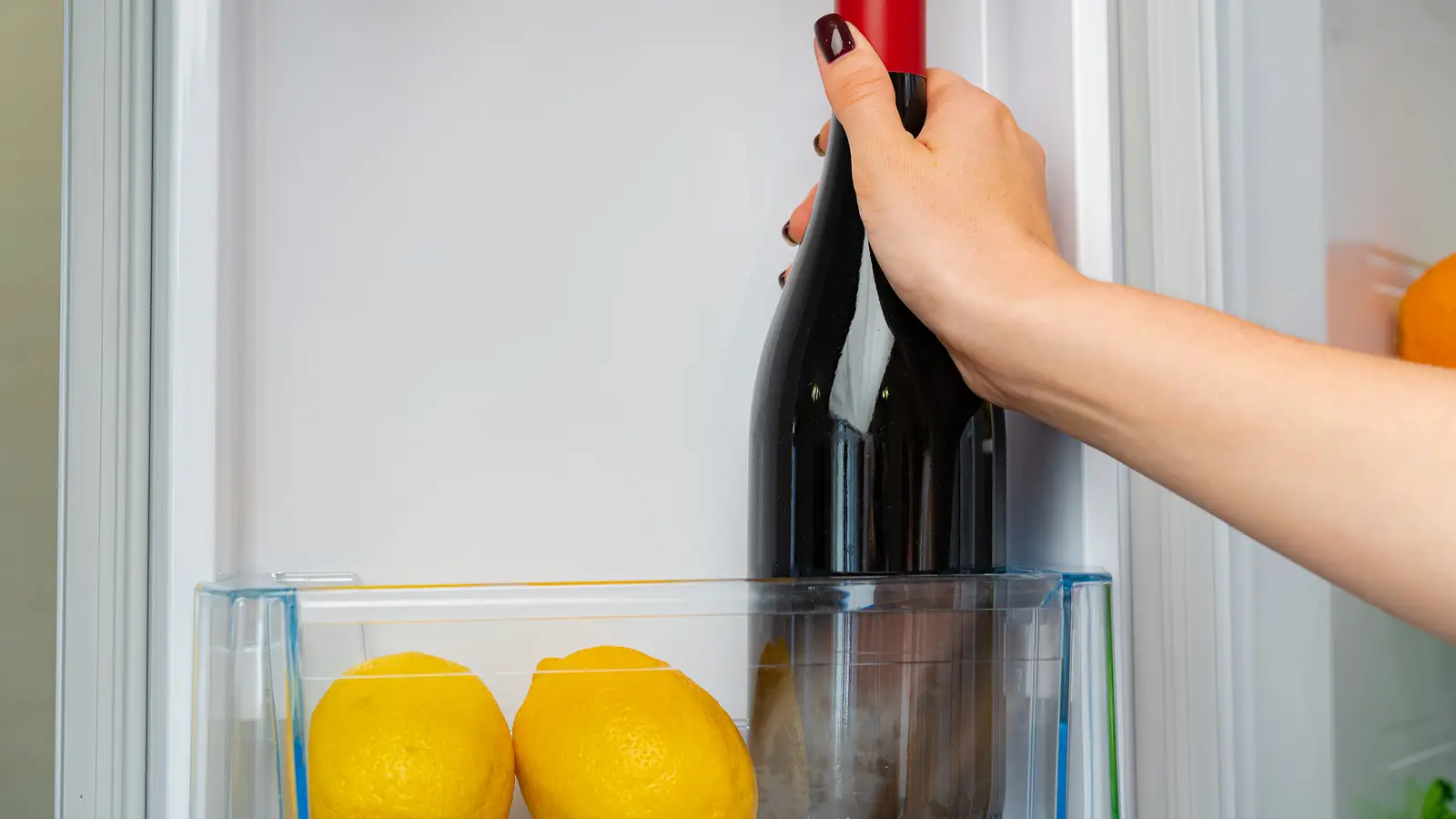
Standard kitchen fridge
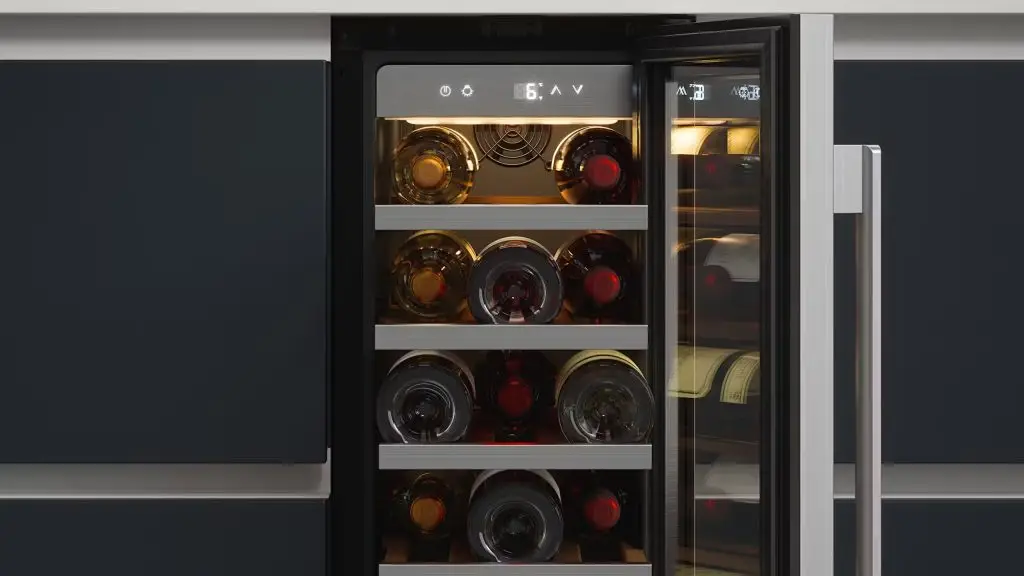
Dedicated wine cooler
When a standard fridge is fine
For short-term storage of a day or two before serving, a standard fridge is entirely acceptable. White wine and sparkling wine need to be served chilled and a few days in the fridge before a dinner party causes no meaningful harm. The problems described above are cumulative and require weeks rather than days to produce noticeable effects.
Screwcap bottles are also considerably more tolerant of fridge conditions. The cork drying issue does not apply to aluminium closures, and the risk of oxidation from a compromised seal is absent. Temperature and flavour suppression still apply, but screwcap wines stored in a fridge for a few weeks will fare significantly better than cork-sealed bottles under the same conditions.
If a bottle has been stored in a standard fridge for more than a week, allow it to warm to its serving temperature over 20 to 30 minutes before opening rather than pouring straight from the fridge. The aromas and flavour profile will be more expressive at the correct serving temperature.
For the right storage temperatures by wine style, see what temperature to set a wine cooler. For humidity requirements and why they matter for cork-sealed bottles, see ideal humidity for wine storage. Browse the CATA wine cooler range for freestanding and built-in models.
Explore More Kitchen Advice & Buying Guides
Browse our latest articles covering appliance tips, energy-saving advice, and expert guidance – designed to help you choose, use, and get the most from your kitchen appliances.