Home » Hob Guides & Advice » The Best Cookware Shapes for Induction Hobs
The Best Cookware Shapes for Induction Hobs: A Complete Guide
In this guide
Why shape matters on an induction hob
On a gas hob, heat radiates outward from a flame. A rounded wok base sits comfortably over the burner and receives heat from all sides. On an induction hob, none of that applies. The hob’s coil generates an alternating magnetic field that induces eddy currents in the base of the pan, and those currents generate heat. The process only works where the pan is in physical contact with the glass surface directly above the coil.
This means contact area is everything. A pan with a perfectly flat base sitting flush on the glass transfers energy efficiently across its entire base. A pan with a curved, warped, or rounded base has significantly less contact — and the coil can only heat the parts of the base that are actually touching. The result is slower heating, uneven cooking, or in some cases the zone failing to activate at all because the hob’s pan-detection sensor cannot read enough magnetic material.
Contact area between pan base and hob surface determines how efficiently the electromagnetic field transfers heat. Flat bases maximise this; warped or rounded bases reduce it significantly.
Base thickness also plays a role, though it is secondary to flatness. A thick base distributes heat more evenly once generated, which reduces hot spots. A very thin base generates heat quickly but spreads it unevenly. For everyday induction cooking, a medium-to-heavy gauge base performs best. Cast iron is the most effective induction material precisely because it is flat, thick, and highly magnetic.
Cookware shapes compared
The table below covers every common cookware shape and gives a direct assessment of induction performance. The contact rating reflects how well the base shape maintains contact with the hob surface. The activation rating reflects how reliably the hob’s detection circuit recognises the pan.
| Shape | Best used for | Contact rating | Works on induction? |
|---|---|---|---|
| Flat frying pan | Frying, searing, omelettes | Excellent | |
| Straight-sided saucepan | Sauces, boiling, reheating | Excellent | |
| Wide stock pot | Soups, stews, batch cooking | Very good | |
| Casserole / Dutch oven | Braises, one-pot dishes | Good | |
| Ridged griddle pan (flat base) | Grilling meat, fish, vegetables | Good if base is flat | |
| Flat-bottom wok | Stir-frying, quick sautéing | Works, with caveats | |
| Traditional round-bottom wok | High-heat stir-frying | Not suitable | |
| Narrow-base tall saucepan | Boiling eggs, melting small quantities | Depends on zone size | |
| Warped or dented pan | Any task | Avoid |
Each shape explained
Flat frying pans and sauté pans
A flat frying pan is the best-performing shape on an induction hob by a clear margin. The wide, completely flat base maximises the electromagnetic contact zone, and the shallow sides mean there is no risk of the pan’s upper geometry interfering with the hob’s control panel sensors. Whether you are searing meat, cooking eggs, or making pancakes, a flat-bottomed frying pan transfers heat from the coil as efficiently as any cookware can.
The same principle applies to sauté pans, which have deeper straight sides than a frying pan but the same flat base profile. These are excellent on induction for dishes that start with a sear and finish with a sauce, since the flat base heats quickly and the straight sides retain liquid well.
Straight-sided saucepans
Saucepans with straight sides and flat bases are among the most practical shapes for everyday induction cooking. The flat base activates the zone reliably and distributes heat evenly across the base, which matters for sauces, custards, and anything else where you need controlled, consistent heat. The straight sides also mean you are measuring the right thing when checking compatibility: the base diameter of a straight-sided saucepan closely matches the quoted size, which is not always true of flared or tapered pans.
One thing to be aware of: saucepan sizes are usually quoted as the diameter across the rim, not the base. A 20 cm saucepan often has a base of around 14–16 cm. This matters for zone activation — see the pan sizing section below.
Stock pots and large pans
Wide, flat-based stock pots perform well on induction when the base diameter is appropriate for the cooking zone. The key variable here is base width relative to zone size. A stock pot with a genuinely wide base — comparable to or slightly larger than the zone — will activate it cleanly and heat efficiently. A tall, narrow stock pot on a large zone may only partially cover the coil and receive reduced power as a result.
For large-batch cooking — soups, chilli, pasta water — a wide-based stock pot on a large zone is perfectly suited to induction and will often boil water faster than the same pot on a gas hob, because no heat is lost around the sides.
Casserole dishes and Dutch ovens
Cast iron and enamelled cast iron casseroles are some of the most effective induction cookware available. Cast iron is one of the most magnetically responsive materials, and the flat, thick base of a casserole dish sits flush on the glass and heats evenly. The mass of a cast iron casserole means it takes slightly longer to reach temperature, but once hot it holds that heat exceptionally well — making it ideal for braises and slow-cooked dishes that benefit from stable, sustained temperature.
Enamelled cast iron (such as a Le Creuset-style casserole) performs identically to bare cast iron on induction. The enamel coating has no effect on electromagnetic coupling because the relevant contact is between the iron base and the hob glass.
Griddle pans
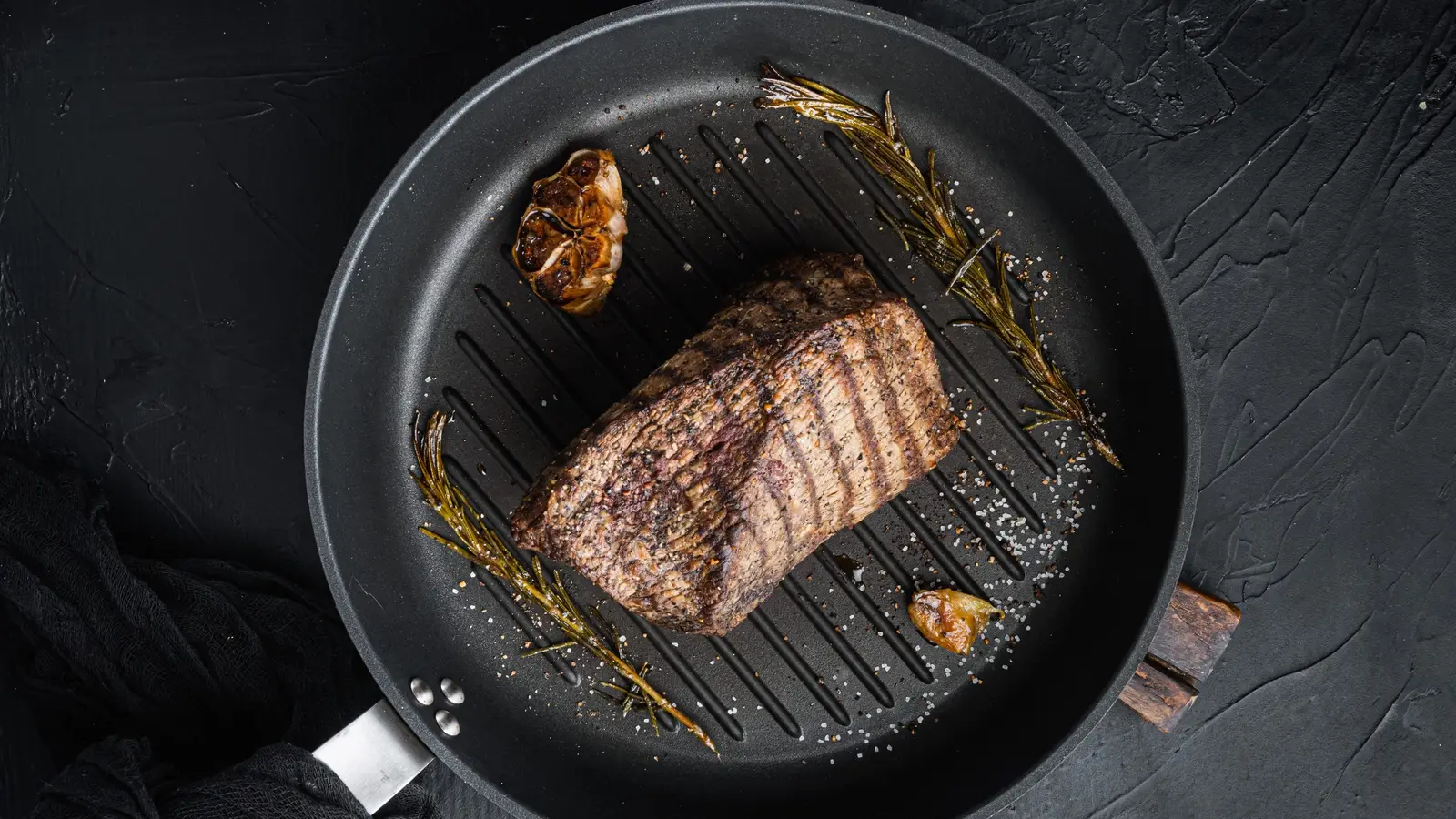
A flat-bottomed griddle pan works well on induction provided the base sits flush on the glass. The ridges on the cooking surface face upward and have no bearing on induction performance — what matters is the underside, which should be flat and smooth. Where griddle pans sometimes cause issues is when they are large enough to sit across two zones. Some hobs will handle this, particularly those with flexible or bridging zones, but a standard griddle placed across two fixed zones may only activate one of them.
Flat-bottom woks
A flat-bottomed wok is a genuine compromise. The flat base is large enough to activate the zone and conduct reasonable heat, but the flared sides and smaller base relative to the pan’s overall diameter mean the contact zone is proportionally smaller than in a frying pan. Stir-frying also traditionally involves tossing food up the sides of the wok — but on induction, the sides are not being heated, only the base. The result is functional stir-frying but different from the high-sided, all-around heat of a gas flame.
For occasional wok cooking, a flat-bottomed induction-compatible wok is the practical choice. If wok cooking is a regular part of your cooking, it is worth considering an induction hob with a dedicated wok zone — some models include a recessed bowl-shaped zone specifically designed for round-bottom woks.
Traditional round-bottom woks
A traditional round-bottom wok is not suitable for standard induction zones. The curved base makes contact with the hob at only a very small central point, which is not enough for the coil to detect the pan or transfer meaningful heat. A heat diffuser adapter can bridge this gap — a magnetic plate that sits on the zone and heats up, acting as a conventional heat source for the wok above it. This works, but it loses most of the speed and efficiency advantages of induction.
Pan size and zone sizing: what actually matters
Base size is one of the most misunderstood aspects of induction cookware. A pan described as “20 cm” is measured across the rim at the top, not the base. The base of the same pan is often 14–16 cm — and it is the base that must meet the hob’s minimum detection threshold.
The mismatch between quoted size and actual base size catches many people out. A 16 cm saucepan can have a base as small as 11 cm. If your hob requires a 12 cm minimum base diameter, that pan will not activate the zone reliably even though it appears to be the right size.
Equally, using a very small pan on a large zone reduces efficiency. The coil generates power across its full area, but only the portion covered by the pan base is able to transfer that energy usefully. If you are regularly using small pans, it is more efficient to use a smaller zone where the coil size better matches the pan base.
Good sizing practice
- Match pan base size to zone size as closely as possible
- Measure the base diameter, not the rim
- Centre the pan on the zone marking
- Use smaller zones for smaller pans
- Check your hob manual for minimum base requirements
- Choose wide-base stock pots for large zones
Sizing problems to avoid
- Using a tiny pan on a large zone (wastes power)
- Assuming quoted pan size equals base size
- Placing pans off-centre on the zone
- Using a pan much larger than the zone
- Ignoring the hob’s minimum base requirement
- Using a pan whose base only partially covers the zone
Common problems and what causes them
Most induction cookware complaints trace back to a small number of base shape issues rather than hob faults. Knowing what to look for makes it easier to diagnose whether the problem is the pan or the appliance.
- Pan not detected / zone not activating: the base is too small for the zone’s detection circuit, or the base material is not sufficiently magnetic. Test with a magnet — if it sticks firmly, the material is magnetic. If the base is large enough and magnetic but still not activating, the pan may have a composite base where only part of the bottom is magnetic.
- Uneven cooking / food burning in the centre: usually caused by a warped pan base. Even slight warping — barely visible to the eye — can create an air gap in the middle that prevents heat transfer there. The edges heat while the centre does not, causing burning at the perimeter. Replace warped pans; they cannot be corrected.
- Clicking, buzzing, or whistling sounds: common with pans that have layered or sandwich bases. As the different metals in the base heat at different rates they expand differently, producing noise. This is normal and not a fault — but it is more pronounced in lower-quality pans with poorly bonded bases.
- Slow heating despite high setting: often caused by using a small pan on a large zone, meaning only part of the coil’s energy is being captured. Switch to a smaller zone, or use a larger pan that better matches the zone diameter.
- Pan sliding or not sitting flat: a pan base that is not perfectly flat will rock slightly on the glass, affecting both performance and safety. Check by placing the pan on a flat surface — it should not rock at all. If it does, the base is warped.
Frequently asked questions
Key takeaways
- Induction heats the pan directly via a magnetic field. Contact area between the pan base and the hob surface determines efficiency — flat bases maximise this, curved or warped bases reduce it.
- Flat frying pans and straight-sided saucepans are the best-performing shapes. Both offer maximum base contact and activate cooking zones reliably.
- Traditional round-bottom woks are not compatible with standard induction zones. Use a flat-bottomed induction wok, or look for a hob with a dedicated wok zone.
- Pan sizes are quoted as the rim diameter, not the base. Measure the base specifically — most hobs require a minimum base diameter of 12–14 cm to detect the pan.
- Warped pans cause uneven cooking and should be replaced. Slight warping is invisible to the eye but creates air gaps that prevent even heat transfer.
- Cast iron and enamelled cast iron are among the best induction materials: flat, thick, and highly magnetic. They heat slowly but retain heat exceptionally well.
Explore More Kitchen Advice & Buying Guides
Browse our latest articles covering appliance tips, energy-saving advice, and expert guidance – designed to help you choose, use, and get the most from your kitchen appliances.