Home » General Appliance Guides & Advice » Why Is the Bottom of My Cake Burning but the Top Raw?
Why Is the Bottom of My Cake Burning but the Top Raw?
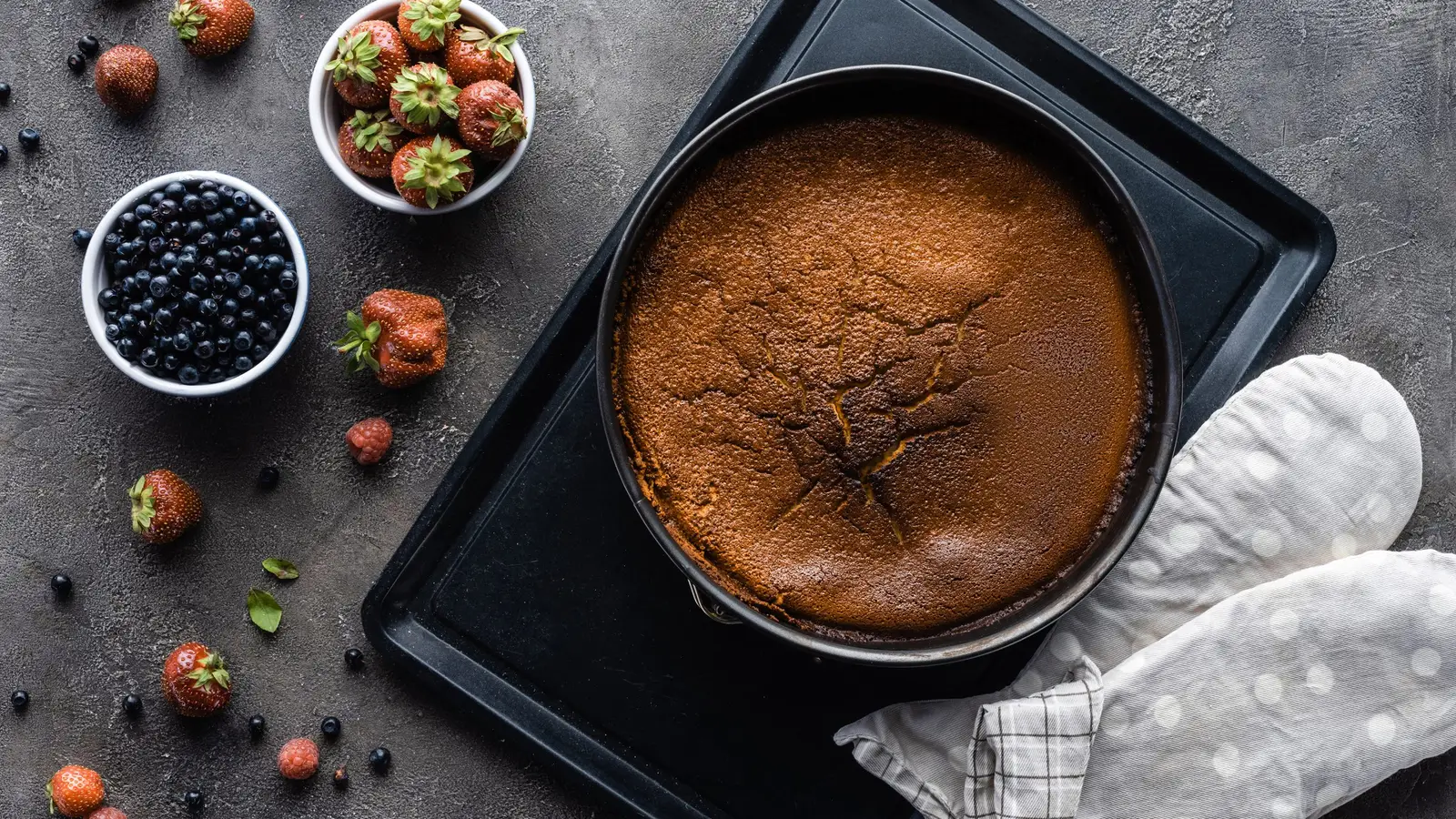
It is one of the most frustrating bakes: a scorched base and a wet, wobbly middle. The good news is that it is almost always down to how the oven is set up rather than your recipe, and most of the time it can be fixed with a couple of simple changes.
The short answer
A burnt base with a raw top usually means too much heat is reaching the bottom of the cake too quickly, before the centre has had time to set. The three most common reasons are an oven running hotter than the dial shows, the tin sitting too low and close to the bottom element, and a dark or thin tin that browns the base fast. Moving the cake to the middle shelf, lowering the temperature a little, and checking the oven’s real temperature will fix the large majority of cases.
The usual culprits
Run through these in order. The first two solve most burnt bases on their own.
- The oven runs hotter than the dialThermostats drift over time, so a dial set to 180°C might be delivering noticeably more. The base sits closest to the heat source, so it scorches first while the centre lags behind. This is the single most common cause, and our guide to troubleshooting uneven baking and oven temperature walks through how to confirm it.
- The shelf is too lowA tin placed near the floor of the oven sits right above the bottom element, which drives fierce heat straight into the base. For cakes, the middle shelf is the sweet spot, as our oven functions explained guide sets out.
- The wrong setting is selectedA base heat or bottom-element-only function pushes heat up from below with nothing to even it out. Switching to a fan setting circulates the air and stops the base taking the full force of the lower element.
- A dark or thin metal tinDark, lightweight tins absorb and conduct heat quickly, so the base browns long before the middle is done. It is one of the most overlooked reasons a cake ends up burnt on the outside but raw in the middle.
- The tin is on a hot surfaceResting the tin directly on the oven floor, or on a baking tray that has been preheating, conducts intense heat straight into the base. Always bake on a wire shelf unless a recipe tells you otherwise.
- The temperature is simply too highIf the oven is genuinely set too hot, the outside sets and colours fast while the centre stays raw. As one round-up of common baking problems puts it, too high and it burns, too low and it will not cook through.
Quick fixes that work
Most burnt bases are solved by a handful of small adjustments:
- Move the tin to the middle shelf, away from the bottom element.
- Switch to a fan setting for more even heat, and drop the temperature by around 20°C if your recipe was written for a conventional oven. Our guide to how a fan oven works explains why.
- Lower the set temperature by 10 to 20°C and give the cake a little longer to bake through.
- If the bottom heat is fierce, slide an empty baking tray onto the shelf below the cake to take the edge off the heat reaching the base.
- When the top is browning enough but the centre is still raw, cover loosely with foil and keep baking rather than taking it out early.
- Line the base of the tin with an extra layer of baking parchment for a little more protection.
Is your tin making it worse?
The tin matters more than most people expect. The colour, thickness and material all change how quickly heat reaches the base of your cake.
| Tin type | How it behaves | What to do |
|---|---|---|
| Light, heavy aluminium | Heats gently and evenly, the most forgiving for cakes | Use as your default for sponges and most bakes |
| Dark or non-stick | Absorbs more heat, so the base browns faster | Lower the temperature by 10 to 20°C and watch the base |
| Glass or ceramic | Holds heat and keeps releasing it, edges can over-brown | Reduce the temperature slightly and check a few minutes early |
| Thin, lightweight metal | Heats quickly and can warp, leading to uneven bakes | Avoid for delicate cakes, or buffer with a tray below |
Check your oven’s real temperature
If you have tried the steps above and the base still burns, the oven itself is the most likely suspect. The temperature on the dial is not always the temperature inside the cavity, and even a well-made oven can drift over the years.
The quick test: place an oven thermometer in the centre of the cavity, preheat to a set temperature, and compare the reading with the dial. A gap of 10 to 20°C is common and easy to allow for by adjusting your setting. A larger or shifting gap points to a thermostat that needs recalibrating or checking.
Hot spots play a part too. Most ovens are slightly hotter in some areas than others, which is why rotating the tin partway through a longer bake can even out the colour. If the base scorches no matter what you try, it is worth ruling out a worn door seal or an ageing thermostat before assuming the recipe is at fault.
Key takeaways
- A burnt base with a raw top almost always means too much heat is reaching the bottom too fast.
- Start by moving the cake to the middle shelf and keeping it off the oven floor or any hot tray.
- Lower the temperature by 10 to 20°C, and reduce by around 20°C more if you switch to a fan setting.
- Dark, thin and glass tins all brown the base faster, so adjust the temperature to suit.
- If problems persist, check the oven’s real temperature with a thermometer and look for hot spots or a worn seal.
Frequently asked questions
The middle shelf is usually best for cakes. It sits furthest from both the top and bottom elements, so the base is less likely to scorch and the heat reaches the cake more evenly. If your oven runs hot at the bottom, moving up one shelf often solves a burnt base on its own.
Both work well. Conventional heat, with the top and bottom elements and no fan, gives gentle still-air baking that many bakers prefer for delicate sponges. A fan setting cooks more evenly across shelves but is more drying, so reduce the recipe temperature by around 20°C if you switch to it. Whichever you use, the middle shelf gives the most even result.
A fan oven should spread heat evenly, so a burnt base usually points to the tin sitting too low, resting on the oven floor or a hot tray, or the oven running hotter than the dial shows. Move the tin to the middle shelf, keep it off any preheated surface, and check the real temperature with an oven thermometer.
They can. Dark and thin metal tins absorb and conduct heat faster than light, heavier ones, so the base browns more quickly. If you are using a dark or non-stick tin, try lowering the temperature by around 10 to 20°C, or line the base with an extra layer of baking parchment.
Lower the temperature rather than pulling the cake early. Cover the top loosely with foil to stop further browning, then keep baking until a skewer inserted into the centre comes out clean. For next time, drop the temperature by 10 to 20°C and check your oven’s real temperature.
Place an oven thermometer in the centre of the cavity, preheat to a set temperature, and compare the reading with the dial. A difference of 10 to 20°C is common and easy to allow for. Larger or shifting gaps suggest the thermostat needs recalibrating or checking by an engineer.
Explore More Kitchen Advice & Buying Guides
Browse our latest articles covering appliance tips, energy-saving advice, and expert guidance – designed to help you choose, use, and get the most from your kitchen appliances.