Home » Dishwasher Guides & Advice » What is a half-load setting and does it save money?
What Is a Half-Load Setting, and Does It Save Money?
The half-load button on a dishwasher or washing machine promises a lighter, cheaper wash when you do not have much to clean. It is one of the most misunderstood settings in the kitchen and utility room, so here is what it actually does, what it really saves, and when a full load is the smarter choice.
The short answer
A half-load setting saves a little water and energy, but nowhere near half. It is better than running a near-empty machine, yet a full load is still the cheapest way to wash per item. For real savings, the bigger wins are running full loads and using the eco programme.
What a half-load setting actually does
Despite the name, a half-load setting does not simply halve everything. It works quite differently on the two appliances that use it.
On a dishwasher
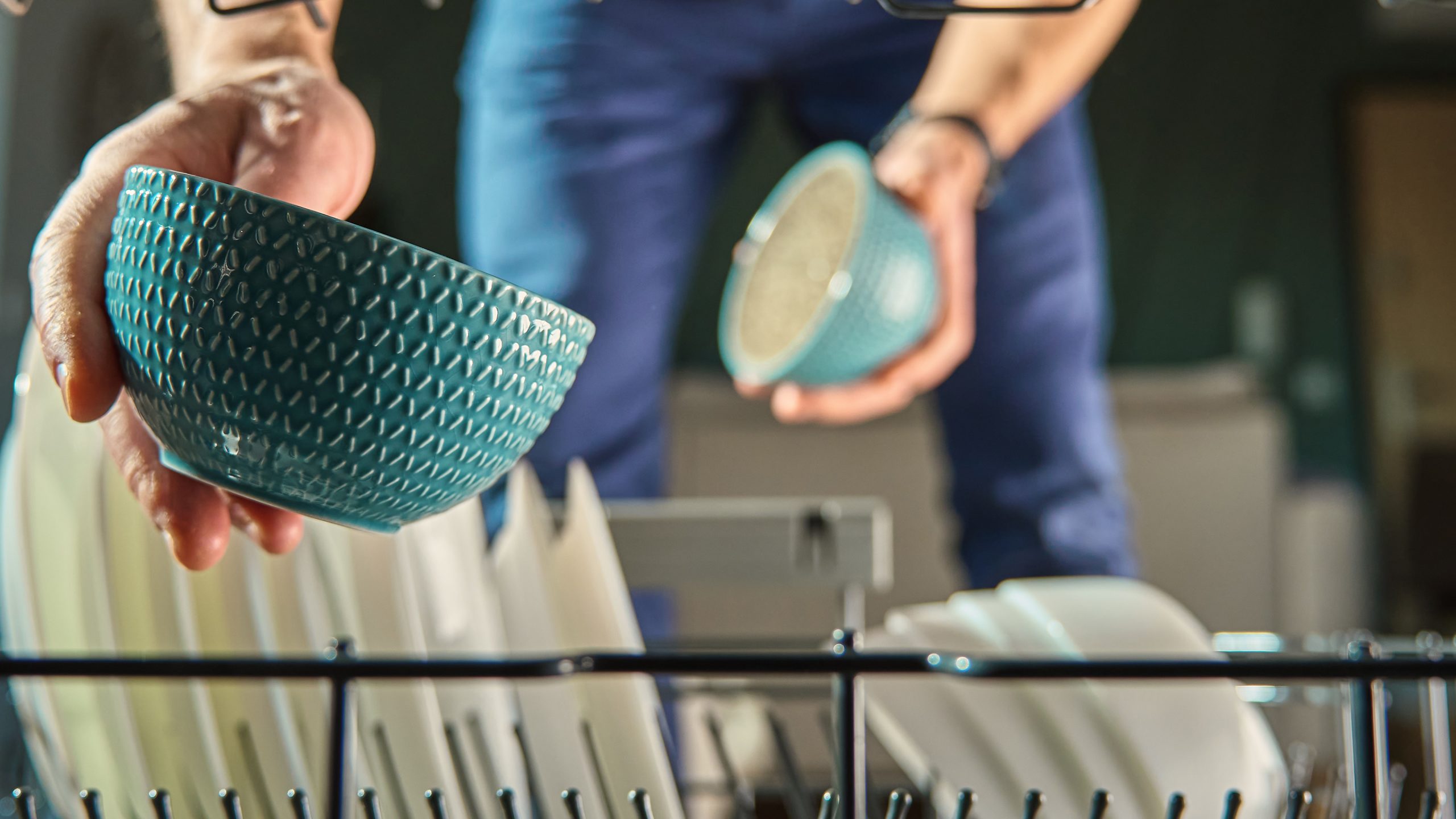
A diverter valve sends water to only the top or bottom basket, so you fill and clean just one. It uses less water, but you still need a full detergent tablet, and the basket you fill varies by model, so it is worth checking the manual.
On a washing machine
The drum still turns and the water still heats, so the cycle draws almost as much energy as a full load. Older machines had a dedicated half-load button, while many newer ones weigh the load and adjust the water automatically.
For a fuller picture of each appliance, see our guides to the most energy-efficient dishwasher cycles and to cutting energy use with your washing machine.
So, does it save money?
A little, but far less than the name suggests. The reason is simple: the biggest cost in both appliances is heating the water, and the pump, motor and base cycle all still run whether the machine is half full or full.
The key figure: the consumer group Which? has found that a half-load dishwasher programme can still use up to 90% of the water and energy of a full cycle. On a washing machine the picture is much the same, with a half-load drawing close to the energy of a full one.
How a half load really compares
Almost the same water and energy, to clean half as much. That is why a full load works out cheaper per item.
That is the catch. Because you are cleaning half the items for most of the cost, a half-load actually works out more expensive per plate or per garment than a full load. If you use detergent tablets, there is no saving there either, since a half-load still needs a whole tablet.
Half load vs full load vs eco
Seen side by side, it is clear where the real savings sit.
| Setting | What it saves | Best when |
|---|---|---|
| Half load | A little water and some energy, but often up to around 90% of a full cycle | You need items cleaned now and cannot wait |
| Full load | The lowest water and energy per item | Whenever you can fill the machine without overpacking |
| Eco, full load | The most overall, by washing at a lower temperature for longer | Your everyday default when you are not in a rush |
When a half-load makes sense
It is not useless. There are times when a half-load is the sensible call:
- You need a specific item or a small batch cleaned now and cannot wait to fill the machine.
- The load is genuinely dirty and you would rather not leave it to dry on and turn smelly over a day or two.
- You are between full loads and the machine would otherwise sit part-filled for too long.
If you find yourself reaching for it almost every time, that is usually a sign the appliance is simply larger than your household needs, and a slimline model would suit you better.
Better ways to cut running costs
If the goal is a lower bill, these habits do far more than the half-load button:
- Run full loads, just short of overpacking, so almost the same energy cleans far more.
- Make the eco or energy-save programme your everyday default, as explained in our guide to the eco wash setting.
- Wash laundry at lower temperatures, around 30 degrees C, where the load allows.
- Skip the pre-rinse on dishes, since modern machines are built to handle the job.
- Run cycles off-peak if you are on a time-of-use tariff such as Economy 7.
- Keep filters clean so the machine does not have to work harder to do the same job.
The Energy Saving Trust makes the same point: choosing efficient settings and waiting for a full load are among the easiest ways to cut what these appliances cost to run. For more across the kitchen, see our tips on saving money on appliance running costs.
Key takeaways
- A half-load setting trims some water and energy, but not half, often using up to around 90% of a full cycle.
- Because you clean fewer items for most of the cost, it works out dearer per item than a full load.
- On a dishwasher it washes one basket; on a washing machine the drum and heating still run as normal.
- Many modern machines weigh the load automatically, so a half-load button is less needed than it used to be.
- The real savings come from full loads, the eco programme, lower temperatures and off-peak running.
Frequently asked questions
No. It uses less than a full cycle, but not half. Which? has found a half-load dishwasher programme can still use up to 90% of the water and energy of a full load, and on a washing machine a half-load draws almost as much energy as a full one, because most of the energy goes on heating water.
Waiting for a full load is cheaper per item. A full load spreads almost the same water and energy across more dishes or clothes. A half-load only wins when you genuinely need something cleaned and cannot wait.
It uses a diverter valve to send water to only the top or bottom basket, so you fill and wash just one. It trims water use, but you still need a full detergent tablet, so the saving is small.
Often not. Many newer machines weigh the load automatically and adjust the water to suit, so a separate half-load setting is less necessary than it once was.
Not always. In tests, half-load programmes do not always clean as thoroughly, and lightly packed dishes can knock together and chip. A correctly loaded full cycle usually gives the best results.
Run full but not overpacked loads, use the eco or energy-save programme as your default, wash at lower temperatures where you can, and run cycles off-peak if you are on a time-of-use tariff.
Explore More Kitchen Advice & Buying Guides
Browse our latest articles covering appliance tips, energy-saving advice, and expert guidance – designed to help you choose, use, and get the most from your kitchen appliances.