Home » Cooker Hood Guides & Advice » How to Reduce Cooking Smells in an Open-Plan Kitchen
How to Reduce Cooking Smells in an Open-Plan Kitchen
Open-plan living looks wonderful, right up until you fry fish on a Friday and the sofa still smells of it on Sunday. With no doors to shut and soft furnishings all around, cooking odours travel freely and settle into fabrics. The good news is that a mix of the right extraction, a few habits, and some clever design choices will keep the whole space fresh. This guide works through all three, from the single biggest lever to the quick fixes.
Use a ducted extractor hood sized for your room, switch it on before you start cooking and leave it running for 10 to 15 minutes after, and keep lids on pans. Almost everything else builds on those three.
Why open-plan kitchens hold onto cooking smells
In a closed kitchen you can shut the door and let an extractor deal with the air in one room. Open-plan removes that boundary. The cooking plume, a rising mix of steam, airborne grease and odour molecules, spreads across a much larger volume before anything can capture it. Those odour molecules then land on the soft surfaces that make a living space cosy: sofas, curtains, rugs and cushions all act like sponges. It is worth knowing that this plume comes from the food itself, not the hob, so even a clean induction hob produces one when you boil pasta or sear a steak.
Extraction is your biggest weapon: the cooker hood
No amount of airing out beats capturing smells at the moment they are produced. A good extractor hood is the single most effective thing in an open-plan kitchen, but two details decide how well it works: the type of extraction and whether it is powerful enough for your space.
Ducted beats recirculating for open-plan
A ducted hood pushes cooking air out of the building through a duct, so odours leave for good. A recirculating hood pulls air through a grease filter and a carbon filter, then returns it to the room. The carbon filter reduces odours but does not remove them, and it cannot remove steam at all, so in an open-plan space a recirculating hood effectively redistributes softened smells back into your living area. Wherever a duct to an outside wall or roof is possible, duct it.
| Feature | Ducted | Recirculating |
|---|---|---|
| Where the air goes | Outside the building | Filtered, back into the room |
| Removes odours | Yes, fully | Reduces, does not remove |
| Removes steam and moisture | Yes | No |
| Best for open-plan | Recommended | Only if ducting is impossible |
| Installation | Needs a duct to outside | Flexible, no duct needed |
For a fuller comparison, see our guide to recirculating vs ducted cooker hoods.
Get the extraction rate right for your space
A hood that is underpowered for the room will never keep up, and open-plan rooms are large. The standard rule of thumb is to aim for at least 10 air changes an hour, which means an extraction rate of at least ten times your kitchen’s volume. Work out the volume by multiplying length by width by height in metres, then multiply by 10 to get a figure in cubic metres per hour.
Because open-plan spaces let air disperse, and gas hobs add combustion by-products, it is wise to add capacity on top: roughly 20 percent for a gas hob and 30 to 50 percent for an open-plan layout. The calculator below does the maths for you.
Extraction rate calculator
A guide only. Building Regulations set a legal minimum of 108 m³/h (30 l/s) for a hood above the hob, so treat that as the floor, not the target.
These figures are indicative. Under the government’s Building Regulations Approved Document F, a ducted hood directly above the hob must extract at least 30 litres per second, which is 108 cubic metres per hour, and recirculating hoods in new homes must be paired with a separate extract fan. Remember too that real-world ducting reduces performance, so size with headroom. Our guide to extraction rates covers this in depth.
Using the hood the right way
Even the best hood underperforms if it is only switched on once the kitchen is already full of steam. Timing is everything.
- Switch it on before you start. Get the airflow going before the first splash of oil so the plume is captured from the outset.
- Use the back burners. Pans at the back sit more squarely in the hood’s capture zone than those at the front.
- Reach for the boost. Frying, grilling and wok cooking throw up far more grease and odour, so use the boost or highest speed for those, then drop back down.
- Leave it running after. Give it 10 to 15 minutes once you have finished to clear the last of the airborne odours.
Keep the filters clean
A clogged filter quietly wrecks performance. Grease filters that are caked up choke airflow, and a saturated carbon filter stops absorbing odours without giving any visible sign, so work to a schedule rather than waiting for smells to return.
| Filter | What to do | How often |
|---|---|---|
| Metal grease filter | Wash (often dishwasher safe) | Every 4 to 6 weeks |
| Carbon filter (recirculating) | Replace | Every 3 to 6 months |
Improve airflow and ventilation across the space
Extraction removes smells at the source; ventilation clears whatever escapes. The two work best together.
- Create a cross-breeze. Open a window near the kitchen and another across the room so air flows through and carries odours out rather than letting them settle.
- Use trickle vents. The small vents on modern window frames provide constant background ventilation, so leave them open while you cook.
- Make the most of mechanical ventilation. If your home has a mechanical ventilation with heat recovery system, or MVHR, make sure the kitchen extract is working and boost it when cooking.
- Give smells an exit, not a tour. Try to draw air from the kitchen towards a window or vent rather than through the seating area on its way out.
Stop smells at the source while you cook
Small habits at the hob dramatically cut how much odour ever reaches the air.
- Keep lids on pans. A lid traps steam and aroma, and as a bonus it cooks faster and saves energy.
- Favour gentler methods for strong foods. Boiling and steaming release far less airborne grease than frying, so where a recipe allows, choose the calmer method.
- Save the strong stuff for full extraction. Fish, curries and deep-frying are worth timing for when you can run the hood on boost and open a window.
- Manage splatter. A splatter guard keeps grease off surrounding surfaces, which stops it turning into a lingering smell later.
- Clear up promptly. Wipe down the hob and surfaces soon after cooking, before residues have time to bake on and release odours.
Protect soft furnishings and clear lingering odours
Because fabrics hold onto smells, a little protection and the occasional refresh go a long way in an open-plan room.
- Choose washable covers. Removable, washable covers on cushions and throws let you reset the room’s smell in a wash cycle.
- Air the space afterwards. A short blast of fresh air after cooking stops odours bedding into upholstery.
- Neutralise, do not just mask. A bowl of white vinegar or bicarbonate of soda left out absorbs odours, and a gentle simmer pot of lemon, herbs or a little vinegar freshens the air naturally. These beat heavy sprays, which only cover smells up.
- Consider an air purifier. A purifier with an activated carbon filter helps mop up cooking odours in a large open space, especially during heavy cooking sessions.
- Deal with the bin. Food waste is its own odour source, so use a lidded caddy and empty it often rather than letting it sit in an open space.
Designing an open-plan kitchen to control smells
If you are planning or renovating, you can build odour control into the layout from the start.
- Position the hob thoughtfully. Keeping the cooking zone away from the main seating area gives smells less chance to reach the sofa.
- Plan a proper duct route. A short, wide, straight duct to an outside wall gives ducted extraction its best chance, so factor it in early.
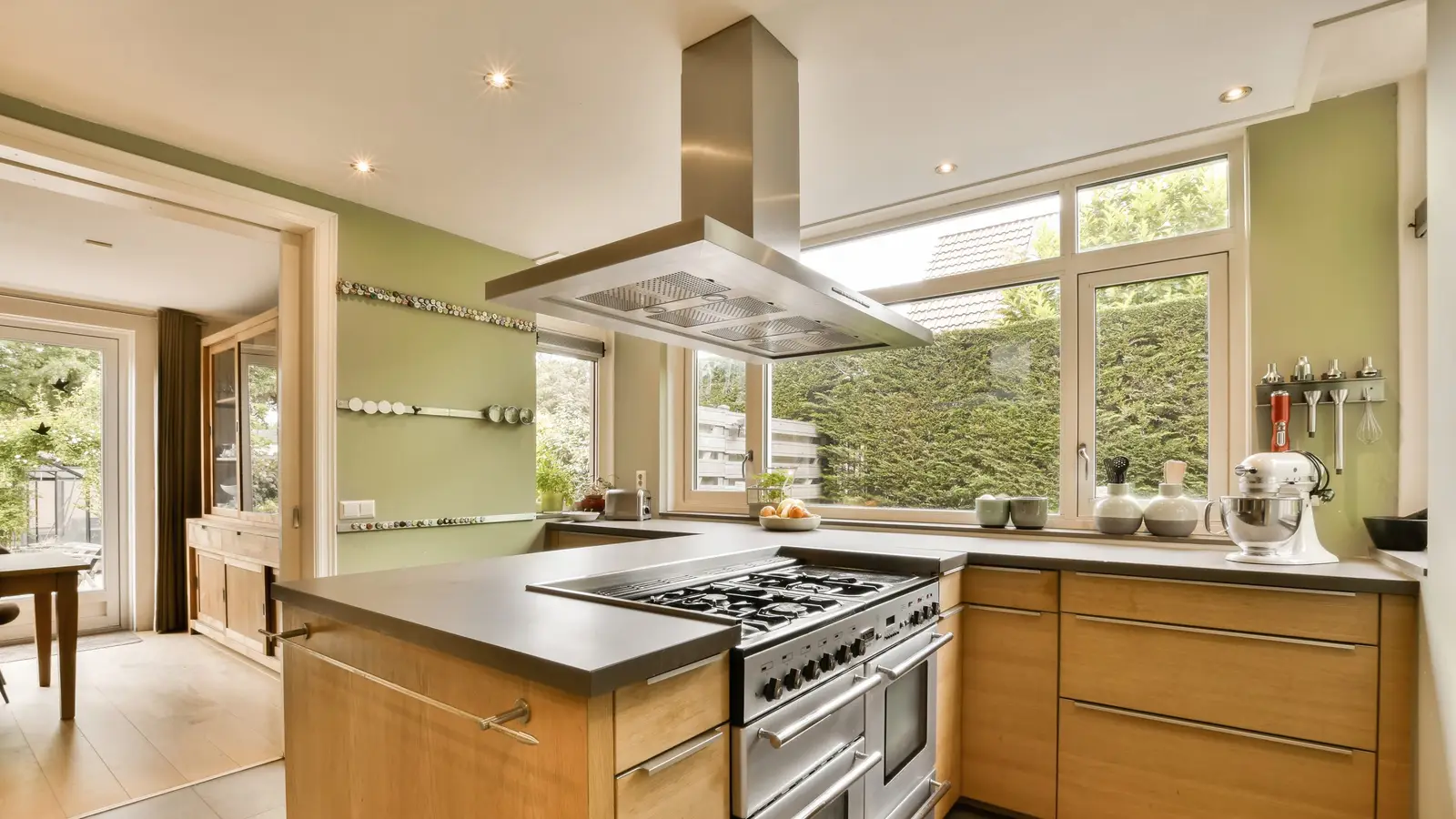
- Match the hood to an island. For an island hob, a ceiling or island cooker hood, or a downdraft extractor that rises from the worktop, captures the plume where a wall hood cannot reach.
- Consider broken-plan touches. A partial partition, a change in level or a glazed divider keeps the open feel while giving smells a gentle boundary.
- Do not skimp on power or quiet. In a room you also relax in, pick a hood that is both strong enough and quiet, ideally under 65 decibels. Our guide to the quietest cooker hoods for open-plan kitchens can help.
Your open-plan freshness checklist
- Fit a ducted hood, sized above ten times your room volume with extra for gas and open-plan.
- Make sure the hood is at least as wide as the hob.
- Switch it on before cooking, use the back burners and boost for frying.
- Leave it running 10 to 15 minutes after you finish.
- Clean grease filters every 4 to 6 weeks and replace carbon filters every 3 to 6 months.
- Keep lids on pans and open a window for cross-ventilation.
- Neutralise lingering odours and empty the food caddy often.
Frequently asked questions
A ducted extractor hood, sized for the room and switched on before you cook, is the most effective step. Back it up with lids on pans and a window open for cross-ventilation.
Usually not on its own. A recirculating hood reduces odours but returns the air to the room and cannot remove steam, so a ducted hood is recommended. If ducting is impossible, choose a high extraction rate and change carbon filters diligently.
Aim for an extraction rate of at least ten times your kitchen’s volume in cubic metres per hour, then add roughly 20 percent for a gas hob and 30 to 50 percent for an open-plan layout. The legal minimum under Building Regulations is 108 cubic metres per hour.
Yes. Leaving it running for 10 to 15 minutes after you finish clears the airborne odours and steam that remain once the cooking stops.
Air the room well, wash removable covers, and leave out a bowl of bicarbonate of soda or white vinegar to absorb odours. Avoid relying on sprays, which mask rather than remove smells.
Induction avoids combustion gases, but the steam, grease and odour come from the food, not the hob. A pan of frying or a simmering curry produces a plume on any hob, so you still need extraction.
Related reading
Ready to keep your open-plan space fresh? Explore the CATA range of cooker hoods, island hoods and downdraft extractors.
Browse CATA cooker hoodsExplore More Kitchen Advice & Buying Guides
Browse our latest articles covering appliance tips, energy-saving advice, and expert guidance – designed to help you choose, use, and get the most from your kitchen appliances.