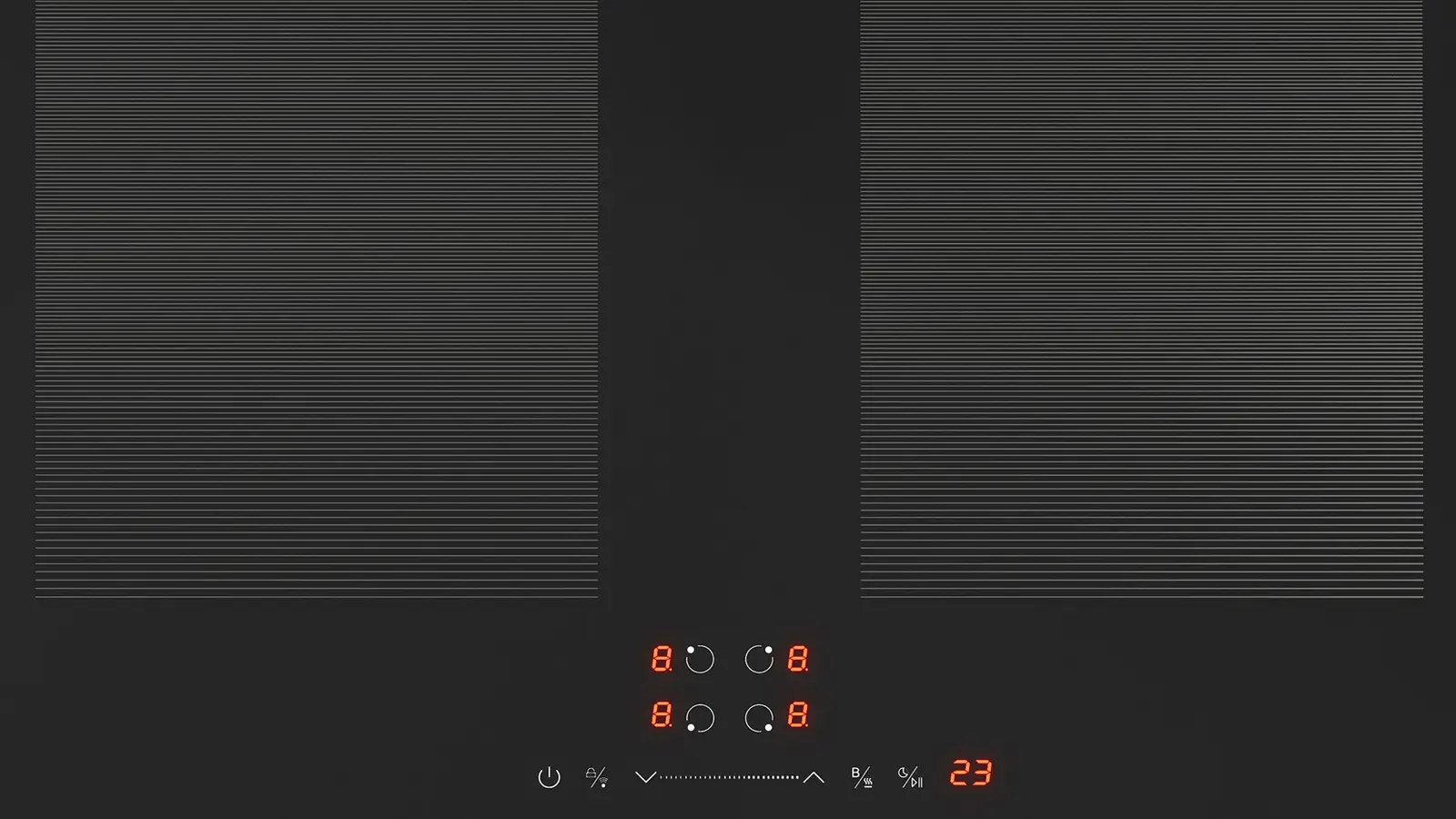
How Flex Zone Induction Hobs Work
A flex zone induction hob uses multiple induction coils arranged beneath a larger section of the glass surface. Those coils can operate independently or combine into a single unified heating area, adapting to whatever cookware you place on them. It is the same induction technology as a standard hob, but with a more intelligent approach to how the cooking surface is organised.
How Induction Heating Works
Every induction hob works on the same electromagnetic principle. Beneath the glass surface sits one or more copper coils. When you switch a zone on, an alternating electrical current passes through the coil, generating a rapidly oscillating magnetic field above the glass. Place a pan with a ferromagnetic base on that zone and the changing magnetic field induces eddy currents inside the pan’s base. Those currents meet electrical resistance in the metal and convert to heat — directly inside the pan itself, not in the glass or the air around it.
The practical result is that the heat goes exactly where you want it, with almost no lag between adjusting the setting and the cooking temperature changing. The glass surface heats only from contact with the warm pan base, which is why induction hobs feel safe to touch a few seconds after removing a pan, and why spills do not bake onto the surface in the same way they do on ceramic or gas.
This also explains why pan choice matters. A fridge magnet stuck firmly to the base of a pan is the reliable test: cast iron, magnetic stainless steel, and carbon steel all work well. Aluminium, copper, and glass do not generate the eddy currents needed, unless the manufacturer has bonded an induction-compatible base plate to the underside.
What Makes a Flex Zone Different
A standard induction hob has a fixed number of discrete circular zones, each served by a single coil. The zones are positioned to match common pan sizes, and you centre your pan on whichever ring is the right size. If you have a pan that falls between two zone sizes, or a griddle that spans two zones, you are working against the hob’s fixed layout.
A flex zone replaces the fixed circular arrangement in part or all of the hob with a matrix of smaller coils distributed across a larger rectangular area. The electronics can activate any subset of those coils as a coordinated group, effectively drawing a custom-shaped heating zone around whatever cookware detects the magnetic field above it.
On a standard hob, zones are fixed circles. On a flex zone hob, a matrix of smaller coils activates only beneath the detected cookware — enabling any shape or size within the zone area.
Bridging and Pan Detection
How pan detection works
The hob continuously monitors each coil position for the presence of a ferromagnetic surface. When a pan is placed on the glass, the electromagnetic load on the active coils changes in a measurable way. The hob’s control system reads this change, identifies which coils have a pan above them, and activates only those. Coils with nothing above them remain off, drawing no power and generating no field.
This is why you can place a small saucepan anywhere within a flex zone and the hob will find it, rather than requiring you to position it precisely over a marked ring. The detection system resolves the pan’s footprint to within a few centimetres and activates the corresponding coil subset accordingly.
Bridging two areas
On hobs with two distinct flex zones — a left section and a right section, for example — bridging combines them into a single continuous heating area. This is the feature that makes flex zone hobs particularly suited to rectangular or oval cookware such as griddle pans, fish kettles, and large saute pans. Without bridging, a griddle pan straddling two zones would be heated unevenly: the left side at one temperature setting, the right at another. With bridging activated, a single power level applies uniformly across all active coils beneath the pan.
Bridging is typically activated via a specific button or touch control labelled with a bridge or link symbol. The two zones then operate as one, sharing a single power setting and timer. To use them independently again, bridging is deactivated and each zone returns to individual control.
What a Flex Zone Is Good For
The technology solves specific real-world cooking problems rather than being a general-purpose upgrade. It makes the most difference in these situations.
Griddle pans and flat iron pans
Rectangular griddle pans that span most of the hob width are the canonical use case. Bridging produces even heat across the full pan surface so you get consistent cooking results from one end to the other, rather than hotter and cooler sections determined by where the fixed zones happen to be.
Large stockpots and casseroles
An oversized stockpot or preserving pan with a base wider than a standard single zone benefits from multiple coils activating beneath it automatically. The heat distributes across the larger base area rather than concentrating on a central circle, which produces more even simmering and reduces the risk of scorching at the centre.
Batch cooking and entertaining
When cooking for large numbers, the ability to use more of the hob surface productively — without carefully matching each pan to a specific ring — speeds up the process. You can move pans around freely within the flex area and the detection system adjusts automatically.
Fish kettles and roasting pans
Oval fish kettles and long roasting pans have always been awkward on standard hobs, typically requiring two separate zone settings and producing uneven results. Bridged flex zones treat the whole base as a single cooking surface, which suits the geometry of these pans directly.
Flex Zone vs Standard Induction
| Feature | Standard induction | Flex zone induction |
|---|---|---|
| Pan placement | Must be centred on a marked zone ring | Place anywhere within the flex area; detection finds it |
| Griddle and rectangular pans | Awkward — two zones, two settings, uneven heat | Bridge zones for even heat across the full base |
| Large pots wider than a single zone | Single central coil; edges may be underheated | Multiple coils activate beneath the detected footprint |
| Small pans on any part of the surface | Works — if centred on the right zone | Works anywhere in the flex area |
| Energy efficiency | Only active zones draw power | Only detected coil positions draw power — equally efficient |
| Everyday simplicity | Straightforward; fixed zones easy to use | More flexible but equally intuitive once familiar |
| Typical price range | Wider range; budget to premium | Mid to premium; more advanced technology |
For straightforward everyday cooking — four pans, each on a standard round zone — a flex zone hob offers no meaningful advantage over a well-specified standard model. The technology earns its worth in kitchens where large or irregularly shaped cookware is used regularly, or where the freedom to place pans without thinking about zone alignment genuinely matters to how that household cooks.
CATA’s vented induction hobs combine flex zone technology with built-in extraction — the combination that removes both the overhead hood and the fixed-zone constraint in a single appliance. The guide to how vented induction hobs work covers the extraction side in detail. Browse the full CATA induction hob range to compare flex zone and standard models side by side.
CATA Induction Hobs
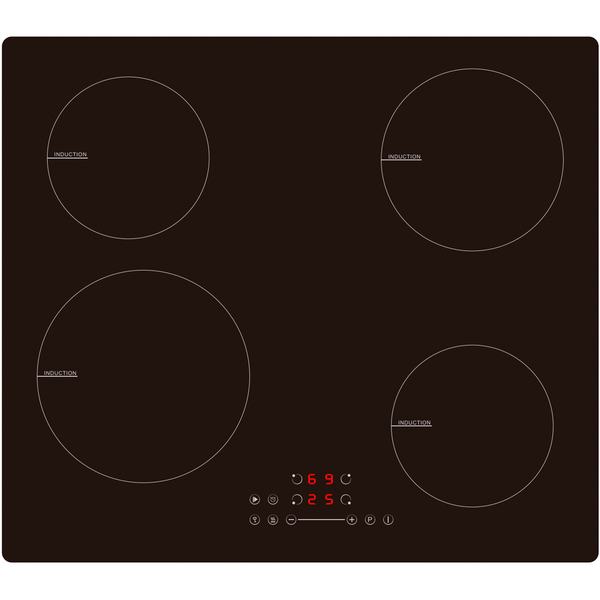
CATA 300 — UBIND60MS 60cm 4 Zone Induction Hob
- 4 cooking zones, 7kW total power
- 9 power settings plus boost
- Touch slider control with LED display
- Defrost, keep warm, and simmer functions
- Cooking timer and child safety lock
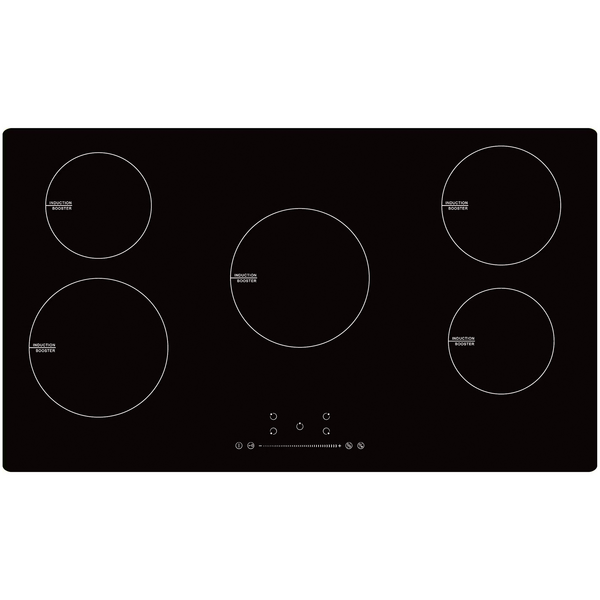
CATA 300 — UBIND90F 90cm 5 Zone Induction Hob
- 5 cooking zones with 5 boost zones
- 9 power levels per zone
- Auto pan detection system
- Pause and keep warm functions
- Touch slider control