Home » Oven Guides & Advice » The Easiest Way to Make the Perfect Jacket Potato
The Easiest Way to Make the Perfect Jacket Potato
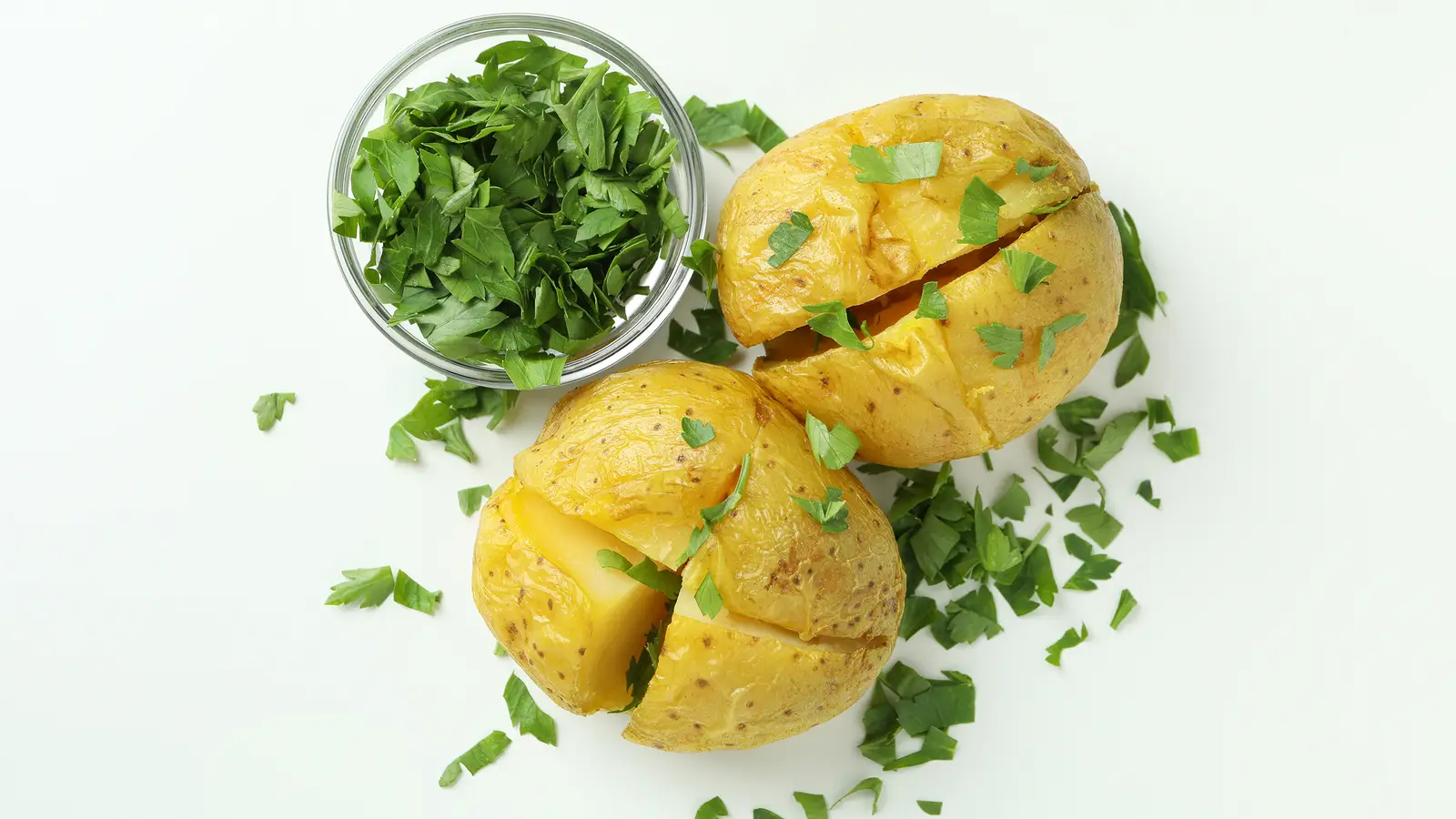
A great jacket potato is one of the most satisfying things a decent oven can produce: crackling, deeply seasoned skin and a fluffy, steaming interior. The method is simple, but a few small decisions — potato variety, rack position, oven temperature — make the difference between a good one and a genuinely memorable one.
Choosing the Right Potato
The variety matters more than most recipes admit. A floury potato — Maris Piper, King Edward, or Desiree — has high starch content and low moisture. When it bakes, the starch granules swell and separate, producing the dry, fluffy interior that a jacket potato is supposed to have. A waxy potato stays firm and slightly dense, and no amount of extra cooking time will change that fundamental texture.
Size matters too. An even potato of around 250 to 300g cooks predictably in 60 to 70 minutes at 220°C. A very large potato (400g or more) needs an extra 15 to 20 minutes and benefits from a small temperature reduction for the final third of cooking, otherwise the skin chars before the centre is fully cooked through. If cooking two or more together, try to choose similar sizes so they finish at the same time.
The Method
Perfect Jacket Potato
Crispy salt-rubbed skin, fluffy floury centre. Serves 2.
Ingredients
- Maris Piper or King Edward potatoes2 large
- Olive oil or vegetable oil1 tbsp
- Flaky sea salt1 tsp
- Butter, to serve30g
Method
- 1Heat your oven to 220°C (200°C fan). A properly hot oven from the start is what gives you crackling, blistered skin rather than a pale, soft exterior.
- 2Scrub the potatoes under cold water and dry thoroughly with a clean cloth. Moisture on the skin is the enemy of crispness. Pierce each potato 8 to 10 times all over with a fork so steam can escape.
- 3Rub each potato all over with the oil, then sprinkle with flaky salt and press it in lightly. The salt draws out surface moisture and seasons the skin as it crisps.
- 4Place the potatoes directly on the middle oven rack with a baking tray on the shelf below to catch drips. Rack position allows heat to circulate all the way around, crisping the underside as well as the top. Bake for 60 to 75 minutes.
- 5The skin should be deeply golden and crackling. Push a skewer through the thickest part — it should slide in with no resistance. If there is any firmness, give it another 10 minutes.
- 6Remove from the oven, rest for 2 minutes, then cut a deep cross and push the ends toward the centre to open it up and let steam escape. This fluffs the interior significantly. Add butter and your toppings of choice.
Notes
- Fan ovens crisp the skin faster — check at 55 minutes. If the skin is browning faster than the inside is cooking, reduce to 190°C fan for the final 20 minutes.
- Microwave shortcut: microwave on full power for 8 minutes (turning halfway), then transfer to a 220°C oven for 20 to 25 minutes to crisp the skin. Saves around 40 minutes but sacrifices a little depth of flavour.
- Potato choice: floury varieties like Maris Piper and King Edward give the dry, fluffy interior a jacket potato needs. Waxy potatoes produce a dense, slightly gluey centre regardless of cooking time.
Getting the Best from Your Oven
Jacket potatoes are a surprisingly useful test of how well you know your oven. Conventional ovens run hotter at the top and cooler at the bottom; the middle rack is the most even position for one or two potatoes. Fan ovens circulate heat uniformly, which is why they crisp the skin faster — 200°C fan typically achieves the same result as 220°C conventional.
Placing potatoes directly on the rack rather than on a baking tray is the single most impactful technique change most home cooks can make. A tray blocks airflow to the underside, which steams rather than crisps. The rack lets heat reach every surface. Put a tray on the shelf below to catch any oil drips and that is the setup sorted.
If your oven has a fan-assisted setting alongside a standard fan setting, use fan-assisted for the first 40 minutes to build even heat through the potato, then switch to full fan for the last 20 to 25 minutes to finish the skin. CATA’s single ovens and double ovens include multiple cooking function settings that make this kind of staged approach easy to manage.
A clean oven maintains more consistent temperature and airflow than a dirty one. Grease on the base reflects heat unevenly and can cause hot spots that scorch the underside of the potato. If your oven has a pyrolytic self-cleaning function, using it periodically keeps the interior in the condition needed for reliable cooking. Our guide to how self-cleaning ovens work explains what the different cleaning modes do and when to use them.
Topping Ideas
A jacket potato is as good as whatever goes on top of it. The classics are classics for a reason, but a few less obvious combinations are well worth knowing.
Mature cheddar and butter
The benchmark. Use a strong, aged cheddar — the contrast between sharp cheese and floury potato is what the whole thing is built on.
Baked beans
Heat them separately, season with black pepper, and serve in a generous heap. As good as it has always been.
Chilli con carne
Leftover chilli is one of the best jacket potato toppings there is. Add a spoonful of soured cream and sliced spring onion to finish.
Tuna and sweetcorn mayo
Drain a tin of tuna well, mix with sweetcorn, a spoonful of mayonnaise, and a squeeze of lemon. Quick to assemble and works at room temperature.
Pulled chicken and BBQ sauce
Shredded leftover roast chicken warmed in smoky barbecue sauce. Add grated cheddar and finish under the grill for two minutes.
Cottage cheese and chives
Full-fat cottage cheese with plenty of fresh chives, seasoned well with black pepper. Lower in fat than most toppings and genuinely satisfying.
Creamed mushrooms
Sauté sliced mushrooms in butter with garlic, add a splash of double cream and fresh thyme. A meat-free option that feels substantial.
Soured cream and smoked salmon
A generous spoonful of soured cream, two or three slices of smoked salmon, and a few capers. Simple and better than it sounds on paper.
Roasted tomatoes and feta
Roast cherry tomatoes alongside the potato for the last 20 minutes, then crumble over salty feta with a drizzle of olive oil.
Explore More Kitchen Advice & Buying Guides
Browse our latest articles covering appliance tips, energy-saving advice, and expert guidance – designed to help you choose, use, and get the most from your kitchen appliances.