Home » Wine Cooler Guides & Advice » How to Set the Ideal Wine Temperature
How to Set the Ideal Wine Serving Temperature
Serving temperature has a more noticeable effect on how wine tastes than most people realise. A red served too warm tastes flat and alcoholic; a white served too cold loses its aromatics and complexity. Getting the temperature right does not require precision equipment. It requires understanding the rough ranges for each style and knowing a few practical ways to reach them.
Serving temperatures by wine style
The ranges below are serving temperatures: the temperature at which the wine should be in the glass. A wine cooler set to these temperatures is ready to pour. A bottle from a standard fridge (around 4°C) will need 10 to 20 minutes at room temperature for whites, and longer for reds.
| Wine style | Serving temperature | Examples | What happens outside this range |
|---|---|---|---|
| Sparkling | 6–8°C | Champagne, Cava, Prosecco, Crémant | Too warm: flat bubbles, heavy mouthfeel. Too cold: aromas suppressed, tastes sharp. |
| Light, crisp white | 7–10°C | Sauvignon Blanc, Pinot Grigio, Muscadet | Too warm: loses freshness and acidity, can taste flabby. Too cold: flavour muted. |
| Fuller white and rosé | 10–13°C | Chardonnay, Viognier, Dry rosé | Too cold: oak and texture become harsh; aromas closed. Too warm: alcohol dominates. |
| Light red | 12–14°C | Pinot Noir, Gamay (Beaujolais), Zweigelt | Too warm: tannins soften to flatness; fruit jammy. Too cold: tannins feel harsh and astringent. |
| Medium to full-bodied red | 15–18°C | Cabernet Sauvignon, Malbec, Syrah, Rioja | Too warm: alcohol overpowering, aromas muddled. Too cold: tannins grippy, fruit subdued. |
| Fortified | 12–16°C | Dry sherry, Port, Madeira | Style-dependent. Dry Fino sherry is best cooler (8–10°C); rich Port and Madeira warmer (14–16°C). |
Why “room temperature” is misleading for reds
The phrase “serve reds at room temperature” originates from a time when European domestic rooms were considerably cooler than today, typically 16 to 18°C. Modern centrally heated homes sit at 20°C or above, which is too warm for most red wines. A Cabernet Sauvignon served at 22°C in a warm kitchen smells and tastes predominantly of alcohol rather than fruit.
The practical implication: if you store red wine at room temperature, put it in the fridge for 20 to 30 minutes before serving. The goal is around 16 to 18°C for full-bodied reds and 12 to 14°C for lighter styles. A 30-minute chill from 21°C will drop a bottle to approximately 15°C.
Getting to the right temperature without a wine cooler
- Standard fridge to serving temperature. A bottle straight from a standard fridge at 4°C needs 20 to 30 minutes at room temperature to reach 10°C for whites, and 45 to 60 minutes to reach 14°C for a light red. A rough guide: wine warms approximately 1°C per 10 minutes at 20°C room temperature.
- Fast chilling with ice water. A bucket of iced water (half ice, half cold water) chills a bottle from 20°C to serving temperature in around 20 minutes, much faster than a fridge. An ice-only bucket with no water is less effective because the contact area between ice and glass is smaller.
- Quick chill in the freezer. 15 minutes in the freezer drops a bottle from room temperature to around 10°C. Set a timer. Longer than 20 minutes risks the wine approaching freezing point in the neck, and longer still risks breakage. This is a useful emergency method, not a regular practice.
- Warming a cold red. Never use a microwave or hot water. Both heat unevenly and can damage aromas. Wrap your hands around the bowl of the glass for a minute or two, or let the bottle sit in a warm (not hot) room. Patience is the right tool here.
CATA wine coolers for precise serving temperature
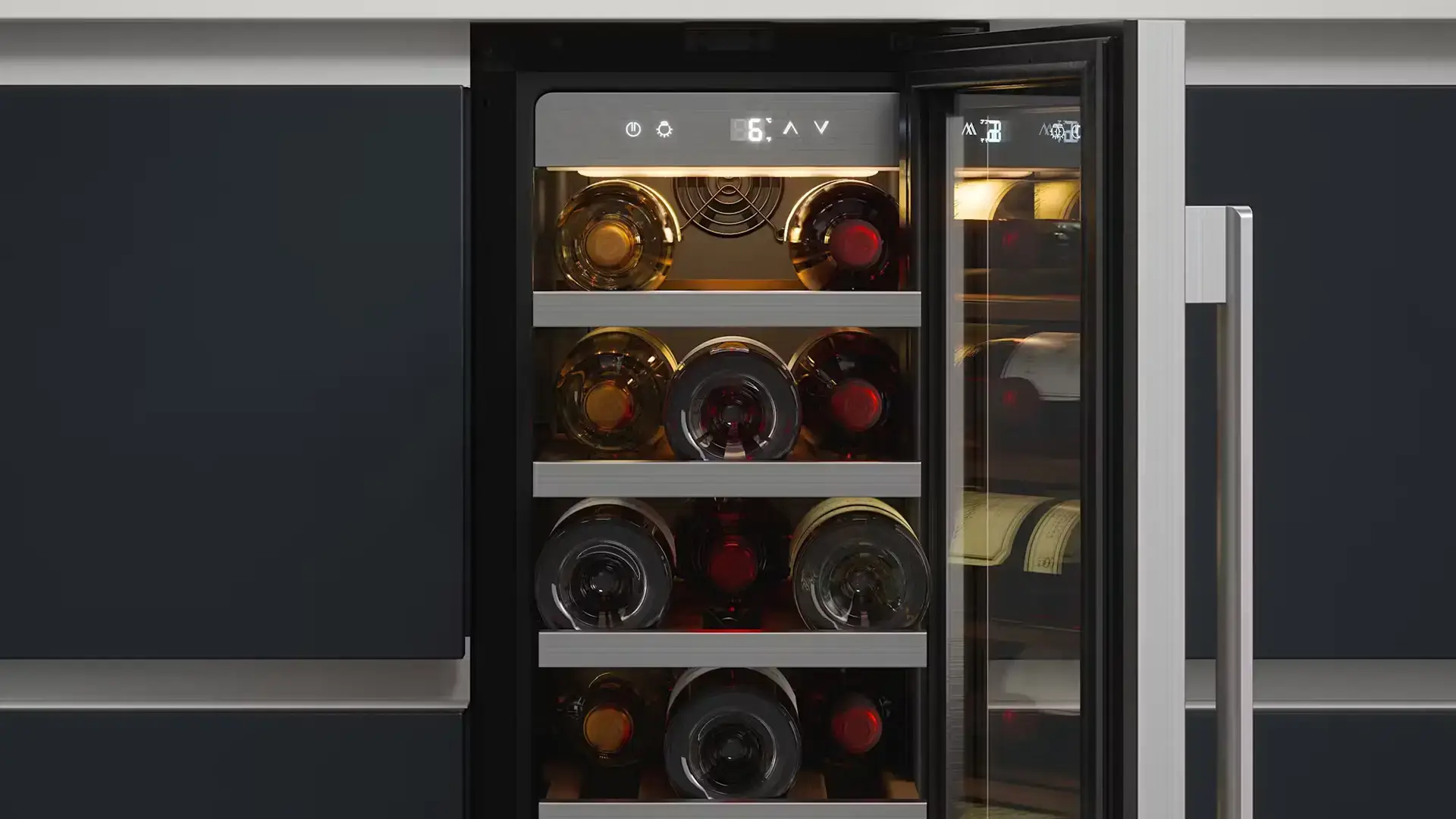
A dedicated wine cooler set to serving temperature removes the guesswork entirely. A dual-zone model stores reds and whites simultaneously at their respective ideal temperatures, ready to pour the moment you want them.
UBBKWC60DD — 60cm Dual Zone Wine Cooler
Two independently controlled zones let you store reds and whites at different temperatures simultaneously. 60cm wide, twin door, black glass finish.
View productCATA built-in wine coolers
CATA’s range of built-in wine coolers fits under a standard worktop or within a kitchen cabinet run, keeping wine at precise serving temperature and out of sight.
View rangeFor how long different wines keep at correct temperatures and the storage conditions that protect them, see how long wine can be stored in a wine cooler. Browse the full CATA wine cooler range for freestanding and built-in models.
Common questions answered
Can I store red and white wine at the same temperature in a single-zone cooler?
Yes. Set it to around 12°C as a practical compromise for storage. Whites will need to warm 5 to 10 minutes before serving, and full-bodied reds will need 20 to 30 minutes at room temperature to reach their ideal serving temperature. A dual-zone model eliminates the compromise.
Is it OK to re-chill wine that has warmed up after pouring?
Yes, completely fine. Returning a bottle to the cooler after it has warmed up causes no harm to the wine. The one thing to avoid is repeated extreme temperature swings over short periods, but going from 10°C to room temperature and back once or twice is not a problem.
How quickly does wine warm up in the glass?
In a standard wine glass at room temperature, wine warms approximately 2 to 3°C per 10 minutes. A white poured at 8°C will be at 12 to 14°C within 20 minutes, which is actually fine, as the wine often opens up and shows more character slightly warmer. Holding the bowl of the glass accelerates warming further.
Does the type of glass affect temperature?
Yes, but modestly. A thin-walled glass retains temperature better than a thick one because less heat conducts through the glass from your hand. A chilled glass (rinsed with cold water before pouring) helps maintain serving temperature for a few minutes longer. For everyday drinking the difference is minor; for fine wine served at a specific temperature it is worth considering.
Explore More Kitchen Advice & Buying Guides
Browse our latest articles covering appliance tips, energy-saving advice, and expert guidance – designed to help you choose, use, and get the most from your kitchen appliances.