Why Is My Hob Tripping the Circuit Breaker?
A hob that trips the circuit breaker every time it is used has a fault that needs professional attention — do not continue using it until the cause has been identified. Most tripping is caused by an earth leakage fault inside the hob, an overloaded circuit, or a failing connection. This guide explains what the tripping pattern tells you about the likely cause and what to check before calling an engineer.
MCB vs RCD — What Type of Trip Tells You a Lot
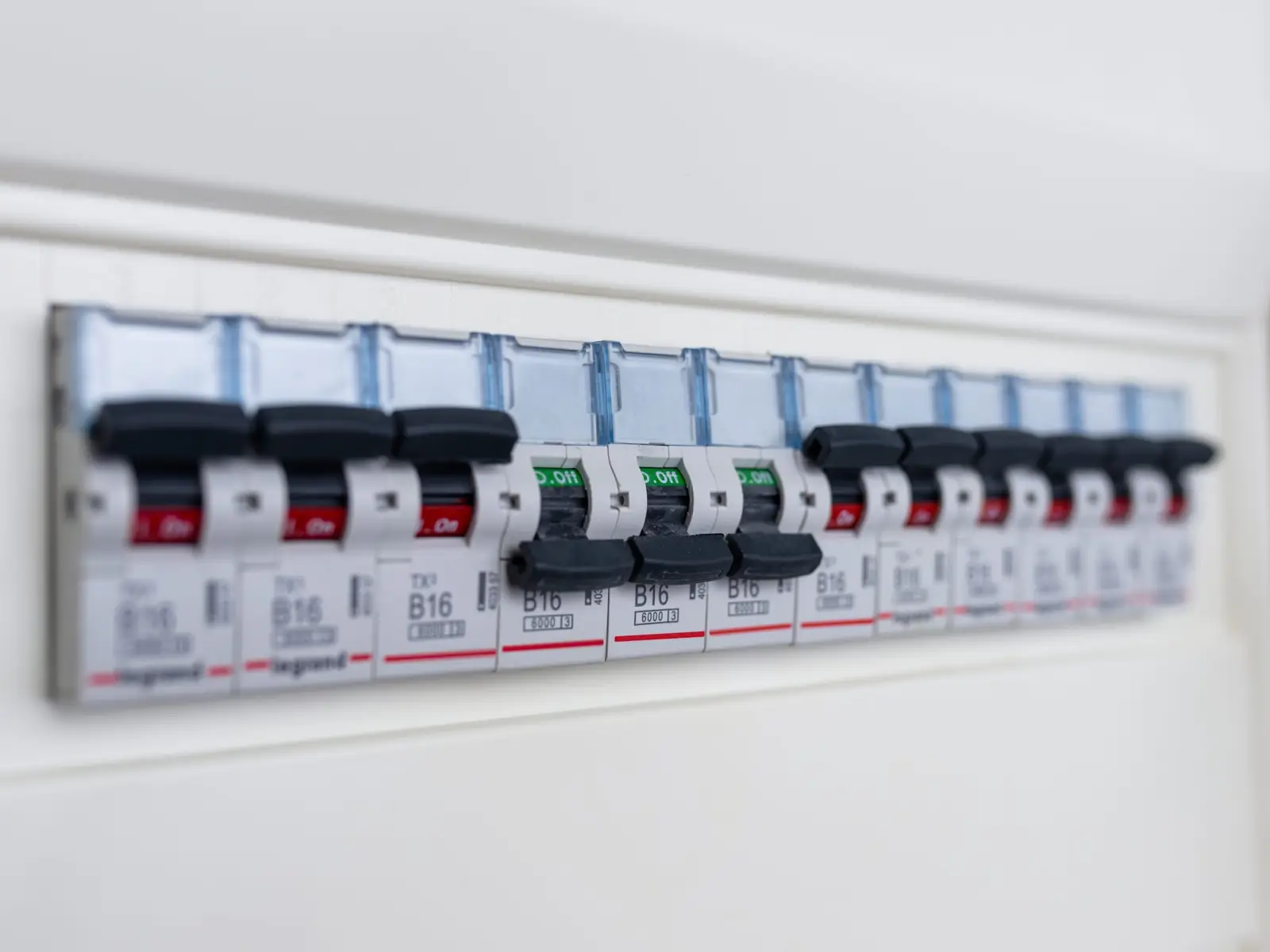
UK consumer units typically have two types of protective device, and understanding which one is tripping is the most useful diagnostic information you have before calling an engineer.
MCB — Miniature Circuit Breaker
Protects against overcurrent — too much current flowing through the circuit. Trips when the total current demand exceeds the circuit’s rated capacity (typically 32A or 40A for a cooker circuit).
An MCB trip from a hob usually points to: the circuit being overloaded by the hob’s power draw, a short circuit inside the hob driving excessive current, or a failing MCB that has become oversensitive with age.
RCD — Residual Current Device
Protects against earth leakage — current flowing to earth through an unintended path, which could be a person touching a live component. Trips on very small leakage currents (typically 30mA) within milliseconds.
An RCD trip from a hob almost always indicates an insulation fault — moisture, physical damage, or component failure causing current to leak from a live part to the metal chassis or earth conductor. This is a more serious fault than an MCB overcurrent trip.
In modern consumer units with RCBO (combined MCB and RCD) protection, each circuit has independent earth leakage protection. In older units with a single RCD protecting multiple circuits, a hob fault can trip power to the whole consumer unit, affecting other circuits simultaneously — a useful clue that it is the hob causing the trip.
Causes by Tripping Pattern
An immediate trip on switch-on — before any zone is activated, before the hob has drawn any cooking load — points to a short circuit or a significant insulation failure inside the hob itself. The hob’s internal wiring, a control board component, or a heating element is allowing current to flow to earth or is creating a direct short between live and neutral.
This pattern is the most serious of the tripping scenarios. Do not reset and retry. The fault is not in the circuit supply — it is in the appliance. Disconnect the hob at the isolation switch and contact a qualified appliance engineer for inspection before reconnecting.
Water or liquid that has entered the hob’s internal components creates a conductive path between live components and the earthed chassis. This causes earth leakage that trips the RCD. The leak may be from a pan boiling over and liquid finding its way through the glass or the control panel, or from cleaning with excessive water.
Do not use the hob after a significant liquid ingress. Allow it to dry thoroughly — at least 24 to 48 hours in a warm, dry environment — before attempting to switch on. If the trip recurs after thorough drying, the liquid has reached a component that requires replacement. An engineer should inspect the internal components before the hob is used again.
If the hob switches on without tripping but the breaker trips when one particular zone is turned on — especially at high power — the heating element or the coil for that zone is likely developing a fault. On induction hobs, a failing coil can develop an insulation breakdown that only manifests when the coil is energised under load. On ceramic hobs, a cracked or failing heating element behaves similarly.
Test by switching on other zones and confirming they do not trip. If only one specific zone consistently triggers the trip, report this to the engineer — it narrows the diagnosis significantly and may mean only one component needs replacing rather than a full board or wiring inspection.
If the trip only occurs when running multiple zones at high settings or using the Boost function, the MCB may be tripping from overcurrent rather than a fault in the hob. A standard induction hob draws 30A or more at full load — at the limit of a standard 32A cooker circuit. If other appliances share the circuit, or if the MCB is rated lower than the hob’s maximum draw, the combined load can trip the breaker.
Check the MCB rating at the consumer unit — it should be rated to match or exceed the hob’s rated maximum current, as specified in the hob’s installation guide. A 32A MCB on a hob rated for 32A leaves no headroom. If the circuit cable rating, MCB rating, and hob specification do not align, an electrician can assess whether the circuit needs upgrading.
Intermittent tripping — the hob works fine for days then trips without warning, or trips occasionally at random power levels — is the hardest fault to diagnose. Possible causes include a connection that has worked loose at the cooker isolation switch or at the terminal block inside the hob, a component on the control board that fails under thermal load, or an RCD that has become oversensitive with age and triggers on the small but normal levels of leakage current that induction hobs produce during operation.
Modern induction hobs do produce a small amount of earth leakage current as a normal by-product of their electronics — typically 4 to 9mA. An older Type AC RCD, or one where cumulative leakage from multiple appliances on the same RCD is already close to the 30mA threshold, can trip on this without any actual fault being present. There is also a compliance point worth noting: BS 7671 Amendment 2 requires Type A RCDs (not the older Type AC) for circuits feeding inverter-driven appliances such as induction hobs. A Type AC device on a hob circuit may be both the cause of nuisance tripping and a compliance issue worth addressing when the circuit is next worked on.
An electrician can measure the hob’s actual leakage current and compare it to the RCD’s trip threshold to determine whether the device itself needs replacing with a Type A equivalent.
Source: BS 7671 Amendment 2 Type A RCD requirement for inverter-driven appliances; Screwfix forum — induction hob leakage and RCD thresholds (9mA limit under BS 7671)
If your hob is switching off mid-cook without tripping the breaker entirely, that is a different issue — covered in the guide to why induction hobs switch off mid-cook. For CATA hob specifications and support contacts, visit the product support pages. If a circuit breaker trip has affected other appliances in the kitchen, the fault is likely in the supply rather than the hob — an electrician rather than an appliance engineer is the right first call. Browse the CATA hob range for replacement options if an older hob is proving uneconomical to repair.
Common questions answered
Is it safe to keep resetting the breaker and using the hob?
No — not if the hob is consistently causing the trip. A circuit breaker tripping is a safety system working correctly. Repeatedly resetting it bypasses that protection and risks overheating wiring, fire, or electric shock if the underlying fault worsens. Identify and fix the cause before continuing to use the hob.
Could the problem be the circuit breaker itself rather than the hob?
Yes, particularly for intermittent tripping. MCBs and RCDs can become oversensitive with age, and an RCD that trips on the small but normal leakage current of an induction hob may simply need replacing. An electrician can test whether the device is tripping at the correct threshold or is faulty.
My hob tripped once and has not done it again. Should I be concerned?
A single isolated trip — particularly if it coincided with a large power demand (using Boost on multiple zones simultaneously, or a brief spike in supply voltage) — may not recur. Monitor the hob over the next few cooking sessions. If it trips again, investigate the cause. A trip that only happened once and has not returned in normal use is worth noting but not necessarily alarming.
Can I use the oven while the hob circuit is isolated?
It depends on whether your hob and oven share a circuit. In many installations, the hob has a dedicated circuit and the oven has a separate one — in which case isolating the hob circuit does not affect the oven. Check your consumer unit labelling or ask your electrician if you are unsure which circuit feeds which appliance.