Noise on Induction Hobs: Buzzing, Clicking, and Humming Explained
Most induction hob noise is completely normal and comes from the physics of how induction cooking works rather than from anything going wrong. Buzzing is typically pan vibration caused by the alternating magnetic field. Clicking is internal power regulation. Humming is the cooling fan. The noises worth paying attention to are those that appear suddenly on a previously quiet hob, get louder over time, or are accompanied by other issues like error codes or uneven heating.
Identifying the Noise
Different sounds have different causes. The noise identifier below covers the most common sounds reported by induction hob owners, what causes them, and whether they indicate a problem.
Pan vibration from the magnetic field
Induction works by generating a rapidly alternating electromagnetic field at around 20 to 50 kHz. This causes the pan’s base material to vibrate at the same frequency. Lighter pans, multi-layer pans with bonded induction discs, and thin-based pans vibrate more noticeably than heavy single-material pans. The buzzing is coming from the pan, not the hob — switching to a heavier pan on the same setting usually reduces it markedly. Louder at high power settings and Boost mode, quieter at medium and low settings.
Internal relay switching for power regulation
Induction hobs regulate temperature by cycling the coil power on and off at intervals rather than running continuously at reduced power. This on-off switching is handled by internal relays or transistor switches that produce a quiet clicking or ticking sound. It is most audible at low power settings where the cycling is slower and more perceptible — at high settings the switching is faster and the sound blends into a hum. Clicking that is consistent and rhythmic is normal. Clicking that sounds mechanical, irregular, or is accompanied by power fluctuation on the display is worth investigating.
Cooling fan protecting the electronics
All compressor-cooled induction hobs have an internal cooling fan to protect the electronics and coils from heat. The fan runs during cooking and may continue running for several minutes after the hob is switched off, until the internal temperature drops to a safe level. A steady hum from the fan is normal. The fan runs faster at higher power settings and during extended cooking sessions. A grinding or rattling from the fan area is not normal and may indicate a loose or failing fan — worth having checked by a service engineer.
Food or liquid on the glass surface
A crackling or popping sound — distinct from the electrical click of power regulation — is almost always caused by liquid, food splatter, or debris on the glass surface beneath the pan. As the area beneath and around the pan gets warm from residual heat, this material bubbles or burns, producing a popping or crackling sound. Switch off the zone, allow to cool, and clean the glass surface thoroughly. This is not a fault with the hob but is worth addressing promptly, as burnt food on the glass is harder to clean the longer it is left.
Pan resonance — particularly with certain stainless steel pans
Some multi-layer stainless steel pans resonate at specific frequencies when the induction field runs at high power. This produces a whistling or singing sound from the pan — similar to the sound a wine glass makes when you run a wet finger around the rim. It is caused by the specific resonant frequency of that pan’s base geometry interacting with the field frequency. Reducing the power setting by one step usually eliminates it. If the sound only happens with one specific pan and not others, the pan is the source.
Possible cooling fan fault or loose internal component
A grinding sound from inside the hob housing, a rattling that was not present before, or any noise that has appeared suddenly on a previously quiet hob is not normal operation. The most common cause is a cooling fan whose bearings are failing — the fan continues to spin but produces an irregular, mechanical grinding sound. Other causes include a loose heat shield or internal component. This type of noise does not resolve with pan changes or power adjustments. Contact a service engineer to inspect the hob before continued use.
How Your Pan Affects Noise Level
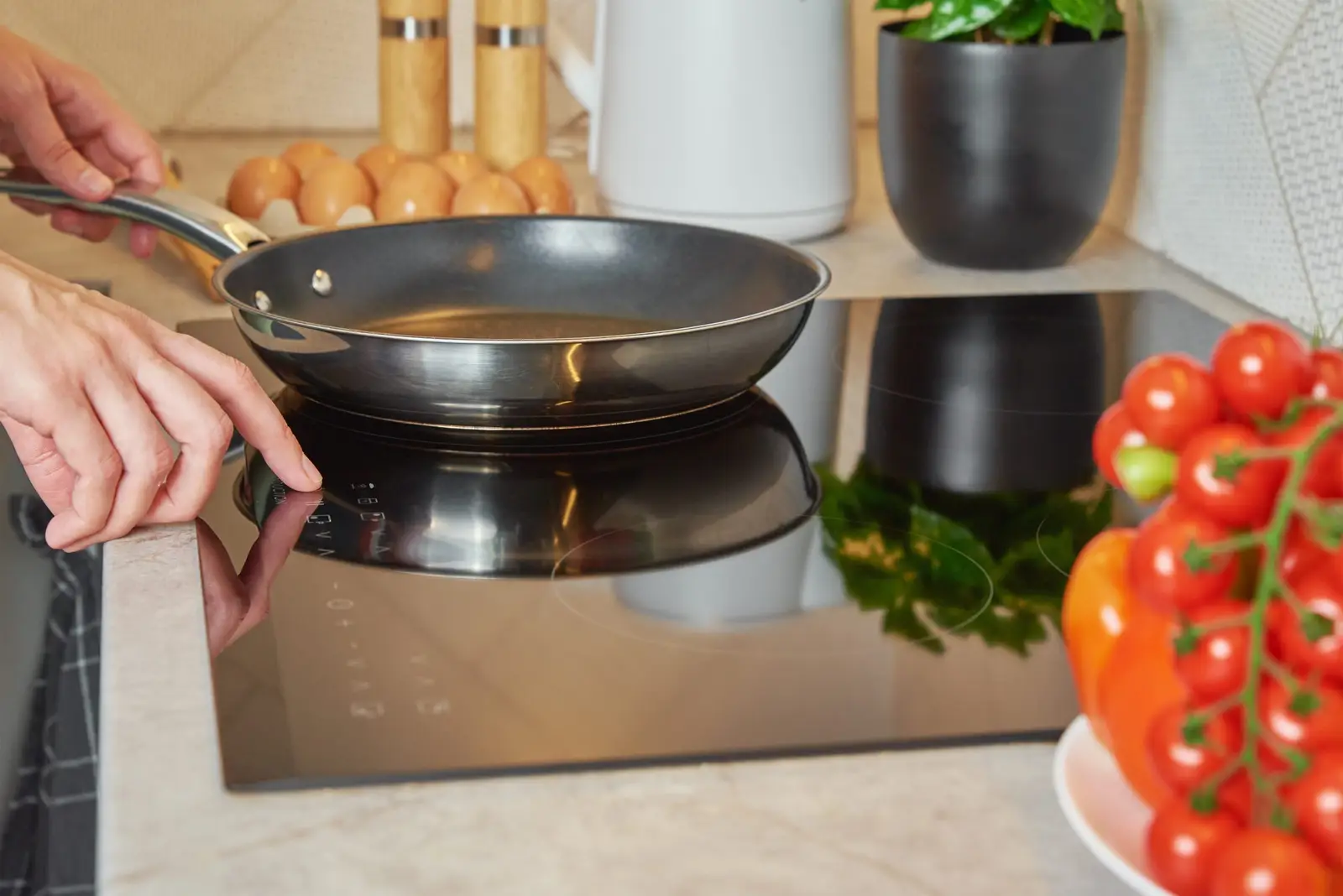
Pan choice is the single most significant variable in induction hob noise. The hob itself produces minimal noise — almost all buzzing and vibration originates in the pan’s base as it responds to the electromagnetic field. Understanding which pan characteristics produce more or less noise helps you choose the quietest setup for your cooking.
Quieter pan types
Cast iron — thick, heavy, and highly ferromagnetic. The mass damps vibration effectively. Generally the quietest material on induction.
Thick-base stainless steel — fully ferromagnetic base without a bonded disc. The heavier the base, the less it vibrates.
Carbon steel — ferromagnetic throughout. Lighter than cast iron but quieter than thin bonded-disc pans.
Fully clad stainless steel — pans with an aluminium or copper core sandwiched between stainless layers reduce vibration compared to single-layer pans.
Noisier pan types
Lightweight non-stick with bonded induction disc — a thin aluminium pan with a small ferromagnetic disc bonded to the base. The disc vibrates against the aluminium body. Often the loudest type on induction.
Thin stainless steel — light gauge pans with minimal base thickness vibrate more freely than heavy equivalents.
Warped or uneven base — any pan whose base is not perfectly flat makes intermittent contact with the glass, increasing both noise and vibration.
Large pans at high power — a large pan presented to a smaller coil, or any pan at Boost setting, produces more noise than the same pan at medium power.
How to Reduce Induction Hob Noise
- Drop one power level from Boost or maximum. The relationship between power level and noise is not linear — Boost mode typically produces significantly more vibration than level 8 or 9, while barely affecting cooking speed for most foods. Reducing from Boost to the highest standard level is the single most effective noise reduction step available to you without changing anything else.
- Switch to a heavier pan. If buzzing on a specific zone bothers you, try a heavier pan of similar diameter. A cast iron skillet on the same zone at the same setting will almost always produce less noise than a lightweight non-stick pan. The investment in a quality heavy-based pan pays back in both noise reduction and cooking performance.
- Check the pan base is flat and clean. A warped base that does not sit flat makes uneven contact with the glass, producing irregular vibration and additional noise. If a pan has been rapidly cooled (plunged into cold water while hot, for example) it may have warped slightly. Hold the pan up and check the base — visible light under any part of the base indicates warping. Food residue or burnt deposits on the base have the same effect.
- Match pan diameter to zone diameter. A very small pan on a large zone, or a pan whose base does not cover the full coil pattern, produces less even magnetic coupling — the field is not efficiently converted to heat, and the mismatch produces more acoustic vibration. Using a pan whose base diameter closely matches the zone circle improves both efficiency and noise.
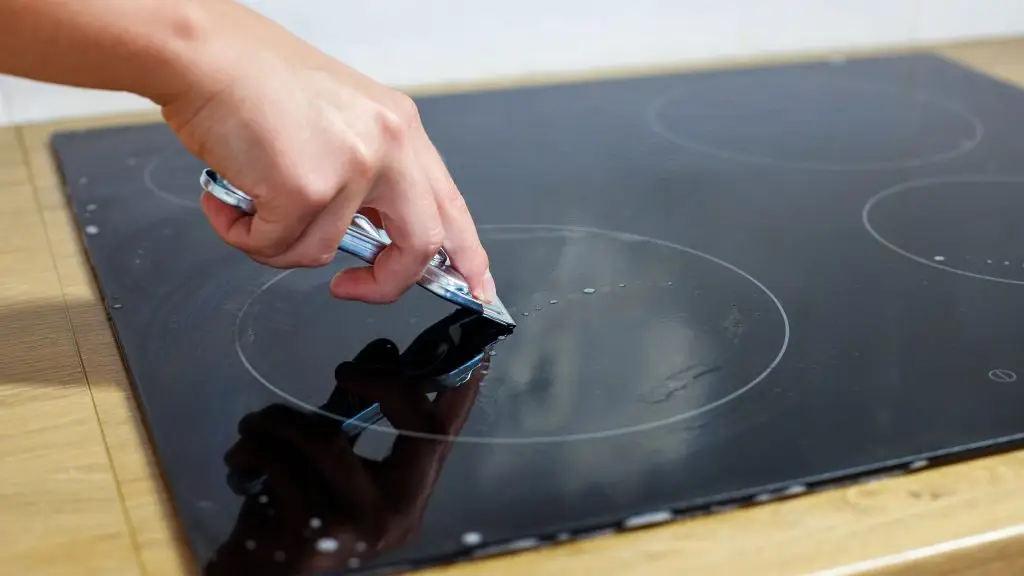
- Keep the glass surface clean. Food splatter and residue on the glass surface can burn at the temperatures around an active zone, producing crackling and popping sounds. A clean hob surface after each use prevents this entirely. Use the hob scraper supplied with the appliance for any hardened residue, applied before it fully cools for easiest removal.
CATA’s induction hob range uses high-frequency coil technology that minimises audible vibration compared to older designs. If you are experiencing noise issues with a CATA induction hob, the product support pages include model-specific guides. The article on induction-compatible cookware covers how pan base material and construction affects both compatibility and in-use performance.
Common questions answered
Is it normal for an induction hob to buzz?
Yes, in the vast majority of cases. The buzzing comes from pan vibration caused by the alternating electromagnetic field, not from any fault in the hob. It is most noticeable at high power settings and with lightweight or thin-based pans. A heavier pan on the same setting almost always produces less buzzing.
Why does my induction hob click?
Clicking is the sound of the hob’s internal power regulation — relays or switching transistors cycling the coil power on and off to maintain a set temperature. It is most audible at low power settings where the cycling is slower. Consistent, rhythmic clicking is normal. Irregular or mechanical-sounding clicking is worth investigating.
My hob has started making a new noise it didn’t before. Should I be worried?
A noise that is genuinely new on a hob that was previously quiet is worth investigating. The most common cause is a cooling fan whose bearings are beginning to fail — this produces a grinding or intermittent rattling sound. Run the hob at the same setting it was previously quiet at and confirm the noise is consistent. If it is, contact a service engineer before continued heavy use.
Does the noise mean my hob is using more electricity?
Not directly. Buzzing from pan vibration is acoustic energy dissipated as sound — a tiny fraction of the electrical input. It does not represent meaningful additional energy consumption. However, a warped pan that makes poor contact with the glass does reduce the efficiency of electromagnetic coupling slightly, meaning slightly less of the electrical input reaches the food as heat.