Home » Oven Guides & Advice » The Best Oven Settings for Roasting Vegetables
The Best Oven Settings for Roasting Vegetables
Roasting vegetables is mostly about heat and airflow. High enough heat drives off surface moisture quickly, allowing caramelisation and browning to develop before the vegetable interior turns soft. Fan mode accelerates this by keeping hot, dry air moving across the surfaces rather than allowing a humid microclimate to build up around the tray. Get both right and crispy edges, tender centres, and good colour follow almost automatically.
Settings at a glance
For most vegetables: 200°C fan (220°C conventional), middle shelf, preheated tray. That one sentence covers the majority of situations. The table below gives more specific guidance for different vegetable types.
| Vegetable type | Fan temp | Conventional | Time | Notes |
|---|---|---|---|---|
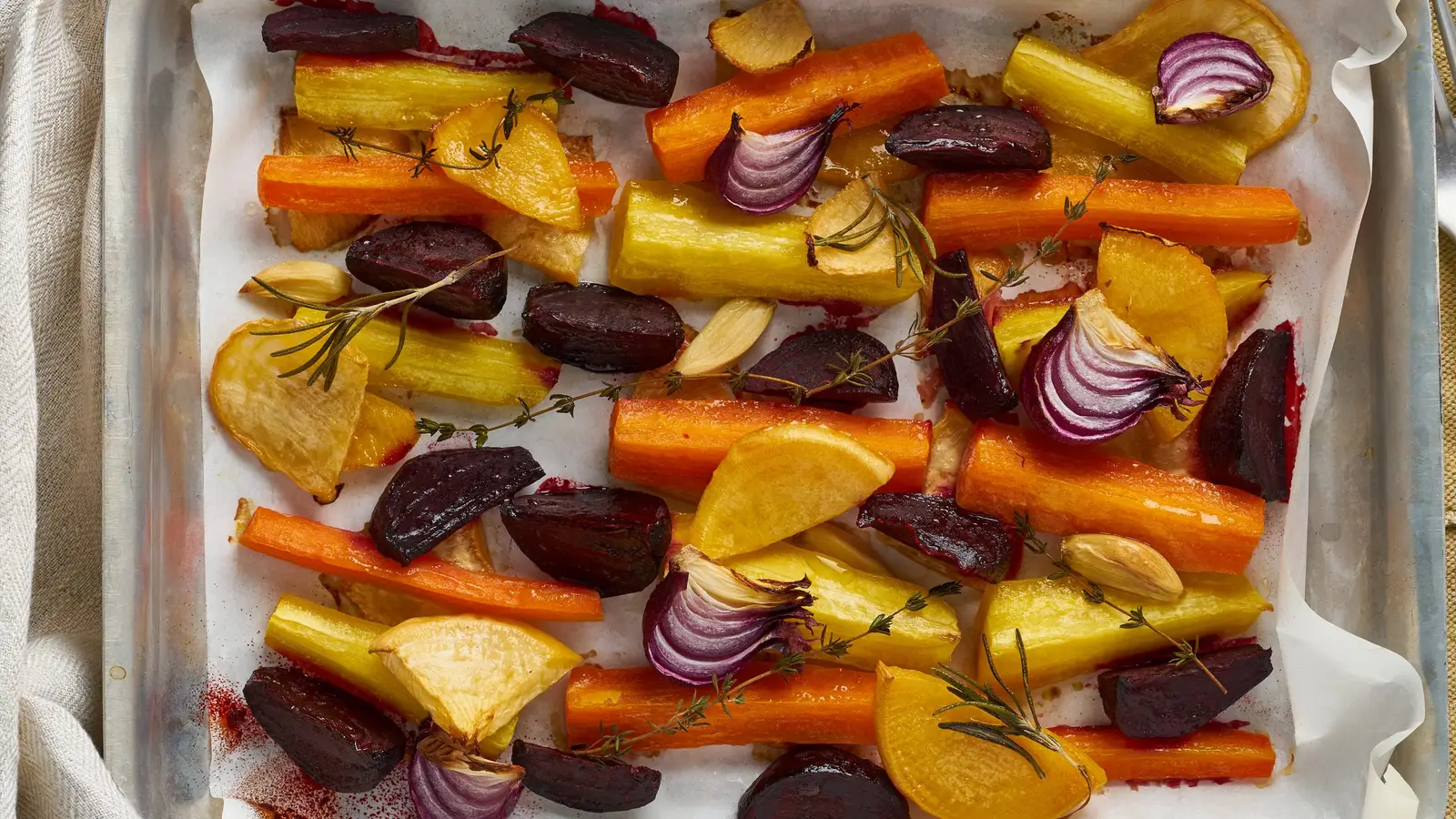
| Root veg (carrots, parsnips, potatoes, beetroot) | 200–210°C | 220°C | 35–50 min | Dense: needs high heat and time. Cut evenly, 2–3cm pieces. Parboil potatoes for extra crispiness. |
| Brassicas (broccoli, cauliflower, Brussels sprouts) | 200°C | 220°C | 20–30 min | High heat browns the cut surfaces well. Toss halfway. Cauliflower takes slightly longer than broccoli. |
| Soft veg (courgette, peppers, onions, fennel) | 180–190°C | 200°C | 20–30 min | Lower temp prevents burning before the interior softens. Onions benefit from slightly lower heat for sweetness. |
| Delicate veg (asparagus, cherry tomatoes, green beans) | 180°C | 200°C | 10–18 min | Short time at moderate heat. Easy to overdo. Check from 10 minutes. Asparagus spears should still have a little bite. |
| Mixed tray (different types together) | 190–200°C | 210–220°C | Stagger | Add denser vegetables first. Add quicker-cooking ones halfway through. Avoid mixing types with very different cooking times on the same tray. |
Why the technique matters as much as the temperature
- Preheat the tray. A cold tray placed in a hot oven takes several minutes to heat through, during which vegetables sit in their own moisture rather than hitting a hot surface. A preheated tray produces an immediate sizzle on contact and starts browning from below from the first second. This is the single biggest improvement most people can make.
- Do not overcrowd. Vegetables release steam as they heat. On an uncrowded tray, that steam escapes quickly into the oven. On a crowded tray, it builds up around the vegetables and steams them rather than roasting them. The result is soft and grey rather than caramelised and browned. If you have a large quantity, use two trays rather than one overloaded one.
- Dry the vegetables. Wet vegetables from the wash, or high-moisture vegetables like courgette and tomatoes, release more steam. Pat dry before tossing in oil. For high-moisture veg, a brief salting and patting dry before roasting removes excess moisture and dramatically improves browning.
- Use the right amount of oil. Enough to coat each piece, roughly one tablespoon per 400g of vegetables. Too little and the vegetables dry out and stick. Too much and they stew in oil rather than crisping. High-smoke-point oils (sunflower, vegetable, refined rapeseed) suit high-heat roasting better than olive oil, which smokes at lower temperatures and can impart a bitter note at 200°C+.
- Turn halfway. The tray base browns the underside well. Turning ensures both sides caramelise rather than one side burning while the other stays pale. Use a metal spatula and toss rather than flipping individually.
- Season at the end, not before. Salt draws moisture out of vegetables during roasting and can inhibit browning. Add salt and any fresh herbs in the last five minutes or after removing from the oven.
Common mistakes
- Overcrowding the tray: the most common cause of soggy vegetables
- Using a cold tray: extends cooking time and reduces browning
- Covering with foil: traps steam and prevents crisping
- Not drying high-moisture vegetables before roasting
- Mixing slow and fast vegetables on the same tray without staggering
- Roasting at too low a temperature: below 180°C, most vegetables sweat rather than roast
Fan grill mode (fan with the grill element) is useful for the last 3 to 5 minutes when you want extra colour and crispiness on the top surfaces without burning. Switch to it near the end rather than using it throughout, which dries vegetables out too aggressively.
For how fan and conventional modes compare across different cooking tasks, see the guide to true fan vs fan-assisted baking. For cooking multiple trays simultaneously, see how to maximise oven space. Browse the CATA single oven range for models with true fan and fan grill modes.
Explore More Kitchen Advice & Buying Guides
Browse our latest articles covering appliance tips, energy-saving advice, and expert guidance – designed to help you choose, use, and get the most from your kitchen appliances.