Vented Induction Hobs: Benefits, How They Work and the CATA 700 Range
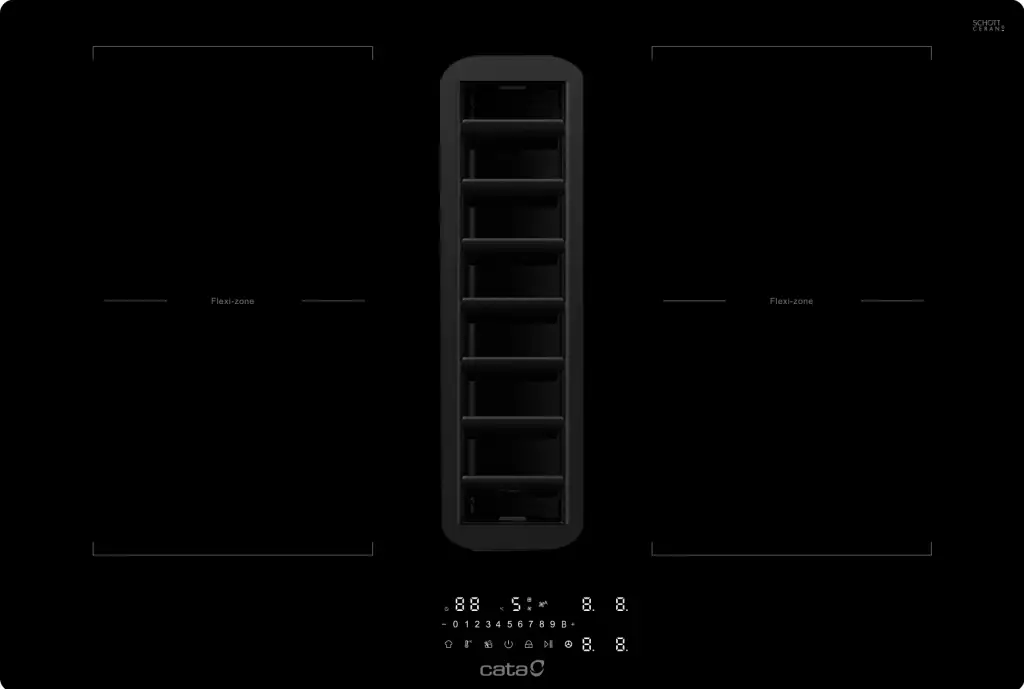
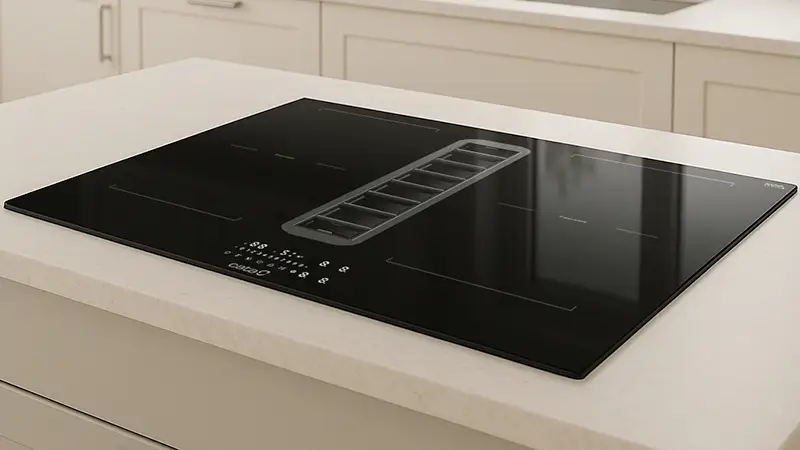
A vented induction hob combines four or more induction cooking zones with a built-in extraction motor that draws steam, grease, and cooking odours down through the hob surface rather than up and out through an overhead hood. The result is more efficient extraction at source, an unobstructed ceiling, and a kitchen island layout with nothing above the cooking zone except open space.
Advantages of integrated hob extraction
For most of domestic appliance history, the hob and the extractor were two separate purchases. You chose a hob, then chose the chimney or ceiling hood that lived above it. Vented induction hobs collapse that into a single appliance and in doing so enable layouts that were previously either impractical or visually heavy.
Three things are worth understanding before comparing models:
Extraction efficiency. A downdraft extractor captures cooking vapour at its point of origin (at pan rim level) before it rises into the room. An overhead hood must capture the same vapour after it has already risen and begun to disperse. At equivalent fan speeds, source-level extraction is significantly more effective, particularly for horizontal steam from boiling at the front of the hob.
Layout freedom. No overhead extractor means unobstructed sight lines across the island, no visual interruption between kitchen and living area, and no constraint on pendant lighting above the island. The cooking zone effectively disappears when not in use.
Acoustic comfort. Because downdraft extraction captures more per cubic metre of air moved, the fan runs at lower speeds for the same extraction performance. In a busy open-plan kitchen, this difference is perceptible.
How vented induction hobs work
Beneath the ceramic glass surface, two independent systems operate simultaneously. The induction coils generate alternating magnetic fields that heat ferrous cookware directly. A separate extraction motor draws air down through a central grille, passing it through a washable aluminium grease filter before either venting it externally through a duct or recirculating it through a carbon filter.
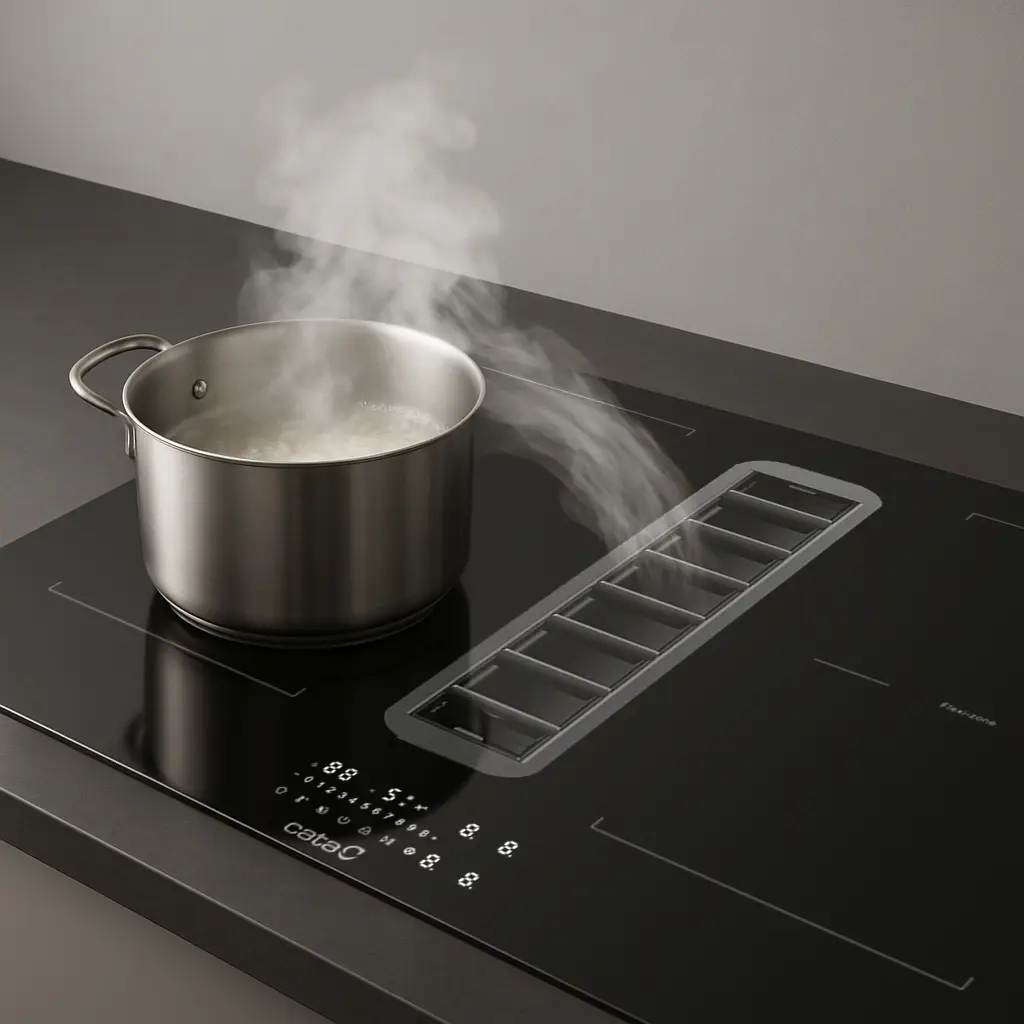
The extraction path
Air enters at the grille, which sits flush with the cooking surface, typically behind or between the cooking zones. It passes through the aluminium mesh filter where grease particles are captured, then either exits through a duct routed down through the island cabinet, or passes through a ceramic carbon filter for recirculation. Because the inlet is at pan level, vapour is captured before it crosses the sight line.
Recirculation vs external ducting
External ducting delivers the best extraction performance and is the only configuration that removes moisture from the kitchen. Recirculation (where filtered air is returned to the room) manages grease and odour effectively but cannot remove steam. For kitchens where a floor duct route to an external wall is not feasible, recirculation with a carbon filter is a practical alternative.
The CATA 700’s regenerative ceramic carbon filter blocks can be refreshed in a standard oven at 60°C for ten minutes rather than replaced, significantly reducing long-term running costs compared to conventional paper or foam carbon filters.
Kitchen island applications
Vented induction works best in two configurations: a true island (cooking zone in the centre of the room with no adjacent wall) and a peninsula (an island attached at one short end). Both are situations where overhead extraction is either impossible without a ceiling recess or structurally expensive. A vented hob resolves this entirely by routing the duct straight down through the island cabinet and into the floor void below.
Before specifying a vented hob for an island
- Cabinet depth. The CATA 700 requires a minimum 170mm installation height beneath the hob. Confirm against your island unit specification before finalising cabinetry.
- Duct route. External ducting is strongly preferred. Plan the duct run through the island plinth and into the floor void before the cabinetry is finalised. Retrospective routing is significantly more disruptive.
- Recirculation fallback. Where floor access is restricted (concrete slab, no suspended floor void), the ceramic carbon filter option requires no structural penetration.
- Cookware check. Induction requires ferrous pans. A fridge magnet sticking firmly to the pan base confirms compatibility.
- Electrical supply. Both CATA 700 models require a 32A connection (cable without plug). Installation must be carried out by a qualified electrician.
CATA 700 range: CATDD60CHF and CATDD77CHF
CATA’s current vented induction range consists of two models sharing the same SL1 extraction motor and specification, differentiated by width.
| Specification | CATDD60CHF (60cm) | CATDD77CHF (77cm) |
|---|---|---|
| Width | 600mm | 770mm |
| Zones | 4 induction zones | 4 flex-zone induction zones |
| Flex zone | Standard zones | Two bridgeable flex zones for large pans |
| Best for | Standard 60cm kitchen runs and smaller islands | Wider island units and peninsula layouts |
| Extraction | 630 m³/h (boost) | 630 m³/h (boost) |
| Connection | 32A (cable without plug) | 32A (cable without plug) |
| Product link | View CATDD60CHF | View CATDD77CHF |
The 77cm model’s flex zones allow two adjacent zones to merge into a single elongated cooking area, accommodating griddle pans, fish kettles, and large roasting trays that span the full width of two standard zones. The 60cm model suits a standard kitchen run where the vented hob replaces a conventional induction hob and separate hood, or an island of standard worktop width.
Vented hob vs ceiling island hood
| Factor | Vented induction hob | Ceiling island hood |
|---|---|---|
| Extraction at source | Yes — pan rim level | Above-pan, 65–75cm up |
| Ceiling obstruction | None | Hood hangs above island |
| Sight lines | Uninterrupted | Hood visible from all angles |
| Pendant lighting | No compromise | Requires planning around hood position |
| Moisture removal | Yes (ducted) or No (recirculating) | Yes (ducted) or No (recirculating) |
| Installation | Duct through island cabinet and floor | Duct through ceiling structure |
| Single appliance purchase | Yes | No: hob and hood are separate purchases |
Browse the CATA vented induction hob range including the CATDD60CHF and CATDD77CHF. For installation planning guidance see the induction hob ventilation guide and the make-up air guide for airtight homes. For downdraft extraction options where hob replacement is not planned, see standalone downdraft extractors.