
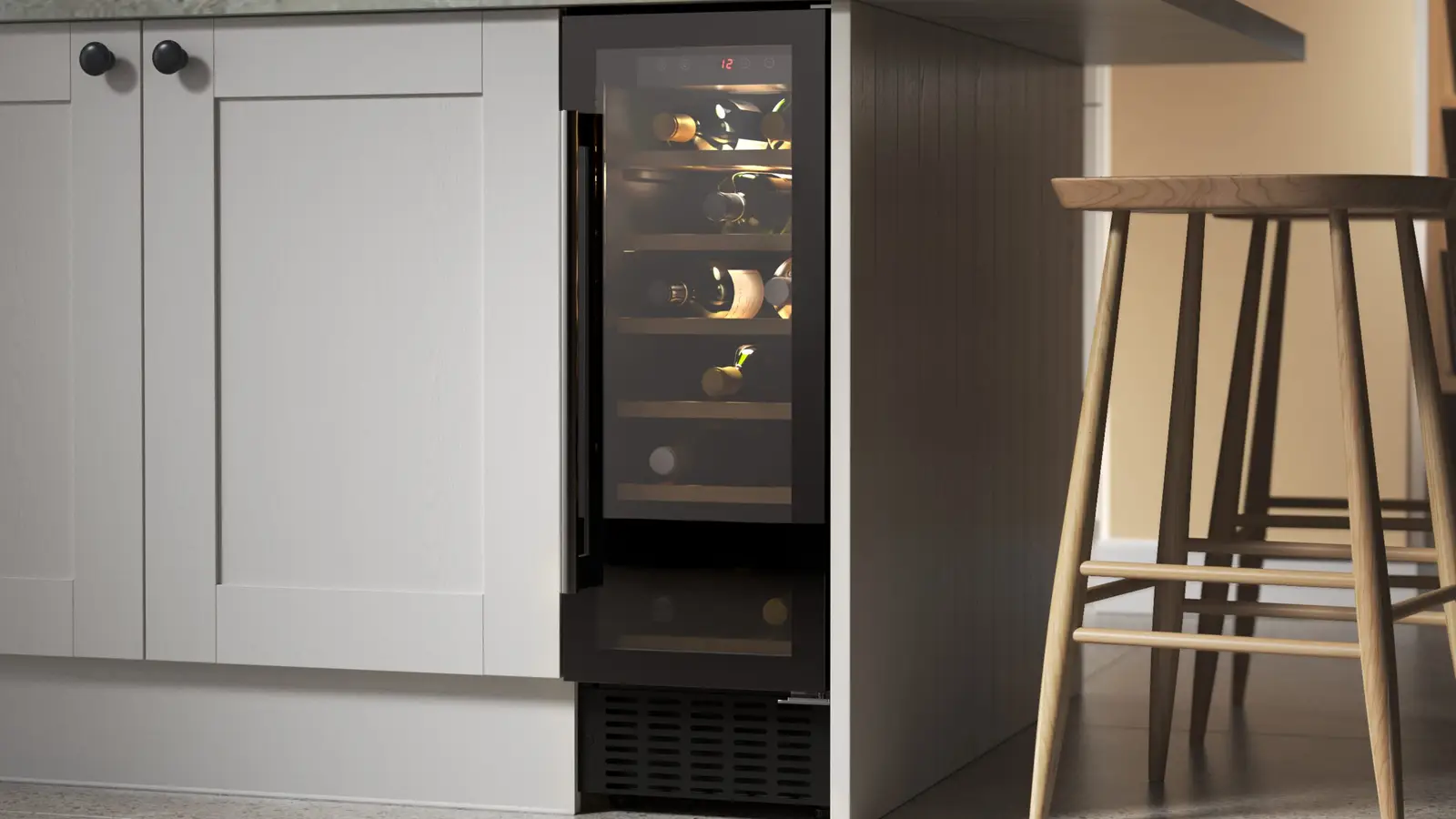
Do Wine Coolers Use Much Electricity?
If you’re thinking about adding a wine cooler to your kitchen or dining space, it’s natural to wonder how much it will add to your electricity bill. The reassuring answer is that most modern wine coolers are designed to be fairly economical to run, especially when compared with larger heat-generating appliances.
Because a wine cooler runs continuously to maintain a stable internal temperature, it does use electricity throughout the day. However, the overall consumption is usually modest, and in many homes the running cost is more manageable than people expect.
How Much Electricity Does a Wine Cooler Use?
The easiest way to judge electricity use is to look at the appliance’s annual energy consumption, which is usually shown in kWh per annum. This tells you how much electricity the unit is expected to use over the course of a year under standard test conditions.
As a rough guide, compact wine coolers tend to use less electricity than larger models, while bigger coolers with more bottles, more shelves, or multiple temperature zones may use more.
| Wine Cooler Type | Typical Electricity Use | What This Usually Means |
|---|---|---|
| Small / slimline | Lower annual kWh use | Usually the most affordable option to run |
| Medium capacity | Moderate annual kWh use | A balance between storage space and efficiency |
| Large / dual-zone | Higher annual kWh use | Often worth it for larger collections and flexible storage |
To estimate running cost, multiply the annual kWh figure by your current electricity rate. That gives you a better real-world picture than judging by size alone.
What Affects a Wine Cooler’s Energy Use?
Size and bottle capacity
A larger unit has more internal space to cool, so it will often use more electricity than a compact model. That said, choosing the right size for your collection can still be efficient if it helps you avoid overworking a smaller unit.
Single-zone or dual-zone design
Dual-zone models are useful if you want to keep different wines at different serving temperatures, but they can be slightly more demanding in energy terms because they control two separate cooling areas.
Cooling system and insulation
Good insulation, well-sealed doors, and quality components all help reduce energy waste. Features such as UV protected glassGlass designed to help reduce the effect of sunlight on the bottles inside, protecting both wine quality and storage conditions. can also support better storage conditions by limiting heat and light exposure.
Room temperature
If your wine cooler sits near an oven, radiator, or sunny window, it may need to work harder to hold its set temperature. That extra effort can increase energy use over time.
How often the door is opened
Frequent opening lets warm air in, which means the wine cooler has to cool the interior back down again. A stable environment is normally better for both efficiency and wine storage.
Are Wine Coolers Expensive to Run?
For most households, a wine cooler is not usually one of the most expensive appliances to run. It does stay switched on all the time, but it is not constantly generating intense heat in the way an oven or tumble dryer does.
Running cost often comes down to three practical points:
- The annual energy consumption listed on the model
- Your electricity tariff
- How well the appliance is positioned and maintained
If you choose a model that suits your storage needs, keep it in a sensible location, and avoid unnecessary door opening, the electricity use is generally quite reasonable.
Do Bigger Wine Coolers Always Cost More to Run?
Not always by a huge margin, but in general bigger models tend to use more electricity than smaller ones. A wine cooler with a larger bottle capacity or a dual-zone layout has more cooling work to do, so its annual kWh figure is often higher.
Still, bigger doesn’t automatically mean poor efficiency. A well-designed larger wine cooler may still be a sensible choice if it stores your collection properly and avoids overcrowding.
How to Keep Wine Cooler Running Costs Down
- Choose a capacity that matches your actual needs rather than buying oversized storage.
- Keep the appliance out of direct sunlight and away from heat-producing appliances.
- Make sure ventilation areas are not blocked.
- Open the door only when needed.
- Keep shelves organised so bottles are easy to find quickly.
- Check the door seal stays clean and closes properly.
Featured CATA Wine Coolers
If you’re comparing models, these two options from the CATA freestanding wine cooler range show how size and specification can affect electricity use while still offering stylish storage.
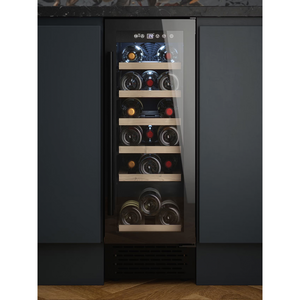
UBBKWC30F
CATA 300 – 30cm Wine Cooler Black
A compact slimline choice for smaller spaces, ideal if you want dedicated wine storage without giving up too much room.
- 18 bottle capacity
- Annual energy consumption: 94 kWh per annum
- Wooden shelves
- White LED lighting and temperature display
- Reversible door
- UV protected glass
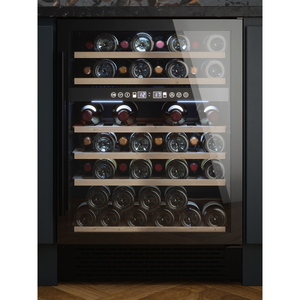
UBBKWC60
CATA 300 – 60cm Dual Zone Wine Cooler Black
A larger option for bigger collections, with dual-zone storage that gives you more flexibility for different wine styles.
- 51 bottle capacity
- Annual energy consumption: 116 kWh per annum
- Dual-zone cooling
- Wooden shelves
- White LED lighting and temperature display
- UV protected glass and humidity box
Final Thoughts
So, do wine coolers use much electricity? In most cases, not especially. They do run continuously, but modern models are generally built to keep energy use sensible while maintaining the steady conditions wine needs.
If you want to keep costs low, focus on the right capacity, sensible placement, and the model’s annual kWh figure. That way, you can enjoy the benefits of dedicated wine storage without worrying that it will be a major drain on your electricity bill.
- All Posts
- Cooker Hood Guides & Advice
- Dishwasher Guides & Advice
- General Appliance Guides & Advice
- Hob Guides & Advice
- Laundry Guides & Advice
- Microwave Guides & Advice
- Oven Guides & Advice
- Wine Cooler Guides & Advice
Discover if a slimline dishwasher is worth it for your kitchen. Learn the pros, cons, and ideal uses — find...
Notice heat escaping or uneven cooking? Learn the key signs your oven seal needs replacing and how to fix it...
Discover the benefits of integrated microwaves and how to choose the right built-in model for your kitchen. Explore features and...