What Are the Different Types of Induction Hobs?
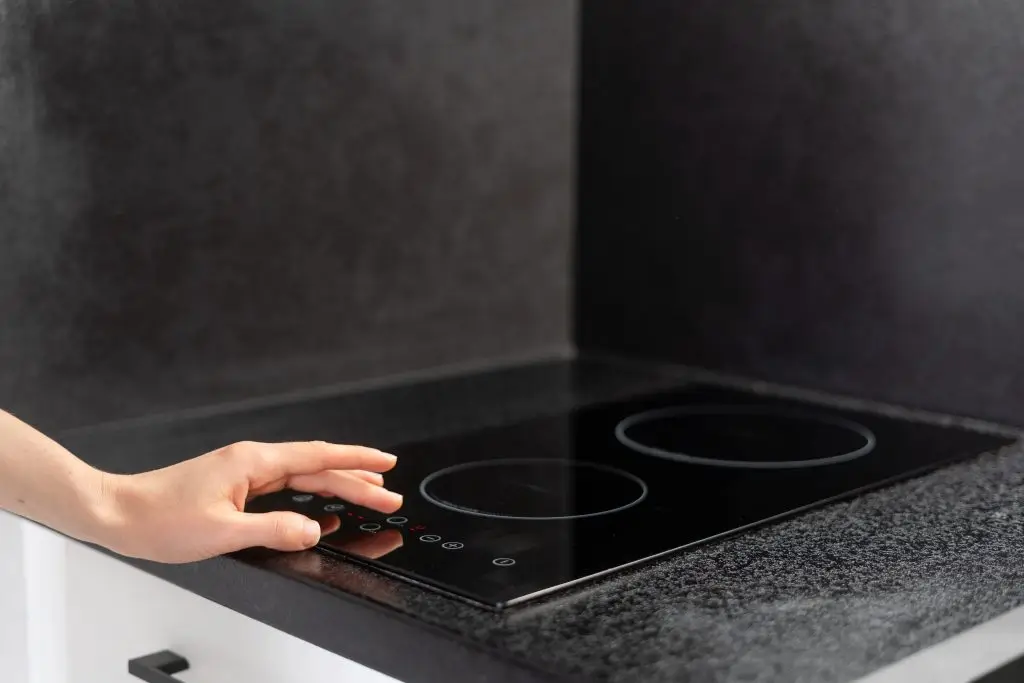
All induction hobs use the same electromagnetic technology to heat pans directly rather than the glass surface. What varies is the zone configuration, size, and whether extraction is built in. The type you choose affects installation requirements, worktop space, and how flexibly the hob handles different pan sizes and cooking styles.
Standard 4-zone induction hobs
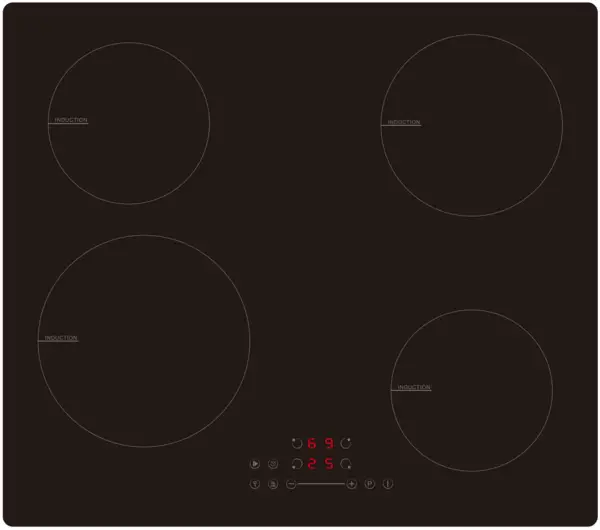
The most widely fitted type in UK kitchens. A 60cm wide hob with four independent zones, touch controls, pan detection, and child lock as standard. Fits the same cut-out as a standard ceramic hob, making it the most straightforward upgrade from ceramic or gas.
Fixed zone sizes suit most everyday cookware. A typical layout has two larger zones for pans and two smaller zones for saucepans. The zones work independently with separate power settings.
View UBIND60MSSuits
- Standard 60cm worktop cut-outs
- Everyday family cooking
- Most budgets — widest price range
- Straightforward like-for-like replacement
Less suited to
- Very large or griddle pans
- Kitchens without overhead extraction
Flexi-zone induction hobs
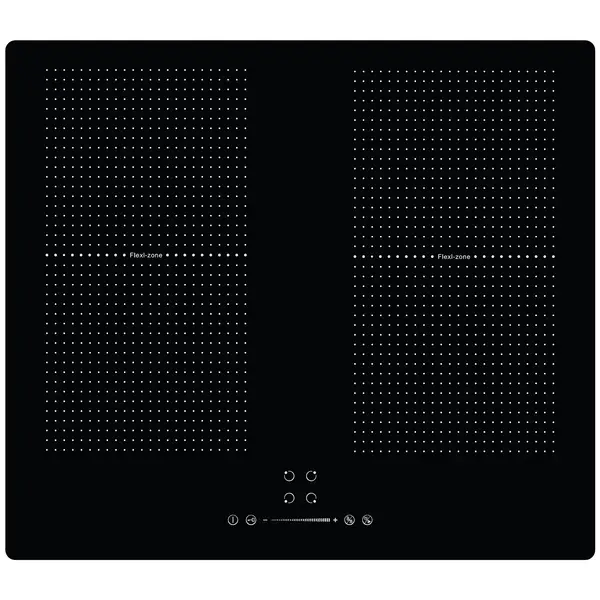
A flexi-zone (or bridge zone) hob allows two adjacent zones to merge into a single elongated cooking area. This is particularly useful for griddle pans, fish kettles, roasting trays, or any cookware that spans the width of two zones. The merged area provides even heat across the full length of the pan rather than two separate hot spots.
Most flexi-zone models are 60cm and otherwise identical to a standard 4-zone hob — the flex function is an additional capability rather than a different physical format.
View ICONFLEX60FSuits
- Griddle pans, fish kettles, and large roasting trays
- Cooks who want standard and flexible zone use
- Same 60cm cut-out as standard models
Less suited to
- Entry-level budgets — typically mid-range and above
- Those who rarely use large or elongated cookware
Portable plug-in induction hobs
Portable induction hobs plug into a standard 13A socket and require no hardwiring or professional installation. Available as single or double zone units, they are a practical choice for compact kitchens, student accommodation, rentals, and caravans, or as a secondary hob when the main one is busy.
The trade-off is power. A 13A socket limits total draw to around 2.9kW, which caps maximum zone output below that of a hardwired built-in hob. For boiling a kettle-sized pot or cooking a single dish this is adequate; for high-heat stir-frying or cooking multiple pans simultaneously it is a constraint. See the full guide to 13A plug-in induction hobs for detail on what the power limit means in practice.
Suits
- Compact kitchens, rentals, and temporary setups
- Additional hob capacity without installation
- Low upfront cost
Less suited to
- High-heat cooking or large volumes
- Primary hob for a family kitchen
- Multiple simultaneous zones at full power
Vented and downdraft induction hobs
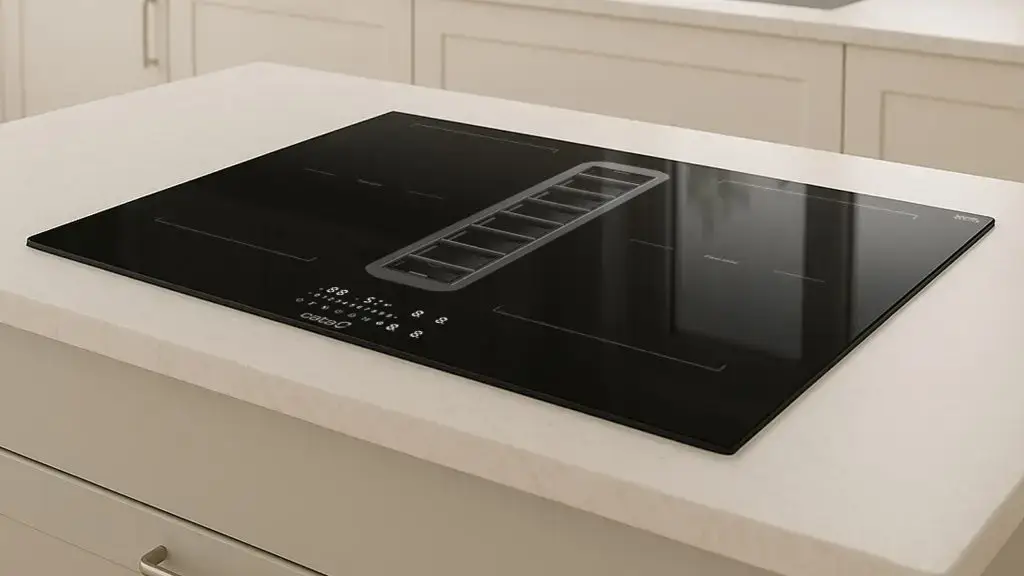
Vented induction hobs integrate an extraction system directly into the hob. A central vent or perimeter channel draws steam, grease, and cooking odours downwards through the hob surface, ducting them out externally or through a recirculation filter. No overhead cooker hood is needed, making this the natural choice for kitchen islands, peninsulas, or any layout where a wall-mounted hood is impractical.
Installation is more involved than a standard hob. Ducting must run either through the worktop to an external wall or down through the cabinet below. Both ducted and recirculating configurations are available. For the full technical picture, see the vented induction hob guide.
Suits
- Island and peninsula kitchens
- Open-plan spaces where a hood would be obtrusive
- Kitchens where hob-to-hood connectivity is wanted in a single unit
Less suited to
- Straightforward wall-mounted kitchen runs (a separate hood is simpler)
- Tight installation budgets
- Very small kitchens where the duct route is impractical
Domino induction hobs
Domino hobs are modular single or two-zone units, typically 30cm wide, designed to be placed side by side with each other or mixed with other hob types. A household might combine a two-zone induction domino with a gas domino, for example, retaining the visual flame for certain cooking tasks while having induction available for others.
The modular approach suits kitchen designs where a wide continuous worktop run is available and the homeowner wants a customised cooking setup. Cost per zone is higher than a standard 4-zone hob, but the flexibility of the format is unmatched.
Suits
- Custom hob layouts combining different types
- Compact kitchens where a 60cm hob is too wide
- Premium kitchen designs with bespoke worktop configurations
Less suited to
- Standard kitchen installations
- Value-conscious buyers — higher cost per zone
Extra-wide induction hobs
Extra-wide models run from 70cm to 90cm and typically offer five or six zones. The additional zones provide more simultaneous cooking capacity and the wider surface accommodates larger pans comfortably. Many 90cm models incorporate flexi-zone functionality as standard. They are the natural choice for larger households, keen home cooks, or anyone upgrading from a range cooker.
Suits
- Larger households and batch cooking
- Kitchens with a wider than standard worktop run
- Range cooker replacements
Less suited to
- Standard 60cm cut-out kitchens
- Smaller households who rarely use more than 3 zones simultaneously
At a glance
| Type | Typical width | Key feature | Installation |
|---|---|---|---|
| Standard 4-zone | 60cm | 4 independent zones, straightforward | Hardwired, standard cut-out |
| Flexi-zone | 60cm | Zones merge for large pans | Hardwired, standard cut-out |
| Portable | Single or double unit | Plug-in, no installation | 13A socket only |
| Vented / downdraft | 60–90cm | Built-in extraction, no hood needed | Hardwired plus ducting |
| Domino | 30cm per module | Modular, mix with other types | Hardwired, custom cut-out |
| Extra-wide | 70–90cm | 5–6 zones, high capacity | Hardwired, wider cut-out |
For compatibility, cookware, and everyday use guidance, see the induction hob beginner’s guide and the induction cookware guide. Browse the full CATA induction hob range including standard, flex, and vented models across 60cm and 90cm formats.