Home » Hob Guides & Advice » Can You Use Stainless Steel Pans on an Induction Hob?
Can You Use Stainless Steel Pans on an Induction Hob?
Sometimes yes, sometimes no. The reason is in the metallurgy rather than the finish. “Stainless steel” describes a family of steel alloys, not a single material. Some grades are magnetic and work perfectly on induction. Others are non-magnetic and will not heat at all. The pan’s appearance gives no indication of which type you have.
Why stainless steel is inconsistent
Induction requires a ferromagnetic base: a material that responds to a magnetic field. Ferritic and martensitic stainless steels, which contain high levels of iron with moderate to low nickel content, are ferromagnetic and work on induction. Austenitic stainless steels, which contain higher nickel and chromium content, are non-magnetic and do not work. Austenitic grades (the most common in the industry, covering grades like 18/10 and 18/8) produce the bright, corrosion-resistant finish associated with quality cookware, but that finish comes at the cost of induction compatibility unless a magnetic layer is added.
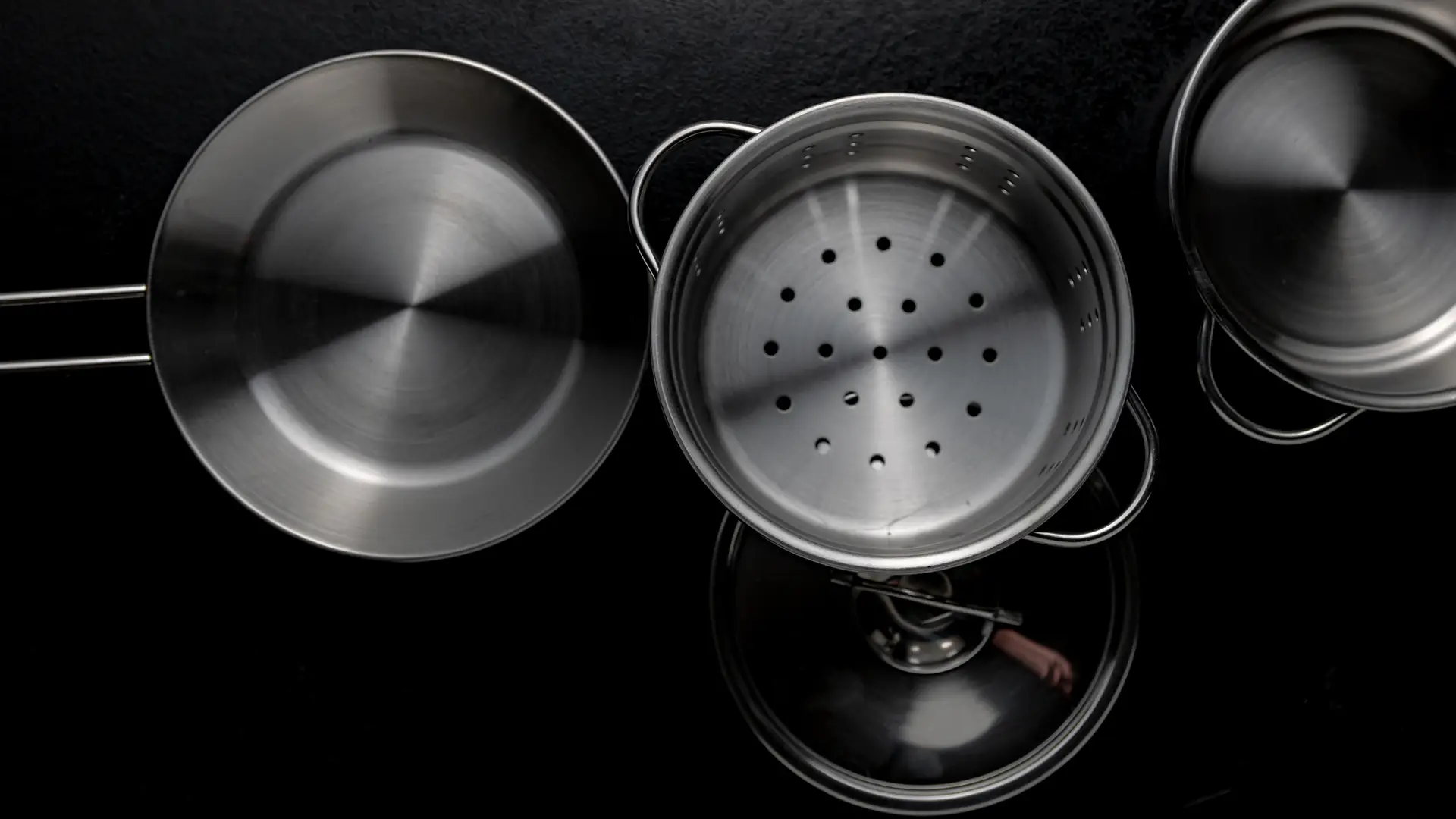
This is exactly what tri-ply and multi-ply stainless pans address. A tri-ply pan has three bonded layers: stainless steel on the cooking surface, an aluminium core for even heat distribution, and a magnetic stainless steel base layer added specifically for induction compatibility. The outer layer handles the induction coupling; the inner aluminium spreads the heat evenly across the base. The result is a pan that works on induction and heats more evenly than a single-layer ferritic pan.
Interpreting the magnet test correctly
A strong pull (the magnet clings and requires effort to remove) means the base has good magnetic permeability and will couple efficiently with the induction coil. A weak pull, where the magnet barely holds or slides, suggests a thin or partial magnetic layer that may cause the hob’s pan detection to be unreliable, or may produce uneven heating at the edges. These pans are technically “compatible” but perform less well than a properly magnetic base.
The induction symbol on pan packaging (a horizontal coil icon) confirms manufacturer-tested compatibility. Where this symbol is absent on older pans, the magnet test is the practical alternative.
What to do with incompatible stainless pans
A stainless pan that fails the magnet test will not heat on induction at all. Not partially, not weakly. The hob will not detect it and no current will be induced. There is no workaround that restores compatibility to an existing pan. Options are to retire it from induction use, repurpose it for other tasks (serving, storage, use on a portable hob for camping), or donate it.
When replacing incompatible pans, tri-ply stainless is the most versatile choice for an induction hob: it couples magnetically, heats evenly, handles high temperatures well, is dishwasher safe in most cases, and is non-reactive with acidic foods. It is the closest stainless equivalent to the performance of carbon steel without the seasoning requirement.
For a full overview of how different cookware materials behave on induction including cast iron, carbon steel, copper, and aluminium, see what cookware materials work best on induction hobs. Browse the CATA induction hob range for current models.
Explore More Kitchen Advice & Buying Guides
Browse our latest articles covering appliance tips, energy-saving advice, and expert guidance – designed to help you choose, use, and get the most from your kitchen appliances.