Vented Induction Hobs: The Modern Solution for Cleaner, Smarter Kitchens
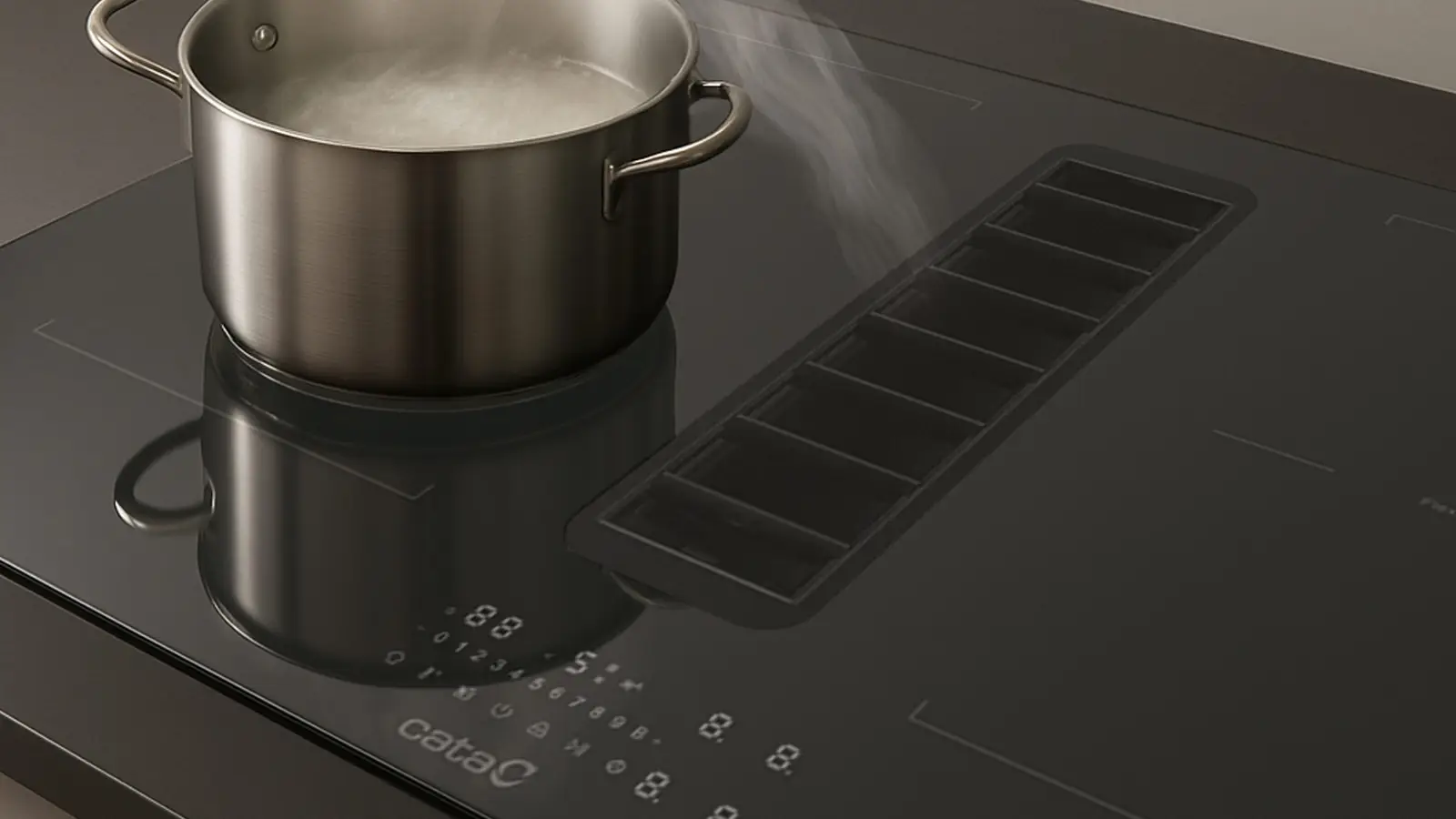
A vented induction hob combines an induction cooktop and a built-in extractor in a single appliance. It pulls steam, grease and cooking odours down through a vent in the hob surface as you cook, so there is no need for a separate overhead cooker hood. The result is cleaner air, a sleeker layout, and a perfect fit for islands and open-plan kitchens.
Quick answer
A vented induction hob does the job of two appliances at once. The induction zones cook quickly and precisely, while an integrated extractor captures steam and grease at the source and draws it downward. Most models can be set up either ducted to outside or with recirculating filters. They suit open-plan and island kitchens especially well. You can see the options in the CATA vented hobs range.
What Is a Vented Induction Hob?
A vented induction hob brings two essential kitchen appliances together: a fast, precise induction cooktop and an integrated extractor. Rather than letting steam rise toward an overhead hood, it uses downdraft extractionA system that draws steam, grease and odours downward through a vent in the hob surface, instead of up into an overhead cooker hood. to capture it at the source, right where it is produced.
By removing steam and odours where they start, a vented hob keeps the kitchen fresher and does away with the need for a large cooker hood overhead. That makes it a natural choice for open-plan rooms and kitchen islands, where a ceiling extractor would interrupt the look of the space. To compare it with a standalone cooktop, browse the wider CATA induction hobs range.
How Does a Vented Induction Hob Work?
It is simpler than it looks. Two systems work side by side in the same appliance.
- The induction zones heat your pans directly using an electromagnetic field, so the glass surface stays relatively cool and the temperature responds instantly.
- A central or rear vent draws air downward as you cook, pulling steam and grease through a washable filter before they can spread across the room.
- The captured air is then handled in one of two ways: ducted to the outside, or passed through carbon filters and returned to the kitchen.
Because extraction happens at hob level rather than above head height, it catches steam earlier and is not affected by tall pots or the gap to a ceiling hood.
Benefits of Vented Induction Hobs
| Feature | Why it matters |
|---|---|
| Integrated extractor | Removes steam and odours directly at the hob, with no overhead hood |
| Induction technology | Fast, precise heat with a cool surface and efficient energy use |
| Space-saving design | Frees up the wall and ceiling, ideal for islands and open-plan rooms |
| Easy to clean | The flat glass wipes down, and the filters lift out for washing |
| Modern appearance | A sleek, low-profile look that suits contemporary kitchens |
Induction also tends to be efficient because it heats the pan rather than the air around it. For a sense of how that fits into your wider running costs, see our guide to how much electricity kitchen appliances use.
Ducted or Recirculating: Which Setup?
Most vented hobs can be installed either way, and the right choice depends on whether you can run a duct to the outside.
Ducted
- Vents air outside the home
- Best at clearing moisture and odours
- Needs a duct route through a wall or floor
- Keep the run short and straight for best airflow
Recirculating
- Filters air and returns it to the room
- No ductwork required, so easier to fit
- Uses carbon filters that need replacing over time
- Less effective at removing moisture
For a full breakdown of the trade-offs, see recirculating versus ducted, our guide to what size ducting to use, and our explainer on carbon filters.
Featured Product: CATA CATDD77CHF Vented Induction Hob
CATDD77CHF
77cm 4 Zone Flex Vented Induction Hob
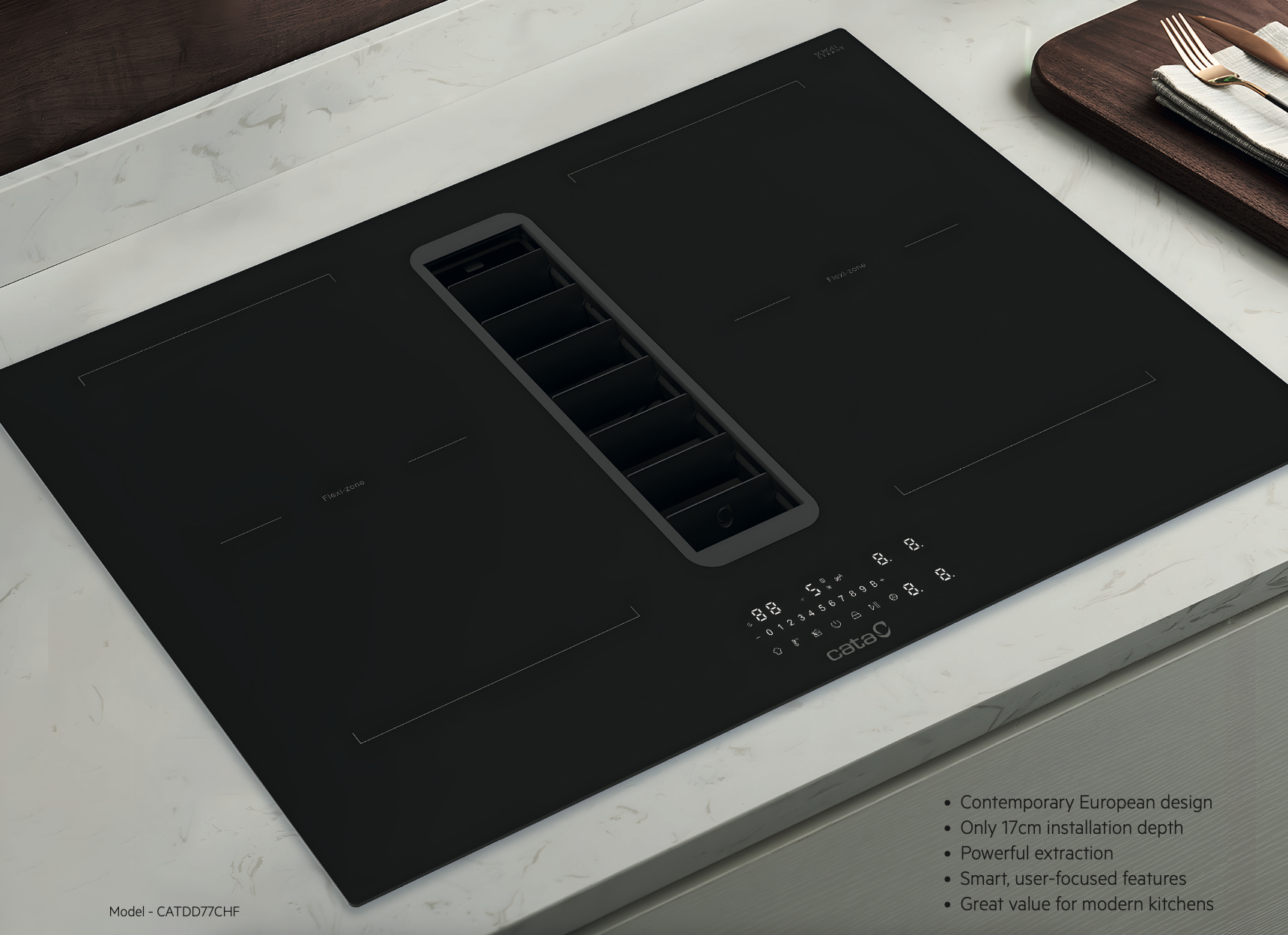
The CATDD77CHF is a premium 77cm vented induction hob built for modern kitchens. Flexible cooking zones and an integrated extractor give you powerful cooking and effective ventilation from a single, streamlined appliance.
- 77cm induction hob with a built-in downdraft extractor
- Four cooking zones with flexible cooking options
- Touch controls for simple, precise operation
- Sleek black glass design
- Can be installed ducted or recirculating
- Ideal for open-plan kitchens and island layouts
What to Consider Before You Buy
A vented hob is a bigger decision than a standard cooktop, so a few checks are worth making first.
- Cabinet and worktop space. The downdraft unit needs room in the cabinet below, so check the depth your kitchen can accommodate.
- Your ducting route. If you want ducted extraction, plan where the duct will run and keep it short and straight.
- Filter upkeep. Recirculating setups use carbon filters that need replacing, while the grease filter is washable.
- Extraction power. Make sure the rate suits your kitchen size and how you cook.
- Pan suitability. Induction needs ferrous, magnetic-base pans, so check yours work or budget for new ones.
Top tip: Kitchen extract ventilation in England is covered by Approved Document F of the Building Regulations. If you are ducting outside as part of a refit, it is worth checking the requirements or asking your installer to confirm compliance.
Vented Hob vs a Separate Hob and Cooker Hood
| Point | Vented induction hob | Hob plus overhead hood |
|---|---|---|
| Appliances | One combined unit | Two separate units |
| Extraction point | At the hob surface | Above the hob |
| Best for islands | Excellent, nothing overhead | Needs a ceiling or island hood |
| Sightlines | Clear and uninterrupted | Hood is visible above |
| Installation | Needs space in the cabinet below | Needs wall or ceiling mounting |
If your layout would suit a wall or ceiling hood instead, our guide to the best cooker hoods for small kitchens is a useful comparison point.
Are Vented Induction Hobs Worth It?
For many homes, yes. Combining two appliances into one saves space, looks clean, and delivers efficient cooking with effective extraction in the same footprint. The benefit is greatest in open-plan and island kitchens, where keeping the space clear and uncluttered really matters and an overhead hood would get in the way.
If you mostly cook on a hob against a wall and already have room for a hood, a traditional pairing may still suit you. But where design and a tidy layout are a priority, a vented induction hob is hard to beat. Once you have tried induction, our guide to pan-frying salmon on induction is a good place to put it to work.
Frequently Asked Questions About Vented Induction Hobs
It is a single appliance that combines an induction cooking surface with a built-in extractor. The extractor pulls steam, grease and cooking odours down through a vent in the centre or rear of the hob while you cook, rather than letting them rise to an overhead hood.
Yes. Because the extractor is built into the hob, most kitchens do not need a separate overhead cooker hood, which is what makes vented hobs so popular for islands and open-plan rooms.
They are one of the best options for islands. Extracting at hob level removes the need for a ceiling-mounted hood, so nothing breaks up the sightlines over the island.
Not always. Many models can run either ducted to the outside or with recirculating carbon filters, depending on your installation. Ducting clears moisture more effectively, while recirculating is easier to fit where a duct route is not practical.
Noise levels are broadly similar to a standard cooker hood. Modern vented hobs use efficient motors designed to keep sound to a minimum, and running the extractor on a lower setting where possible keeps things quieter.
The glass surface wipes down just like a standard induction hob. The extractor grease filter usually lifts out for washing, and any carbon filter is replaced rather than washed. Keeping the filter clean is what keeps the extraction working well.
Yes. Induction works with ferrous, magnetic-base cookware. A quick test is to hold a magnet to the base of a pan: if it grips firmly, the pan will work. Most modern stainless steel and cast iron pans are suitable.
Explore CATA hobs and extraction
Whether you want everything in one appliance or a separate hob and hood, CATA has an option to suit your layout.
- Browse the full CATA vented hobs range
- Compare standalone cooktops in the CATA induction hobs range
- See all extraction options across CATA cooker hoods
Final Verdict
A vented induction hob is a smart, space-saving way to cook and extract from one appliance. It shines in open-plan and island kitchens where a clear, uncluttered layout matters.
- Combines induction cooking and extraction in a single unit.
- Captures steam and grease at the hob, with no overhead hood.
- Installs ducted to outside or with recirculating filters.
- Check cabinet space, ducting route and filter upkeep before buying.
- Ideal for islands and contemporary, open-plan designs.