Why Your Oven Smells When You First Turn It On
An oven smell on first use is almost always normal. New ovens produce a chemical or slightly plasticky smell as manufacturing residues burn off during the first few heating cycles. An oven that has been unused for a while may smell of burning dust. The smell that should concern you is a sharp, persistent acrid odour that does not fade after several uses — that pattern is worth investigating before cooking again.
Identifying the Smell
Different smells have different causes, and identifying which type you are dealing with is the fastest way to know whether to act or wait. The smell is the diagnostic — not just the fact that there is one.
Manufacturing residue burning off
The most common smell from a brand-new oven. Protective oils, coatings, and manufacturing residues on the oven’s internal surfaces, elements, and insulation volatilise when heated for the first time. This is expected, harmless, and typically resolves after one to three high-temperature uses. May produce a small amount of white smoke on the very first use — this too is normal.
Dust burning from an unused oven
An oven that has sat idle for weeks or months accumulates dust on the heating elements and cavity surfaces. When heated, this dust burns off quickly and produces a faintly dusty or musty smell. It typically clears within 10 to 15 minutes of the oven reaching temperature. More noticeable after a house move, long holiday, or when using an oven for the first time after installation.
Food residue or grease burning
A smell of burning food when the oven is not in use for cooking means there is residue inside the cavity — on the base, walls, or elements — that is burning as the oven heats. Grease splatter from previous cooking, dried food spills, and residue under the heating element are the typical sources. Produces visible wisps of smoke in heavier cases and a distinctly food-like burnt smell rather than a chemical one.
Packaging material left inside
Plastic packaging, protective film, foam padding, or cardboard inserts left inside the oven cavity or caught behind internal components will burn when the oven heats. This produces a sharp, unmistakably plastic smell. Check the oven interior thoroughly — including the area around the element and behind any removable panels — for any remaining packaging before proceeding.
Possible electrical fault
A sharp, acrid smell distinct from the food or chemical smells above — sometimes described as burning rubber, hot metal, or singeing insulation — can indicate an electrical component issue. Overheating wiring, a failing element, or a component short can produce this pattern. Unlike first-use smells, an electrical smell is typically stronger with each subsequent use rather than fading, and may be accompanied by tripping a circuit breaker or unusual sounds.
New Oven vs Established Oven Smells
The context matters almost as much as the smell itself. A chemical smell from a three-day-old oven is almost certainly manufacturing residue. The same smell from an oven that has been in regular use for two years needs more investigation.
Brand new oven
First few uses
New ovens almost invariably produce a smell on first use. Manufacturers apply protective oils and coatings during production that are not fully removed before shipping. The cavity insulation, heating elements, and enamel surfaces all need to heat to operating temperature for the first time, and this process produces volatile compounds that smell distinctly chemical or slightly acrid.
This is entirely expected. The solution is a burn-in cycle — running the oven empty at high temperature before using it for food. Most manufacturers recommend this in the installation guide and it takes under an hour. The smell typically reduces significantly after the first burn-in and disappears within two or three subsequent uses at normal cooking temperatures.
Established oven
After regular use
An oven that has been in use for months or years should not produce a chemical smell. If it does, something has changed — either a new element has been fitted, accumulated grease has reached a level where it produces smoke and smell at normal cooking temperatures, or there is an emerging electrical issue.
The most common cause by far is grease and food residue build-up. A thorough clean of the cavity, the base, the back wall, and the area around the heating element resolves this in most cases. If a clean oven continues to produce a smell that was not there before, particularly a sharp or acrid one, it warrants professional attention before continued use.
How to Do a Proper Burn-In Cycle
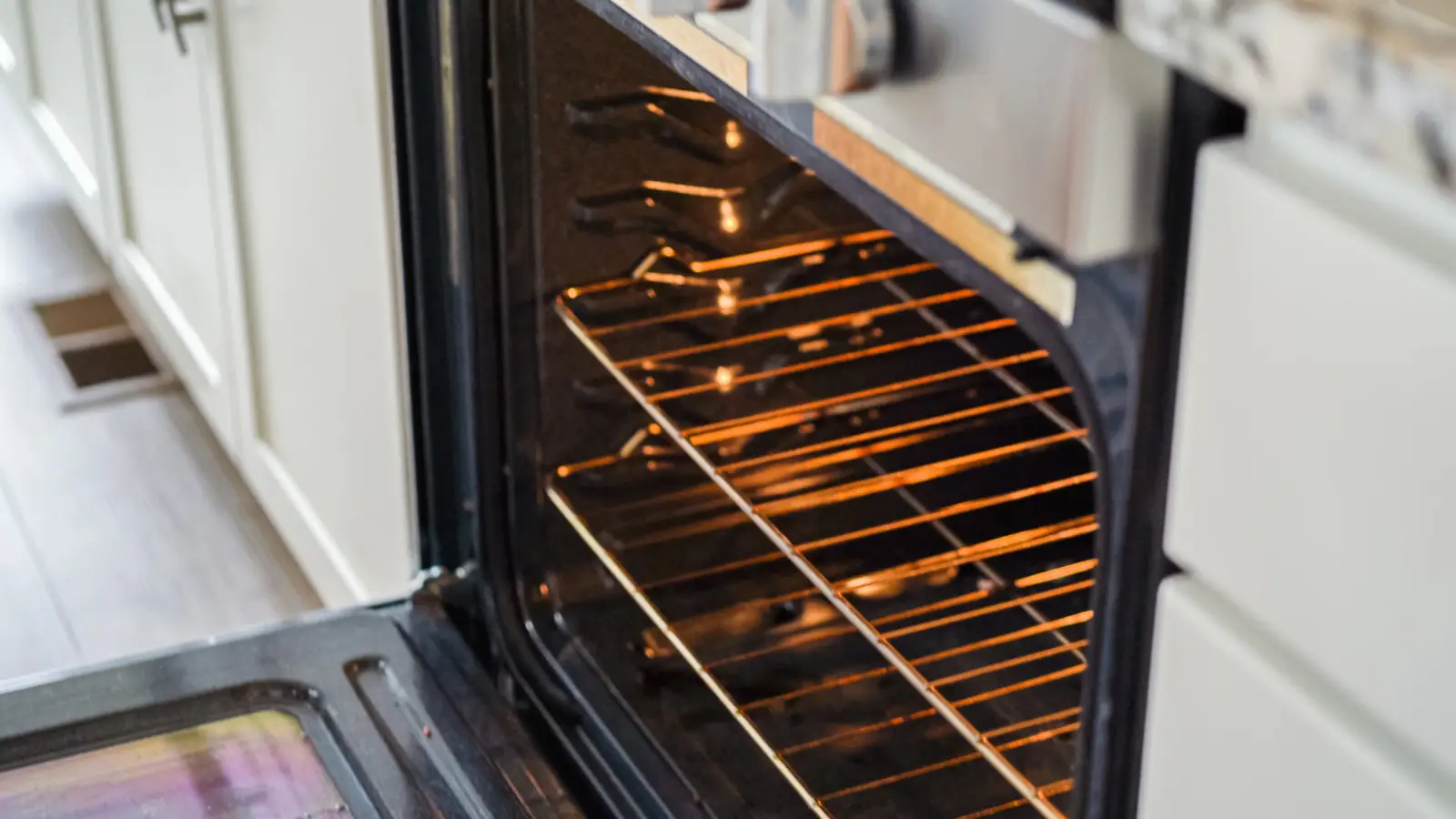
A burn-in cycle is the recommended first step for any new oven before cooking food. Most manufacturers specify this in the installation guide. It takes under an hour and removes the manufacturing residues that cause first-use smells.
- 1
Remove all packaging and accessories
Check the oven cavity thoroughly for protective films on shelves or the door glass, foam packaging in corners, cardboard inserts, or any other material that was there for transit. Remove the shelves and trays and wash them before replacing. Look behind the element and along the base — transit packaging is sometimes pushed out of sight during installation.
- 2
Ventilate the kitchen
Open a window and run the cooker hood at full speed before switching the oven on. The burn-in process produces fumes that, while not dangerous in a ventilated space, are unpleasant to breathe in concentration. If you have a bird in the kitchen, move it to another room before starting.
- 3
Set the oven to its highest temperature
Select the conventional or fan setting and set the temperature to maximum — typically 220°C to 250°C depending on the model. Do not select the grill, as the grill element burns off residue differently and is less efficient for the initial cavity burn-in.
- 4
Run for 30 to 60 minutes
Leave the oven running at maximum temperature for 30 to 60 minutes with nothing inside. Some smoke and smell will be produced, particularly in the first 10 to 20 minutes. This is normal. The smoke should reduce and largely stop before the cycle ends — if it does not, extend the cycle by another 15 to 20 minutes.
- 5
Allow to cool fully and wipe down
Switch off and leave the oven door slightly ajar to allow the interior to cool. Once fully cool, wipe the cavity interior with a damp cloth to remove any ash or residue that has settled. The oven is now ready for food use. A mild smell may persist for the first one or two cooking sessions — this is normal and will clear completely.
When to Be Concerned
The vast majority of oven smells are benign and resolve within a few uses. These specific patterns are the ones worth taking seriously.
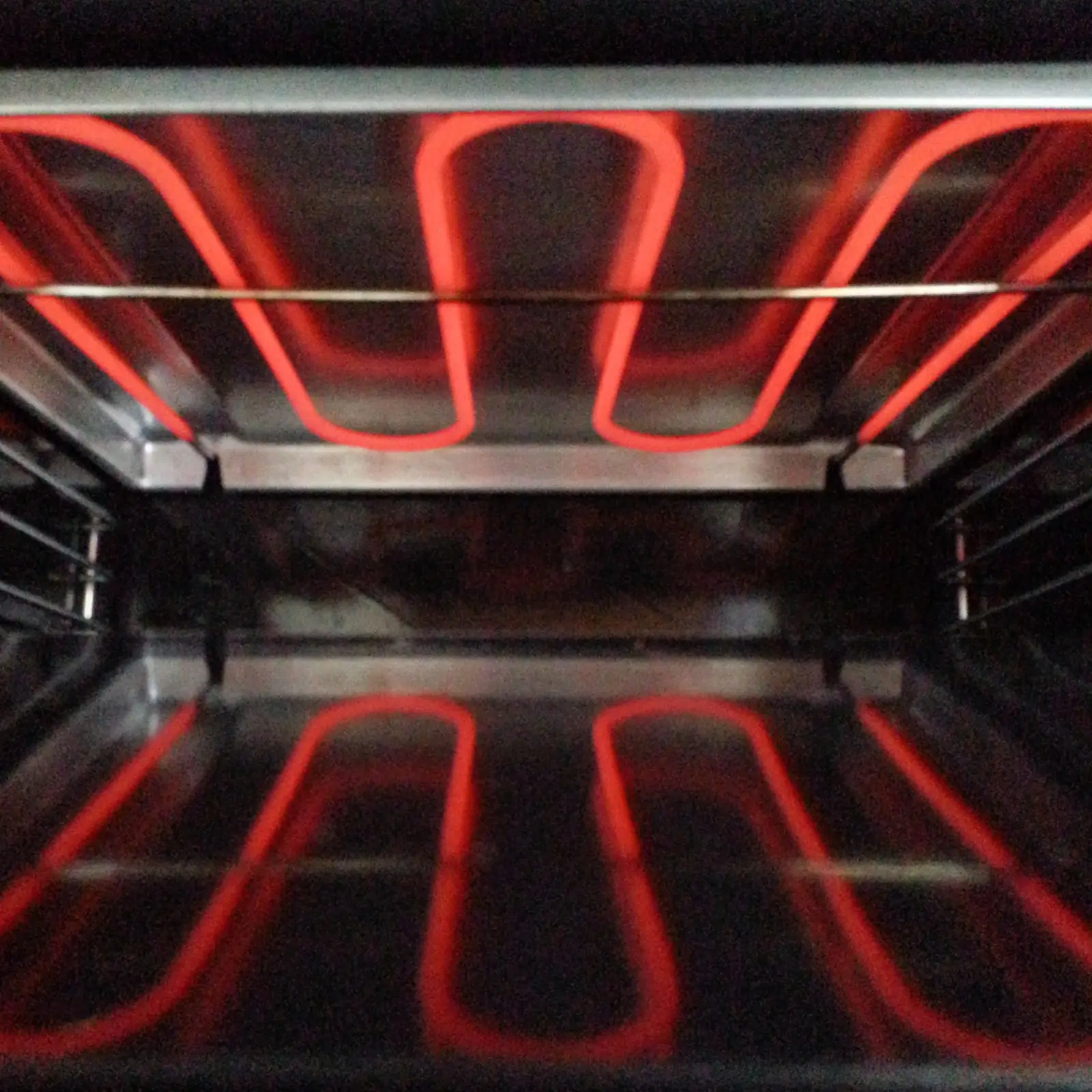
Stop using the oven if you notice any of these
- A sharp, acrid, or metallic burning smell that is getting stronger rather than fading over multiple uses
- The smell is clearly distinct from food or chemical residue — more like burning insulation, hot wire, or singeing rubber
- The circuit breaker trips when the oven is in use
- You notice visible sparking inside the cavity, particularly near the back wall or around the element
- The oven stops heating correctly at the same time a smell develops — suggesting a failing element rather than just residue
- Heavy, persistent smoke that continues throughout a cooking session rather than clearing after a few minutes
In any of these cases, the right action is to stop using the oven, isolate it at the socket or cooker switch, and contact a qualified appliance engineer before using it again. Attempting to diagnose electrical faults inside a live oven is not safe and not a job for an unqualified person.
If you are using a newer CATA oven and notice a persistent smell after the burn-in cycle has been completed, the product support pages at cata-appliances.co.uk/product-support are the right starting point before contacting a service engineer.
Keeping a clean oven is the most reliable way to prevent recurring smells from in-use residue. CATA’s pyrolytic single ovens remove the need for manual interior cleaning by burning all residue to ash at high temperature. The guide to self-cleaning ovens explains how pyrolytic, catalytic, and steam cleaning compare in practice.
Common questions answered
How long does the new oven smell last?
Most of the smell clears after the burn-in cycle. A mild residual smell may persist for the first one or two cooking sessions at high temperature. If a noticeable smell continues beyond the third or fourth use, check for remaining packaging or residue inside the cavity.
Is it safe to cook in a new oven that still smells?
After a proper burn-in cycle, yes — a mild residual smell during the first few cooking sessions will not affect the food and poses no health risk. Avoid cooking food during the burn-in cycle itself, as the fumes produced are more concentrated at that stage.
My oven smells of burning plastic — what should I do?
Switch it off immediately and check the entire interior for remaining packaging. Protective film on shelves, foam padding on the door, or transit cardboard anywhere in the cavity are the most common sources. Once removed, air the oven fully before using. If you cannot find a source for the plastic smell and it persists, contact a service engineer.
Should I open a window when running a burn-in cycle?
Yes — good ventilation is important. Run the cooker hood at full speed and open a window. The burn-in produces fumes and sometimes a small amount of smoke that you do not want to breathe in a sealed kitchen. The fumes are not toxic at the levels produced by a domestic oven burn-in, but they are unpleasant and unnecessary to inhale.