Are Induction Hob Protectors Any Good?
Induction hob protectors (thin silicone or fibreglass mats designed to sit between the pan and the glass) are a genuine niche product with a genuine use case. They are not essential, and plenty of induction hobs run for years without one. But for certain households and certain use patterns, they solve a real problem rather than a theoretical one.
What they actually do
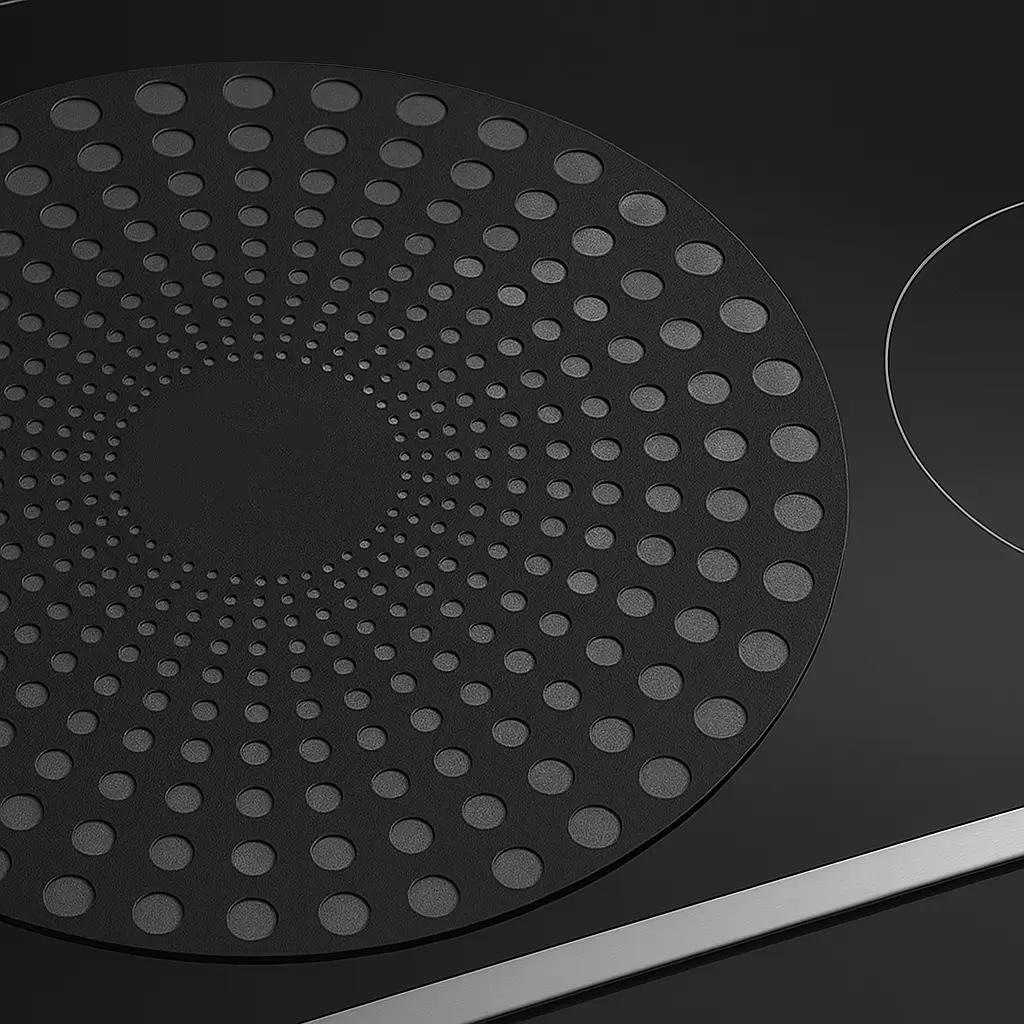
The glass-ceramic surface of an induction hob is hard but not scratch-proof. A cast iron pan placed down firmly, a heavy pan base dragged rather than lifted, or grit trapped under a pan can all leave marks. The protector puts a soft layer between these and the glass. It also catches boil-overs and spills before they can bake onto the surface during cooking, which makes cleaning considerably faster. Wipe the mat rather than scrape the glass.
The pan still heats correctly through the mat. Induction works by electromagnetic induction through the base of the pan, and a thin silicone or fibreglass layer does not meaningfully impede this. The hob detects the pan through the mat as it would directly. The main caveat is thickness: a mat above about 3mm starts to create a perceptible gap between coil and pan base, which reduces efficiency slightly and may cause some hobs’ pan-detection sensors to become less reliable.
The honest case for and against
Who genuinely benefits
The households where a protector earns its keep are those with cast iron or heavy carbon steel cookware used regularly. Raw cast iron has a slightly rough base texture that can leave fine marks on glass over months and years of regular use. A protector eliminates this risk entirely. If you have young children who help at the hob, or if kitchen busyness means pans sometimes get put down less than gently, the cost-benefit calculation is straightforward.
For households using lighter non-stick pans with smooth bases and already careful habits, the practical protection benefit is smaller. The glass surface of a quality induction hob is more durable than it looks, and with sensible use it will remain unmarked for years without any protection.
What to look for if you buy one
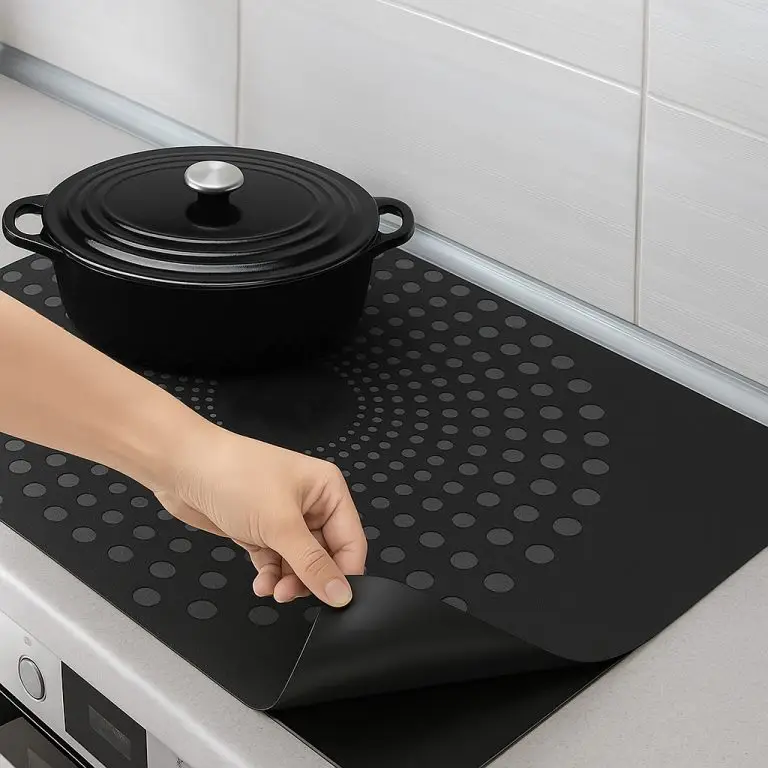
Heat resistance is the non-negotiable. The mat must be rated for at least 250°C, the residual surface temperature a hob glass reaches through transferred heat from a hot pan. Some cheaper silicone mats are rated for lower temperatures and will discolour or deform with regular high-heat cooking. Check the rating before buying.
Non-slip backing on both sides matters more than it might seem. A mat that slides when you push a pan across it provides no scratch protection and is a stability hazard. Silicone both above and below is the most reliable construction.
Cut-to-fit designs work better than pre-cut standard sizes for most kitchens, because they can be trimmed to avoid covering touch controls while still protecting the cooking zones. Zone indicator markings on the glass are easier to see if the mat is trimmed back slightly from the edges of each zone.
For advice on keeping an induction hob surface in good condition, the guide to cleaning burnt-on spills from an induction hob covers the right tools and techniques for glass-ceramic without risking scratches. For cast iron pan use on induction specifically, see the cast iron on induction guide. Browse the CATA induction hob range for current models.